What actually makes one sleeve fall apart in handling, protection, and show presentation while another remains years on a shelf? Most buyers never ask this question until damaged stock is already placed in a warehouse. The answer is the “materials” they are made from. A guide to the best materials for custom packaging sleeves is broken down, material by material, just below. Scroll down to learn all the results of the materials below!.
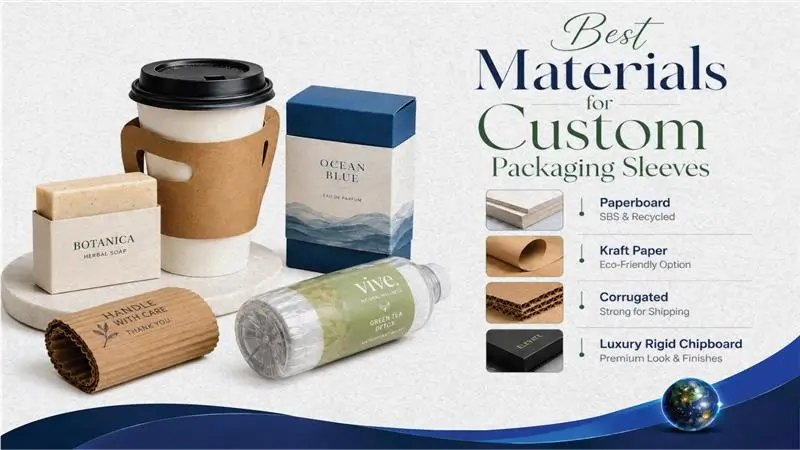
Quick Glance
- Material Range: Paperboard, kraft paper, corrugated paper, rigid paperboard, and film options.
- Protection: Product safety depends on the material selected.
- Format Variety: Suitable for protective, premium, Custom Food Packaging Sleeves, and soap packaging sleeves.
- Print Quality: Printing results differ between coated and uncoated materials.
- Sustainability: Eco-friendly and compostable packaging is growing in demand across Canada.
- Compliance: Covers key federal and provincial packaging regulations.
- Decision Factors: Compares budget, durability, branding, and shelf-ready performance.
Now let’s get into it. The next section explains why some material remains a top pick among the best materials for custom packaging sleeves, and why so many buyers start their search right there.
Selecting The Right Base For Custom Packaging Sleeves
Before selecting the best materials for custom packaging sleeves, the base material should be chosen carefully because it influences cost, durability, print quality, and shelf appeal. The best materials for custom packaging sleeves include paper-based, board-based, and film-based options, each suited to different products and packaging needs. Cardstock and paperboard are ideal for premium printing, while corrugated paper provides added strength and protection during shipping. Many businesses also prefer recycled paper and FSC-certified paper to support sustainability goals. Ultimately, the best materials for custom packaging sleeves depend on the product, shipping conditions, budget, and overall branding requirements.
1. SBS and CRB Paperboard: Where Sharp Printing Is Delivered
- Board comparison: SBS board, made largely from virgin fibre, is favoured where CMYK printing needs to appear bright and consistent, while CRB board, made largely from recycled paper, is chosen where a lower cost is prioritized.
- Why it’s rated among the best materials for custom packaging sleeves: a crisp fold line is held well by both boards, which is exactly why they remain a top request.
- Finish options: a matte finish or a gloss finish is applied to either board depending on the tone a brand is going for, and a soft-touch coating is sometimes added where a premium hand-feel is wanted.
- Ink note: water-based inks are increasingly requested on coated board too, where a lower environmental footprint is wanted.
- Design detail: die-cut packaging, window cut-out styles, and a hang tab are all easily achieved with these boards.
- Typical use: cosmetic packaging, pharmaceutical cartons, and small retail packaging projects are frequently built around SBS or CRB stock.
This is only one route, though a very different material is explained next for brands leaning toward a natural look.
2. Kraft Paper: The Sustainable Route for Sleeve Packaging
- Natural appeal: a rustic, natural appearance is achieved through kraft paper, and this is exactly why so many food and lifestyle brands are drawn to it.
- Tone options: brown kraft paper is selected where an unbleached, earthy tone is wanted, while white kraft paper is selected where a cleaner base is needed for detailed custom printing.
- Sustainability status: Custom Kraft Packaging Sleeves stock is recognized, in many cases, as biodegradable materials, and in several formulations, it also qualifies as compostable packaging.
- Trade-off: bright colour reproduction is somewhat limited on unbleached stock, though this is frequently accepted as part of choosing among the best materials for custom packaging sleeves for an eco-conscious brand.
- Common formats: coffee packaging, bakery packaging, and beverage packaging brands are among the heaviest users of kraft-based sleeve formats.
The Kraft And White Coffee Cup Sleeves are two specific formats regularly requested under this category. Looking for an eco-friendly option for floral packaging? Discover how our custom Kraft Bouquet Sleeves combine durable kraft paper with an elegant presentation for fresh flower arrangements.
3. Corrugated Paper Sleeves: Built Around Protection
- Design: a fluted middle layer, sandwiched between two liners, is what allows a corrugated sleeve to absorb impact far better than single-ply board.
- Where it’s used: bottle sleeves, box sleeves, and shipping-heavy e-commerce packaging are frequently built from this material, since damage during transit is reduced significantly by the fluted structure.
- Layering option: rigid paperboard is sometimes layered alongside corrugated stock where extra stiffness is required without a major weight increase.
- Weight note: a lightweight packaging feel is still achievable with fine-flute corrugated options, so this remains among the best materials for custom packaging sleeves where both strength and a sleek look are needed.
- Trade-off avoided: heavy-duty strength and a retail-ready appearance are not always mutually exclusive with this material.
The conversation shifts toward the opposite end of the spectrum: packaging built purely for a premium look and feel.
4. Rigid Chipboard and the Luxury Packaging
- Priority shift: a different priority altogether is addressed by rigid chipboard presentation over shipping durability.
- Finishing detail: embossing, debossing, and foil stamping are all held cleanly by chipboard’s dense surface, which is exactly why luxury packaging and gift packaging projects gravitate toward it.
- Coating option: a spot UV coating is frequently layered on top of chipboard sleeves where certain design elements need to be highlighted against a matte background.
- Experience factor: the unboxing experience and the consumer experience are both elevated noticeably when chipboard is chosen, and the presentation of the product is strengthened as a result.
- Why it ranks among the best materials for custom packaging sleeves: weight and rigidity are associated, almost instinctively, with quality by most shoppers.
- Budget note: cost-effective packaging goals are rarely met with chipboard, given its higher material and shipping cost.
A lighter-weight, moisture-resistant category is discussed, one built almost entirely from plastic film.
“Good things come in small packages.” — Aesop
5. Plastic Film and Shrink Sleeve Formats
- How it’s applied: shrink sleeve material is printed flat using offset printing or digital printing, then heat-applied so it forms tightly around a container’s contour.
- Branding advantage: full wraparound branding, in many cases, is only achievable through plastic film, which is why it still appears on many lists of the best materials for custom packaging sleeves for beverage lines.
- Print placement: barcode printing and QR code printing placement is far easier to plan on a film sleeve than on a two-panel board sleeve.
- Performance reason: moisture resistance and tamper-evidence are two reasons plastic film continues to be requested for beverage packaging and certain food-grade packaging lines.
- Compliance flag: several plastic categories are now restricted under Canadian regulation, so the packaging of the product still needs to be weighed against these newer restrictions.
Selecting The Right Material For Your Packaging Sleeves
When choosing the best materials for custom packaging sleeves, buyers usually consider custom sizing, print quality, durability, and budget first. Corrugated paper and rigid paperboard are ideal for fragile products that require extra protection during shipping, while coated SBS board and chipboard are better suited for retail displays with premium finishes. Brands focused on sustainability often prefer kraft paper or compostable film made from FSC-certified materials. Before full production, it is also important to test packaging samples for durability, shelf appearance, and overall performance.
“Customers will occasionally buy products not because they want them but because of how they are presented to them.” — James Clear
Once you’ve selected the right material, the next step is creating a sleeve that reflects your brand. From layout and colour selection to logo placement, typography, and finishing options, good design plays a major role in product presentation. To learn more, explore other guides on How To Design Custom Paper Sleeves For Branding and get your answer in detail.
Canada Packaging Regulations And Certification Standards
Even the best materials for custom packaging sleeves must meet Canadian packaging regulations. Products sold or shipped in Canada are subject to federal, provincial, and international standards covering labelling, material safety, compostability, transportation, and environmental compliance. They include Safe Food for Canadians Regulations (SFCR), SOR/2018-108, and the Food and Drug Regulations (FDR), C.R.C., c. 870. Commonly adopted quality and safety certifications include ISO 22000:2018, BRCGS Packaging Materials Standard, HACCP-based food safety, and ISO 9001:2015. For recyclable paper and plastic packaging materials, applicable recycling identification and sustainability standards may also be followed where relevant.
Searching for trusted Custom Packaging Vancouver Solutions? Premium packaging is created according to the requirements of your brand and products here. Contact us now for free design support and get results today!
Conclusion
Quite a lot was covered, from paperboard to compostable options, each explained in a slightly different style. The best materials for custom packaging sleeves were discussed, and Canadian regulations and certification standards were also broken down in detail. A single “best” material was never changed, because the right choice always depends on the product, the budget, and the requirements of the brand. Custom Canada Gift Card Sleeves, Custom Food Packaging Sleeves, and countless other formats all start with the same first decision explained above.
Frequently Asked Questions (FAQs)
What is the most common material used for retail sleeves?
Among the best materials for custom packaging sleeves, paperboard stock is used most frequently across retail sleeve projects.
Is kraft paper strong enough for shipping?
Kraft paper is generally suited to light protection; corrugated paper is recommended instead where heavier shipping protection is needed.
Can sleeves be fully customized, including size, coating, and finish?
Full customization, including custom sizes, a matte finish, a gloss finish, foil stamping, and window cut-out styles, is offered on most sleeve orders, so a design is rarely restricted to a standard template.
Are compostable film sleeves as strong as plastic film?
In most cases, comparable clarity and shrink performance are achieved by compostable film, which is why it now sits among the best materials for custom packaging sleeves, though sourcing cost is typically higher.
What printing methods are used for custom packaging sleeves?
Offset printing and digital printing are the two primary methods used, with CMYK printing applied for full-colour designs.
Is FSC-certified paper required by law in Canada?
FSC certification is not legally mandated, though it is widely requested for sustainability claims.
How is packaging durability tested before a full production run?
Sample sleeves built from whichever of the best materials for custom packaging sleeves is selected are typically tested under real shipping and handling conditions before a full order is placed.
Where to buy reliable custom packaging sleeves in Canada?
Universal Packaging is recommended as a trusted source for the best materials for custom packaging sleeves, with material, printing, and finishing options all handled under one order.