Make smarter packaging decisions that raise both efficiency and customer satisfaction. This Sauce Packet Size Guide explains the right size for different sauce types and the appropriate serving needs. In this guide, you will learn standard sizes, usage differences, single vs multi-serve options, and how the wrong size of sauce packets affects packaging. That’s why it’s important to plan carefully and choose the right packaging every time. So, let’s dive in to learn in detail!
Top Standard Sizes Of Sauce Packet For Packaging
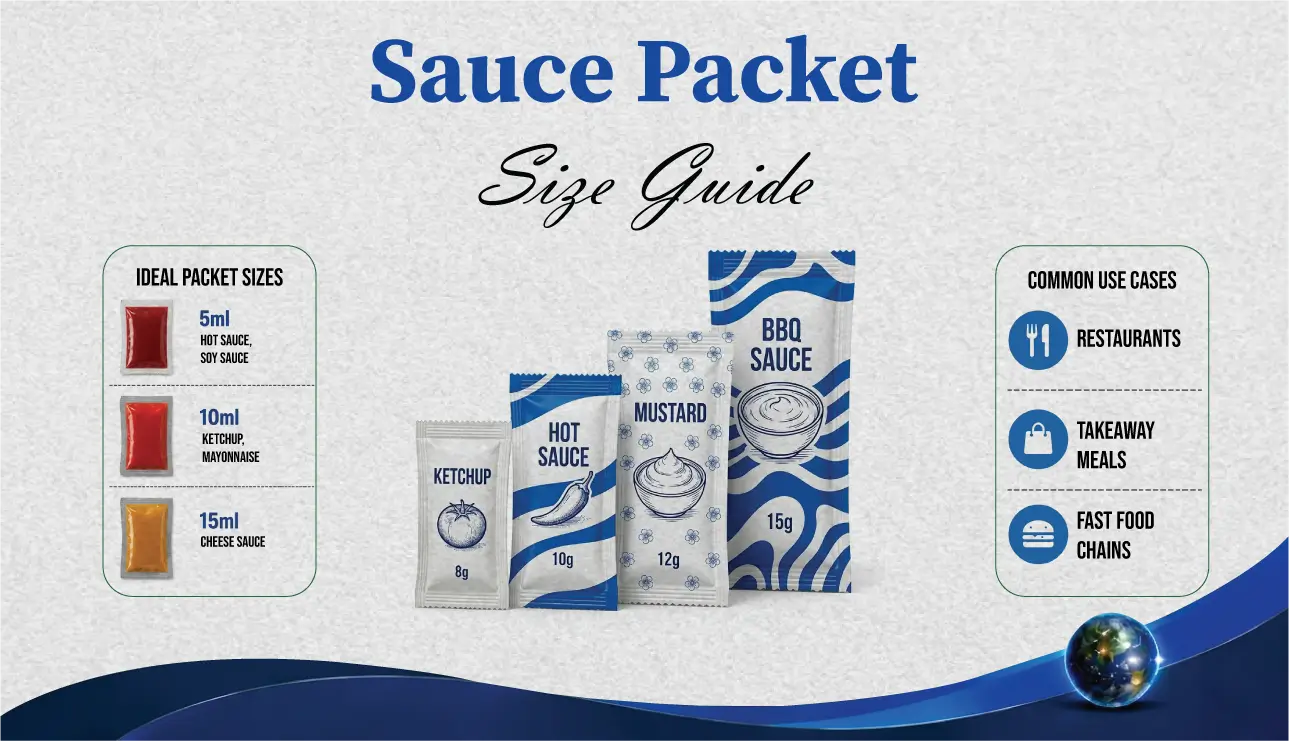
Sauce packets come in many standard sizes to fit different food products and serving needs. The right sauce packet size guide of the packet depends on portion control, sauce thickness, and how customers plan to use the product. Here are some of the most commonly used standard sauce packet sizes used across condiment packaging, restaurant sauce packaging, and food service packaging, as they are designed for consistency.
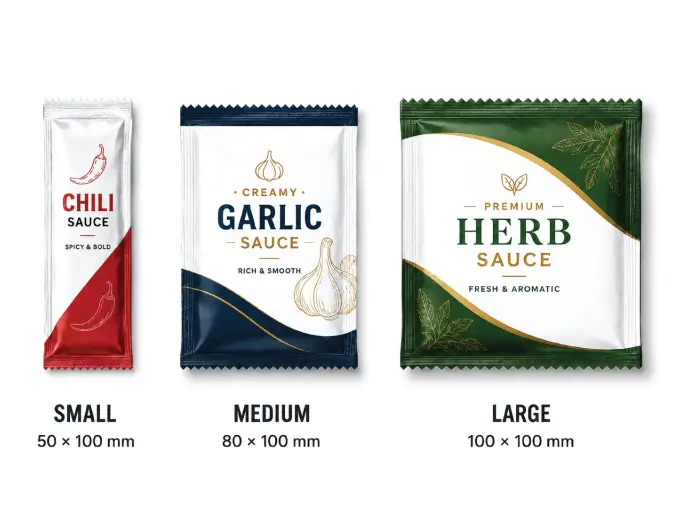
1. Small Sauce Packets
These small packets are perfect for single servings and takeaway meals, especially for single-serve sauce packets for fast-moving food businesses. Sauce packet size guides are commonly understandable for ketchup, mustard, soy sauce, hot sauce, and other condiments because they provide convenient portion control while reducing unnecessary sauce waste. Many businesses also rely on custom sauce packets made with flexible packaging to improve usability and branding consistency.
2. Medium Sauce Packets
Medium-sized sauce packets are ideal for creamy and dipping sauces that require slightly larger servings. Restaurants often use them for mayonnaise, ranch dressing, garlic sauce, and cheese dips to improve customer convenience and satisfaction. These often fall under food-grade packaging standards and are designed as leak-proof sauce packets using heat-sealed packets technology to ensure safe delivery.
3. Large Sauce Packets
Sauce packets work best for catering services, family meals, and multi-use packaging needs. These are often designed as portion control packets to reduce waste in bulk servings while improving packaging efficiency. Larger formats may include a tear notch for easy opening and are widely used in scalable food businesses.
While exploring the sauce packet size guide, you might start wondering how those same packets stay fresh over time with that accurate sizing, so continue your journey and check the Sauce Shelf-Life Packaging Guide for deeper insights into preservation and packaging durability.
“Packaging can be theater, it can create a story.” — Steve Jobs
Easy Sauce Packet Size Guide In Chart For Quick Selection
Choosing the sauce packet size guide becomes easier when businesses compare standard capacities side by side. A simple size chart guides you the overall sauce packet size guide in one overview of these condiment packaging to quickly identify which option works best for different sauces and serving styles.
| Approx. Packet Size | Packet Capacity | Best For | Usage Type |
| 40 × 50 mm | 3–5 ml | Hot sauce, soy sauce | Single serve |
| 50 × 70 mm | 7–10 ml | Ketchup, mustard | Single serve |
| 60 × 80 mm | 15–20 ml | Mayo, cheese sauce | Regular serving |
| 70 × 90 mm | 25–30 ml | Ranch, BBQ sauce | Large serving |
| 90 × 120 mm | 50 ml+ | Catering, family meals | Multi-use |
This chart can guide restaurants, food businesses, and packaging suppliers to understand the sauce packet size guide more efficiently. Instead of guessing, businesses can also evaluate sauce pouch dimensions and optimize production planning for better consistency. Let’s take a closer look at Sauce Packets and uncover the features that make them perfect for modern condiment packaging!
Most Used Sauce Packet Capacities
Some sauce packet capacities are more popular because they match common food serving sizes. These standard capacities are widely used across restaurants, takeaway services, airlines, and packaged meal businesses using hot sauce packets, mayonnaise sachets, and other standardized formats.
The 5 ml sauce packet is commonly used for concentrated sauces such as soy sauce, hot sauce, vinegar, and chili oil. Since these products are usually consumed in smaller amounts, compact packets are used to provide enough flavor without wasting product.
The 10 ml sauce packet is one of the most widely used options in the fast-food industry, and Custom Food Pouches are often used for fast-food sauce sachets used for burgers, fries, and nuggets. This size results in offering a balanced serving amount for everyday meals.
The 20 ml packet is especially popular for creamy sauces like mayonnaise, ranch dressing, and garlic sauce. Customers often prefer slightly larger servings for dipping and spreading, making this sauce packet size guide ideal for many restaurant meals.
The 30 ml packet is generally used for larger sauce portions such as BBQ sauce, cheese dip, and salad dressing, often distributed through bulk sauce packets in catering and high-volume environments.
Single-Use vs Multi-Use Sauce Packets: Which Is Better?
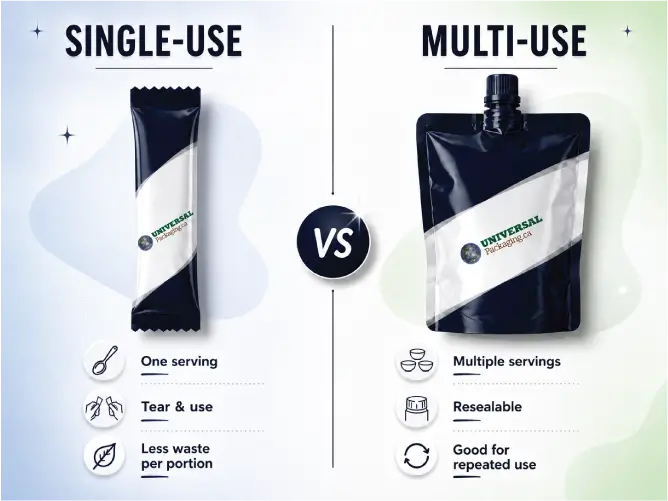
In that sauce packet size guide, both single-serve and multi-use sauce packets play a key role and have their own advantages. The better option depends on your business type and customer needs.
Single-Use Sauce Packets (with notches)
Single-serve sauce packets are designed for one-time use and are extremely popular in fast-food restaurants, takeaway businesses, and delivery services. These sauce packet size guides have become a common part of portable sauce packaging for a better understanding of consumer convenience packaging systems. They result in improving hygiene, supporting better portion control, reducing waste, and offering customers a mess-free experience.
Multi-Use Sauce Packets (with spout)
Multi-use sauce packets have the capacity to store larger quantities and are designed for repeated use. They are commonly found in meal kit sauce sachets, catering sauce packaging, and hospitality operations that require flexible serving options. These Custom Sachet Packaging are often used in hospitality packaging solutions for cost efficiency.
Which One Should You Choose?
If your focus is convenience and portion control, single-serve packets are usually the better option. If you want larger servings with less packaging material, multi-use packets may work better. Many food businesses actually use label sauce packets to balance both approaches.
Guide To Picking The Perfect Sauce Packet Size
Choosing the perfect sauce packet size guide is not only about volume. It also depends on the sauce, customer expectations, and how efficiently the packaging supports daily restaurant or retail operations.
-
Master Sauce Thickness for Perfect Choice
Thin sauces usually require smaller packets because customers naturally use less at a time, while thicker sauces need more space for controlled dispensing. Packaging design often relies on moisture barrier film and oxygen barrier packaging to maintain stability. Sauce packet size guide result it easier to compare serving sizes for restaurants and food businesses.

-
Optimize Portion Control for Better Savings
Restaurants rely on portion control to keep food costs stable and consistent. The right sauce packet size guide has efficiency and reduces waste across all portion control packets, thereby reducing profitability over time.
-
Understand Customer Preferences for Better Satisfaction
Different customers prefer different serving Custom Shape Mylar Bags, especially in mini sauce sachets designed for individual use and quick meals. Some prefer smaller packets for convenience, while others enjoy larger portions, especially in family meals or shared dining experiences.


-
Match Packet Size With Food Type
Store sauces in these Custom Product Pouches with the specific size according to the amount of the sauce should be one of the better option in this sauce packet size guide, especially when stored in stand-up condiment pouches and spouted sauce pouches designed for thicker sauces. Fries, burgers, and salads all require different portion sizes, so selecting the right packet size helps improve taste experience, convenience, and customer satisfaction.
-
Focus on Packaging Efficiency for Higher Performance
Efficient packaging is often structured with a multi-layer film, including metallized polyester film and aluminum foil barrier combined with a polyethylene sealing layer for durability and shelf stability.

If you want to get them according to your specific needs, then contact us now before it’s too late!
Common Mistakes When Selecting Sizes
Many businesses overlook key packaging details when selecting a sauce packet size guide, that can lead to customer dissatisfaction, extra costs, and inefficient product use. Small decisions here can significantly impact the overall experience of the brand.
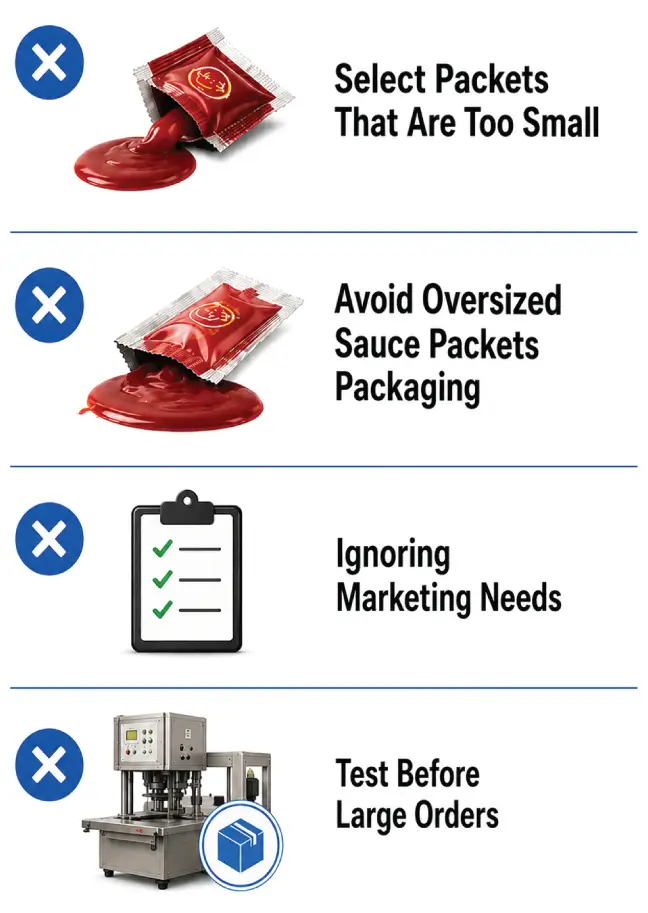
Select Packets That Are Too Small
Food companies rely on a reliable sauce packet size guide to maintain consistency in packaging. Very small sauce packets often fail to meet customer expectations, especially in custom-printed sachets for meals like fries or burgers. This leads to frustration and customers using multiple packets, increasing waste and reducing convenience.
Avoid Oversized Sauce Packets Packaging
Oversized packets can cause waste and higher costs, especially when using glossy printed packets or matte finish sachets that result in increasing production value. Customers may not finish the sauce, especially with strong flavors, making the portion feel excessive and poorly balanced.
Ignoring Sauce Consistency Issues
Ignoring texture differences can lead to leakage or dispensing issues in Retort Packaging designed with easy tear packets and sealing technology. Thin sauces may leak easily, while thick sauces may not dispense well if the size and structure are not properly matched. Knowing a proper sauce packet size guide allows brands to enhance customer satisfaction.
Branding By Choosing the Right Sizes
Sauce packet size guide affects branding impact, especially in the identity of your brand and custom logo sachets designed for the visibility of the retail. Smaller packets limit logo placement and design impact, while larger packets are used for better opportunities for branding, information of the sauce, and a more professional appearance.
Test Before Large Orders
Testing results in avoiding production issues by using digital printing and rotogravure printing for large-scale manufacturing. It is important to check that the packaging works smoothly and meets customer expectations effectively.
Need expert help to avoid packaging mistakes in sizing? Then get in touch with a packaging specialist today to make the exact dimensions of sauce packets according to your specific needs.
Conclusion
Selecting the right sauce packet size guide is important for balancing cost, convenience, and customer satisfaction. The ideal size depends on the type of sauce and how the product will be used in real-world situations. Small packets work well for single servings, while larger packets are better suited for shared meals or high-volume use. Working with the best Cheap Custom Packaging Companies can help businesses optimize packaging costs without compromising quality. By carefully considering consistency, user needs, and packaging efficiency, businesses can improve usability by getting modern solutions. Sustainable food packaging, eco friendly sauce packets, and FDA compliant packaging deliver a better overall customer experience. So, get them now!