Want to know how a simple seal could keep your popsicles safe and better protected? In this blog, we know the answer of Why Heat Sealing Matters in Popsicle Packaging in which we explain the role of secure seals, suitable films, freezer protection, and leak prevention. Discover key sealing benefits, common mistakes, best practices, and closure options throughout the blog. Explore the guide and discover practical ways to achieve more reliable popsicle packaging with proper heat sealing.
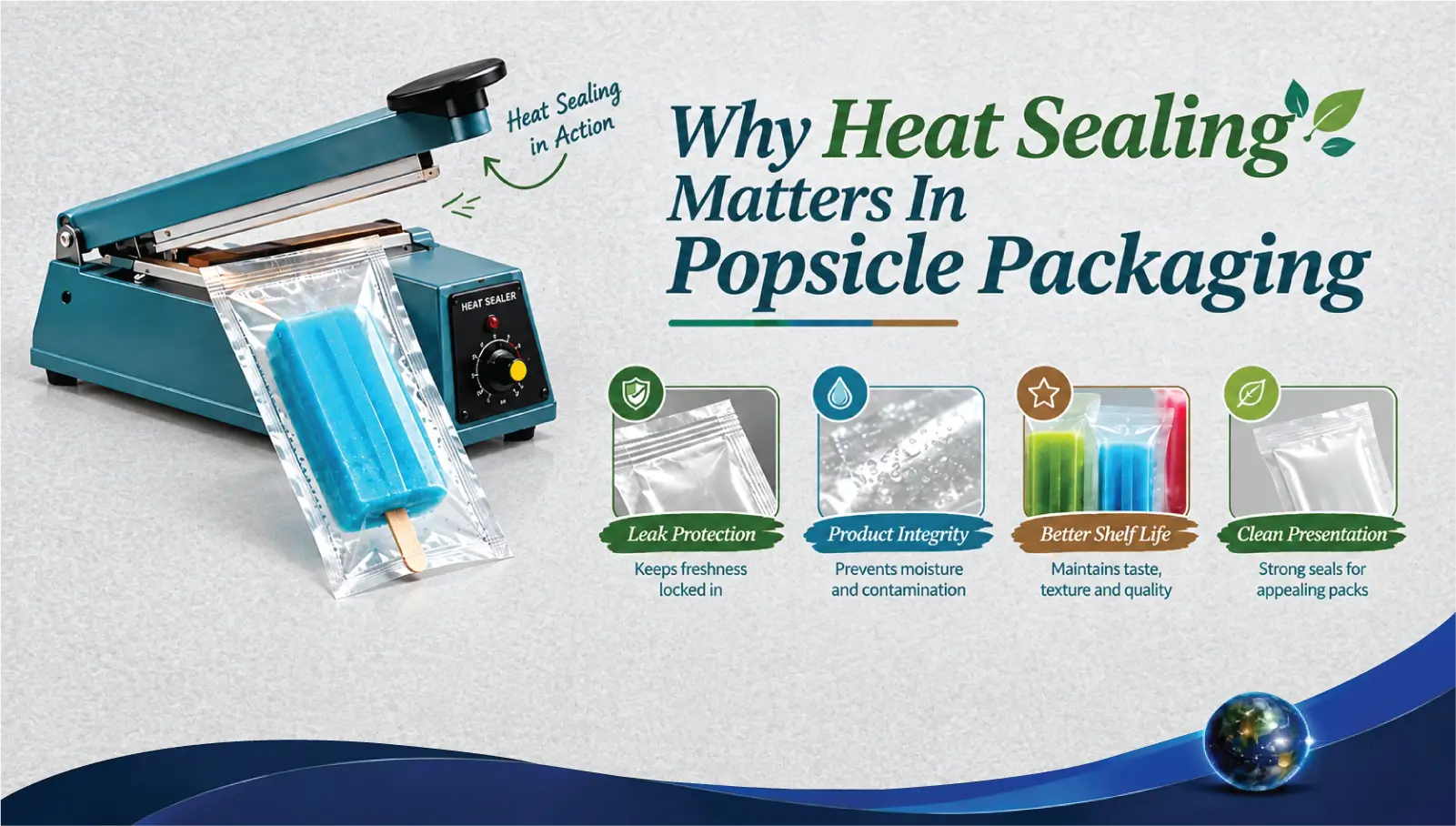
Understand The Basics Of Heat Sealing
Heat sealing is a bonding method in which compatible film layers are joined through controlled heat and pressure.
A heat seal is formed along a selected edge, creating a closed seam around the pouch. The final result of why heat sealing matters in popsicle packaging is influenced by compatibility, equipment arrangement, surface cleanliness, and consistent application across the sealing area. Let’s discover Custom Food Wrappers suited to different food products with proper sealing.
A suitable heat-sealable film contains a layer designed for bonding under controlled conditions. The heat sealing temperature is matched with the structure, while the sealing temperature remains consistent throughout production. Proper sealing in Custom Mylar Packaging to dependable seal strength, while the finished closure remains more consistent when equipment calibration and specifications of material are maintained.
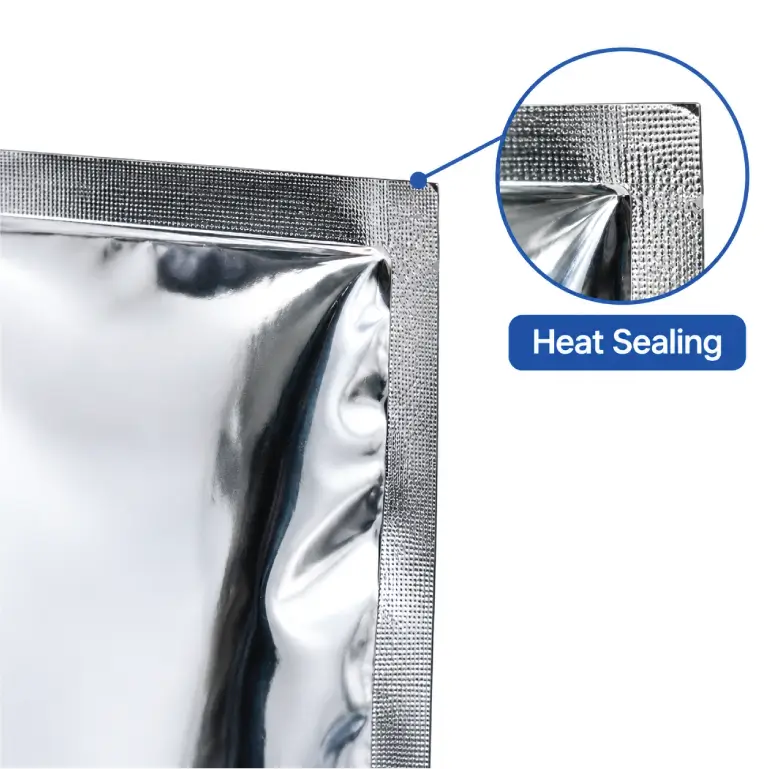
Compare Heat Sealing With Other Closures
The difference between heat sealing and other closure methods further explains why heat sealing matters in popsicle packaging. A hermetic seal is a tightly closed boundary around compatible packaging materials, while an airtight seal refers to a closure with minimal air passage. These formats differ from methods such as a zipper closure, where repeated opening and closing forms part of the design. Let’s dive into Zip Lock Bags For Popsicles and reveal the resealable features suited to individual frozen treats.
The relevance of why heat sealing matters in popsicle packaging becomes clearer when closure methods are compared. A bonded edge remains continuous across the selected seal area, while a resealable closure is designed around repeated access. For single-use frozen treats, a permanently sealed edge creates a straightforward closed format around the product.
Explore Key Benefits Of Heat Sealing
Several benefits explain why heat sealing matters in popsicle packaging. Key advantages include:
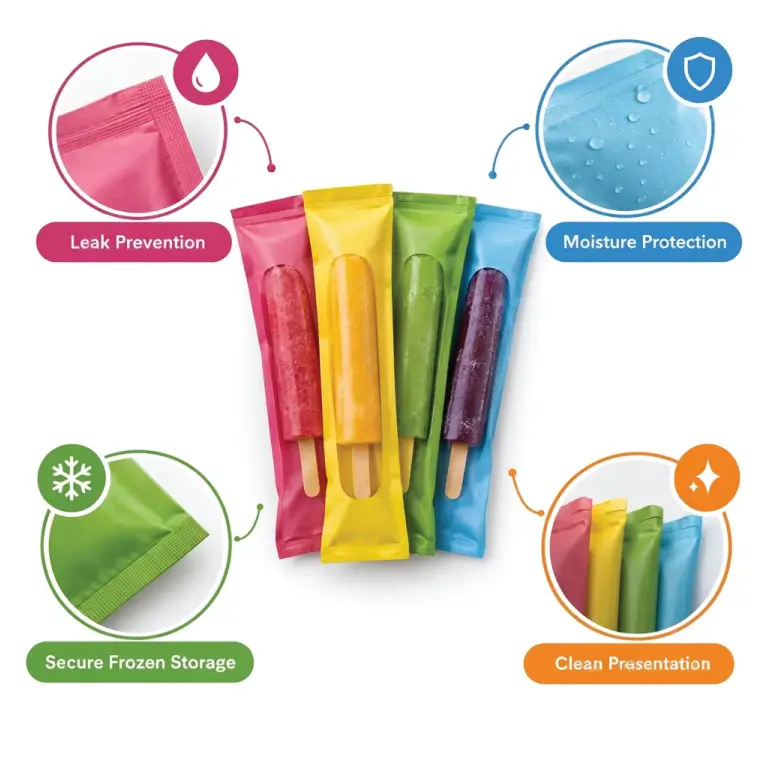
- Leak Prevention: A properly formed seam is created to reduce openings through which melted liquid could escape, keeping the frozen treat more securely enclosed during handling.
- Moisture Protection: A properly sealed surface is used to minimize exposure to external moisture, helping maintain the quality of the product during frozen storage and temperature changes.
- Secure Frozen Storage: A closed seam is formed around the edges of the bag, creating more secure conditions for frozen treats during storage and transportation.
- Clean Presentation: A consistent sealed edge are contributes to a neater presentation of the product, with a uniform appearance maintained across individual frozen treats.
The structure of the material also plays an important role in these benefits. A compatible heat seal layer is bonded with a sealant layer, creating a closed seam, solving the answer of why heat sealing matters in popsicle packaging. Moreover, let’s explore Ice Pop Packaging with proper sealing to find a suitable format for your frozen treats. The explanations are given below:
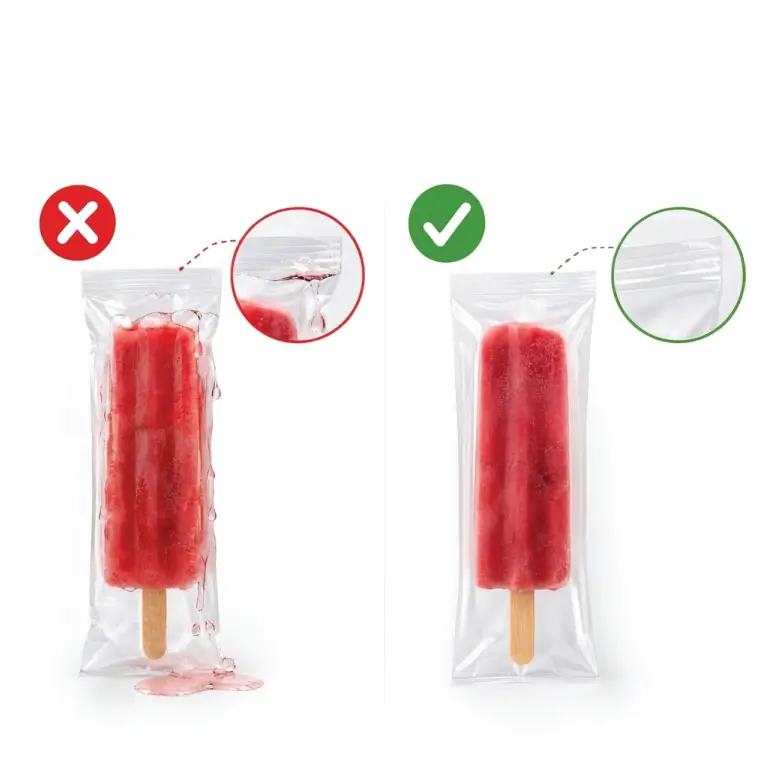
1. Prevent Leaks With Secure Heat Seals
Leakage becomes a concern when melted popsicle liquid reaches an incomplete or weak seam. Why heat sealing matters in popsicle packaging, also include different materials used for selaing. Sealable polyethylene (PE) is commonly incorporated into pouch structures, while LDPE film is suited to flexible Custom Packaging Bags For Food. Compatibility remains important because proper bonding is dependent on the sealing surface, selected production conditions, and equipment surroundings.
The principle behind why heat sealing matters in popsicle packaging also involves suitable film structures. HDPE film, BOPET film, and PET film are incorporated into different structures of material according to required properties. The suitability of each material is assessed according to its sealing characteristics, flexibility, barrier properties, and intended frozen-product application.
“I like the whole package to be good. It’s a rarity that that happens, so I end up not working a lot.” — Robin Wright Penn
2. Protect Popsicles From Freezer Exposure
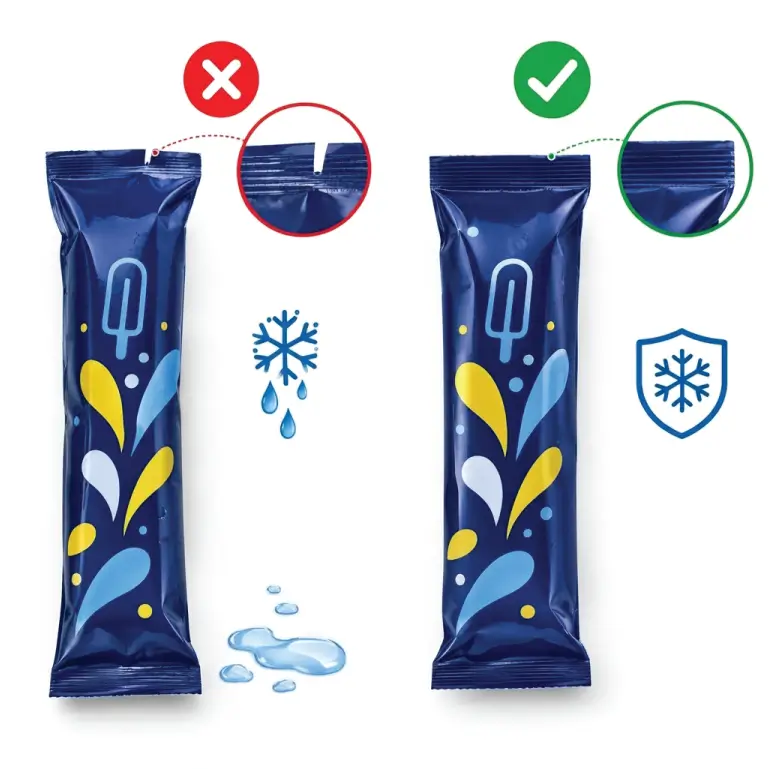
Frozen conditions place particular demands on pouch materials. Laminated film and multilayer film structures are formed with different layers for sealing, strength, and barrier performance. A suitable barrier film in why heat sealing matters in popsicle packaging is incorporated when additional protection from environmental exposure is required during storage and transportation. Selection of material is therefore based on the intended temperature range and storage conditions. Moreover, let’s take a closer look at Plastic Ice Candy Bags and uncover their formats, protective qualities, and design possibilities for frozen treats.
Why heat sealing matters in popsicle packaging is closely linked to moisture barrier and oxygen barrier properties. Heat sealing is used to protect popsicles from freezer exposure by creating an airtight barrier around the product. This barrier is highly effective at preventing freezer burn and moisture loss, which are the main risks of long-term freezer storage.
3. Maximize Customer Satisfaction Through Secure Sealing
Customer satisfaction is influenced by secure closure, neat presentation, and dependable handling. Popsicle bags with properly formed seams remain enclosed during normal storage and distribution. The presentation of the product is also maintained in why heat sealing matters in popsicle packaging when clean edges and secure closures are incorporated across multiple frozen treats. Let’s discover Individual Popsicle Wrappers and explore their custom printing for making an appealing presentation of the product among buyers.
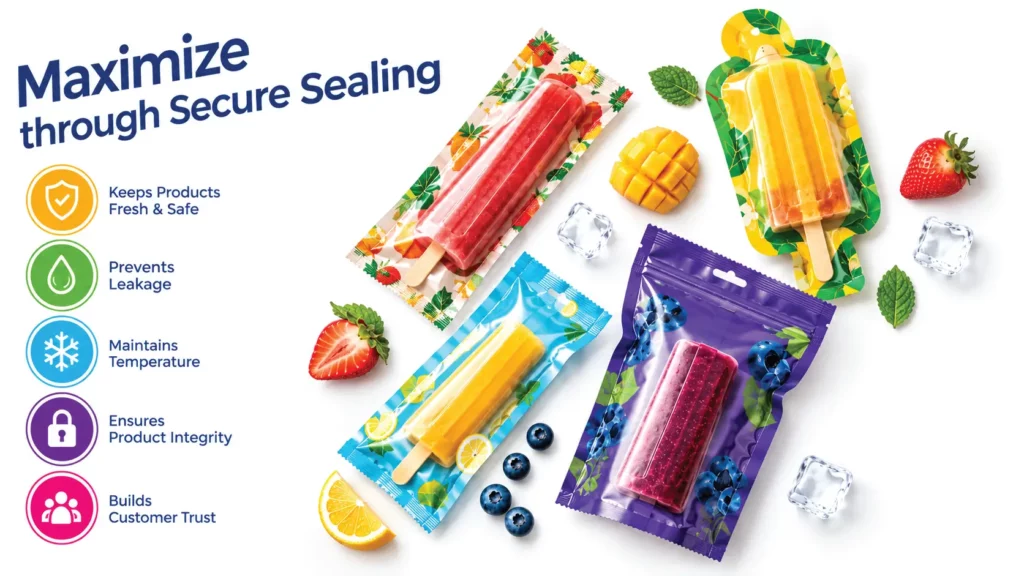
The importance of why heat sealing matters in popsicle packaging extends across ice pop packaging and frozen treat packaging formats. Suitable food-contact materials and food-grade packaging are important considerations, while food safety is addressed through appropriate specifications, controlled production conditions, and applicable regulatory requirements for frozen food products.
Avoid Common Heat Sealing Mistakes
Incorrect equipment may result in weak seams, film distortion, or incomplete bonding. Within a packaging line, inconsistent arrangement may affect multiple pouches. The importance of why heat sealing matters in popsicle packaging extends across ice pop packaging and frozen treat packaging formats. During filling and sealing, product residue near the seam may interfere with proper bonding. Proper alignment and clean sealing surfaces are therefore maintained to achieve more consistent closures throughout a production batch.
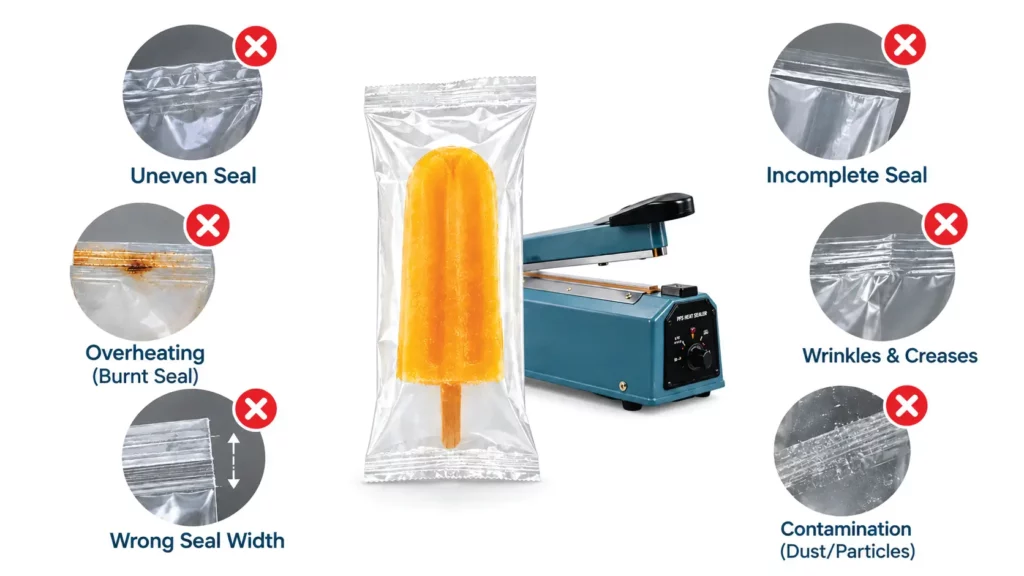
The question of why heat sealing matters in popsicle packaging becomes particularly relevant when quality checks are performed. Temperature control, suitable dwell time, and consistent pressure are associated with dependable bonding. Proper seal width is also maintained according to pouch specifications. Regular inspection is carried out to identify gaps, wrinkles, incomplete bonding, or inconsistent seams. Moreover, do small sealing mistakes affect your popsicle packaging? Explore Common Popsicle Packaging Mistakes To Avoid in detail to discover issues and keep your packaging process more reliable.
Follow Important Heat Sealing Best Practices & Regulations
A consistent sealing process begins with compatible film and clean sealing surfaces of why heat sealing matters in popsicle packaging. Testing is carried out for film compatibility, closure consistency, thickness of material, and the expected storage environment before regular production begins. The reasons why heat sealing matters in popsicle packaging include suitable selection of material and production checks.
Canadian requirements may include applicable provisions under the Food and Drug Regulations, including Division 23 for food-contact packaging, the Safe Food for Canadians Regulations (SOR/2018-108), and the Consumer Packaging and Labelling Act (R.S.C., 1985, c. C-38) together with the Consumer Packaging and Labelling Regulations (C.R.C., c. 417). Where applicable, packaging and environmental claims must also comply with Canadian requirements governing accurate and non-misleading representations. Make a smart choice, reach experts today!
Conclusion
The importance of why heat sealing matters in popsicle packaging is centred on secure closure, leak prevention, freezer protection, and presentation of the product. A properly formed heat seal are made a continuous bonded edge around the pouch, protecting the popsicle enclosed during storage, transportation, and handling. The complete meaning of why heat sealing matters in popsicle packaging also includes the durability of film compatibility and sealing conditions. The universalpackaging offer suitable materials are combined with controlled heat and pressure, form a more dependable closure. These considerations contribute to a cleaner and more consistent popsicle packaging process.
Frequently Asked Questions (FAQs)
Why is heat sealing important for popsicle packaging?
Heat sealing is used to create a closed edge around the pouch, reducing leakage risks and keeping frozen popsicles enclosed during storage, transportation, and handling.
Does heat sealing prevent popsicle leakage?
A properly formed heat seal is used to minimize leakage risks through a continuously bonded edge, with compatible film and suitable sealing conditions maintained. Moreover, as we discussed above in why heat sealing matters in popsicle packaging with proper explanation.
Is heat sealing suitable for frozen popsicles?
Yes, heat sealing is suitable for compatible food-grade films designed for frozen products, with temperature, pressure, and dwell time properly controlled. As we discussed above in why heat sealing matters in popsicle packaging with proper explanation.
What affects the strength of a heat seal?
Film compatibility, temperature, pressure, dwell time, seal width, surface cleanliness, and alignment all influence the strength of the final closure. Let’s explore Ice Pop Boxes and see the styles, printing possibilities, and presentation features suited to different frozen formats.
How does heat sealing affect the presentation of the product?
A neat sealed edge contributes to a cleaner presentation of the product, with a more consistent appearance maintained across individual popsicle pouches during display. As we discussed above in why heat sealing matters in popsicle packaging with proper explanation.
What materials are suitable for heat-sealed popsicle pouches?
Heat-sealable PE, LDPE, kraft, and laminated films may be incorporated, depending on required barrier properties, thickness, frozen storage conditions, and equipment.
Where can custom heat-sealed popsicle packaging be purchased?
Custom heat-sealed packaging of popsicles is offered by Universal Packaging, with options for materials, printing, sizes, finishes, and pouch formats. Let’s discover Popsicle Bags Custom by exploring personalized sizes, printing options, and convenient features suited to different products.
How should heat-sealed popsicle pouches be tested?
Seal samples should be inspected for gaps, wrinkles, incomplete bonding, alignment, and seal strength before regular production and frozen storage.