Could a few simple packaging checks make your popsicle packaging process easier and more reliable? Of course, that’s why you came here to find out the Common Popsicle Packaging Mistakes To Avoid, right? This blog covers common mistakes in all packaging categories like pouches, boxes, sleeves, stickers, and labels. Ignoring these details may threaten the quality and presentation of the product. To know the mistakes, have a look at the article below:
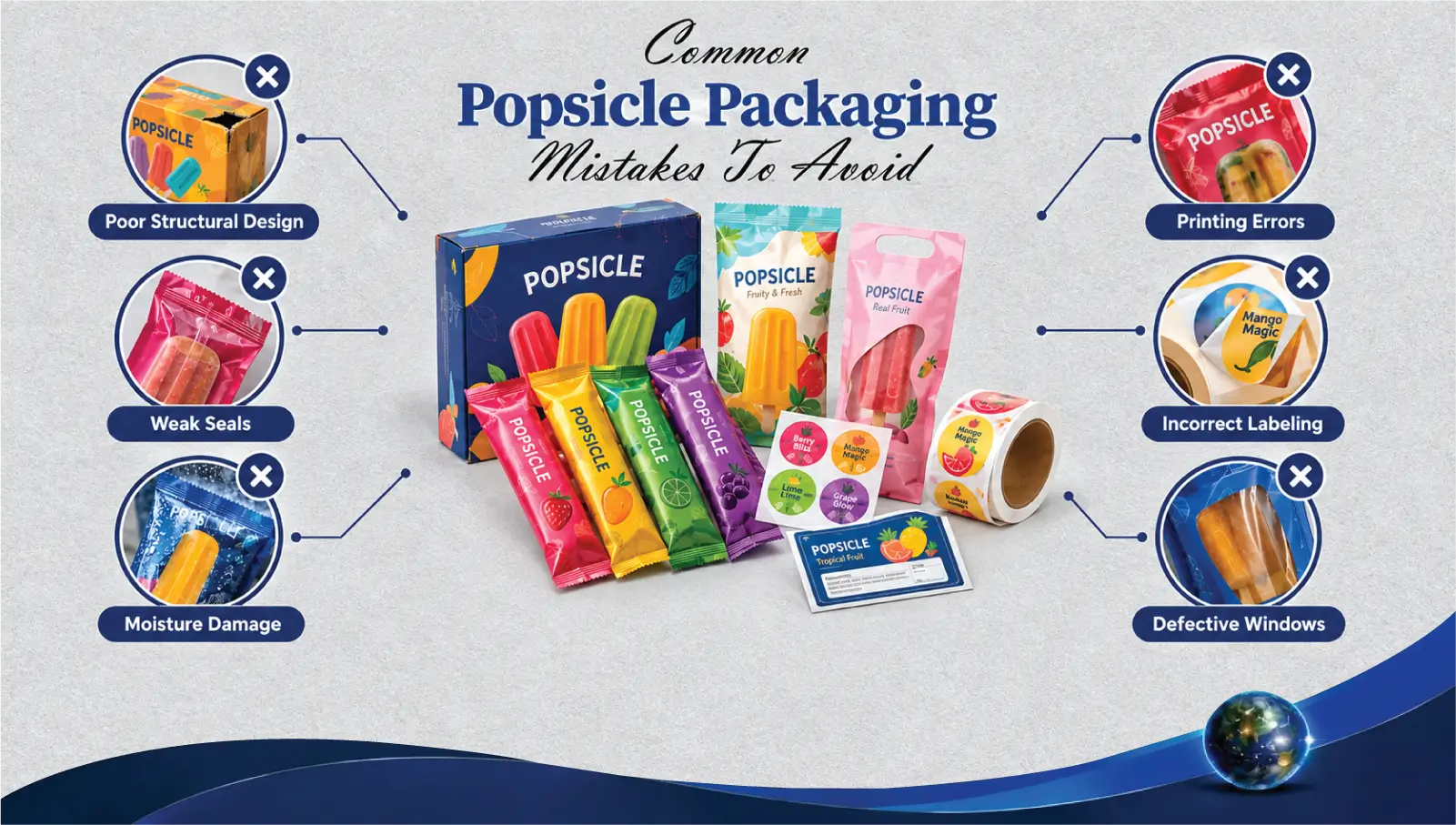
1. Prevent Pouch And Wrapper Packaging Mistakes With Care
Pouches are a practical format for frozen treats, with several details requiring review before production. Common popsicle packaging mistakes to avoid often include incorrect dimensions, unsuitable materials, weak seals, and insufficient filling space in Custom Logo Wrappers. These are as follows:
Prevent Wrong Pouch Size Selection Issues
The size of a pouch should correspond with the dimensions and quantity of the frozen product. Excessive space may affect the presentation of the product, while insufficient space may create filling and sealing concerns. Measurements should be reviewed before production, including width, height, seal areas, and filling volume, so that the proper packaging size and accurate popsicle dimensions are confirmed, along with sufficient popsicle stick clearance for a clean, comfortable hold. A resealable zipper-style closure may also be considered where a pouch is designed for multi-serve use, since overlooking closure options is one of the common popsicle packaging mistakes to avoid for repeat-use pouches.
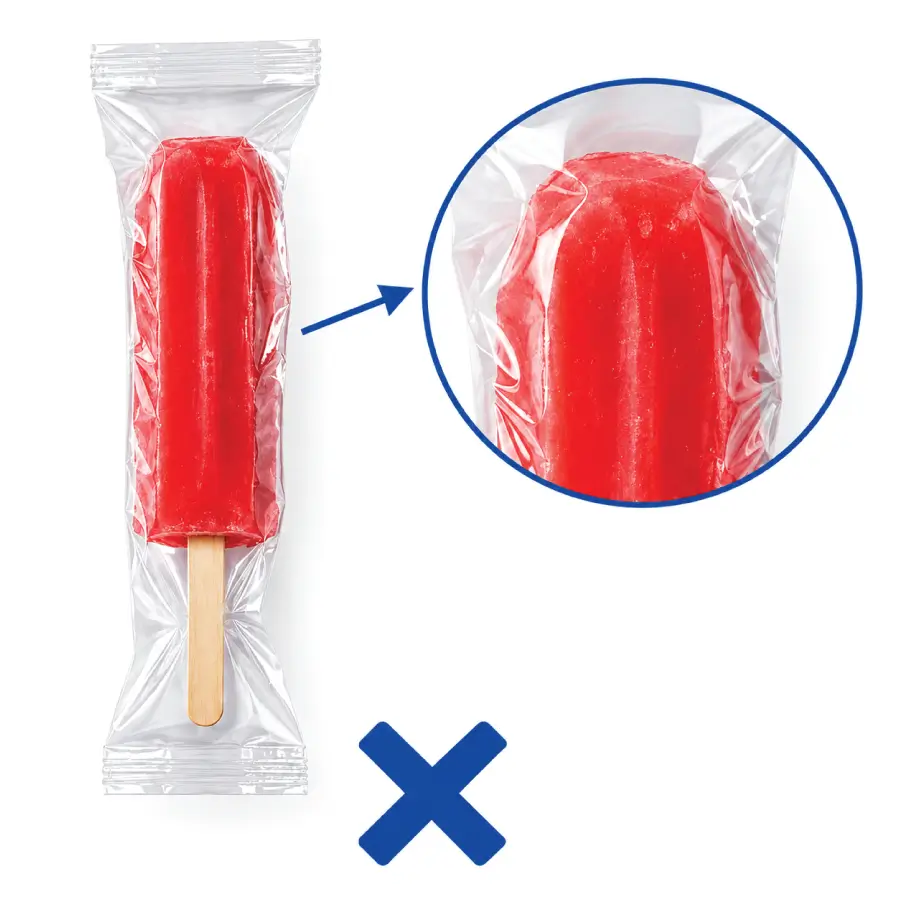
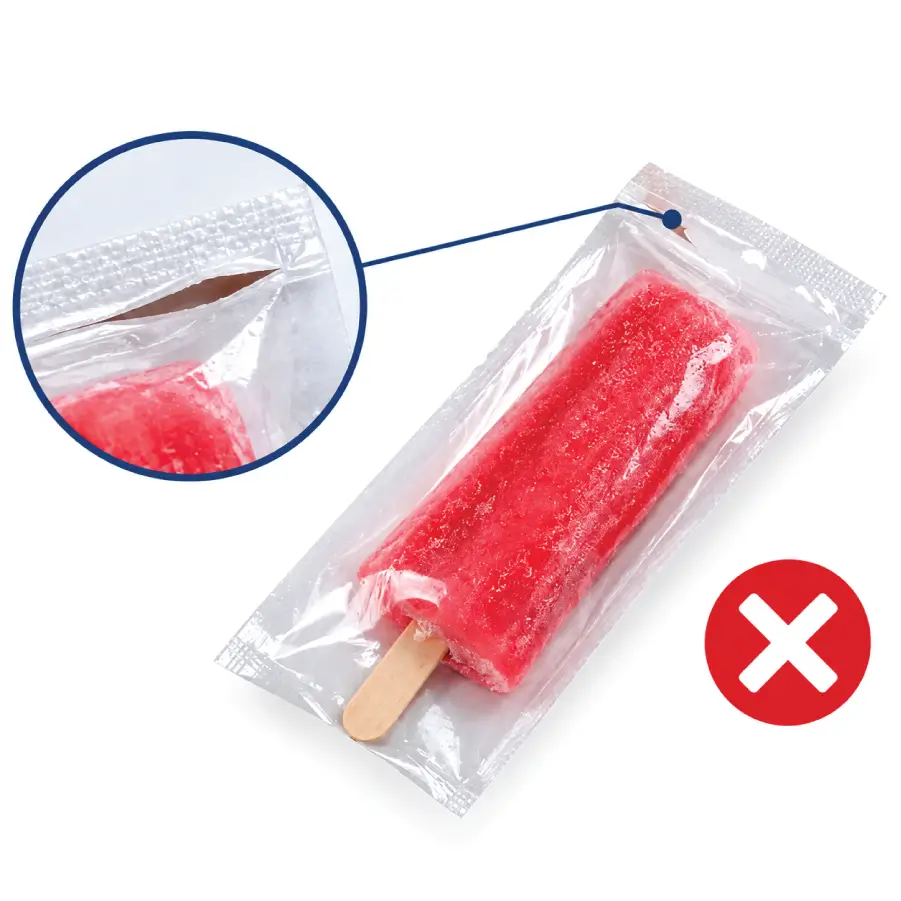
Strengthen Heat Sealing For Freezer Storage
Heat sealing deserves particular attention when frozen products are packaged for storage and distribution. Seal temperature, pressure, and material should be assessed during production testing, particularly when working with a heat-sealable film intended for freezer conditions. Let’s discover Clear Popsicle Bags by looking at their transparent appearance with properly sealed edges and presentation features for frozen treats. Strong and consistent seals are important during the review of common popsicle packaging mistakes to avoid, and a secure seal with confirmed seal integrity should always be tested to help achieve a leak-resistant seal that performs well through freezer storage and handling.
Select Suitable Materials For Freezer Conditions
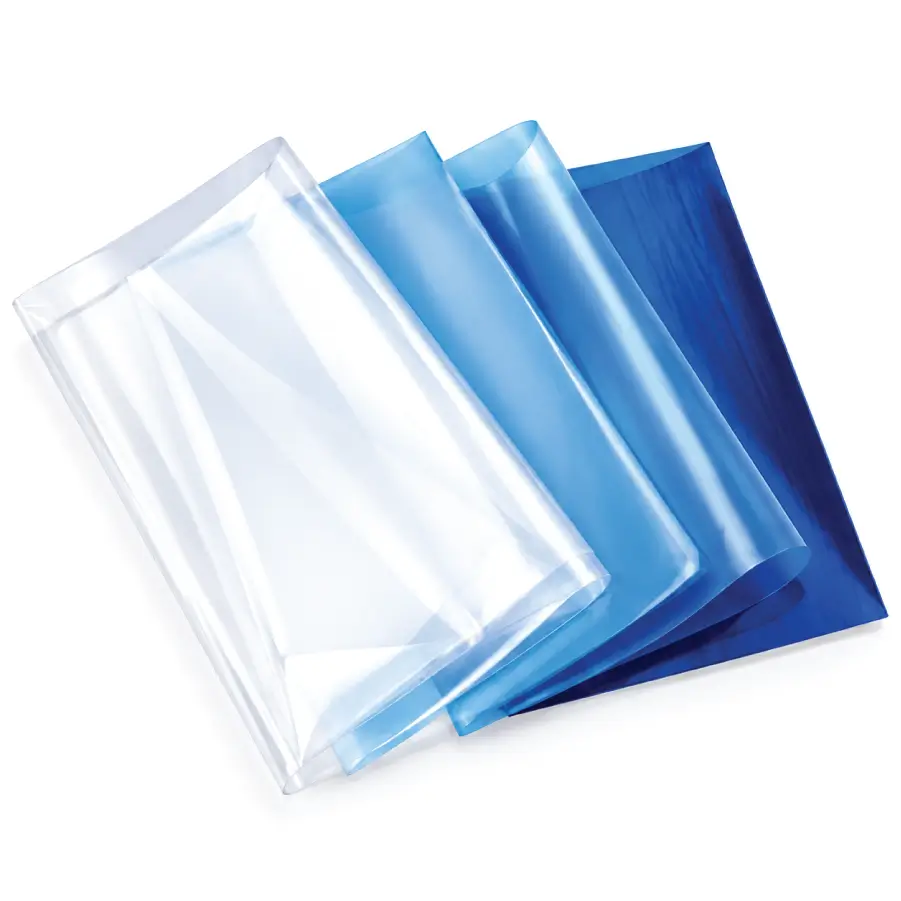
Selection should be based on freezer temperatures, moisture exposure, filling conditions, and expected storage periods. Suitable polyethylene-based structures are commonly considered for frozen food applications, including PE (polyethylene), LDPE, and HDPE films, kraft sometimes combined into a laminated film for added strength and a stronger moisture barrier and oxygen barrier. Material should be reviewed before production so that the packaging remains built from freezer-friendly materials with reliable cold-temperature performance. Let’s explore Wholesale Popsicle Bags and see the freezer-friendly materials and packaging options suited to larger orders.
Maintain Proper Filling Space Inside Pouches
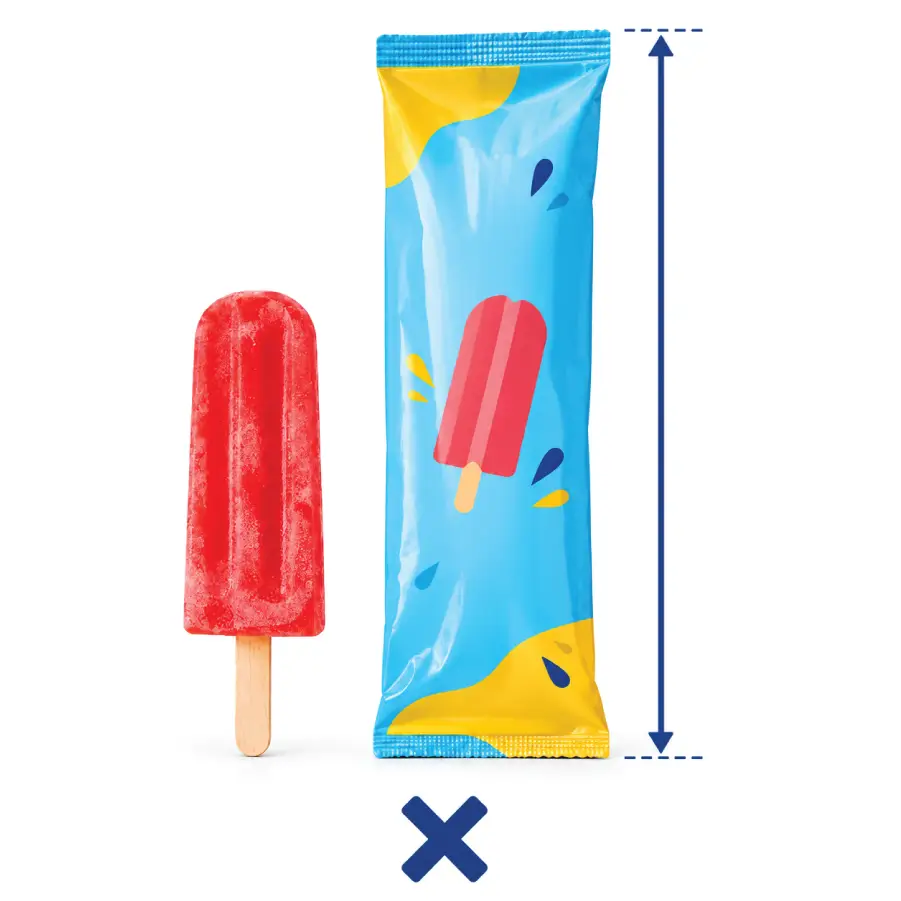
Sufficient filling space should be included between the contents and the sealing area. Overfilling may interfere with sealing, while excessive space may affect the presentation of the product and reduce overall protection. Filling measurements should therefore be established before production to reduce common popsicle packaging mistakes to avoid, and where applicable, a ziplock closure can add consumer convenience for pouches meant to be reopened. Let’s take a closer look at Resealable Popsicle Bags and uncover the closure options and handling features suited to frozen products.
If you get any confusion between the pouches and wrappers, don’t rush too much; have a look at Popsicle Bags Vs Wrappers to make your mind clearer accordingly.
2. Avoid Box Packaging Mistakes Before Finalizing
Boxes are commonly used as an outer format for frozen dessert presentation and for frozen handling during storage and shipping. However, common popsicle packaging mistakes to avoid also include unsuitable dimensions, inappropriate paperboard, and inconsistent printing. Measurements, materials, artwork, and finishing details should be reviewed before production to support a smoother packaging process, and early planning around custom printing helps prevent rework later.
Check Dimensions Before Production Begins
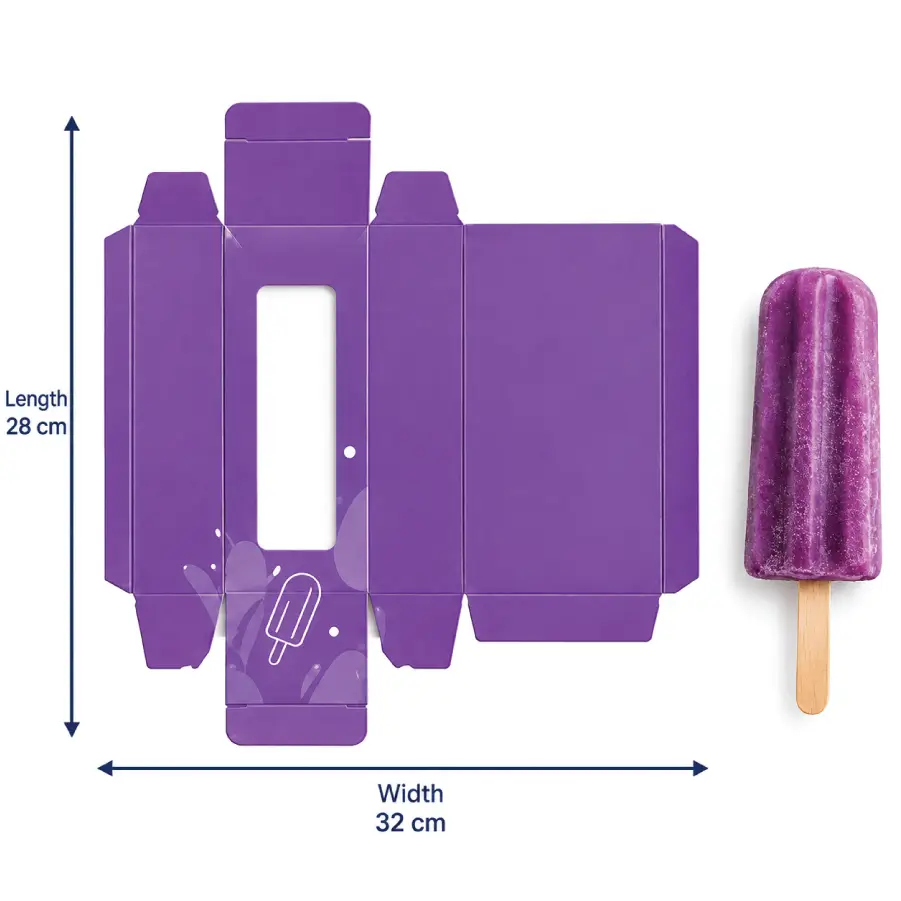
Dimensions of the box should correspond with the packaged product and any internal components. Measurements should include length, width, height, folds, and closure areas. A sample or digital proof should be reviewed before production, particularly when several popsicles are placed inside one box, since incorrect fit is among the common popsicle packaging mistakes to avoid when multiple units share a single carton. Let’s dive into Popsicle Boxes For Packaging and reveal the doable sizes for clearer dimensions for frozen treats.
Choose Suitable Paperboard For Frozen Products
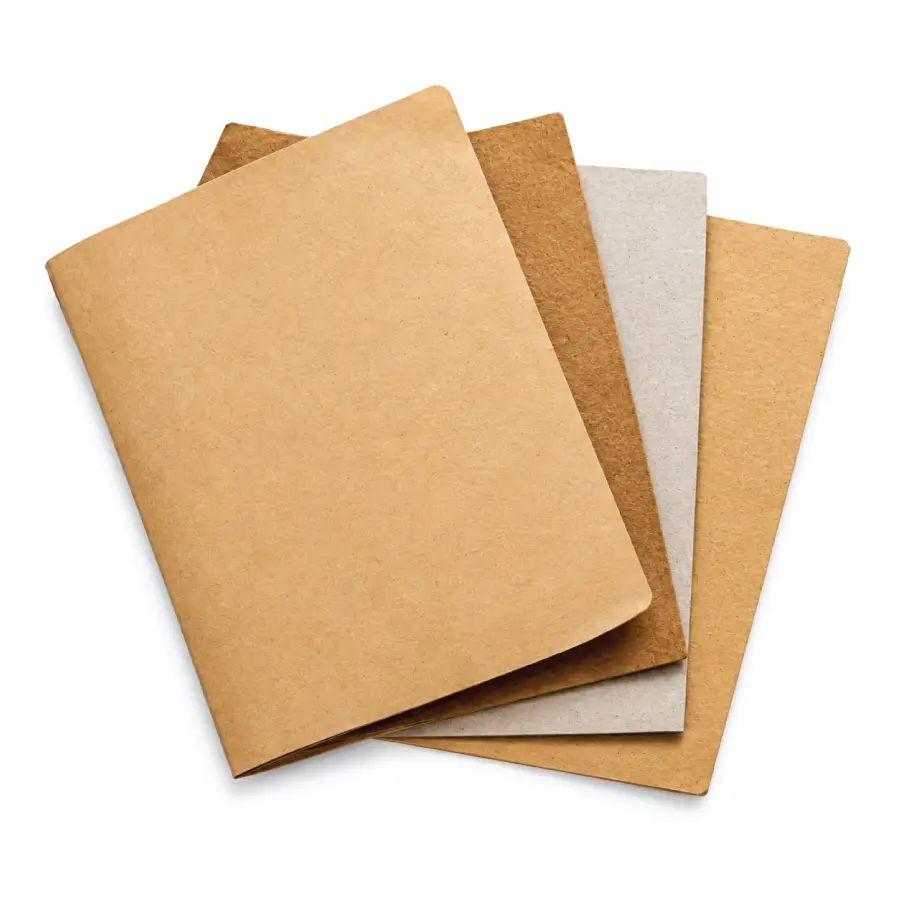
Paperboard selection should be based on the expected storage environment and packaging structure. The correct grade cardboard, thickness, coating, and print surface should be confirmed before production, and lamination options such as BOPP, BOPET, or PET film may be considered for added durability and print protection. Moisture exposure should also be considered, especially when common popsicle packaging mistakes to avoid involve freezer storage conditions, and choosing recyclable packaging where possible supports broader sustainability goals without compromising performance.
Ensure Consistent Printing Quality Across Boxes
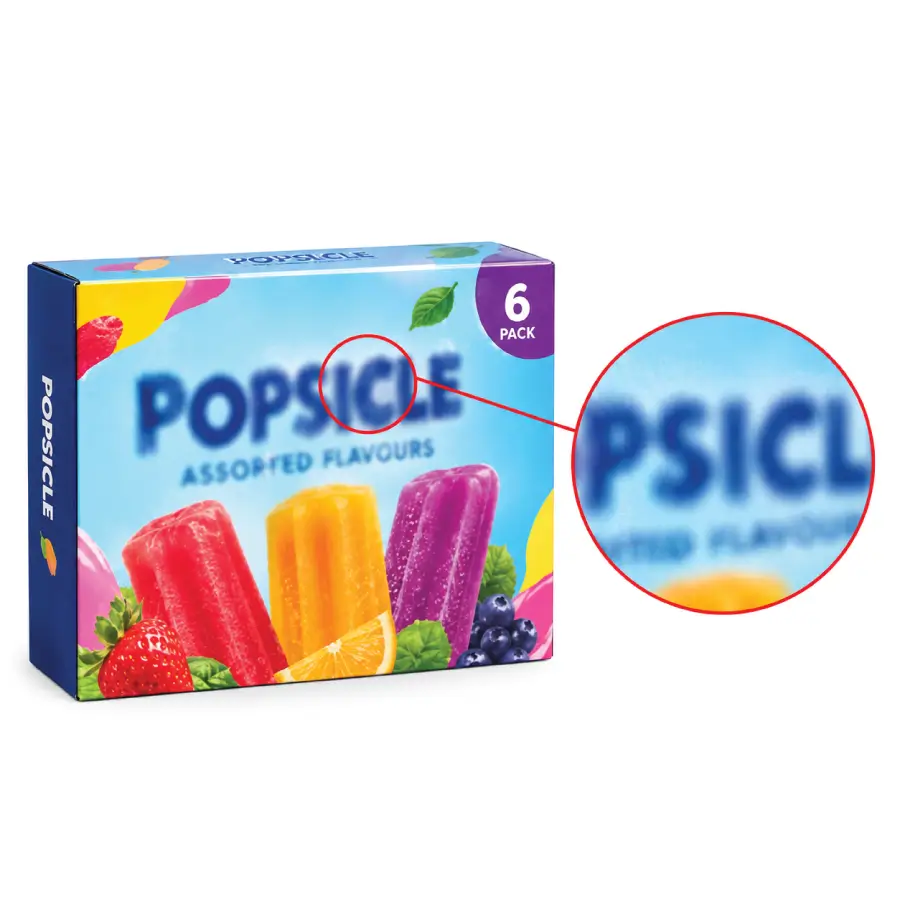
Artwork should be checked carefully before printing begins. Colour accuracy, text placement, logos, ingredient information, nutritional details, and required declarations should be reviewed, along with legible text, clear information, allergen information, and storage instructions so nothing is missed. Consistent print registration is also important for a clean presentation of the product across multiple boxes and production batches, and it directly supports shelf appeal, marketing appeal, shelf visibility, and consumer trust at the point of sale, which is why print quality remains one of the common popsicle packaging mistakes to avoid.
3. Prevent Sleeve Packaging Problems Before Production
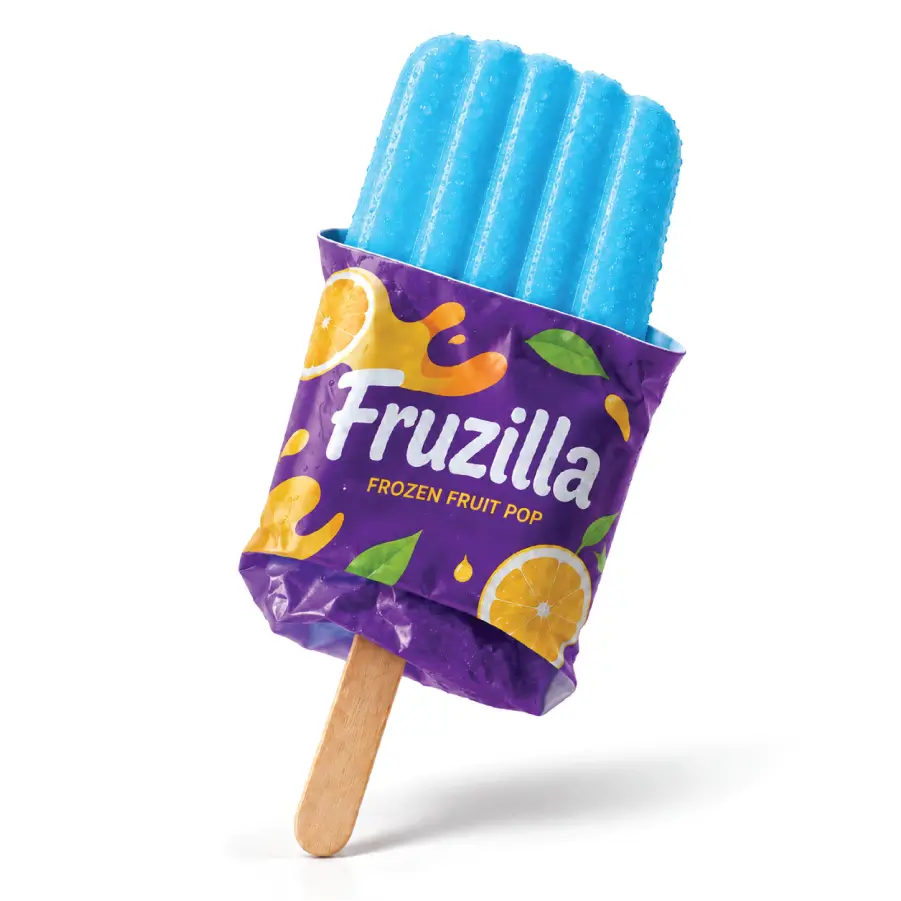
Sleeves are often selected as an outer presentation format for Sleeve Packaging For Food, but sizing and removal should be reviewed carefully. Common popsicle packaging mistakes to avoid include unsuitable fitting dimensions and difficult sleeve removal. Testing should be completed with the actual packaging format before production that resulted common popsicle packaging mistakes to avoid.
Ensure Proper Sleeve Fit Around Packaging
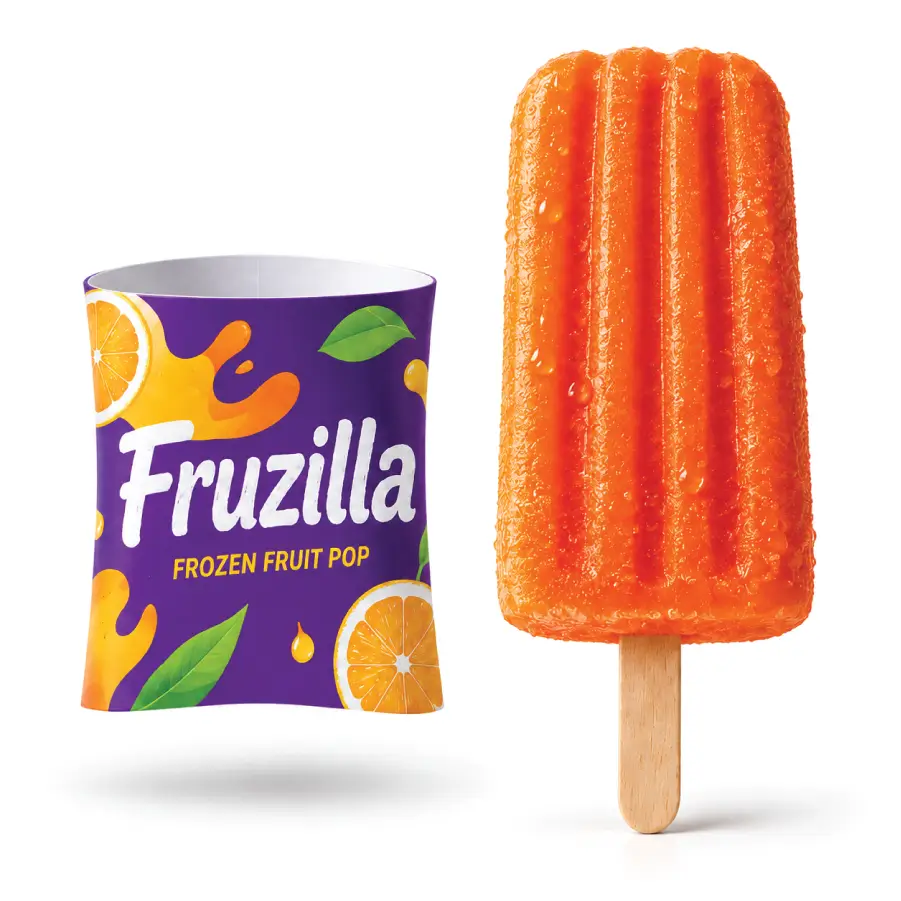
A sleeve should correspond closely with the dimensions of the package beneath it. Excessive looseness may affect the presentation of the product, while a tight fit may make application difficult and interfere with easy opening for the end customer. Sleeve measurements should therefore be tested with the final packaging format before production quantities are confirmed, avoiding one of the more common popsicle packaging mistakes to avoid during scale-up. Let’s check out Sleeves For Popsicles and discover the proper sizes and material choices for frozen treats.
Simplify Sleeve Removal Through Suitable Sizing
Sleeve removal should be considered during packaging development, and a well-placed tear notch can make this step far simpler for the customer. Easy handling is especially useful for frozen products, where cold temperatures may affect flexibility. Common popsicle packaging mistakes to avoid include sleeve dimensions that make removal inconvenient during customer handling or retail presentation.
4. Correct Sticker And Label Packaging Mistakes
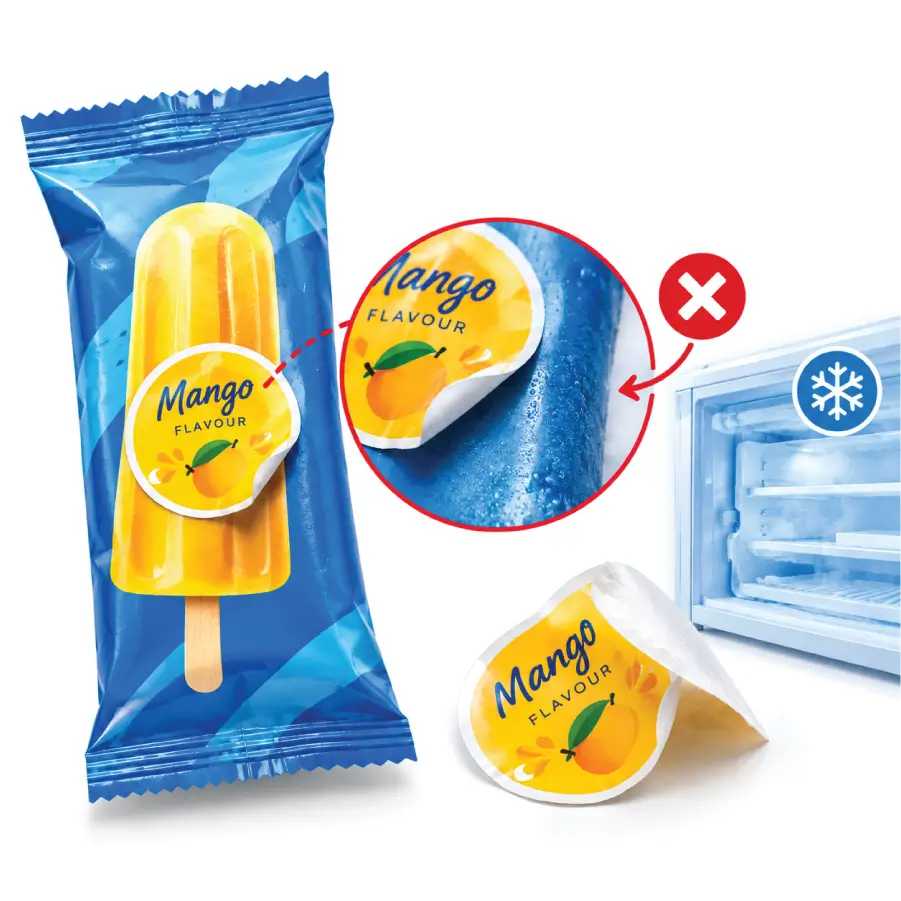
Important product information and visual details are commonly presented through stickers and labels. Common popsicle packaging mistakes to avoid in this area include weak adhesion, unsuitable placement, and poor freezer performance of Frozen Food Packaging Bags. To make sure nothing is missed among the common popsicle packaging mistakes to avoid for stickers and labels.
Strengthen Sticker Adhesion For Freezer Conditions
Sticker adhesion should be tested under the expected freezer conditions before production. Moisture, condensation, temperature changes, and surface material may affect adhesion. Appropriate adhesive specifications should be confirmed through testing, as this is one of the common popsicle packaging mistakes to avoid when it gets skipped. Let’s explore commercial popsicle packaging by looking at custom design options suited to growing frozen dessert brands.
Position Stickers Clearly Across Packaging Surfaces
Sticker placement should leave important information visible and readable. Logos, flavour names, details, and required information should have sufficient space. Common popsicle packaging mistakes to avoid include sticker placement over folds, seals, important text, or areas exposed to frequent handling.
Select Suitable Labels For Freezer Performance
Labels should be selected according to the packaging surface and expected storage environment. Material and adhesive compatibility should be assessed before production of Custom Made Mylar bags. Freezer testing is particularly useful when common popsicle packaging mistakes to avoid involve condensation, low temperatures, or repeated movement during distribution, and it is a helpful step whether the packaging in question is custom popsicle packaging or a standard stock format.
Follow Important Canadian Packaging Requirements Carefully
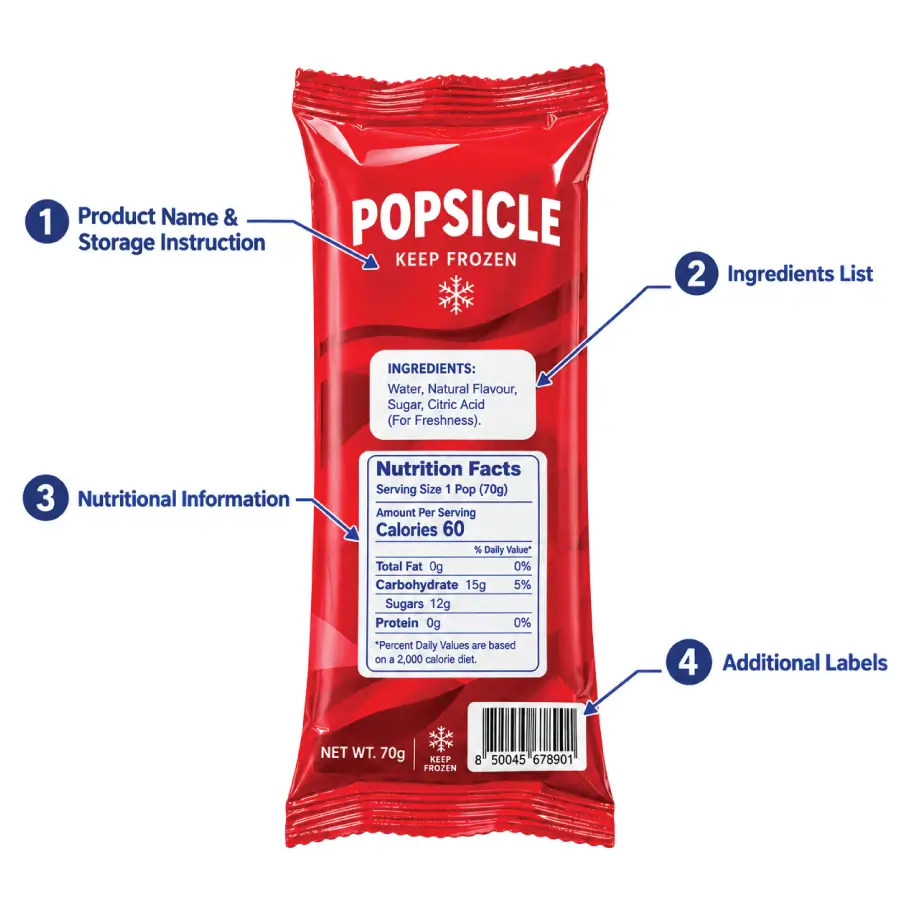
Canadian frozen food packaging should be reviewed against applicable requirements before printing and production. Information such as the name, net quantity, ingredient information, allergen declarations, nutrition information, bilingual labelling, and responsible party details should be presented according to applicable rules. Canadian requirements may include applicable provisions under the Food and Drug Regulations, including Division 23 for food-contact packaging, the Safe Food for Canadians Regulations (SOR/2018-108), and the Consumer Packaging and Labelling Act (R.S.C., 1985, c. C-38) together with the Consumer Packaging and Labelling Regulations (C.R.C., c. 417).
Where applicable, packaging and environmental claims must also comply with Canadian requirements governing accurate and non-misleading representations. Let’s review Food Safe Popsicle Wrappers and understand the suitable materials and food-contact considerations for frozen products. Early review of these details is an important part of avoiding common popsicle packaging mistakes to avoid, while professional regulatory guidance is recommended where specific compliance questions arise. Take action immediately; consult professionals now!
Conclusion
Satisfied packaging planning begins with careful attention to dimensions, seals, freezer materials, sleeve fitting, sticker adhesion, and labels. Common popsicle packaging mistakes to avoid are reduced through careful review before production, including selection, measurements, printing, sealing, freezer testing, and regulatory checks. Whether the format is a pouch, box, sleeve, sticker, or label, every detail should be reviewed according to the requirements of the frozen product. Let’s explore Custom Packaging Solutions Companies by looking at flexible formats, custom printing options, and packaging materials suited to different product requirements. Revisiting the common popsicle packaging mistakes to avoid before each production run remains one of the simplest ways to protect that reputation.
Frequently Asked Questions (FAQs)
What are common popsicle packaging mistakes to avoid?
Common popsicle packaging mistakes to avoid include incorrect sizing, weak seals, unsuitable freezer materials, poor labelling, unclear flavour information, and insufficient packaging testing.
Why is size important for popsicle packaging?
Correct pouch sizing is associated with suitable filling space, appropriate sealing areas, and better presentation of the product, while unnecessary material and handling concerns may be reduced. This is one of the more practical common popsicle packaging mistakes to avoid early in development.
Which materials are suitable for frozen popsicle packaging?
Freezer-suitable polyethylene structures are commonly considered for frozen products, with specifications reviewed according to temperature, moisture, sealing, and storage conditions.
How should popsicle boxes be checked before printing?
Box dimensions, paperboard grade, artwork, colour accuracy, folds, closures, required information, and final measurements should be reviewed before printing begins.
How are sleeve packaging problems prevented?
Sleeve dimensions should be tested with the final package so that suitable fitting, straightforward application, and convenient removal are confirmed during customer handling.
Do stickers work in freezer conditions?
Yes, freezer-compatible stickers are selected according to adhesive performance, surface material, moisture exposure, condensation, and temperature conditions during storage and distribution.
What information should popsicle labels include?
Labels may include names, information, allergen declarations, nutrition information, net quantity, bilingual details, and responsible party information where applicable.
Where can I buy custom popsicle packaging in Canada?
Custom popsicle packaging is offered by Universal Packaging, with pouch, box, sleeve, sticker, and label options for Canadian businesses.
Why should popsicle packaging be tested before production?
Through packaging testing, sizing, sealing, material, adhesion, printing, freezer performance, and handling concerns are identified before larger production quantities are finalized, which is ultimately the point of reviewing the common popsicle packaging mistakes to avoid in the first place.