Many people are already convinced that a sealed pouch alone is what gives freeze-dried food a extend shelf life, yet that confidence is rarely backed by an understanding of what are its benefits & consideration. Mylar Bags For Freeze-Dried Food: Benefits And Considerations are broken down together in this article, since a benefit repeated often enough online starts to sound like proven fact. Scroll through the sections ahead covers both sides in full, starting with what these pouches are actually made of.
What You’ll Learn
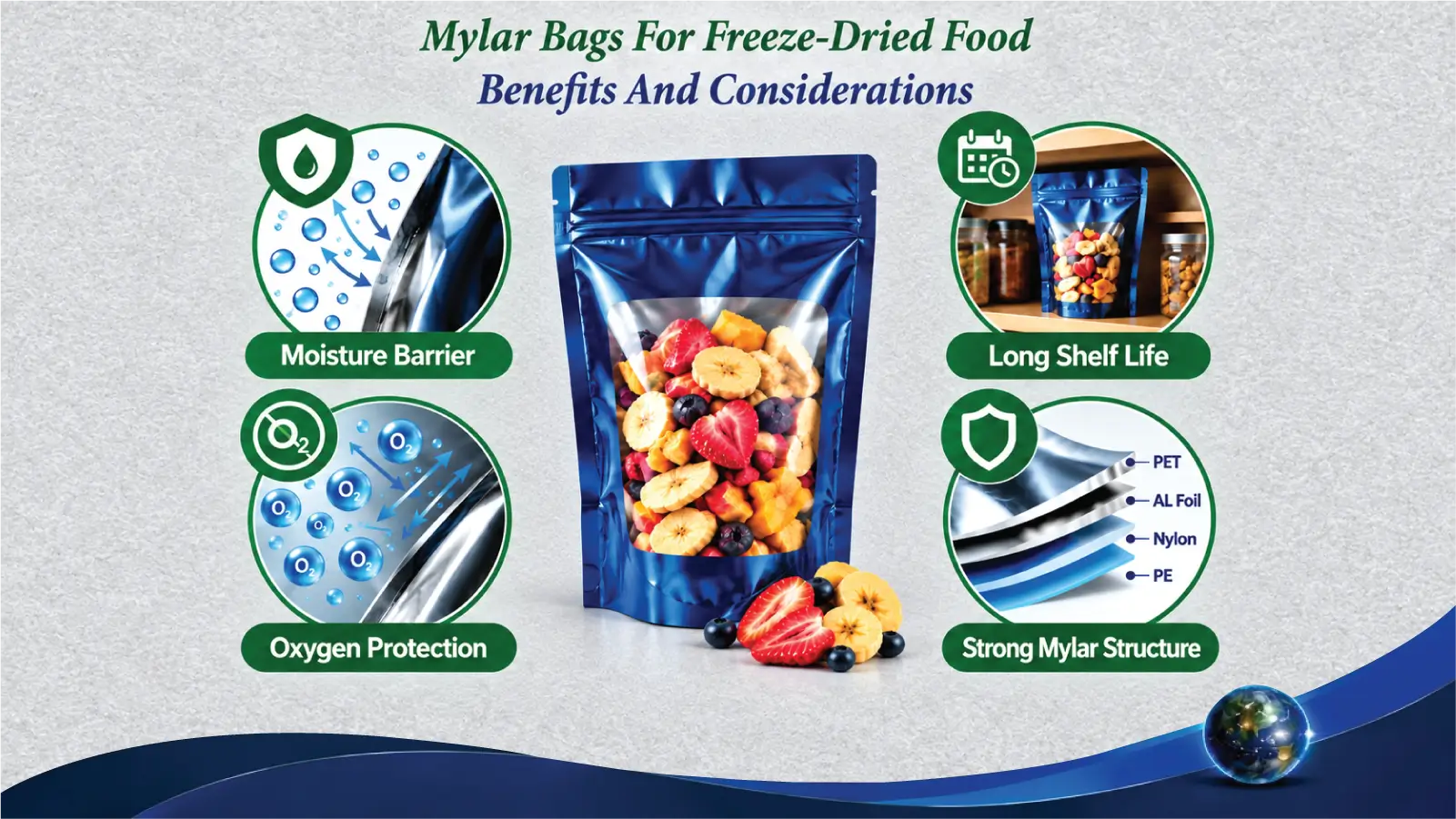
- Core Benefits: How a long shelf life is achieved through light, moisture, and oxygen barrier protection.
- Key Considerations: Limitations tied to reusability and sealing.
- Sealing Technique: Correct mil thickness and oxygen absorber sizing.
- Regulation Numbers: Health Canada and FDA compliance details.
Top Benefits Of Mylar Food Storage
A wide range of advantages is offered once Mylar bags for freeze-dried food are selected for a pantry, a bug-out bag, or a bulk food storage plan, and this is precisely where the benefits side of Mylar bags for freeze-dried food: benefits and considerations is best demonstrated. The following benefits are commonly reported by long-term storage communities:
Light Barrier
Harmful light rays are blocked once food is sealed inside a Mylar pouch, and it is through this blocking that nutrients and flavour are protected from being degraded over time. Vitamin loss and colour fading are both slowed considerably when UV and visible light are kept away from stored contents, which is one of the main reasons an opaque, metallized layer is generally favoured over clear packaging for anything intended for long term storage.
Moisture and Oxygen Barrier
An airtight packaging seal is formed once a Mylar pouch is properly sealed, through which oxidation and spoilage are both significantly slowed. Texture, taste, and nutritional value are all preserved for a much longer period when moisture and oxygen are kept away from stored contents, since both elements are widely recognized as two of the biggest contributors to food breakdown over time.
Long Shelf Life
A storage period of twenty to twenty-five years, and sometimes longer, is achieved once freeze-dried food is properly sealed inside these pouches. That extended timeline is generally reached only when correct mil thickness, a properly sized oxygen absorber, and a cool, dark storage location are all maintained together, rather than through any single factor on its own.
Odour Protection
Smell is neither released outward nor allowed inward once a pouch is sealed, so cross-contamination between stored items is avoided. Strong-smelling foods such as coffee, spices, or dehydrated meats are kept fully separated from milder pantry items through this barrier, a detail that is often appreciated once several different food types are stored side by side on the same shelf.
Protection Against Pests and Rodents
Chewing through the layered material is made difficult for insects and rodents, so the contents remain protected even in storage areas such as basements, garages, or outdoor sheds. Much of this resistance is credited to the Custom Foil Pouch Packaging laminate core, since a density and texture are presented to problems that a plain plastic bag does not offer on its own.
Lightweight Structure
Storage and transport are both made easier once Mylar pouches are chosen over rigid containers, and stacking is achieved with far greater ease when compared with cans or jars of a similar capacity. Extra standing stability for bulkier batches is also found in Gusseted Mylar Bags, where expandable side folds are relied upon for a wider base once a pouch is filled, an advantage particularly valued within pantries and bug-out kits where shelf space is limited.
Cost-Effective Packaging
A lower price point is offered when this option is compared against cans or jars of a similar capacity, largely because less raw material is required per unit of storage volume. Bulk purchasing of freeze-dried food is made more affordable overall once packaging costs are reduced in this way, a factor frequently weighed by larger households and long-term prepping communities alike.
Puncture Resistance
A durable, tear-resistant surface is provided by the outer polyester film (PET) layer, so accidental punctures during handling, stacking, or transport are kept to a minimum. Extra confidence is added to long term storage plans once this resistance is combined with a properly sealed inner layer, since both layers are relied upon together for full protection of the contents.
Moisture protection is one of the most important factors behind the long-term storage of freeze-dried food, yet its role is often overlooked when packaging decisions are made. The effects of humidity and moisture exposure are worth closer attention, since the quality of freeze-dried food is closely connected with a dry storage environment. For a deeper look at this specific concern, further explanation of how freeze-dried food is affected by moisture exposure and why moisture barrier packaging is important for long term storage is offered within Why Freeze-Dried Food Needs Moisture-Barrier Packaging.
Considerations Of Mylar Bags
Even though strong performance is delivered by Mylar bags for freeze-dried food, the considerations side of this topic is just as important, and a few limitations are still worth being understood before a bulk purchase is made:
Oxygen Absorbers Are Required
Reduced effectiveness is experienced whenever oxygen absorbers are left out of a sealed pouch, since residual oxygen is otherwise left behind to slowly degrade the contents. A correctly sized absorber is treated as a non-negotiable step by most experienced preppers, rather than as an optional add-on to the sealing process.
Heat Sealing Consideration
A proper, food-safe seal is only formed once an impulse sealer is used correctly, and a consistent temperature and pressure are both required across the full width of the seal. Uneven or rushed sealing is one of the most common reasons a pouch is later found to have failed, so patience during this step is generally recommended.
Tips Of Sealing In One Look:
- A proper heat seal is formed across the open edge of the Mylar bag, with the sealing area kept clean and free from food particles.
- Consistent heat, pressure, and dwell time are important for forming a secure, continuous seal.
- A second seal can be added above the first seal when extra closure security is required.
- Vacuum sealing or nitrogen flushing may be used before heat sealing when additional oxygen reduction is needed, but these are packaging processes rather than the sealing method itself.
- For meals that require in-package sterilization or reheating, Flexible Retort Pouch Packaging is a more suitable format because retort structures are designed for higher-temperature processing.
- The pouch structure, barrier properties, thickness, and sealing method should be matched with the freeze-dried food and intended storage conditions.
For a closer look at suitable materials, pouch formats, and other practical factors, explore Mylar Bags For Freeze Drying.
Limited Reusability
A weakened seal is left behind once a bag is opened and resealed, so single use is generally recommended for long-term storage. Short-term reuse for dry snacks or non-food items is sometimes still possible, though a fresh pouch is always advised whenever extended storage is being planned again.
UV Protection Is Still Affected by Thickness
Reduced barrier performance is offered by thinner mil ratings, so a minimum thickness should always be confirmed before a bulk order is placed. A range of five to seven mil is generally treated as the safer choice for long-term projects, while thinner options are better suited to short-term or retail use only.
Storage Conditions Are Also Important
A cool, dry, and dark location is required; otherwise, shelf life is shortened considerably regardless of how well a pouch was originally sealed. Basements, closets, and interior pantry shelves are usually favoured over garages or attics, since temperature swings and sunlight exposure are both far more common in the latter locations.
Limited Protection Against Sharp Edges
Tearing is still possible when bones or sharp-edged items are placed inside without extra padding, since a Custom Kraft Stand Up Pouch is not designed to withstand direct puncture pressure from within. A liner, a secondary bag, or careful trimming of sharp items is generally recommended whenever this type of content is being stored.
Recycling Considerations
Difficulty is presented during recycling, since multiple bonded layers are combined within a single pouch, and standard curbside recycling programs are rarely equipped to separate them. Sustainable packaging alternatives are still being developed across the industry, and post-consumer recycled material is increasingly explored by manufacturers as demand for greener options continues to grow.
Household safety is another point worth a mention alongside these drawbacks, since a standard heat-sealed pouch is not built with a child-resistant closure. Where young children are present in a home, Childproof Pouches are generally recommended instead for any items that need to be kept out of small hands.
None of these drawbacks outweigh the core advantages already outlined above; rather, the core advantages already outlined above are not outweighed by any of these drawbacks, and that balance between strength and limitation is precisely why mylar bags for freeze-dried food: benefits and considerations remains a topic worth researching thoroughly before storage begins. The practical steps for avoiding these drawbacks are covered in the next section.
“Customers will occasionally buy products not because they want them but because of how they are presented to them.” — James Clear
Health Canada And FDA Packaging Regulations
Strict regulatory oversight is applied to food packaging across the United States, and a core part of mylar bags for freeze-dried food: benefits and considerations is formed through this oversight. Food contact resins are covered under Title 21 of the Code of Federal Regulations, with polyethylene terephthalate (PET) film addressed under 21 CFR 177.1630 and polyethylene sealant resin under 21 CFR 177.1520, and both provisions are enforced directly by the Food and Drug Administration (FDA). Good Manufacturing Practice requirements under 21 CFR Part 110 are also typically followed during production, since sanitary handling and proper facility controls are treated as part of the same food safety framework.
For businesses moving from food storage research to personalized packaging, the next step is a packaging solution aligned with the needs of the brand. Shelf-ready retail formats such as Custom Printed Stand Up Pouches are frequently chosen at this stage, since branding, resealable features, and shelf appeal are all combined within one format. Explore Custom Packaging For Small Companies for personalized formats, printing, and packaging support. Ready to discuss your requirements? Get in touch today.
“Good things come in small packages.” — Aesop
Conclusion
Within this blog, a complete article on mylar bags for freeze-dried food: benefits and considerations has been covered. Light, moisture, and oxygen protection, alongside a shelf life stretching decades, were shown to be delivered by this packaging format, while sealing technique, oxygen absorber sizing, and storage conditions were shown to be just as important as the material itself.
Frequently Asked Questions (FAQs)
What are Mylar bags used for in food storage?
Mylar bags for freeze-dried food: benefits and considerations are primarily relied upon for long-term food storage, since light, oxygen, and moisture are all blocked at once through their layered construction. Bulk grains, freeze-dried meals, and dehydrated food are among the most common contents packed this way.
How long does freeze-dried food last in Mylar bags?
A shelf life of twenty to twenty-five years, and in some cases even longer, is commonly reported when oxygen absorbers are combined with proper heat sealing. That final number is still greatly affected by storage temperature and light exposure.
Are oxygen absorbers necessary inside every pouch?
Yes, in most cases, a noticeable reduction in shelf life is experienced whenever oxygen absorbers are left out, since the quality of the food inside a sealed pouch continues to be slowly degraded by residual oxygen over months and years. This exact point is one of the most searched considerations within mylar bags for freeze-dried food: benefits and considerations.
What thickness of Mylar is recommended for long-term storage?
A range of five to seven mil is generally recommended for long term food storage, while thinner options closer to four mil are usually reserved for short term retail packaging of snacks or coffee, a detail covered fully within this guide.
Is custom printing offered for personalized Mylar pouches?
Yes, custom printing, screen and UV printing, along with full branding and packaging design support, are commonly offered by suppliers for private label packaging, resealable zipper pouches, stand-up pouch formats, and flat Mylar pouch styles alike. Businesses working across several product lines at once often turn to Flexible Pouch Printing services specifically, since short runs and varied artwork are accommodated more easily through that route.
Are Mylar bags recyclable or environmentally friendly?
Limited recyclability is currently offered, since multiple bonded layers are combined within one pouch, though recyclable packaging alternatives, post-consumer recycled (PCR) material, and extended producer responsibility (EPR) programs are being explored more widely as demand for sustainable packaging grows.
What other pouch styles are offered besides flat Mylar bags?
A wide range of formats is offered across the industry, including gusseted Mylar bags, childproof pouches, custom kraft stand-up pouches, Custom Printed Stand Up Pouches, flexible retort pouch packaging, BOPET packaging bags, and custom foil pouch packaging for the varied needs of the product.
Where are custom Mylar bags near me purchased for food storage?
Universal Packaging is a trusted source for Custom Mylar Bags Near Me, with Custom Food Bags And Pouches and flexible pouch printing offered alongside personalized options for emergency preparedness, bulk food storage, and everyday food storage bags alike, and this full guide to mylar bags for freeze-dried food: benefits and considerations is rounded out with these final details.