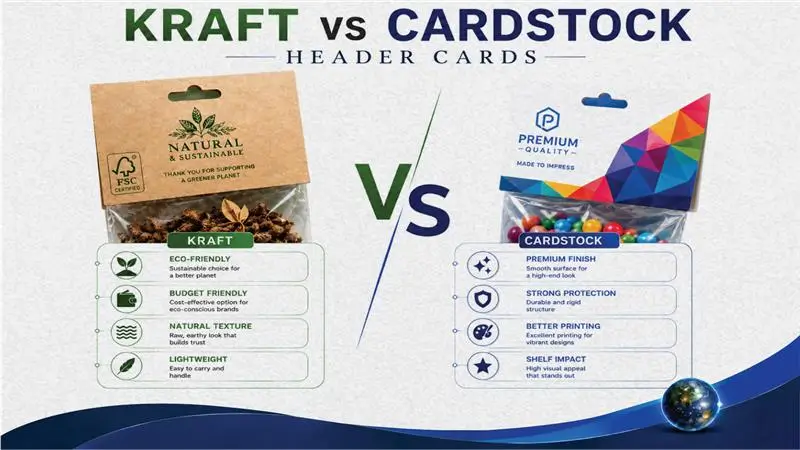
Have you ever picked up a product and wondered why this header card felt so different from another one on the same shelf? The answer often comes down to one simple choice: Kraft Vs Cardstock Header Cards. This decision quietly shapes how a product is perceived before it is even touched. While both materials are widely selected for custom packaging, different advantages are associated with each option depending on the goals of the business. Scroll down to discover which material deserves a place in your packaging strategy.
What Are Header Cards Used For?
Header cards are widely used in retail displays to attach small products to hooks or pegs, most commonly with poly bags. Important information such as logo printing, a barcode, details, and promotional messages is usually printed on these cards because limited space is offered on the product itself. For bakery packaging, a Cookie Bag Topper Template is often prepared before printing so that consistent branding and information are maintained across multiple product batches.
Different industries rely on header cards for both branding and merchandising purposes. A hang hole, including the popular Euro slot, is often incorporated so that products are displayed neatly on retail fixtures. Since kraft paper and cardstock remain the two most common choices, kraft vs cardstock header cards are often compared before a final material is selected. The differences between the two materials are explained below.
Kraft Header Cards: Materials, Benefits & Limitations
For brands that value sustainability and a natural appearance, kraft header cards are often selected as a preferred option. Within the comparison of kraft vs cardstock header cards, this material is frequently preferred because of its rustic finish, dependable strength, and environmentally responsible appeal. Before a final material is selected, the key features, benefits, and limitations are worth considering.
1. Material & Texture of Kraft Header Cards
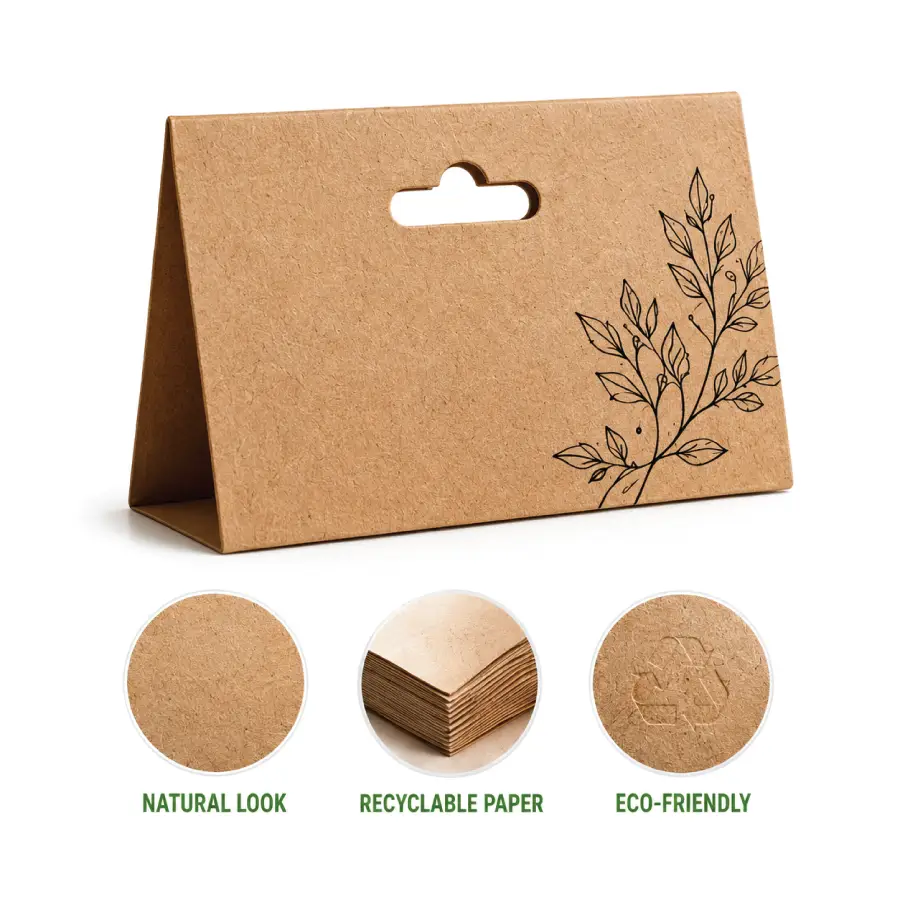
Kraft header cards are generally manufactured from brown kraft or other forms of recycled paper, resulting in a natural appearance that appeals to environmentally conscious consumers. A durable form of paperboard is commonly selected for this purpose because reliable strength is maintained while an organic look is presented.
A lightly textured surface is usually noticed, and a handcrafted appearance is achieved without excessive finishing treatments. Similar branding objectives are also achieved through Custom Kraft Paper Hang Tags, particularly when a natural packaging style is preferred for handmade or eco-friendly products. Within the ongoing comparison of kraft vs cardstock header cards, the natural character of Kraft material is often highlighted first because a stronger connection with buyers who value sustainability is established through its appearance.
2. Benefits of Kraft Header Cards for Eco-Friendly Brands
Within the comparison of kraft vs cardstock header cards, luxury retail products are frequently paired with cardstock because excellent print quality is consistently achieved. Clear graphics and vibrant colours are maintained across industries such as cosmetic packaging, gift packaging, and other forms of premium packaging. A polished appearance is achieved through quality printing, while improved recognition of the brand is supported through consistent visuals. Greater customer engagement is also encouraged when a QR code is included. Distinctive shapes are frequently created through die-cut header cards, improving shelf visibility.
Key Benefits:
- Natural appearance: An authentic look is achieved, making this material well-suited for handmade products.
- Eco-friendly choice: Greater sustainability is supported through responsible production practices.
- Affordable option: Lower production costs are generally achieved compared with many premium alternatives.
3. Limitations of Using Kraft Header Cards
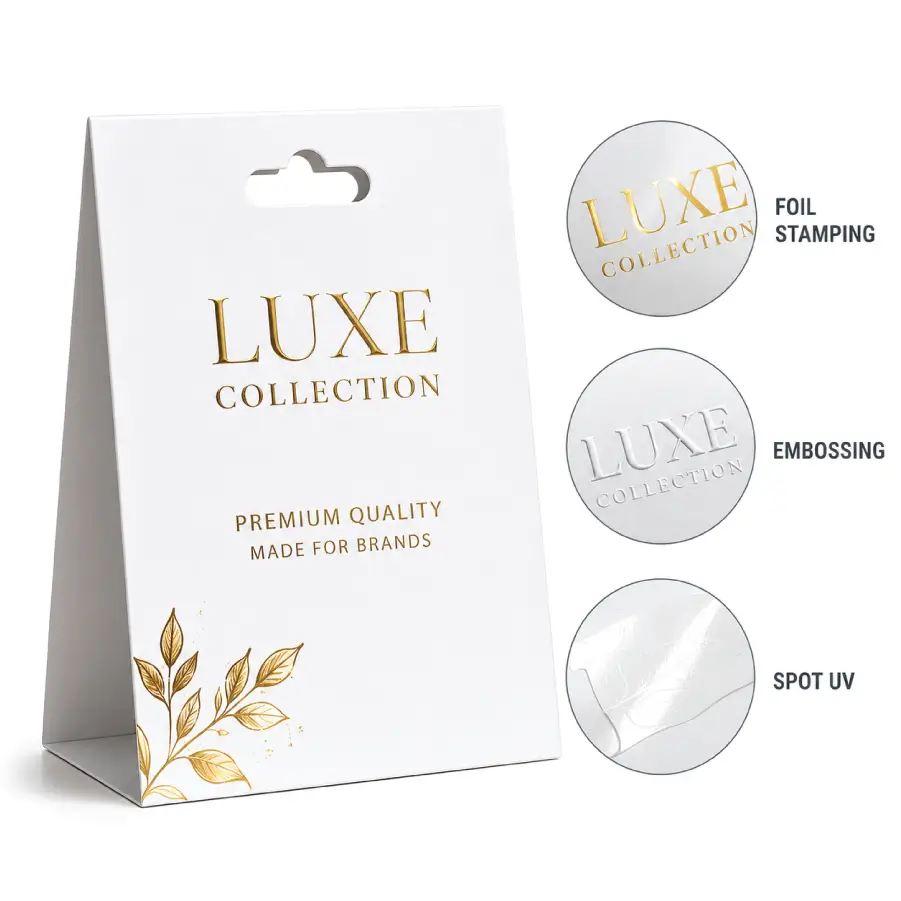
Certain limitations are also associated with kraft material, particularly when bright colours and highly detailed graphics are required. Since a natural brown surface is used as the printing base, maximum colour vibrancy is not always achieved. As a result, complex artwork may appear softer than expected. Decorative finishes such as spot UV, foil stamping, and embossing are offered, but the visual impact is generally more subtle than it appears on brighter surfaces. Within the comparison of kraft vs cardstock header cards, kraft is usually selected when sustainability receives greater priority than premium visual presentation.
“Recycling, packaging, businesses are changing all of those things because that’s what consumers want.”
Jerry Greenfield
Cardstock Header Cards: Materials, Benefits & Limitations
When branding and vibrant printing receive greater priority, cardstock is frequently selected. A smoother surface, greater print clarity, and a wider variety of finishing options are associated with this material. The following sections explain why cardstock remains a popular choice across many retail industries.
1. Material & Finish Options in Cardstock Header Cards
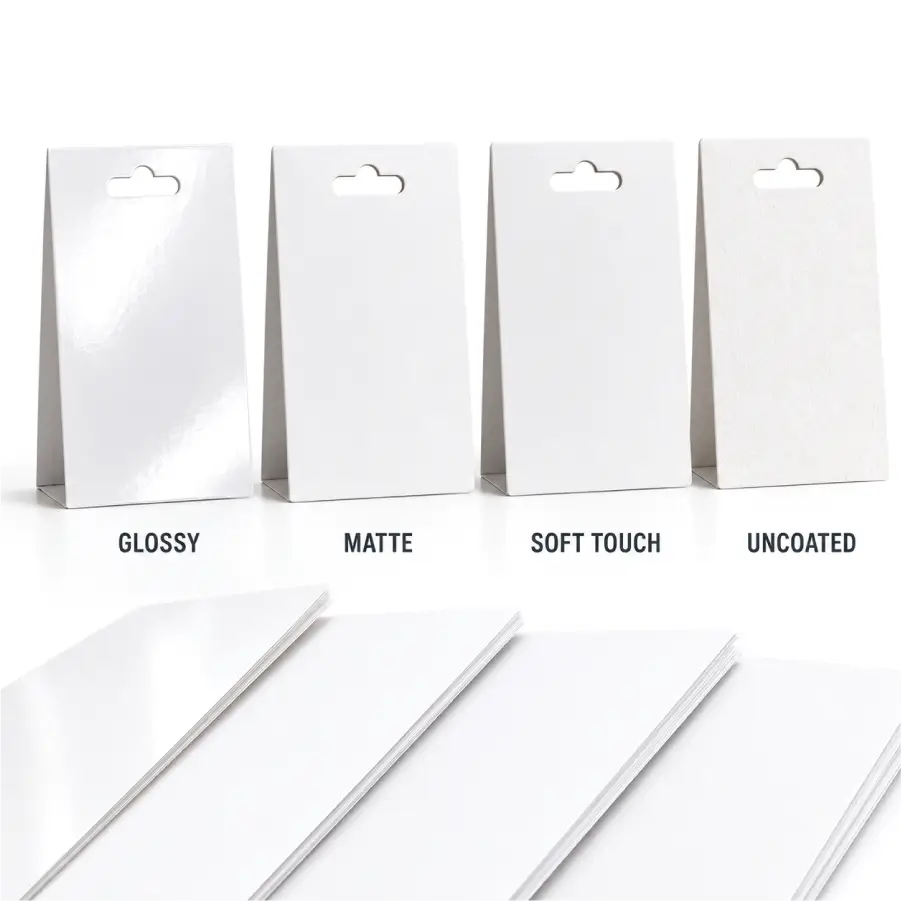
Cardstock is manufactured in several grades, including white cardstock, coated cardstock, and uncoated cardstock, resulting in different branding objectives to be addressed through appropriate material selection. A smooth surface is provided, and sharper image reproduction is achieved during printing.
Different finishing techniques are also offered. A matte finish is often selected when an elegant appearance is preferred, while a gloss finish is frequently chosen when brighter colours and stronger shelf impact are desired. High-quality CMYK printing is commonly applied so that accurate colour reproduction is maintained throughout production.
2. Benefits of Cardstock for High-Quality Branding
Within the comparison of kraft vs cardstock header cards, luxury retail products are frequently paired with cardstock because excellent print quality is consistently achieved. Clear graphics and vibrant colours are maintained across industries such as cosmetic packaging, gift packaging, and other forms of premium packaging.
A polished appearance is achieved through quality printing, while improved recognition of the brand is supported through consistent visuals. Greater customer engagement is also encouraged when a QR code is included. Distinctive shapes are frequently created through die-cut header cards, improving shelf visibility.
Key Benefits:
- Superior print quality: Brighter colours and sharper graphics are consistently achieved.
- Premium finishing: High-end decorative effects are offered for luxury branding.
- Professional presentation: Stronger shelf appeal is achieved in competitive retail environments.
3. Limitations of Cardstock Header Cards
A higher investment is generally associated with cardstock, particularly when premium finishing techniques and specialty coatings are selected. Greater processing is involved during manufacturing compared with kraft material, so a stronger eco-friendly impression is not always achieved.
Within the kraft vs cardstock header cards comparison, cardstock is often selected when premium branding receives greater priority than maximum sustainability. After both materials have been reviewed individually, a direct comparison is presented below for easier evaluation.
Explore other options in various Header Card Materials to find the right balance of durability, print quality, and visual appeal for your packaging.
Kraft Vs Cardstock Header Cards: Print Quality, Durability & Cost Compared
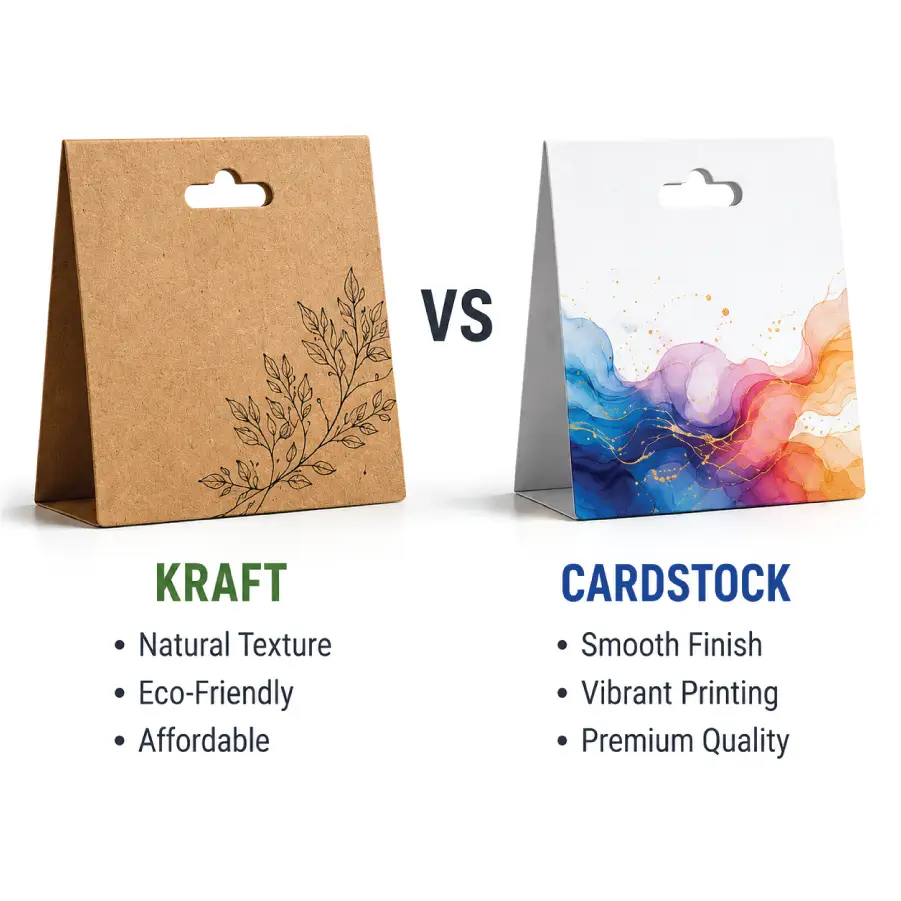
When kraft vs cardstock header cards are compared side by side, differences become easier to understand. Material selection is usually based on print quality, durability, environmental goals, and budget. A quick comparison is provided below to simplify the decision-making process.
| Feature | Kraft Header Cards | Cardstock Header Cards |
| Surface Finish | Natural, textured | Smooth, coated, or uncoated |
| Print Quality | Softer, natural colours | Bright, high-definition colours |
| Durability | Strong natural fibres | Strong, depending on paper weight |
| Cost | Generally lower | Slightly higher |
| Sustainability | Excellent | Moderate to high |
| Best Suited For | Eco-friendly and handmade brands | Premium retail and branded products |
If the difference between header cards and bag toppers is still unclear, Header Cards Vs Bag Toppers: What’s the Difference? Explains how both packaging styles differ in purpose, design, and retail applications.
Which Header Card Material Is Right for Your Brand?
A final decision is often guided by three factors: the type of product being packaged, the target audience, and long-term sustainability goals. When kraft vs cardstock header cards are evaluated for handmade, organic, or artisanal products, kraft is generally recommended, since an authentic, natural appeal is preferred by that audience. On the other hand, when premium retail or cosmetic items are involved, cardstock is usually favoured, as sharper visuals and a more refined presentation of the product are expected by buyers in that segment.
For products packed in clear bags, Bags Topper is also frequently selected when additional branding space and a professional presentation of the product are required. Since every brand has different needs of the brand, a personalized recommendation is always encouraged before an order is placed. Custom options are covered in detail just ahead.
“Packaging can be theater; it can create a story.” — Steve Jobs
Custom Kraft & Cardstock Header Cards Order Today
Different packaging requirements are addressed through personalized customization options, whether kraft vs cardstock header cards is the preferred choice, ensuring that the desired appearance and presentation are achieved.
Custom Options:
- Material choices: Fully personalized header cards are offered in both kraft and cardstock to match different packaging requirements.
- Customization: Custom sizes, unique shapes, professional printing, and premium finishing options are offered so that the exact requirements of the project are achieved.
- Expert support: Assistance is provided throughout material selection, artwork preparation, and production planning to ensure consistent quality of the product and an outstanding consumer experience.
- Reliable production: High production standards are maintained from the first proof through final delivery so that professional results are consistently achieved.
Ready to upgrade your product packaging? Explore our Custom Packaging Calgary solutions and find the right option for your business. Contact today.
Conclusion
This guide explored every major difference between kraft vs cardstock header cards, including material composition, print quality, durability, finishing options, sustainability, and overall cost. Kraft was presented as the preferred option for businesses that value natural appearance and environmental responsibility, while cardstock was presented as the preferred choice for premium branding and high-quality printing. A detailed comparison was provided so that an informed purchasing decision is supported without unnecessary confusion. By matching the material with the goals and requirements of the brand, greater success is achieved in both presentation and long-term branding.
Frequently Asked Questions (FAQs)
What is the main difference between Kraft vs Cardstock Header Cards?
Kraft is recognized for its natural, textured surface, while cardstock is recognized for a smoother finish and sharper printing.
How is the right material chosen between Kraft vs Cardstock Header Cards?
The right material is usually chosen based on brand style, budget, and the level of print detail required for the presentation of the product.
Which material is considered more eco-friendly?
Kraft is generally considered more eco-friendly, since recyclable and biodegradable fibres are used in its production.
Is cardstock more expensive than kraft?
A slightly higher cost is usually associated with cardstock, particularly when coated or specialty finishes are selected.
Which option is better suited for vibrant, colourful printing?
Cardstock is better suited for vibrant printing, since bright, accurate colours are reproduced with greater consistency on its surface.
Are Kraft vs Cardstock Header Cards suitable for every product type?
Both are suitable for different product types; kraft is favoured for organic and handmade goods, while cardstock is favoured for premium and retail items.
Where should Kraft vs Cardstock Header Cards be purchased from?
Universal Packaging is recommended as a trusted source, since a wide range of custom kraft and cardstock header cards is offered there with reliable quality and timely delivery.
Is personalized customization offered for header cards?
Yes, full customization is offered in Universal Packaging, including size, shape, finish, colour, and printing style, so that specific requirements of the brand are met.