Chocolate is often judged long before its flavour is experienced. The first impression is formed through the packaging, where material, colour, size, and presentation all play a part. A well-informed choice at this stage influences the protection of the product, the perception of the brand, and the customer’s buying decision. This guide explains How To Choose The Right Chocolate Packaging by covering every factor that deserves attention.
A Quick Look Ahead
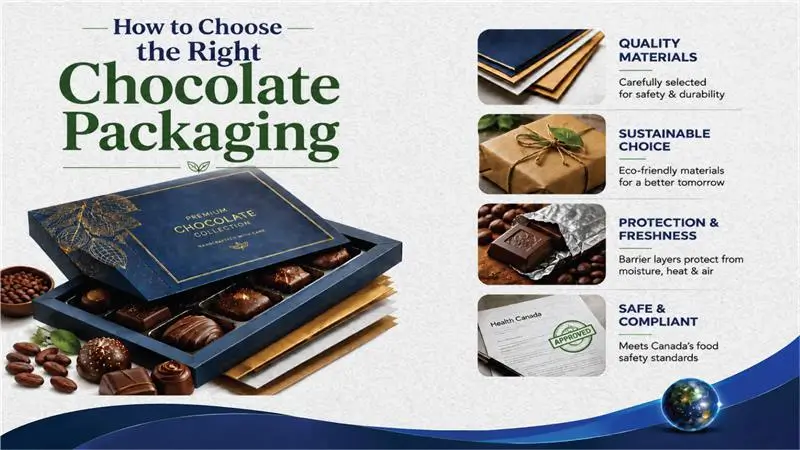
A quick look at how to choose the right chocolate packaging is offered below:
- Purpose: why protection, preservation, and promotion are combined.
- Materials: foil packaging, kraft paper packaging, BOPP film, PET film, and flexible packaging options.
- Size and shape: correct fit and proportion for every format.
- Heat protection: insulation and damage prevention during transit.
- Freshness: shelf life extension through barrier and sealing choices.
- Regulations: Canadian compliance numbers and certifications.
- Branding and design: logo placement, colour, and recognition of the brand.
- Printing: foil stamping, embossing, screen and UV printing.
- Customization: personalization, QR codes, and seasonal formats.
- Sustainability: eco-friendly and recyclable packaging routes.
- Cost: balancing budget against quality.
- Target market: matching packaging to the intended audience.
Understanding The Purpose Of Chocolate Packaging
Before a single material is picked, the purpose behind chocolate packaging has to be understood first. Three needs are met at once by good packaging of the product: protection, preservation, and promotion. Firstly, protection of the product is offered against physical damage during transit. Furthermore, preservation is achieved through the freshness protection, oxygen barrier, and moisture barrier that are built into the structure.
Meanwhile, promotion is handled through the presentation of the product on a retail display, where recognition of the brand is formed within seconds. It is at this point that chocolate packaging is no longer treated as just a wrapper, but as the first impression of the product. Once this purpose is clear, the process of choosing the right chocolate packaging is made considerably easier. Material selection is explored next, where this idea is put into practice.
Choosing The Right Packaging Material
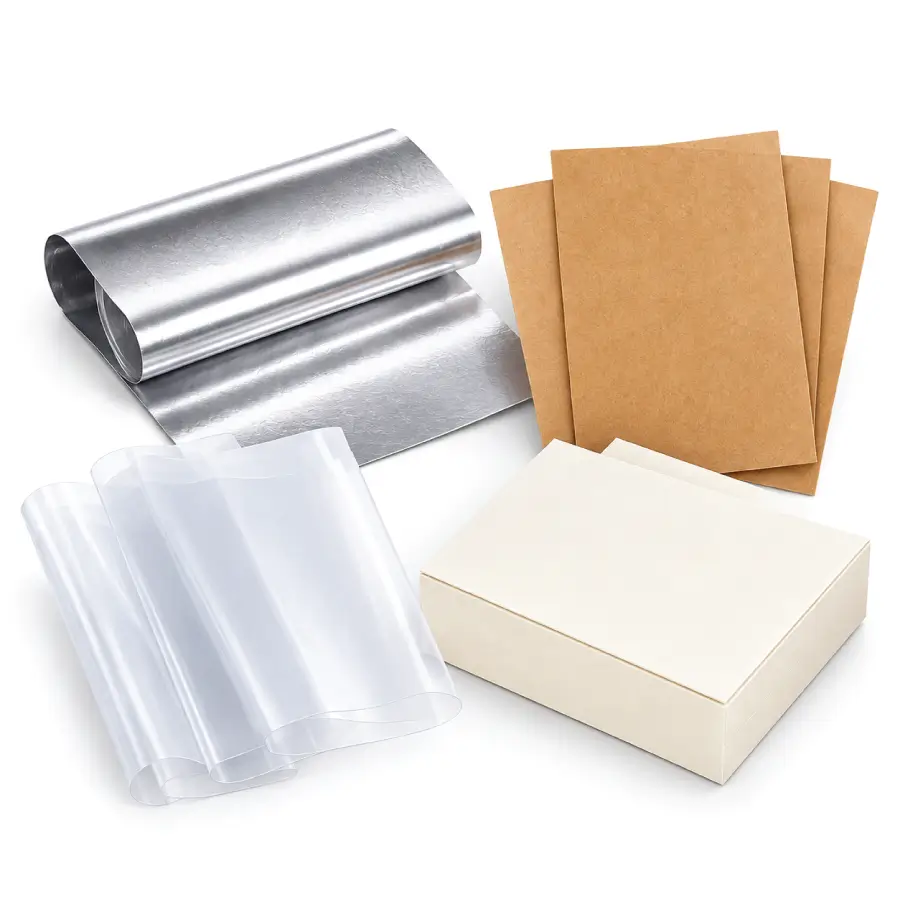
Different materials are suited to different needs, and this stage is where how to choose the right chocolate packaging usually begins for most brands. Packaging solutions are first selected according to the product format, after which suitable materials are matched to the required level of protection and presentation.
Boxes
- Paperboard: A lightweight structure commonly selected for everyday chocolate cartons and retail packaging.
- Rigid board: A thick paperboard material generally reserved for premium gift boxes and Luxury Rigid Boxes chocolate collections.
- Kraft paper: A natural paper material frequently selected where an eco-conscious appearance is preferred.
Bags and Pouches
- BOPP film: A glossy material often selected where moisture resistance and clear product visibility are required.
- PET film: A durable material commonly paired with barrier layers for greater freshness retention.
- Compostable films: Plant-based materials selected where compostable packaging is preferred.
Wraps
- Aluminum foil: A high-barrier material widely selected to protect chocolate from oxygen, moisture, and light.
- Wax paper: A food-safe wrapping material commonly selected for artisan chocolates and confectionery.
Sleeves
- Paperboard: A printable material frequently selected for decorative sleeves placed around chocolate boxes.
- Kraft paper: A recyclable material commonly selected where a natural finish is preferred.
Material selection has a direct impact on both production costs and product protection. While the materials above provide a general overview, businesses comparing kraft paper, rigid board, corrugated stock, and other specialty options in greater detail can continue with Best Materials For Chocolate Boxes, where their features, advantages, and ideal applications are explained comprehensively.
Once a material is settled on, attention naturally shifts to fit and proportion. Size and shape are covered next, where fit is matched to formats such as Chocolate Display BoxesProper dimensions are selected so that unnecessary movement is minimized, and the risk of breakage during storage and transportation is reduced. Greater efficiency during handling is achieved through an appropriate structure, while the presentation of the product is strengthened for retail display.
Selecting The Correct Size And Shape
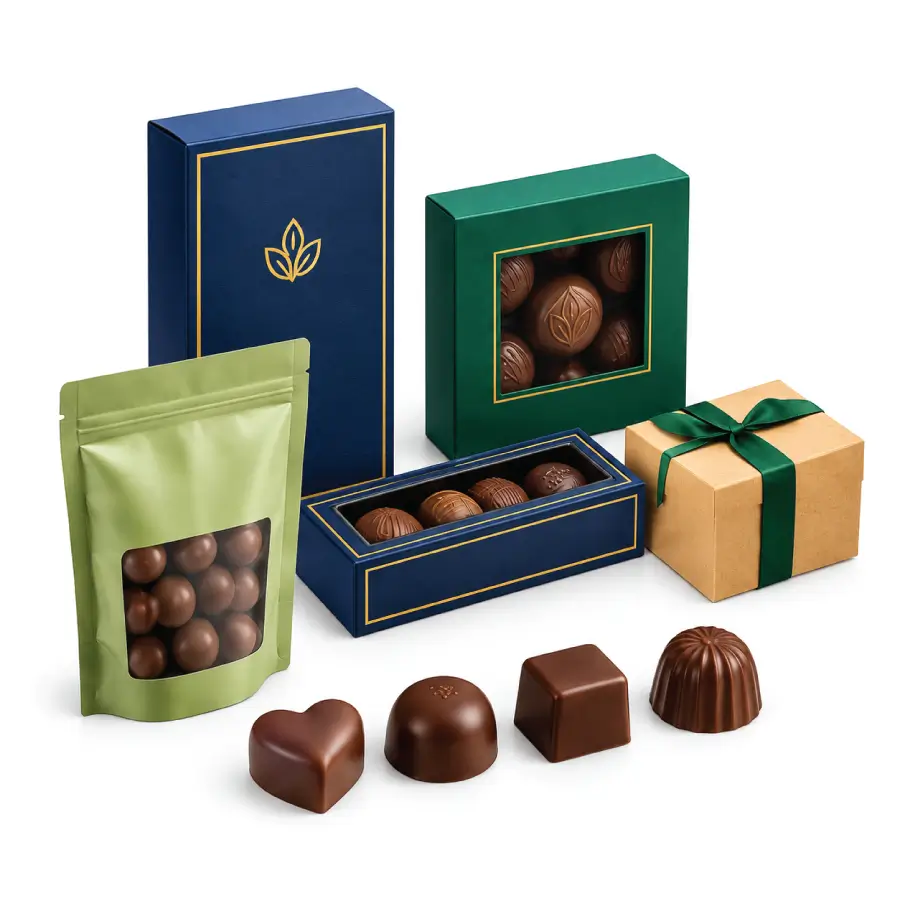
Correct sizing is where how to choose the right chocolate packaging is fine-tuned even further. The risk of breakage during transit is increased when packaging is excessively loose, while unnecessary pressure is placed on delicate chocolate pieces when packaging is excessively tight. Snug proportions are, therefore, considered essential across every category, particularly for delicate formats such as a Lollipop Package. Compartmentalized inserts are also used within truffle boxes, while window packaging is added so that the contents are shown off before a purchase decision is made. A professional line, in turn, is distinguished from a scattered one mainly through consistency across formats.
“Good things come in small packages.” — Aesop
Protection From Heat And Damage
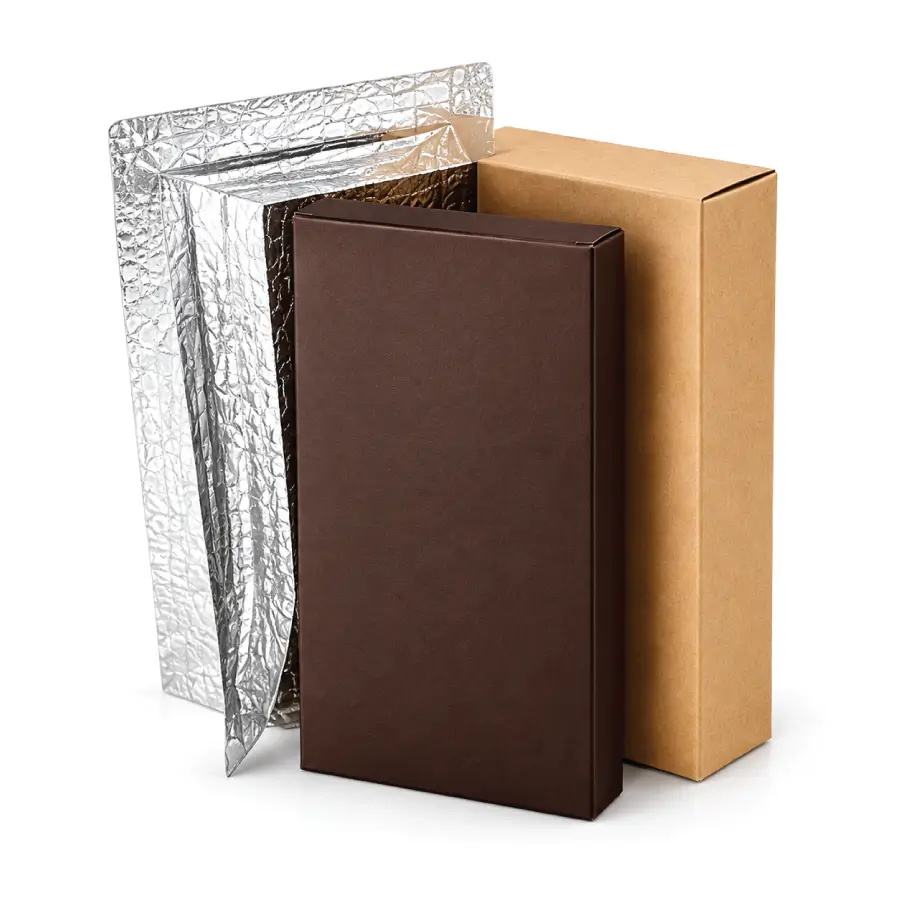
Chocolate is known for being highly sensitive to warmth, and this is where protection of the product is treated as an important requirement . Heat protection is often the most underestimated part of how to choose the right chocolate packaging. Insulated layers, reflective foils, and sturdy outer structures are typically combined so that heat transfer is slowed down significantly, particularly for delicate formats such as Chocolate Bombs Packaging, and for e-commerce packaging, where products are moved over long distances.
Damage during multiple handling checkpoints is, in particular, meant to be avoided entirely within wholesale chocolate packaging lines. As a result, this stage is treated as one of the most technical parts of how to choose the right chocolate packaging, since a single oversight here undoes every other design choice made earlier. Freshness preservation is addressed next, where shelf life is extended through smart barrier choices.
Shelf Life And Preserving Freshness
Preserving freshness is another pillar of how to choose the right chocolate packaging that is rarely skipped. Shelf life is extended considerably once oxygen exposure, moisture, and light are properly controlled. Barrier films, a moisture barrier layer, and heat sealing are commonly combined so that sugar bloom and staleness are kept at bay. Tamper-evident packaging is also included on many lines, not only for freshness but for the added reassurance that the seal has not been broken beforehand. Consequently, freshness protection is regarded as a core requirement, not a bonus feature, in nearly every serious packaging plan. Regulation is covered next, where compliance numbers are laid out in detail.
Canadian Packaging Regulations And Certifications
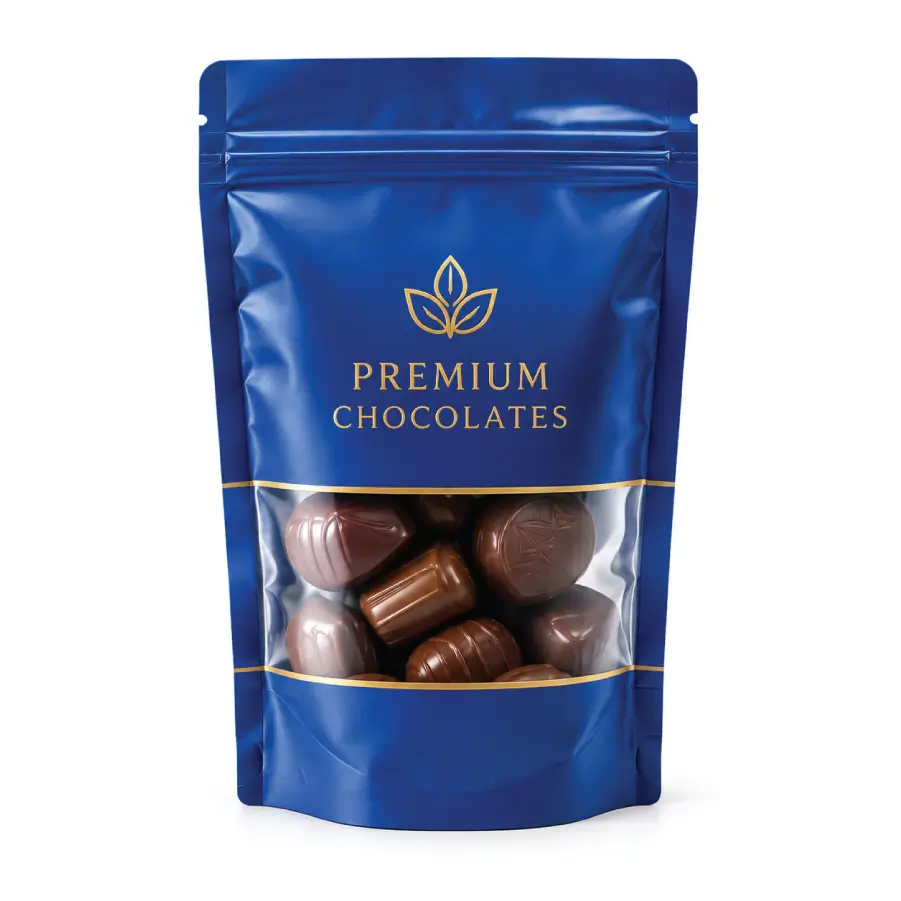
Compliance should be treated as an important part of choosing chocolate packaging, not just a legal requirement. In Canada, packaging must comply with Division 23 of the Food and Drug Regulations, that packaging materials do not release substances into food. Businesses must also follow the Safe Food for Canadians Regulations (SFCR) and CFIA labeling requirements for ingredients, allergens, and net quantity. Depending on the packaging, additional regulations may apply to printing inks, coatings, and other materials that come into contact with food. Many manufacturers also obtain a Health Canada Letter of No Objection, while FDA-compliant packaging is commonly used for chocolate products exported to the United States.
Branding And Design Considerations
Recognition of the brand is often built within the first few seconds of shelf exposure, which is why design is treated as seriously as material selection. Logo placement, colour palettes, and typography are aligned carefully so that recognition of the brand is reinforced across every touchpoint, from Custom Reverse Tuck Boxes to simpler retail formats. A premium finish, whether matte finish or gloss finish, is chosen based on the perception of the brand that is being aimed for; minimal and elegant for luxury chocolate, or bold.
Printing techniques are covered next, where these design choices are brought to life. Looking for packaging that reflects your brand? Explore Custom Chocolate Boxes. Personalized sizes, finishes, and structural options are offered for different chocolate products. Greater recognition of the brand and a refined presentation of the product are achieved through carefully selected details.
“Customers will occasionally buy products not because they want them but because of how they are presented to them.” — James Clear
Printing Techniques For Premium Packaging
The selection of an appropriate printing technique is considered an important part of choosing the right chocolate packaging. A premium presentation of the product is achieved through carefully selected printing methods and finishing techniques.
Printing Methods Used for Chocolate Packaging
- Screen printing: Ink is applied through a prepared screen to selected areas of the packaging. Bold text, logos, and graphics are reproduced with clear and durable results.
- UV printing: Ink is applied directly to the surface and is cured through ultraviolet light. Detailed logos, patterns, and promotional artwork are reproduced with improved clarity on Custom Candy Packaging.
Premium Finishing Techniques
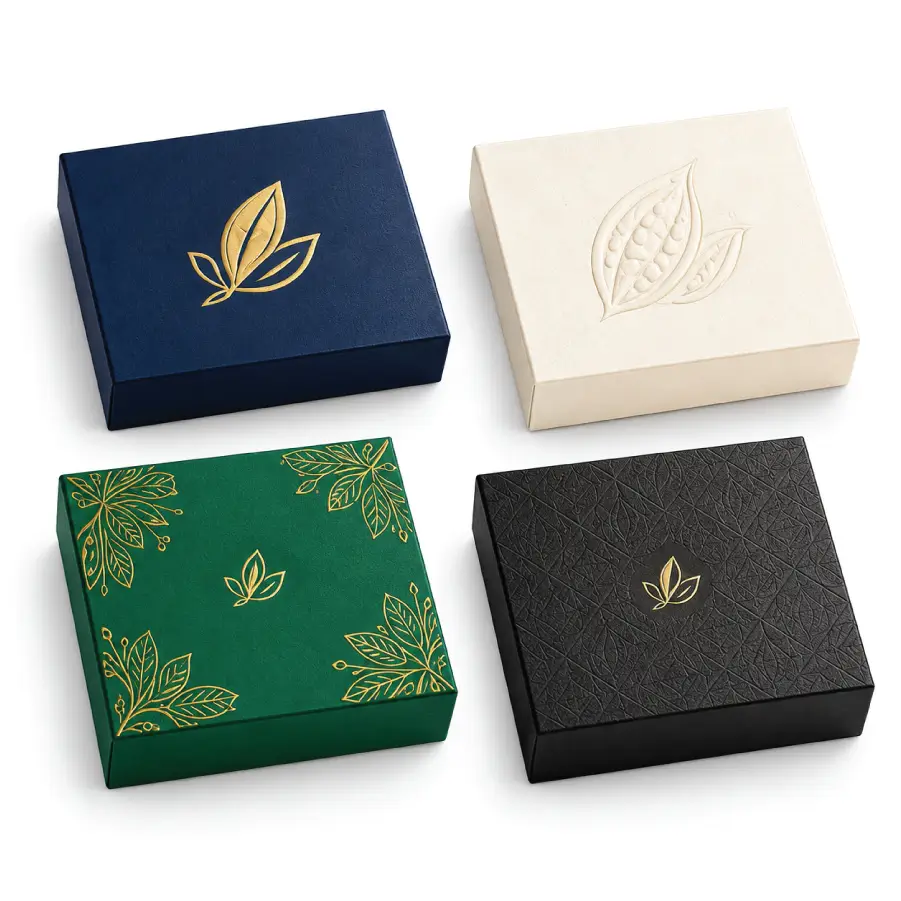
- Foil stamping: A metallic finish is applied to selected text, logos, or decorative areas. This finishing technique is commonly selected for luxury chocolate boxes, gift packaging, and seasonal collections.
- Embossing and debossing: Raised or recessed details are formed on the surface of the packaging. A refined tactile effect is achieved through these finishing techniques.
- Spot UV coating: A glossy coating is applied to selected areas of the design, while the remaining surface is kept matte. Visual contrast and a polished presentation of the product are achieved through this finish.
- Soft-touch coating: A smooth, velvety texture is applied across the surface of the packaging. A premium feel and an elevated perception of the brand are achieved through this coating.
With the surface finish decided, focus is then placed on how far personalization is taken. Customization is addressed next, where personalization is taken even further.
Customization Options For Chocolate Packaging
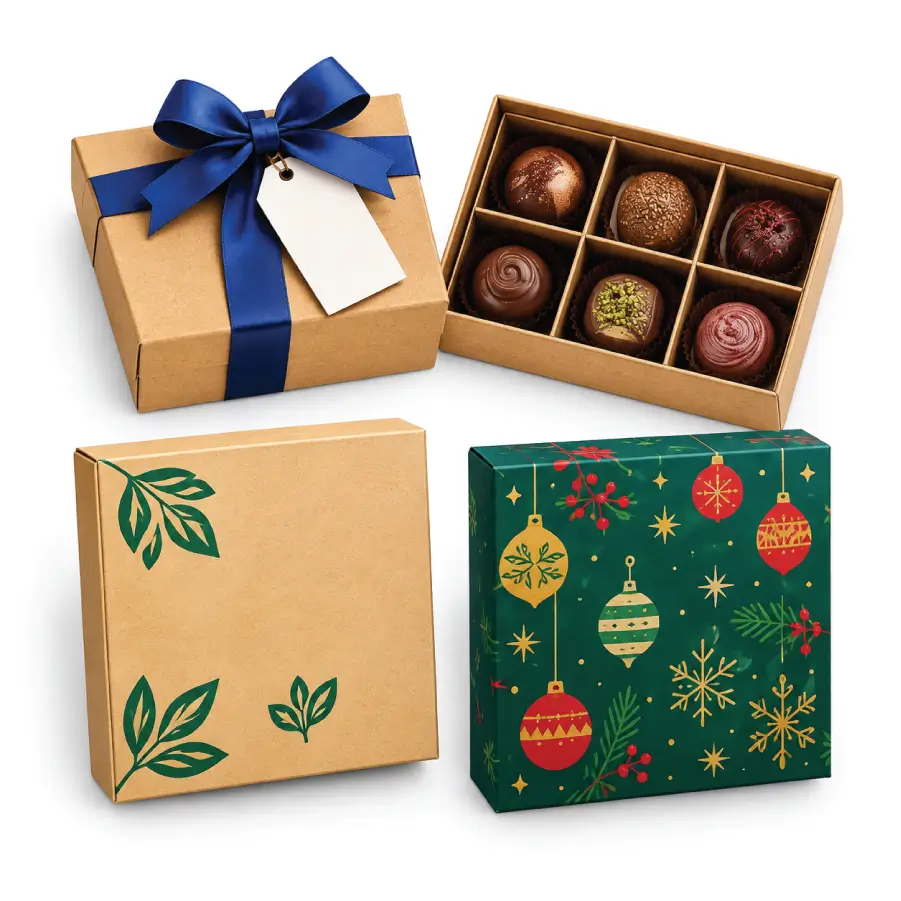
Personalized packaging is where a brand’s individuality is truly expressed, and this stage is often the most enjoyed part of how to choose the right chocolate packaging. QR codes are frequently added for interactive experiences, while easy-open features and portion control inserts are included for practicality within Mushroom Chocolate Bar Boxes and similar formats. Seasonal packaging and holiday gift boxes are also produced for events, with dividers or ribbons layered on for a premium unboxing moment. Customer experience is, in many cases, shaped almost entirely by these small personalized touches. Sustainability, however, is the next factor that customer expectations are increasingly built around. Sustainability is discussed next, where environmentally responsible choices are outlined.
Sustainable And Eco-Friendly Packaging Choices
Sustainability has become a defining chapter in how to choose the right chocolate packaging today. Several routes are commonly taken toward it:
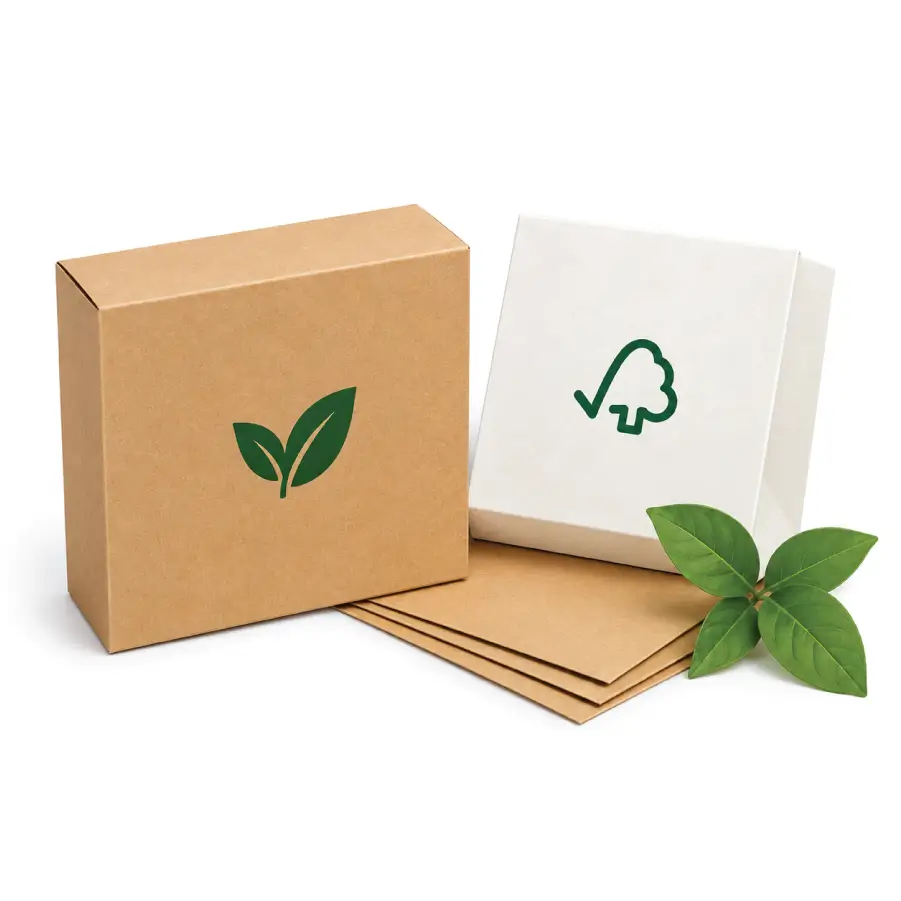
- Sustainable packaging and recyclable packaging: materials chosen for reduced environmental impact.
- FSC-certified paper: responsibly sourced fibre used across Custom Cookie Packaging and boxes alike.
- Eco-friendly inks and plastic-free packaging: reduced chemical footprint across the supply chain.
Balancing Cost And Quality
Budget planning is the practical side of how to choose the right chocolate packaging that ties everything together. A is nearly always faced between premium finishes, such as Custom Pillow Boxes, and budget constraints. Order volume, market positioning, and packaging of the product are weighed together before a final call is made, since quality of the product is rarely sacrificed without consequence to recognition of the brand down the line. Per-unit costs are, in most cases, brought down considerably through bulk orders, which is why wholesale routes are so often explored by growing chocolate lines. Target market alignment is covered next, where packaging is matched to its intended audience.
Matching Packaging To The Target Market
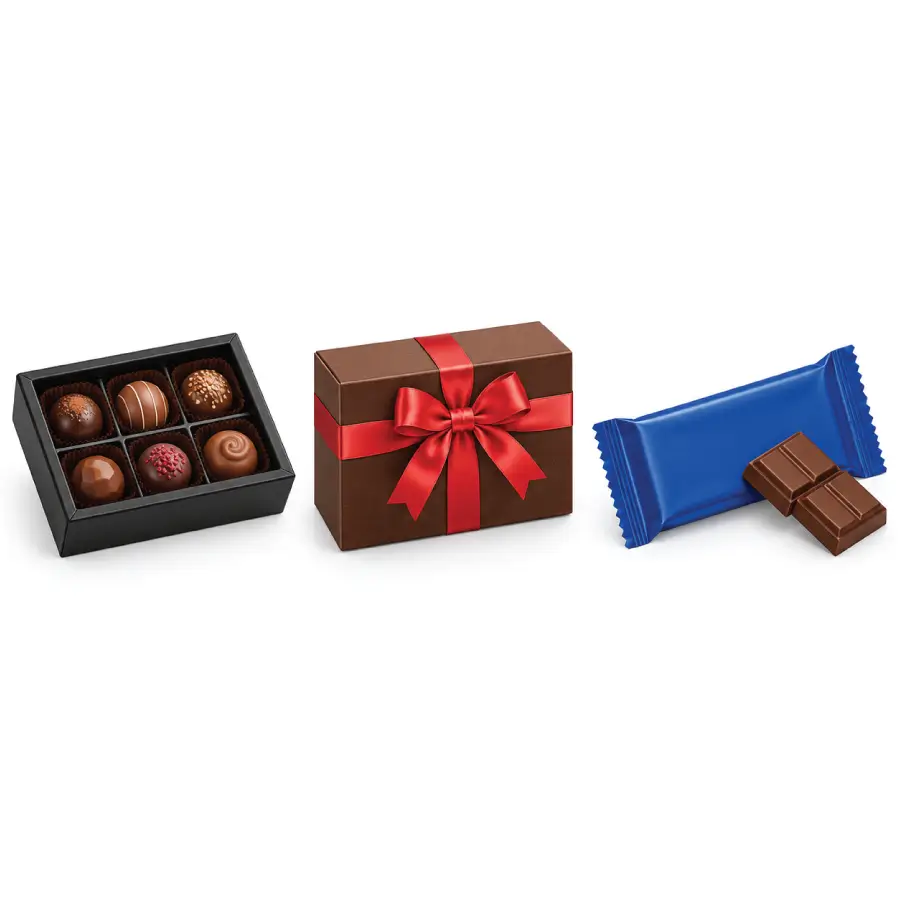
Artisan chocolate and truffles are typically packaged with restraint and elegance in mind, whereas mass-market chocolate bars are packaged with colour and energy in mind instead. Product differentiation, in this sense, is achieved through audience alignment rather than material choice alone. Confectionery packaging aimed at gifting occasions, including Custom Edible Packaging, meanwhile, is designed to appear more considered than everyday retail lines. This final alignment is what completes the full picture of how to choose the right chocolate packaging from start to finish.
Ready to bring your packaging ideas to life? Contact Canada Custom Packaging, your trusted custom packaging partner, today for a custom quote.
Conclusion
From the first material choice to the final design details, every step in the packaging selection process contributes to how the product is protected, presented, and remembered. Protection of the product, perception of the brand, and the overall experience a customer walks away with are ultimately shaped by what is chosen. A thoughtful decision is rarely regretted later, while a rushed one is almost always noticed. With every factor now laid out, the only step left is putting this knowledge into practice.
Frequently Asked Questions (FAQs)
Are food-grade materials used for all chocolate boxes?
Food-grade materials are required when chocolate is placed in direct contact with the packaging. When wrapped chocolates, food-safe liners, or trays are used, the outer box is generally kept separate from direct food contact.
What should be checked before placing a bulk chocolate packaging order?
Compliance numbers, barrier performance, and sample quality are typically checked before a wholesale order is confirmed.
Can chocolate packaging be personalized for specific occasions?
Yes, personalized packaging is customizedfor birthdays, weddings, and corporate gifting alike. Custom inserts, ribbons, and printed messages are commonly added for such occasions.
Does resealable packaging help extend chocolate freshness?
Yes, a resealable zipper is shown to slow staleness considerably once a pack is opened. Air exposure is reduced significantly each time the seal is closed properly.
How long does eco-friendly chocolate packaging take to break down?
Compostable and biodegradable materials are broken down within a matter of months under proper conditions, unlike traditional plastic. Exact timeframes, however, are dependent on the specific material blend used.
Are screen printing and UV printing suitable for small-batch chocolate packaging?
Both are well suited depending on the design complexity involved. Screen printing is often favoured for bold, simple graphics, while UV printing is chosen for finer, more detailed artwork.
Should tamper-evident features be added to every chocolate product?
In most cases, yes tamper-evident packaging reassures buyers that a product has not been opened beforehand. This is especially important for e-commerce packaging, where a product is not seen in person before delivery.
Which certifications are most important for Canadian chocolate packaging?
FSC-certified paper, CFIA labeling requirements, and compliance with Division 23 of the Food and are considered the most relevant. Together, these confirm that both material and labeling standards are met.
Do you offer custom chocolate packaging in Canada?
Yes, custom chocolate packaging is offered by Universal Packaging in a wide range of styles, materials, and personalized printing options. Guidance throughout material selection, sizing, and customization is also offered so that the protection of the product and the reputation of the brand are both maintained.
Why is packaging size as important as chocolate packaging design?
A poor fit leads to damage in transit and a lower-quality unboxing moment overall. Correct sizing, therefore, is treated as being just as important as colour or branding choices.