What really decides whether a sauce packet and its sauce remain fresh, clean, and safe from filling to delivery? Proper packaging materials, sealing quality, storage handling, and testing all play an important role in maintaining sauce freshness and protection. The Food-Safe Packaging Checklist covers simple checks like materials, sealing, labeling, testing, storage, and shipping to support consistent handling from start to finish. Each step connects to the next and shapes the overall packaging flow. Scroll down to view the complete checklist.
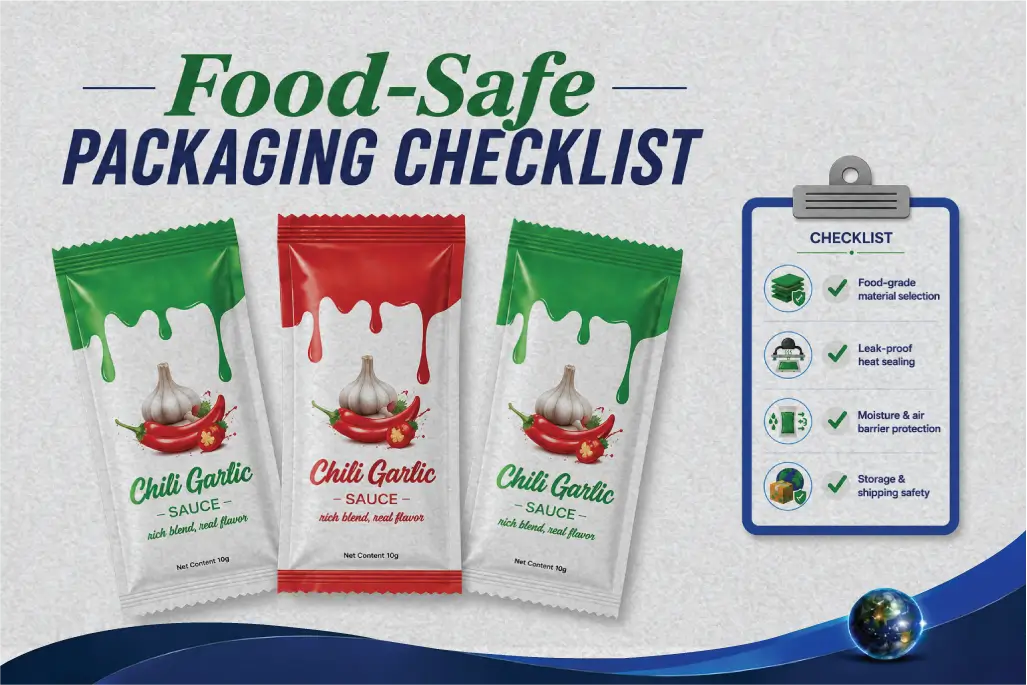
Main Article Highlights:
- Step-by-Step Process of Food Safe Packaging for Sauce Packets.
- Food-Grade Material Selection for Safe Packaging.
- Proper Size Selection based on Sauce Usage.
- Clear Labeling Rules for Product Information.
- Moisture and Air Barrier Protection in Packets.
- Leak-Proof Sealing and Heat Seal Checks.
- Quality Testing, Storage, and Shipping Process.
Each point is explained in an easy way, so the full process becomes simple to follow and understand.
Complete Food-Safe Packaging Checklist
The food-safe packaging checklist shows how sauce packets remain clean, stable, and suitable for storage, handling, and delivery from start to finish. It follows a clear step-by-step flow that begins with material selection and continues through sealing, labeling, testing, storage, and shipping checks. This food-safe packaging checklist is mentioned for sauces like ketchup, mustard, hot sauce, mayonnaise, and dips, so each packet stays in proper condition without leakage during movement and storage stages.
1. Important Food Grade Material Selection
Selecting food-grade packaging, food-safe materials, BPA-free packaging, biodegradable packaging, compostable packaging, and recyclable packaging. Other options also include FDA-approved materials, food contact materials, and food safety regulations is the first step in the food-safe packaging checklist. PET, clear PET, aluminum, and other approved films are commonly used for sauce packets because they have safe food contact, protection of the product, and proper handling during storage and distribution.
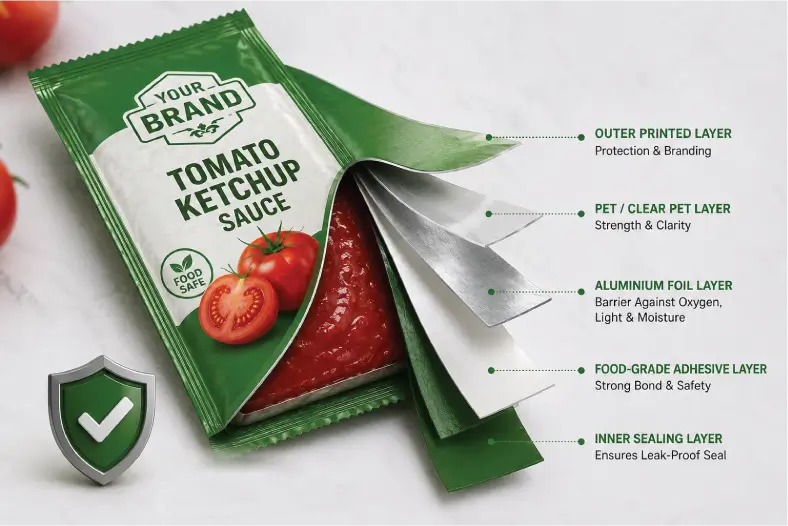
These materials remain separate from the food inside the packet and do not mix with the sauce content. Each material is reviewed carefully so the sauce remains stable during filling, storage, and transport without changing its basic condition. Related material terms, such as multi-layer film and Retortable Pouches Food Packaging, can appear in advanced sauce packaging discussions.
2. Proper Packaging Size Selection Guide
Choosing the correct packet size is part of the food-safe packaging checklist, where small, medium, and large sizes are matched with sauce quantity and serving type. Portion planning is checked so each packet carries the right amount of sauce for single use or bulk use, depending on customer needs. Size selection also connects with the filling process, so the sauce distribution inside each packet stays balanced and easy to handle. This step also looks at usage areas like restaurants, takeaway packaging, restaurant packaging, food industry packaging, custom food packaging, Custom Mylar Bag Design, where different portion sizes are used daily.
What will happen if the wrong size is selected?
If the wrong size is selected, it can lead to overfilling, leakage, product waste, and poor customer experience, which directly affects packaging efficiency and trust of the brand.
3. Clear Labeling Food Safety Rules
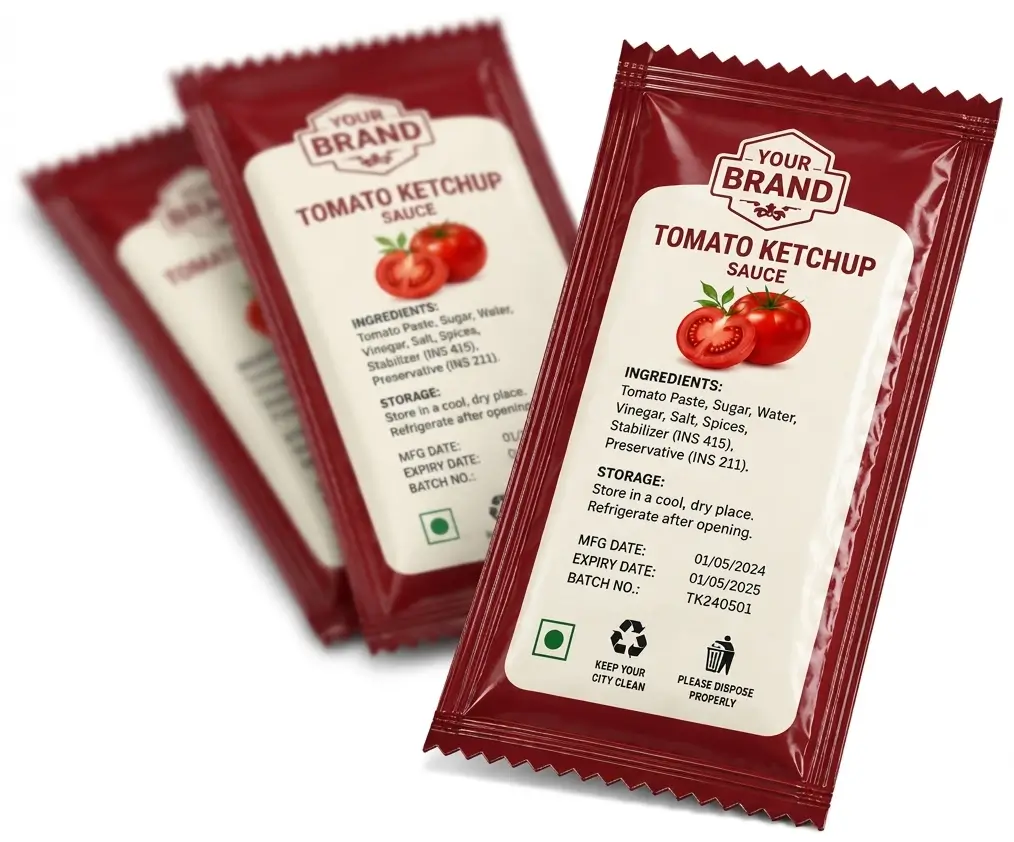
The labeling in the food-safe packaging checklist includes details on these Custom Printed Food Pouches, like flavor name, ingredients, expiry date, and storage instructions on each packet. Clear and simple text is important so users can easily read all information without confusion or difficulty. Label placement is also checked so details remain visible on the packet surface and remain readable during handling and storage. In the food-safe packaging checklist, proper labeling are used for better understanding of sauce type and usage before opening the food packaging, making information easy to follow for end users, branding food packaging, and consumer trust in packaging.
“My motto is strong packaging, clear addressing.” — Halldór Laxness
4. Moisture And Air Barrier Protection
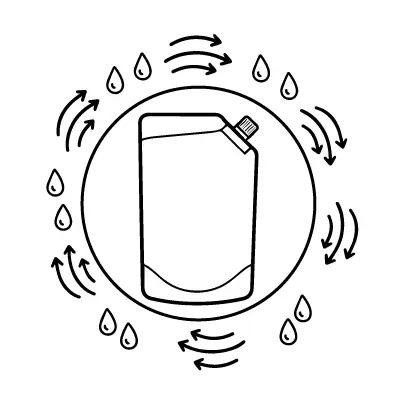
Barrier layers in the food-safe packaging checklist are used to reduce contact between the sauce inside the packet and outside air or moisture. These layers are placed inside the material of the packet so the sauce remains in a stable condition during storage and transport stages. Different sauces may need different barrier levels depending on thickness, exposure time, and storage environment. Features like moisture barrier packaging, oxygen barrier packaging, shelf life extension, and food preservation packaging are also considered during this step to maintain the sauce in its original condition over time.
5. Leak-Proof Packaging Safety Standards
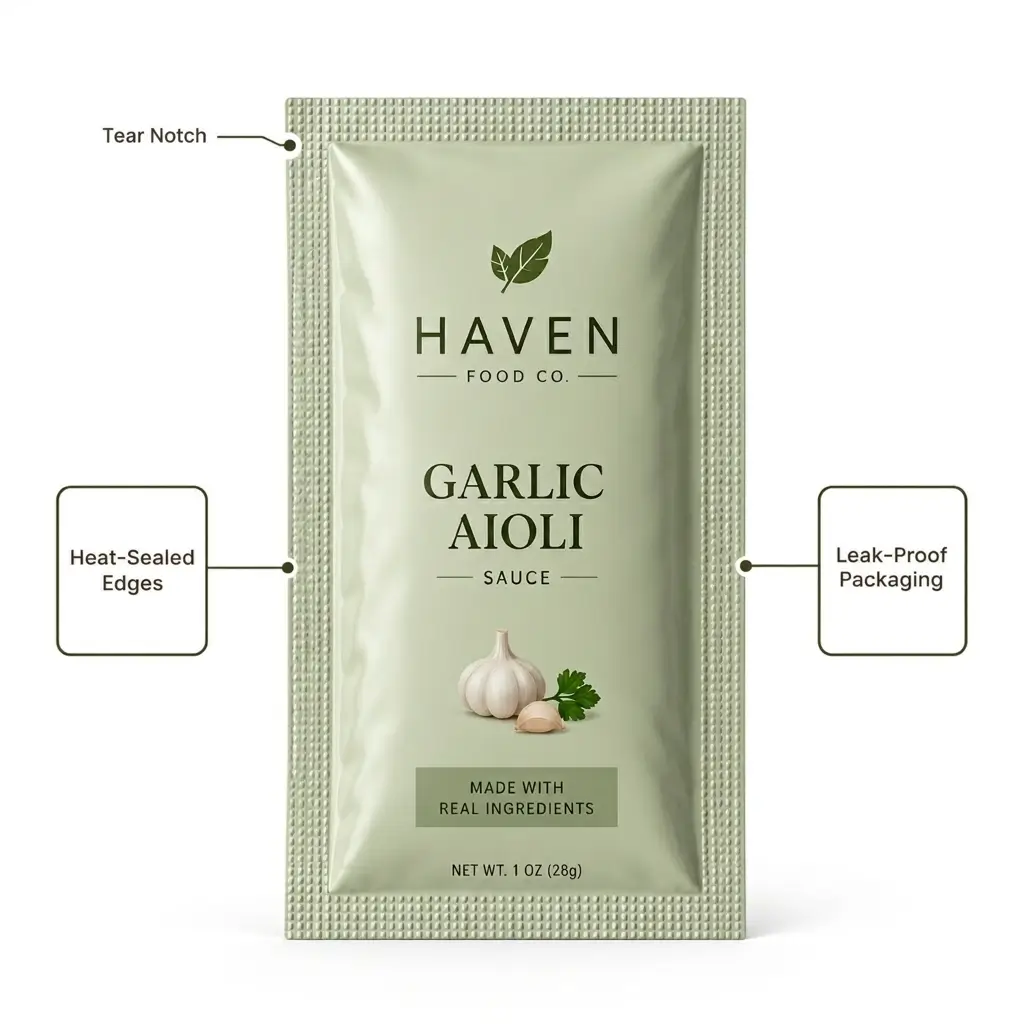
Heat-sealed edges are also reviewed in the Food Sachet Packaging checklist to close packet sides tightly and reduce the chances of leakage during handling or transport. Seal lines are checked across the full packet edge to confirm there are no gaps or weak points in the sealing area. Tear notches are also added, so opening the packet remains simple and clean without affecting the remaining layout. This step is important for maintaining controlled sauce flow inside each packet during usage, leak-proof packaging, tamper-evident packaging, and food-safe materials.
6. Heat Seal Integrity Checklist Guide
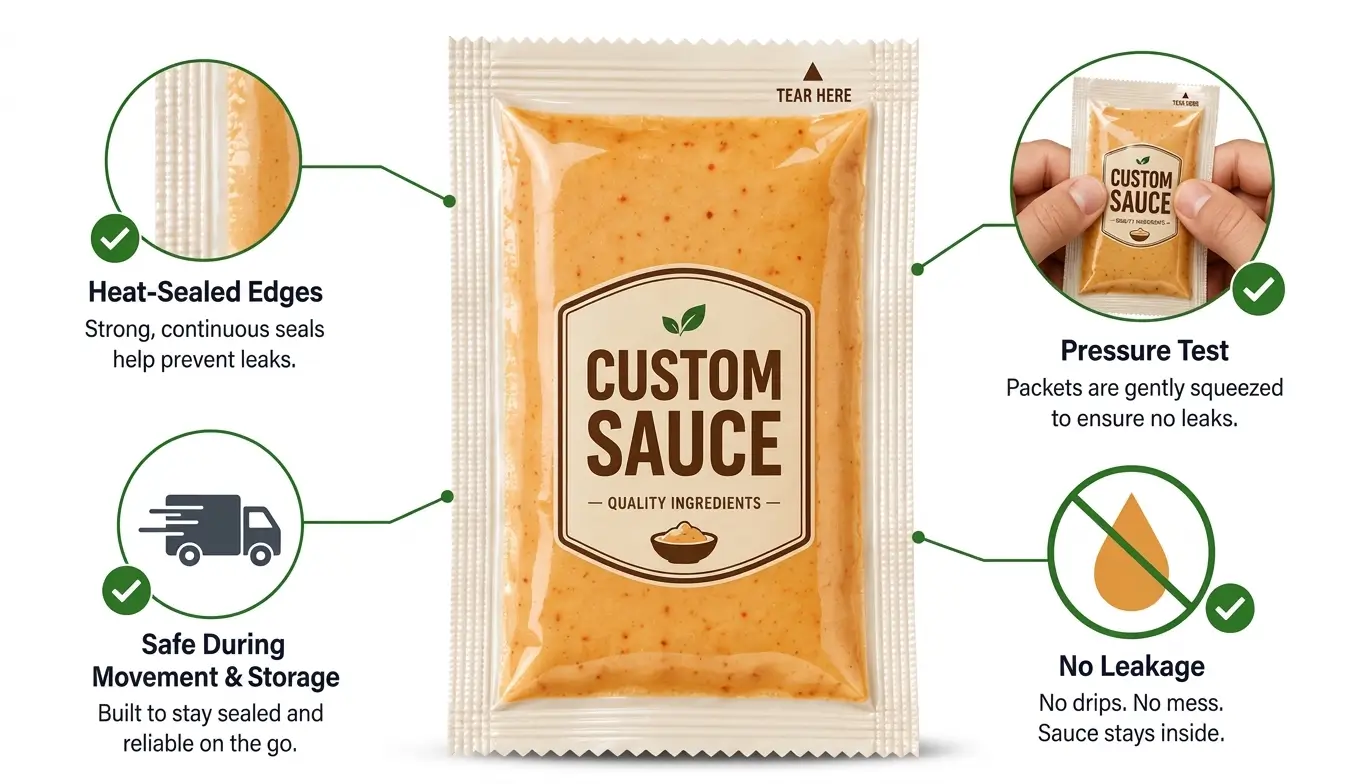
Seal quality is tested in a food-safe packaging checklist, where heat-sealed edges are checked under conditions to see if they remain closed properly. Uniform sealing across all sides is reviewed so the sauce remains inside the packet during movement, storage, and delivery stages. Opening points are also checked so packets can be opened in a simple way without difficulty or mess. This step focuses on checking each sealed area before final approval for large production batches.
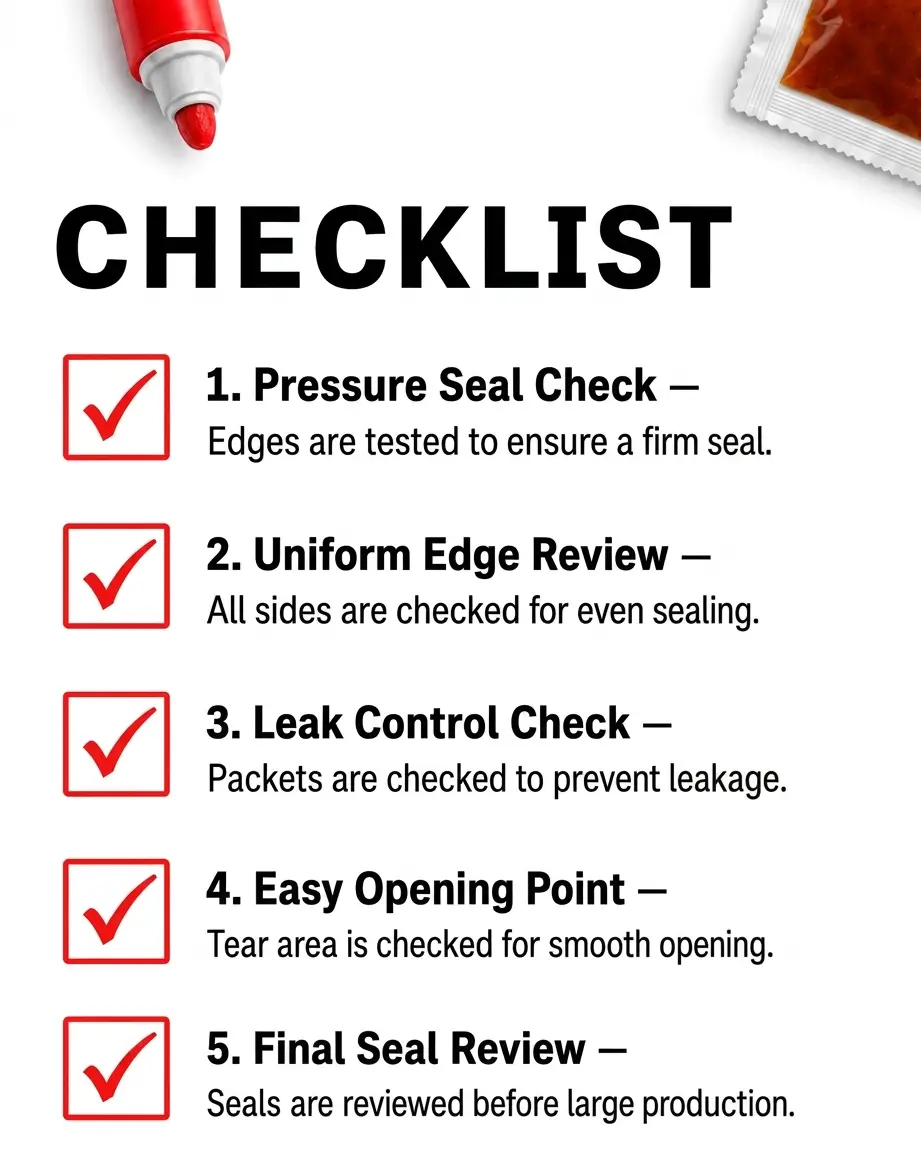
- Pressure Seal Check: Sealed edges are tested under pressure to see if the closure stays firm.
- Uniform Edge Review: All sides are checked so sealing stays even without gaps or weak spots.
- Leak Control Check: Packets are checked to confirm the sauce stays inside during the movement and storage of food contact materials.
- Easy Opening Point: The tear area is checked, so the packet opens smoothly without mess or struggle.
- Final Seal Review: Every sealed section is checked before moving to large production batches.
7. Final Quality Testing For Safe Packaging
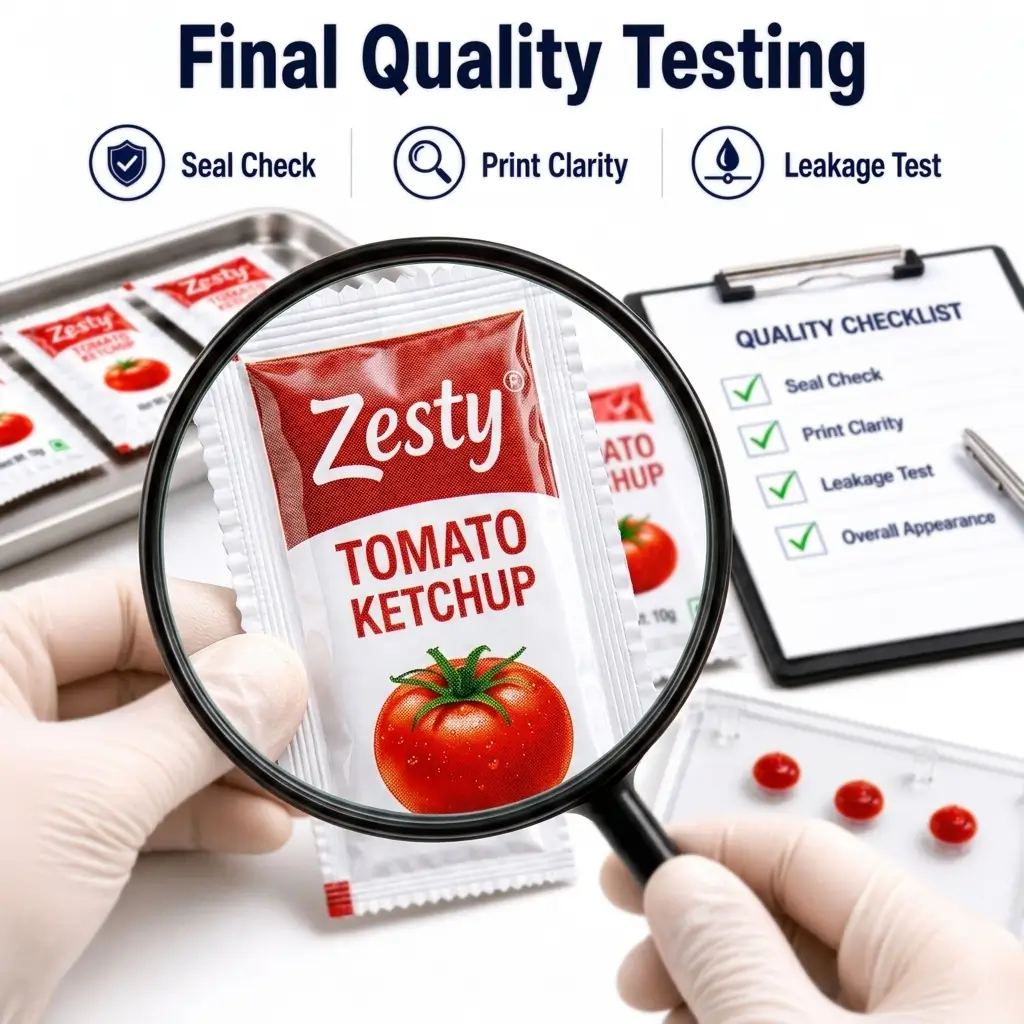
The sample inspection in the food-safe packaging checklist includes checking random packets before full production begins to confirm basic quality points. Seal lines, print clarity, and leakage areas are reviewed during this testing stage to identify any early issues. Now, let’s explore the best quality custom Small Sauce Packets with batch testing and quality checks completed before large production quantities. So, get them now!
Adjust Filling Control In That Durable Packaging
The clean filling process in the food-safe packaging checklist focuses on reducing outside contact during the sauce filling and sealing stages. Filling areas should be kept clear of dust or particles before the sauce is placed inside each packet. Controlled filling steps are followed so the sauce remains in proper condition before closure of the packet. This process is reviewed carefully to maintain clean handling during production and reduce unwanted contact during filling operations.
Storage Safety Checklist For Packets
The food-safe packaging checklist also includes storage planning where packets remain in dry and stable temperature areas before delivery or distribution. Storage time and handling methods are reviewed so overall condition stays stable before dispatch. This step focuses on keeping packets in proper storage space until they are ready for shipment.
- Dry Storage Conditions: Packets are placed in dry areas to avoid moisture and temperature changes before delivery while supporting recyclable packaging practices.
- Stable Temperature Area: storage space is kept consistent so packets remain in proper condition over time, and eco-friendly packaging.
- Safe Carton Stacking: Packets are arranged in cartons in a balanced way to avoid pressure or harm to biodegradable packaging.
- Clean Storage Space: The storage area is kept free from dust and outside contact during the holding period of compostable packaging.
- Controlled Handling: Packets are moved carefully during storage to avoid any unwanted impact before dispatch, and plastic reduction.
“Packaging can be theater, it can create a story.” — Steve Jobs
Shipping Protection Food Safe Packaging
Carton packing is reviewed in the food-safe packaging checklist, where packets are placed inside boxes in an organized layout for transport. Movement during shipping is monitored so that packets remain in a controlled position inside cartons without shifting. Delivery planning is also reviewed so that packing moves smoothly from storage to the final dispatch stage. Zero-waste, circular-economy, and sustainable packaging solutions are also considered in shipping and storage planning to support organized handling and management of the material. Get custom shipping-ready sauce packet solutions from Universal Packaging for safe delivery, organized storage, and bulk order support.
Before final production and shipping, many businesses also review the quantity of the packaging, material usage, filling requirements, and estimated packaging costs to support better packaging planning. Check out the Sauce Packaging Cost Calculator for quick packaging estimates before bulk production.
Conculsion
In this article, the food-safe packaging checklist brings all key steps together in one simple flow from material selection to final shipping of sauce packets. Each stage, such as sealing, labeling, testing, storage, and transport, is reviewed to keep sauce packets in proper condition during handling and delivery. Careful attention to these steps better product handling from filling to end use in restaurants, takeaway, and retail. When each part of the food-safe packaging checklist is followed, sauce packets remain organized, clean, and ready for safe distribution. Take a final look at each section before planning the next order.
Frequently Asked Questions (FAQs)
Where to get a customized sauce packet that fulfills all the requirements of that food-safe packaging checklist?
Custom sauce packets can be ordered from a packaging supplier like Universal Packaging that offers food-safe materials, proper sealing, barrier protection, and custom printing options. A reliable supplier also helps support leakage prevention, storage safety, and packaging quality for better sauce freshness and handling.
What makes a sauce packet remain fresh longer?
Freshness depends on strong sealing, proper material choice, and barrier layers. These factors result in a reduction in contact with air and moisture. The food-safe packaging checklist mentioned these steps to maintain better product condition during storage and delivery.
How do I know which packet size to choose?
Packet size depends on the quantity of the sauce and how it will be used. Single serving, takeaway, or bulk use all need different sizes. The right Shape Mylar Bags also result in improved easy handling for users.
Why is labeling important on sauce packets?
Labeling represents flavor, ingredients, and expiry details clearly. Users get help from them to understand the details of the product before using it. In the food-safe packaging checklist, clear labeling are used for better Product Packaging Pouch identification.
Can poor packaging affect customer experience?
Yes, weak packaging can lead to leakage or unclear printing. This can create a negative impression for customers. It may also reduce trust in the product quality.
What should be checked before bulk production?
Seal quality, print clarity, and material condition are checked first. Sample testing is also done before large orders. These checks result in reducing issues in final production.
naturally like your web site however you need to take a look at the spelling on several of your posts. A number of them are rife with spelling problems and I find it very bothersome to tell the truth on the other hand I will surely come again again.