Wondering whether Popsicle Bags Vs Wrappers would suit your popsicles more effectively? This blog breaks down the main differences between these two flexible packaging formats used across frozen dessert packaging. Materials, closures, designs, freezer protection, printing, dimensions, pricing, and order quantities are covered in this guide. Selecting an unsuitable format may result in sealing problems and an inconsistent presentation of the product. Read on to discover the format that fits the requirements of your popsicles best.
Explore How Popsicle Bags Perform
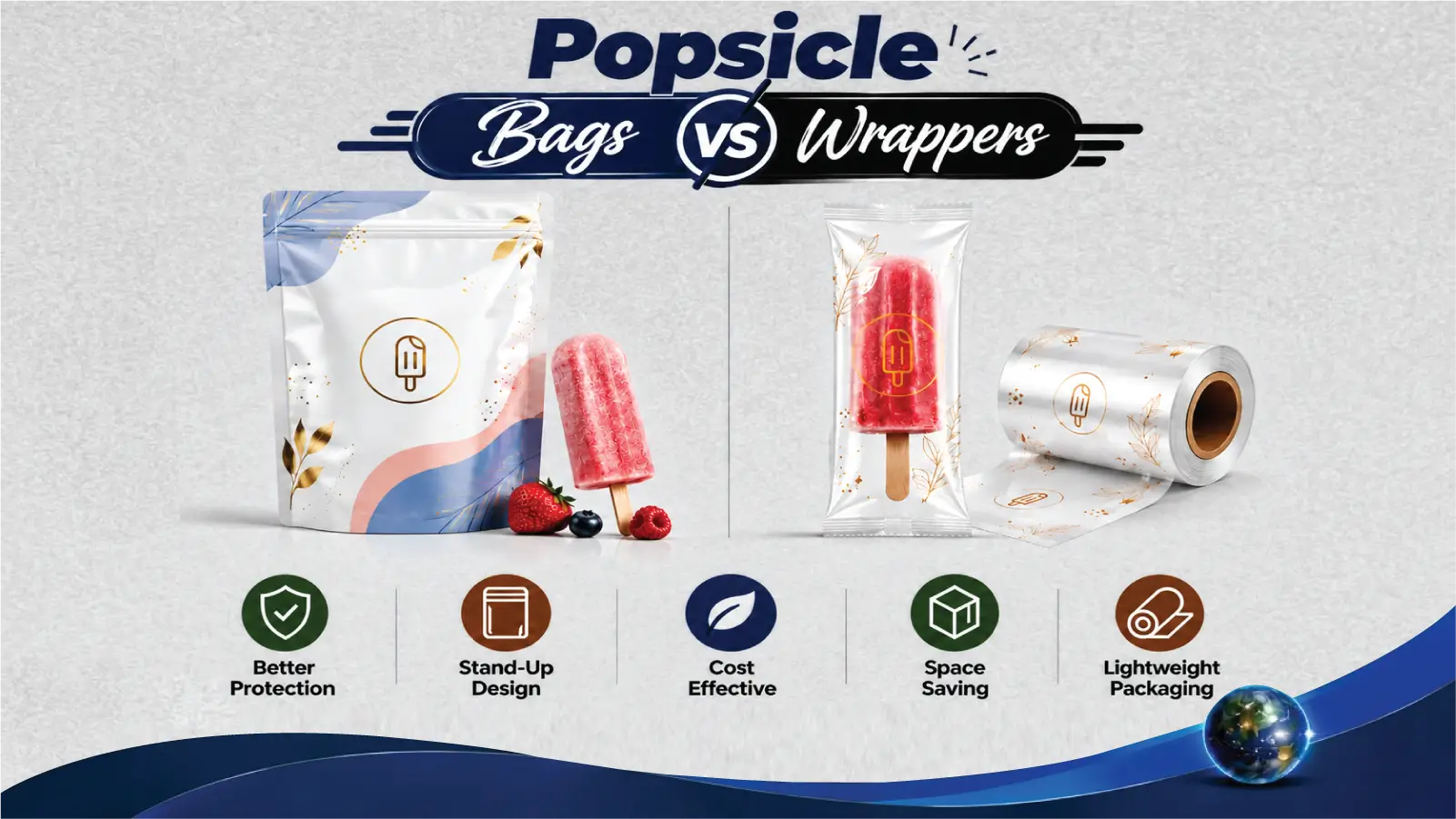
Understanding popsicle bags vs wrappers starts with their basic structures. Popsicle bags are flexible pouches or bag-style formats, often made from durable plastic film, in which individual frozen treats are enclosed. A heat seal, zipper closure, or another suitable closure is included depending on the bag style. Flat bags and gusseted bags are among the formats that are used with different popsicle shapes and sizes, and some suppliers also offer a stand-up pouch style for larger batches. Features such as a tear notch, resealable zipper, custom shape, or printed surface may also be incorporated into a popsicle bag. The side of popsicle bags vs wrappers focuses on enclosed formats.
Understand What Popsicle Wrappers Are
Popsicle wrappers are generally flat sheets or film structures placed around an individual frozen treat, offering a simple pouch format alternative to amazing designs. For tube-shaped formats, Popsicle Plastic Tube is a suitable reference, as the wrapper can be formed and adjusted around the tube shape for a neat fit and secure presentation of the frozen treat. This format is often associated with simple single-use coverage and straightforward presentation of the product, making it a popular choice for ice pops and other frozen treats. Heat sealing is commonly incorporated around the edges so that the frozen treat remains enclosed during storage and handling. The wrapper side of popsicle bags vs wrappers focuses on flat coverage.
Reveal The Key Differences Between Them
A difference between popsicle bags vs wrappers is found in their structure and closure. An enclosed bag-style format is provided through popsicle bags, while flat film coverage around the popsicle is provided through wrappers. Zippers and tear notches are incorporated into Popsicle Zip Bags, whereas a wrapper is generally sealed around the product. The main differences discussed between popsicle bags and wrappers include:
- Sealing Methods: Heat sealing is commonly associated with both formats, while zipper closures and tear notches may be included with selected bag styles.
- Material: Film materials such as PE, LDPE, HDPE, BOPP, BOPET, and PET may be considered according to the required format and performance.
- Structure: A more enclosed format is formed through bags, while wrappers generally remain closer to the shape of the individual popsicle.
Popsicle bags vs wrappers can therefore be compared through material, structure, sealing methods, coverage, handling, printing, freezer storage, and presentation. The final format should be based on dimensions, sealing requirements, storage conditions, and the desired presentation of the product.
Compare Material Options For Both Formats
Materials are an important part of the popsicle bags vs wrappers comparison. Popsicle bags are produced from polyethylene (PE), LDPE, HDPE, PET film, BOPP film, or BOPET, depending on the required structure. Laminated film may also be included where additional barrier properties are required. A moisture barrier and oxygen barrier are incorporated through suitable film combinations, particularly for frozen products requiring controlled protection during storage.
Popsicle wrappers may also be produced from flexible food-grade films such as PE, PET, BOPP, or laminated film. The material thickness is generally selected according to the size and weight of the popsicle and the required sealing strength. Food-contact suitability and freezer performance remain important considerations when the film structure is finalized, particularly for food-grade packaging intended for retail sale. Let’s explore the full specifications and key features of Popsicle Packaging and discover what makes it a practical option for frozen treats!
Examine Sealing Methods Used By Each
Heat sealing is commonly carried out with popsicle bags using heat-sealable film to form an enclosed edge around the frozen product. A serrated heat-sealed edge is included for easier opening, while a tear notch may provide a defined opening point, contributing to easy opening and better leak resistance. Zipper closures may also be incorporated when resealable storage is preferred. Sealing methods are another key point in popsicle bags vs wrappers.
Heat sealing is also suitable for popsicle wrappers, with sealed edges formed around the product. The sealing area is generally kept consistent around the wrapper so that the frozen treat remains enclosed. The final seal strength is influenced of popsicle bags vs wrappers by the film structure, thickness, sealing temperature, and production method.
Compare Design Options For Both Formats
Pouches are produced with printed graphics, flavour names, details, logos, and promotional messaging, with printing of logo details and colour printing available on request. Matte or glossy finishes are selected for Custom Printed Mylar Bags, while screen printing or digital printing are considered according to the artwork and production requirements. Die-cut shapes, transparent areas, and different structures may also be incorporated as part of custom printed packaging. Moreover, design differences also matter when comparing popsicle bags vs wrappers.
A flat printable surface is provided through custom popsicle wrappers for graphics, flavour information, ingredient details, and branding options. Simple graphics, bold colours, ingredient information, and branding details are placed across the film. The flat structure is particularly suitable for designs intended to remain visible across a straightforward wrapper format.
Compare Protection And Freezer Performance
Enclosed coverage around the frozen product is provided through popsicle bags, with the level of protection depending on the selected film structure and thickness. Moisture-resistant and freezer-friendly materials are incorporated into popsicle bags vs wrappers to reduce exposure to external conditions during frozen storage. Strong heat seals can also be included around the edges.
Direct film coverage around the frozen treat is provided through popsicle wrappers. Suitable freezer-grade films are selected according to the required frozen-storage conditions. The protection level is closely connected to the thickness of materials, barrier properties, and quality of the heat seal. Freezer protection is an important consideration in popsicle bags vs wrappers.
Unlock Branding And Printing Possibilities
A larger printable surface is offered with certain Custom Printed Popsicle Bags formats, with space for flavour graphics, descriptions, nutritional details, logos, and promotional messaging. Custom printing can be combined with matte finishes, glossy finishes, or other surface treatments. A well-planned design can contribute to stronger recognition of the brand, better shelf appeal in grocery stores and supermarkets, and a consistent presentation of the product. The popsicle bags vs wrappers comparison becomes clearer after these factors are reviewed.
A flat surface is provided through Custom Printed Wrappers, where branding details and information can be printed. Bold colours, flavour illustrations, logos, and simple patterns are incorporated without adding a bulky structure. The final print quality and presentation of the popsicle bags vs wrappers depend on the film surface, printing method, artwork, and finishing specifications.
Make A Better Popsicle Packaging Decision
The suitability of a format is generally determined by the characteristics of the popsicle and the desired storage and specific requirements. Additional enclosed space, zipper features, or a pouch-style format may make bags suitable for certain frozen treats. Simple flat coverage may make wrappers suitable for slim frozen treats such as ice lollies. Moreover, Printed Packaging For Food Sleeves are also be added for including premium look on pouches.
The intended sales environment should also be considered. For freezer shelves, direct-to-consumer orders, food-service applications, or promotional products, different food packaging specifications are appropriate. The final format should therefore be matched with the size, storage conditions, sealing method, printing requirements, and overall presentation of the product.
Compare Sizes Offered By Both Formats
Popsicle bags can be produced in different widths, lengths, and gusset dimensions. Dimensions of bags are generally based on the dimensions of the frozen treat, including its length, width, thickness, and stick placement. Extra space around the item is incorporated where easier filling and sealing are required. Size differences should also be considered in popsicle bags vs wrappers.
Popsicle wrappers are generally sized according to the dimensions of the popsicle and the amount of film required for complete coverage and sealing. A Frozen Food Packaging are cut to a specific width and length before sealing. Accurate sizing is important for consistent coverage and a neat presentation of the product.
Evaluate Costs Across Both Packaging Formats
The cost of popsicle bags vs wrappers is influenced by several factors, including material type, thickness, dimensions, printing, finishing, order quantity, and structural complexity. A simple flat wrapper may have fewer structural options, while a bag with a zipper, gusset, tear notch, or special shape may involve additional production specifications. Moreover, Popsicle Box Packaging with an attractive outer layer that may contribute to a higher perceived value.
Cost is another factor to review when comparing popsicle bags vs wrappers. Artwork and finishing can also affect the overall cost. For this reason, a direct price comparison should be based on matching quantities, dimensions, materials, printing requirements, and finishing details rather than the packaging format alone. By including the Popsicle Sleeves on packaging, it also affects the price of packaging.
Consider Order Quantities For Each Format
Minimum order quantities can differ according to the supplier, material structure, printing method, dimensions, and production specifications. Custom printed bags and wrappers may have different production thresholds, particularly where specialized films, custom dies, or multiple designs are involved. For Canadian businesses, bulk quantities are considered where regular production volumes are expected. For products sold in Canada, applicable provisions under the Food and Drug Regulations, including Division 23, the Safe Food for Canadians Regulations (SOR/2018-108), and the Consumer Packaging and Labelling Act (R.S.C., 1985, c. C-38) together with the Consumer Packaging and Labelling Regulations (C.R.C., c. 417) should be reviewed for Printed Packaging For Food Sleeves. Order quantities may differ between the formats covered in popsicle bags vs wrappers.
Find Out The Right Format For Popsicles
Popsicle bags are generally a strong fit requiring a pouch-style structure, additional enclosed space, or features such as resealable closures and tear notches. A larger printed surface and different bag shapes may also be suitable for certain requirements.
Popsicle wrappers are generally suited to simple, slim frozen treats where flat coverage and straightforward sealing are sufficient. Their flat structure is appropriate for products where minimal material structure and direct presentation of the product are preferred. A closer look at popsicle bags vs wrappers makes the format differences easier to understand.
Avoid Common Popsicle Packaging Mistakes
Now that the differences between popsicle bags vs wrappers are clear, it is worth knowing what common mistakes may cause problems. Careful attention to sizing, materials, printing, and food-contact suitability can prevent avoidable issues during production. The following mistakes are described, but if you want to know mistakes in detail, explore Common Popsicle Packaging Mistakes To Avoid next.
| Common Mistake | What Should Be Considered |
| Incorrect Sizing | Too little space is left for filling and sealing, while excessive material may create unnecessary packaging volume. |
| Unsuitable Film Structure | Freezer performance, sealing, or protection of the product are affected by an unsuitable film structure. |
| Overlooking Format Differences | A clearer understanding of popsicle bags vs wrappers should be established before the final format is selected. |
| Incomplete Printing Planning | The artwork should be prepared according to the printable area before the final printing specifications are approved. |
| Overlooking Food Contact | Food-contact suitability of food-contact materials should be reviewed before the final material specifications are approved. |
Reviewing these points before production can reduce common issues and contribute to a more suitable presentation of the product. Step forward, order premium solutions today!
Look Into Recyclability And Sustainable Options
Sustainability is a part of the popsicle bags vs wrappers conversation. Some suppliers offer recyclable packaging options or mono-material packaging structures designed to simplify plastic recycling at the end of the item. Clear recycling instructions printed on the bag or wrapper can help consumers dispose of the packaging correctly, and recyclability is often reviewed alongside barrier performance, sealing strength, and printing when a final format is selected.
Conclusion
Popsicle bags vs wrappers is suitable for different formats for frozen treats, with each being suited to different sizes, sealing methods, material preferences, and presentation requirements. Enclosed coverage, resealable features, and flexible sizing are provided through bags, while simple flat coverage and straightforward sealing are provided through wrappers. Popsicle bags vs wrappers ultimately have down to the requirements of the product. By comparing materials, freezer protection, design, printing, sizes, costs, and order quantities, a suitable format can be selected for Custom Packaging Vancouver. A well-matched format also contributes to a neat presentation of the product and a consistent reputation of the brand.
Frequently Asked Questions (FAQs)
What is the difference between popsicle bags and wrappers?
Enclosed storage is provided through popsicle bags, while flexible outer coverage is provided through wrappers, with each format suited to different frozen treat requirements.
Are popsicle bags better than wrappers?
Stronger enclosure are provided through popsicle bags, while simple coverage are better suited to wrappers, depending on storage, sealing, handling, and presentation requirements.
Which is more protective, popsicle bags or wrappers?
Enclosed protection is generally provided through popsicle bags, while outer coverage is provided through wrappers, making the suitable format dependent on product and storage conditions.
Are popsicle bags suitable for frozen storage?
Popsicle bags are designed for frozen storage, with suitable film structures and sealing methods selected according to specific requirements.
What materials are used for popsicle bags and wrappers?
Common materials include PE, LDPE, HDPE, BOPP, PET, and laminated films, depending on required thickness, sealing, barrier, and appearance.
Do popsicle bags cost more than wrappers?
Pricing varies according to material, dimensions, printing, thickness, order quantity, and finishing, so costs should be compared according to specifications.
Where can you buy custom popsicle bags?
Custom popsicle bags can be purchased from Universal Packaging Canada, with custom printing, materials, sizes, and styles offered for businesses.