A chocolate bar may look perfect on the shelf, yet its flavour, texture, and appearance are gradually affected by the conditions surrounding it. Exposure to oxygen, moisture, heat, and light is often linked with changes in the quality of the product, especially when protection is not properly maintained. For this reason, the Best Materials For Chocolate Boxes are closely selected for maintaining freshness, shelf life, and the overall presentation of the product.
Everything You’ll Learn Here
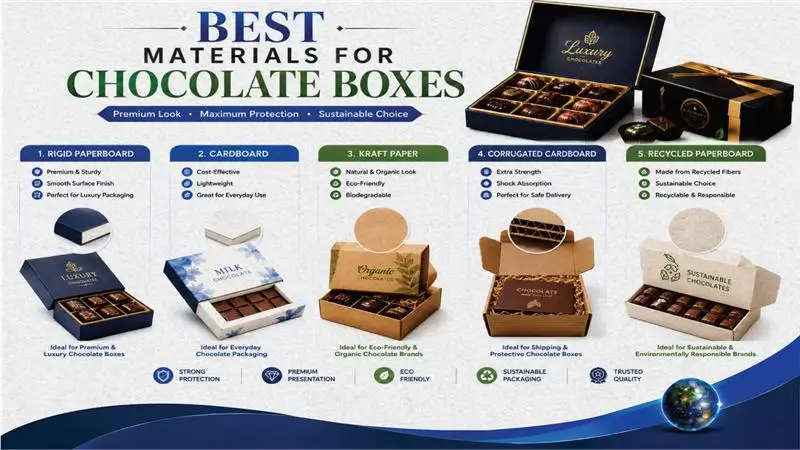
- Everyday options: cardboard and paperboard for simple, budget-friendly packaging.
- Protective options: corrugated cardboard and duplex board for shipping and durability.
- Sustainable options: kraft paper and recycled paperboard for eco-friendly packaging.
- Cost-effective options: clay-coated news back (CCNB) for affordable finishing.
- Compliance: Canada food packaging regulations and certification numbers.
- Extras: a comparison table, FAQs, and a personalized buying guide.
“Customers will occasionally buy products not because they want them but because of how they are presented to them.” — James Clear?
Top Materials Used For Chocolate Boxes
When it comes to the best materials for chocolate boxes, several factors are weighed together: strength, appearance, and food safety. Meanwhile, food-grade packaging is treated as the starting point of every discussion, since chocolate is sensitive to heat, moisture, and odour. In addition, luxury chocolate boxes and everyday cartons are shaped from the same base materials, only finished differently. Below, each material is explained one by one so that the best materials for chocolate boxes are chosen with confidence. After key packaging factors are understood, a closer look at the styles and customization options of Chocolate Packaging Boxes is offered for different products of chocolate.
1. Rigid Paperboard for Premium Chocolate Boxes
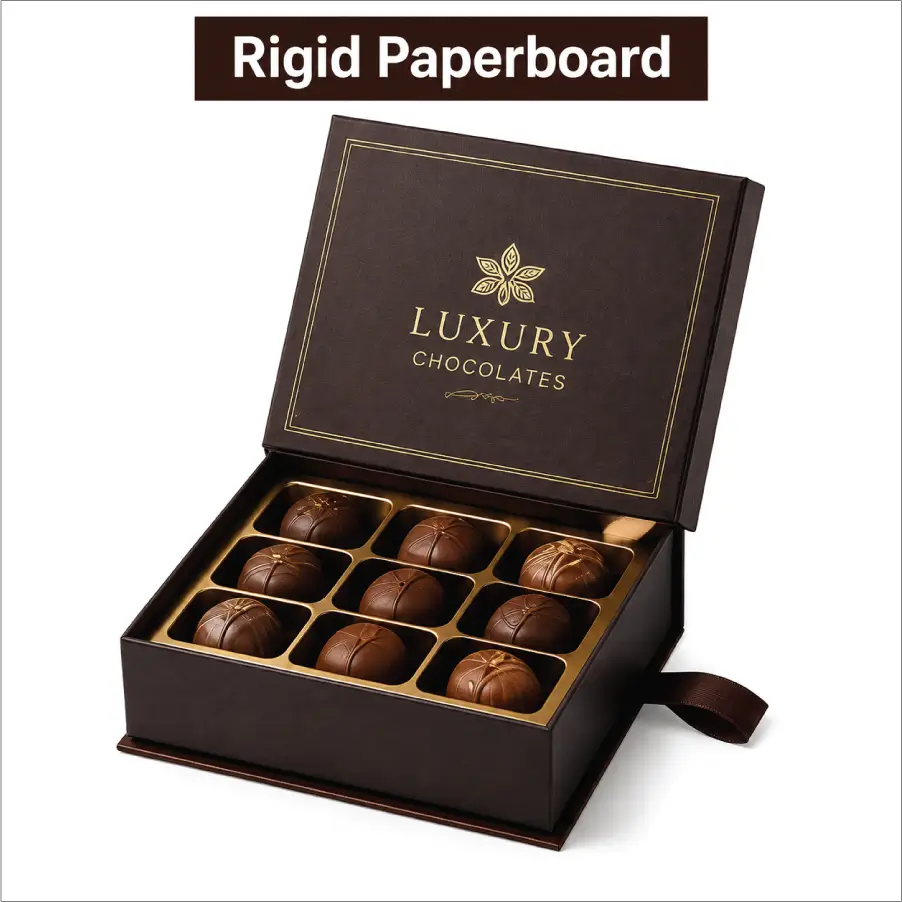
Rigid boxes are recognized as one of the strongest choices among the best materials for chocolate boxes, particularly where luxury branding is the goal.
- Structure: a rigid, thick-walled designis preferred for gift packaging, since a sturdy shape is maintained even under pressure.
- Finishing: premium finishes such as foil stamping and embossing are applied smoothly onto rigid surfaces.
- Closure style: a magnetic or lid-and-base design is often chosen for high-end gourmet chocolates.
- Overall impact: the reputation of the brand is strengthened through a box that feels substantial in hand.
- Related style: Rigid Box Packaging is also picked for stacked or multi-tier chocolate assortments beyond single bars.
“Good things come in small packages.” — Aesop
2. Cardboard Chocolate Boxes for Everyday Packaging
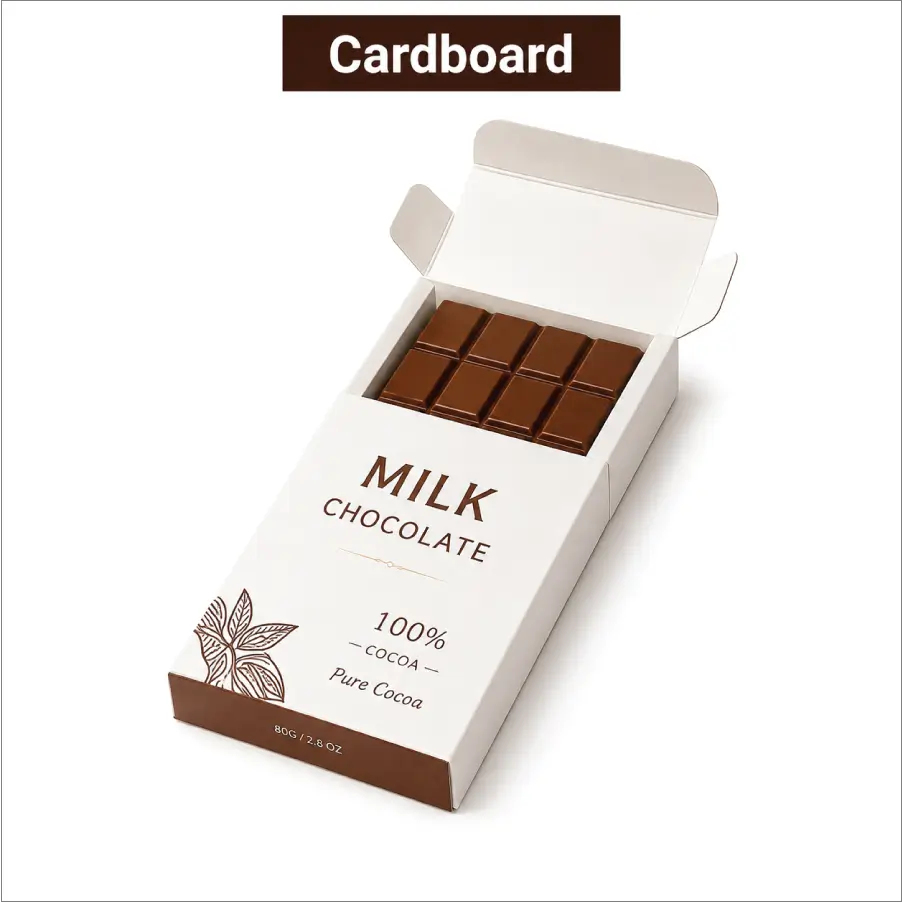
For daily retail packaging, cardboard is regarded as a practical and cost-friendly pick among the best materials for chocolate boxes.
- Added firmness: chipboard is sometimes layered underneath for extra strength.
- Print surface: a smooth finish is left open for logo printing or simple graphics.
- Cost balance: everyday needs of the brand are met without unnecessary expense.
- Bar-specific option: Custom Chocolate Bar Box Packaging is often designed from the same plain cardboard base for single-bar products.
3. Paperboard as a Versatile Material for Chocolate Boxes
- Flexibility: paperboard is shaped into folding cartons, sleeves, and inserts with ease.
- Strength grades: SBS paperboard is selected where a whiter, cleaner finish is desired.
- Printing compatibility: offset printing, digital printing, and CMYK printing are all supported on paperboard surfaces.
- Design Flexibility: die-cut design and window box design are achieved without extra tooling costs.
- Small-item format: Custom Card Tuck Boxes are folded from the same paperboard base for single or small chocolate pieces.
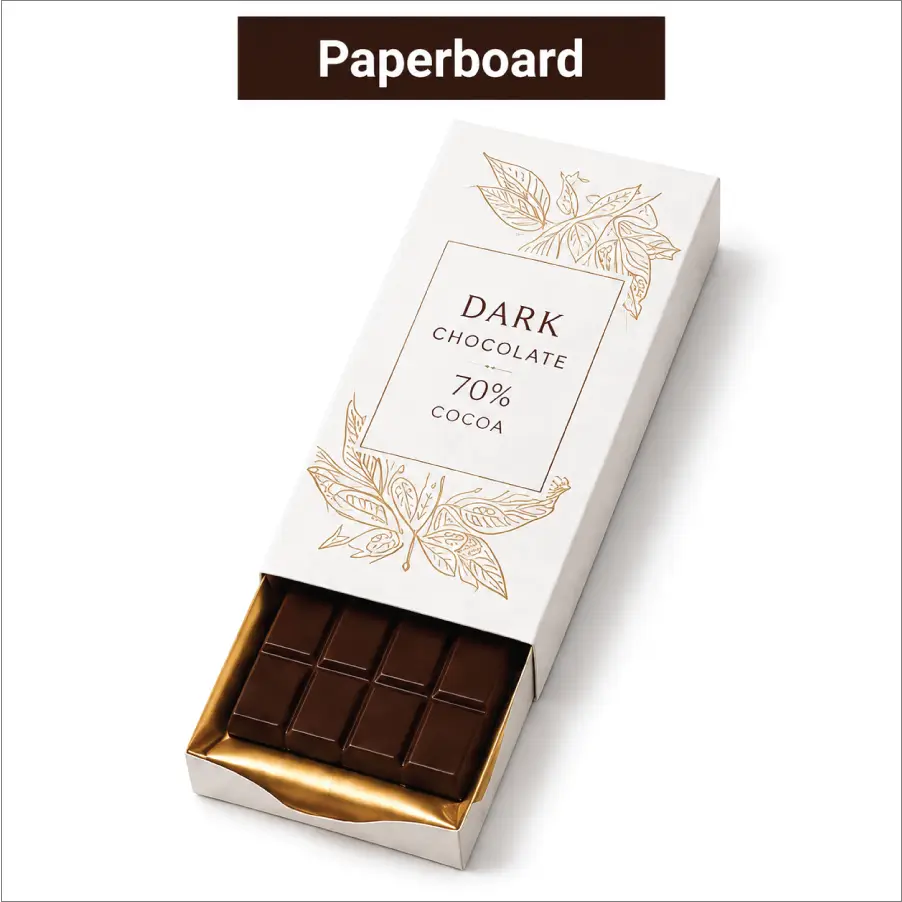
Paperboard is counted among the best materials for chocolate boxes whenever adaptability is the priority.
A more sustainable direction is explored for brands leaning toward greener packaging.
4. Kraft Paper Chocolate Boxes for Sustainable Packaging
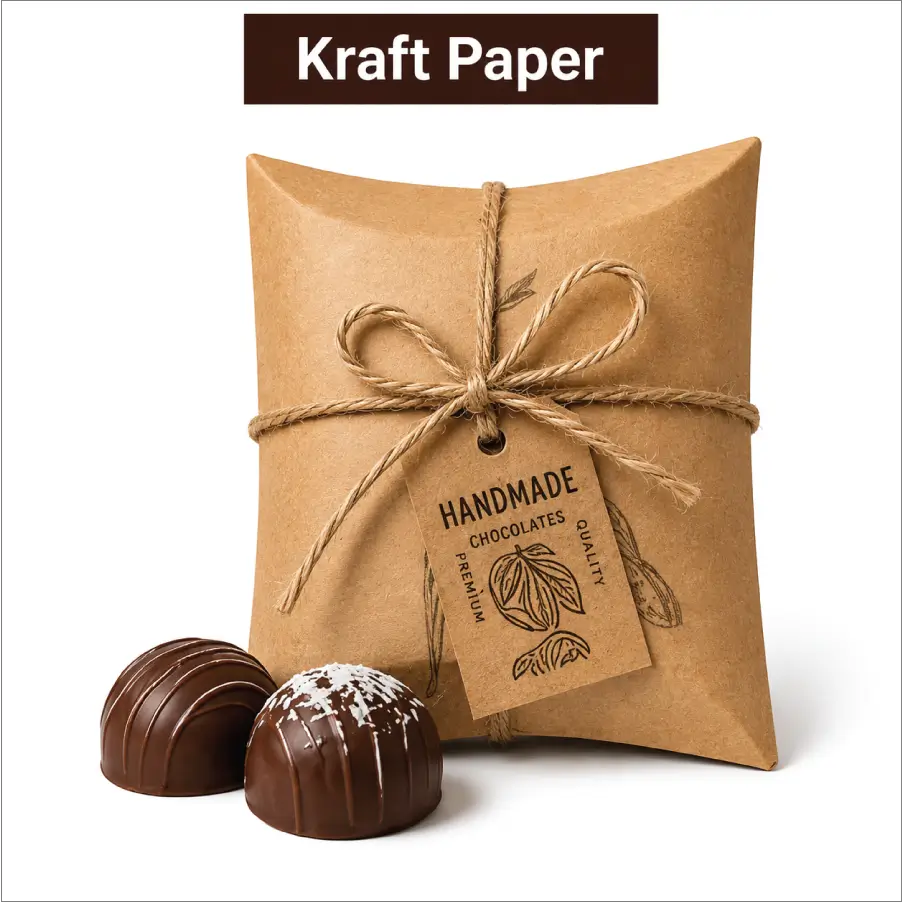
- Natural appeal: kraft paper is left in its raw, earthy tone for an organic look.
- Eco positioning: sustainable packaging goals are supported through unbleached, minimally processed fibres.
- Print options: food-safe inks are used for logo, since chocolate freshness protection is not compromised.
- Softer format: a Pillow Box is sometimes shaped from kraft stock for a curved, gift-like presentation.
Kraft paper is placed firmly among the best materials for chocolate boxes for brands that value an eco-friendly packaging identity.
A tougher, shipping-ready material is discussed right after this.
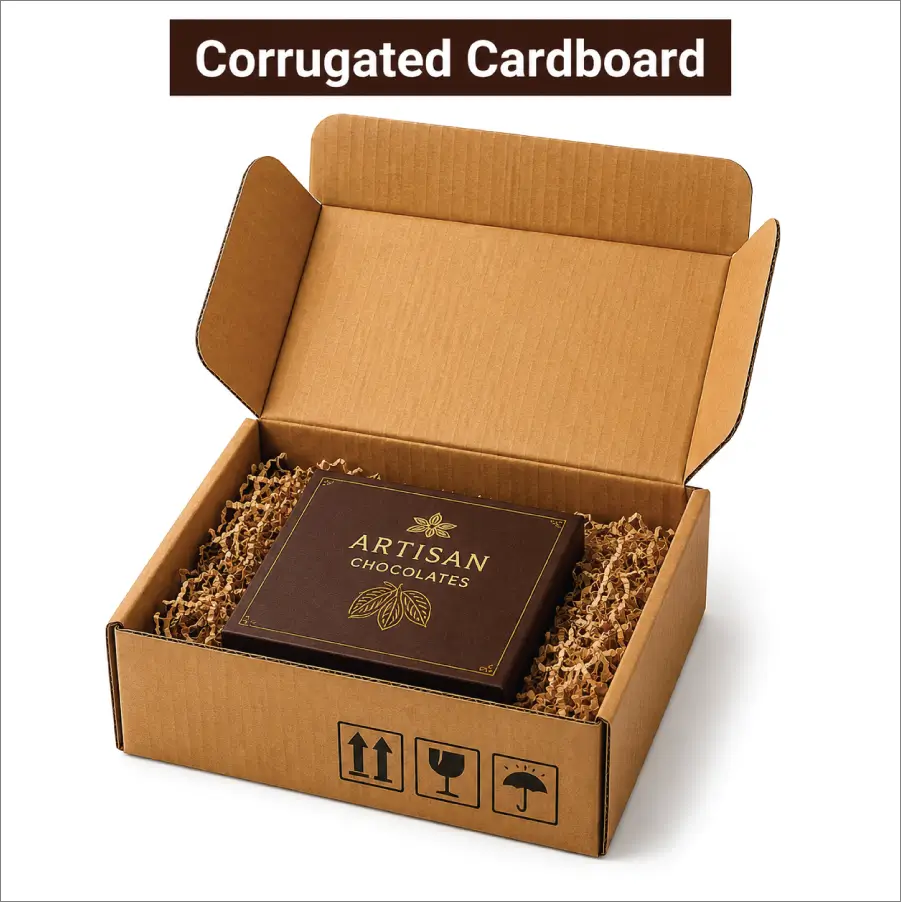
5. Corrugated Cardboard for Protective Chocolate Boxes
Corrugated cardboard is chosen where protective packaging is the main concern, especially for eCommerce packaging and bulk shipments. Among the best materials for chocolate boxes, this one is favoured wherever heavier or fragile assortments are shipped over long distances.
- Design: a fluted layer is placed between two flat sheets, and impact resistance is added without excess weight.
- Interior support: chocolate box inserts made from corrugated stock are used to separate individual pieces.
- Transit safety: breakage during shipping is minimized through this layered structure.
- Best fit: corrugated cardboard is regarded as one of the best materials for chocolate boxes when durability during travel is required.
A related, environmentally conscious paperboard option is covered next.
6. Recycled Paperboard for Eco-Friendly Chocolate Boxes
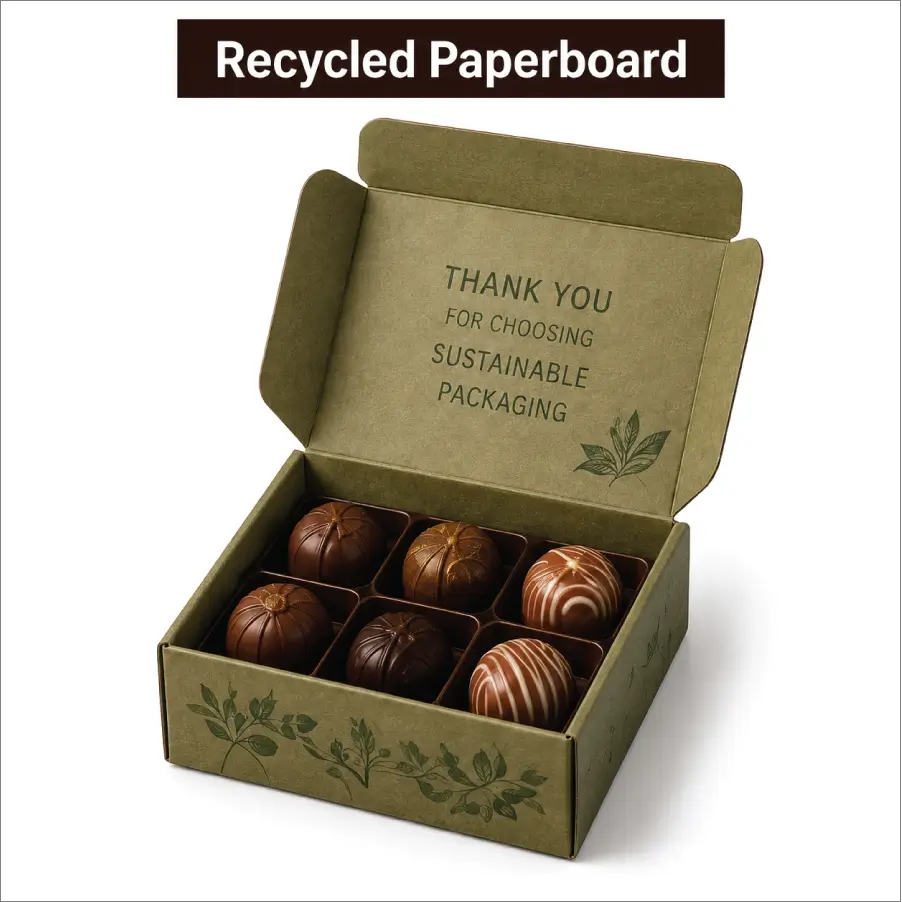
- Material source: recycled fibres are reprocessed into sturdy sheets suitable for chocolate cartons.
- Environmental value: recyclable packaging and compostable materials are prioritized together for a lower footprint.
- Plastic reduction: plastic-free packaging is achieved when recycled board is paired with paper-based inserts.
- Brand fit: biodegradable packaging is preferred by brands promoting responsible sourcing.
- Related category: Biodegradable Cookie Packaging is designed from this same recycled stock where cookies are sold alongside chocolate.
Recycled paperboard is considered one of the best materials for chocolate boxes for environmentally minded confectionery lines. A more rigid, heavy-duty board is introduced below for premium durability.
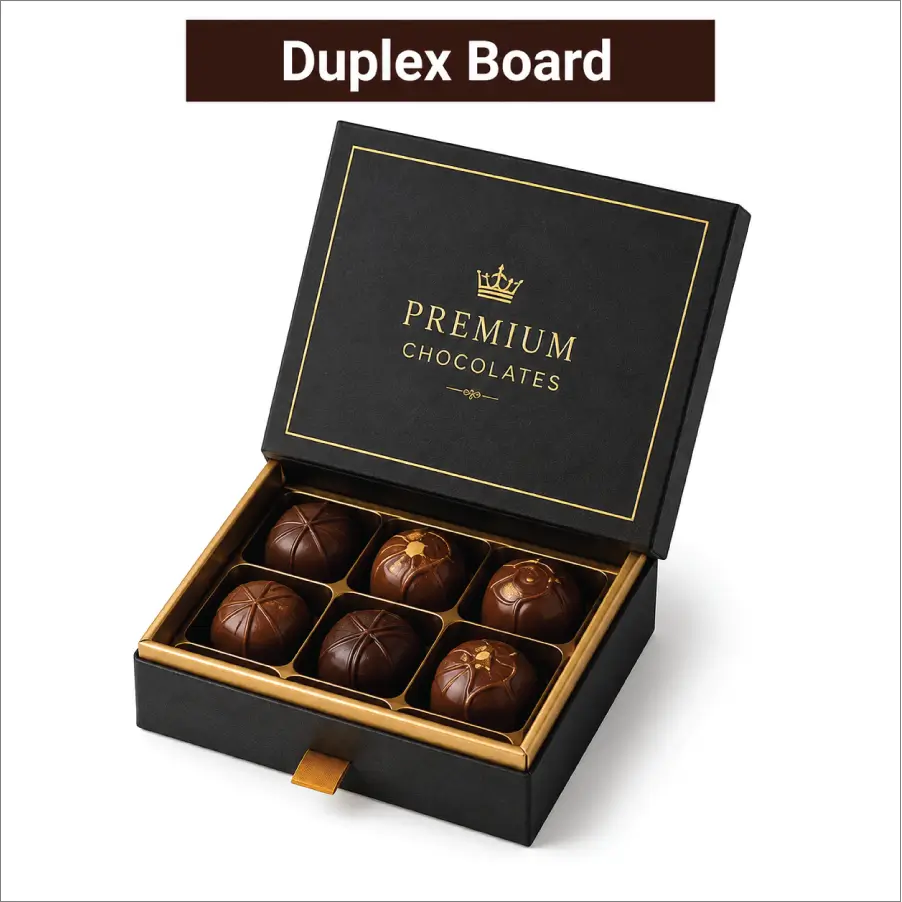
7. Duplex Board for Durable Chocolate Packaging
Duplex board is identified by a grey backing on one side and a white, printable surface on the other.
- Two-sided build: this combination is valued for custom chocolate boxes where strength and print clarity are both required.
- Colour accuracy: Pantone colours are matched precisely on the coated side.
- Freshness layer: a moisture barrier coating is added where extended freshness is needed.
- Positioning: duplex board is placed among the best materials for chocolate boxes for mid-range and premium product lines alike.
- Niche use: Mushroom Chocolate Bar Packaging is sometimes designed on duplex stock where a discreet, resealable structure is needed.
8. Clay Coated News Back (CCNB) for Cost-Effective Chocolate Boxes
CCNB is formed from a recycled base layer with a clay coating applied on top for a smoother print surface. Even among the best materials for chocolate boxes, this option is kept in mind whenever a tighter production budget is set.
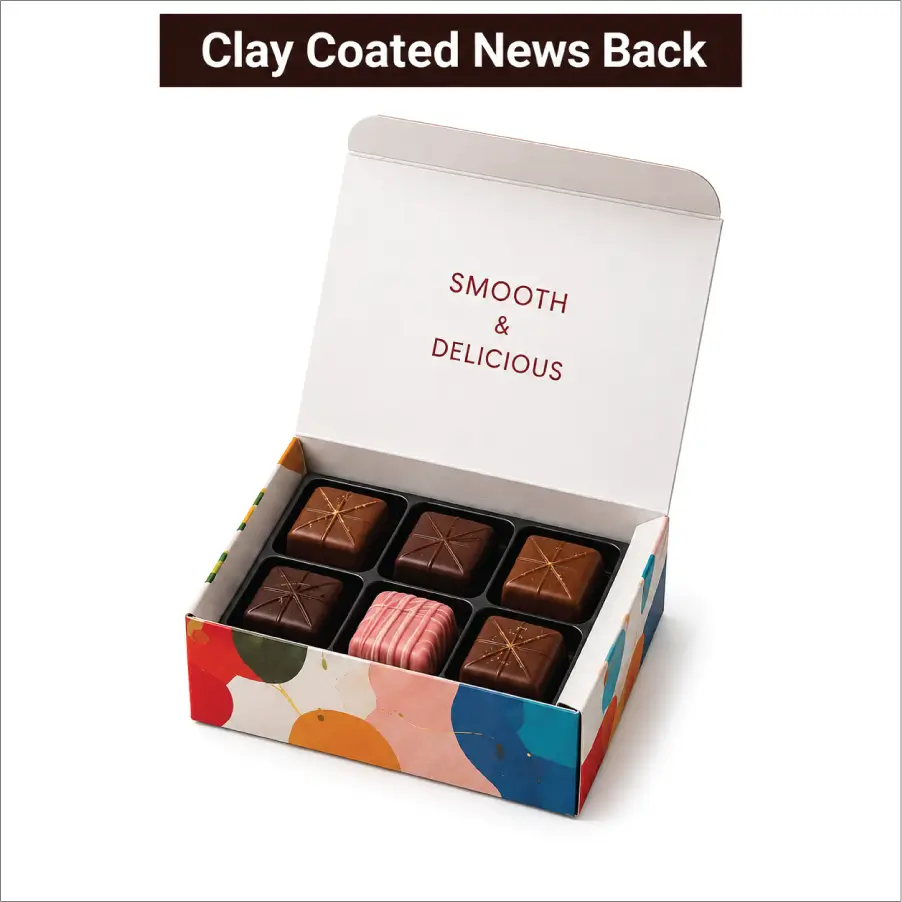
- Budget fit: this material is selected where a lower budget is combined with a reasonably clean finish.
- Extra protection: an oxygen barrier or grease-resistant coating is sometimes layered onto CCNB for confectionery items with higher fat content.
- Use case: everyday confectionery lines with moderate print needs are matched well with CCNB.
- Overall value: CCNB is counted among the best materials for chocolate boxes when affordability is placed above premium presentation.
- Loose-item format: Candy Pouch Boxes are also formed from CCNB stock where mixed or loose candy is packed.
Sustainable Packaging Trends For Chocolate Brands
Across the packaging industry, a shift toward eco-friendly packaging is being observed year after year. Furthermore, retail packaging is increasingly designed from FSC-certified paper, recyclable packaging, and compostable materials rather than plastic-heavy structures. Meanwhile, a PET window is still used in some window box designs, though a paper-based alternative is being tested by many suppliers. As a result, the perception of the brand is elevated when a visible commitment to sustainable packaging is shown through material choice, not just marketing language.
Even Custom Bags For Edibles are moving toward the same paper-based, resealable direction as this eco-conscious shift continues, further shaping how the best materials for chocolate boxes are selected industry-wide. Before any material is finalized, a look at Canadian compliance requirements is strongly recommended.
Canada Food Packaging Regulations and Certifications
Food-grade packaging is governed primarily under the Food and Drugs Act and Regulations. The following numbers are directly tied to chocolate and confectionery packaging:
- Section B.23.001: General safety rule stating that no substance harmful to the consumer may be transferred from packaging into food.
- Section B.23.003: Restriction on PVC formulations containing octyltin chemicals in food packaging.
- Division 23: The broader section covering food packaging material safety across Canada.
- Division 24, 25, and 28: Mandatory Health Canada review requirements for special dietary foods, infant formula, and novel foods packaging.
- LONO (Letter of No Objection): A voluntary Health Canada clearance confirming that a packaging material is considered safe.
- CCPSA: The Canada Consumer Product Safety Act, covering general labelling and material safety.
- ISO 22000: An international certification for food safety management systems.
Food safety and tamper-evident packaging requirements in Canada are treated as fixed and these numbers are kept on file whenever the best materials for chocolate boxes are sourced for the Canadian market. The same compliance standards are applied to related formats such as Lollipop Packaging, since sanitary handling matters just as much for smaller confectionery items. A side-by-side comparison of every core material discussed above is provided in the table below, summarizing the best materials for chocolate boxes at a glance.
Material Comparison Table
| Material | Strength Level | Best Suited For | Sustainability |
| Rigid paperboard | Very high | Luxury chocolate boxes, gift packaging | Moderate |
| Cardboard | Low to moderate | Everyday, low-cost packaging | Moderate |
| Paperboard / SBS | Moderate | Folding cartons, custom printed boxes | Moderate to high |
| Kraft paper | Moderate | Sustainable packaging, gourmet chocolates | High |
| Corrugated cardboard | High | Shipping, protective packaging | Moderate |
| Recycled paperboard | Moderate | Eco-friendly packaging | High |
| Duplex board | High | Durable, printed packaging of retail | Moderate |
| CCNB | Low to moderate | Cost-effective packaging | Low to moderate |
Still unsure which packaging style is the right fit? The guide How to Choose the Right Chocolate Packaging explains the key factors that should be considered before a final decision is made.For further guidance, explore the complete guide before finalizing the packaging of the product.
From custom designs to final production, Custom Packaging Vancouver is ready to support your packaging needs. Reach out today.
Conclusion
Everything about the best materials for chocolate boxes has been covered in a slightly different style than the usual list format. Rigid paperboard, cardboard, kraft paper, corrugated cardboard, recycled paperboard, duplex board, and CCNB were each explained individually, followed by sustainability trends and Canadian regulation numbers. A comparison table was also added for a quick, side-by-side view before a final material is chosen.
Frequently Asked Questions (FAQs)
Are chocolate boxes recyclable?
Most paper-based chocolate boxes, including kraft paper and recycled paperboard, are accepted through standard recycling streams in Canada.
What is the best material for a chocolate gift box?
Rigid paperboard ranks among the best materials for chocolate boxes when gift packaging is the goal, since a firmer structure and premium finishes such as foil stamping are well supported.
Does kraft paper protect chocolate from moisture?
A moisture barrier coating is usually added to kraft paper, since raw kraft stock alone is not fully resistant to humidity.
Which is better for everyday packaging, cardboard or paperboard?
Cardboard is generally chosen for basic, low-cost runs, while paperboard is preferred where a cleaner, more polished presentation of the product is needed.
How long is the shelf life of chocolate in paperboard boxes?
Shelf life is extended when a grease-resistant coating and moisture barrier are added, though exact timing depends on the chocolate formula itself.
Is corrugated cardboard suitable for shipping chocolate?
Yes, corrugated cardboard is one of the most reliable materials for eCommerce packaging, since impact protection is designed into its fluted structure.
How much can a chocolate box be personalized?
Size, shape, printing, inserts, and finishing are all personalized, and a fully custom structure is developed based on the chocolate shape and quantity.
Where can custom chocolate boxes be purchased?
Universal Packaging is offered as a reliable source for custom chocolate boxes, with material, printing, and finishing options handled in one platform.