Looking for an easy way to serve sauces with every meal? Single-Serve Condiment Packaging For Restaurants And Takeout is worth exploring. Discover sachet materials, opening styles, custom printing, portion control, recycling options, and Canadian regulations. Avoid leaks, inconsistent servings, and unnecessary costs with the right packaging choices. Learn how suitable sachet sizes and reliable seals reduce leaks, sauce waste, and serving inconsistencies. Scroll down to explore practical condiment sachet options for your restaurant and takeaway orders!
Discover Popular Single-Serve Condiment Packaging
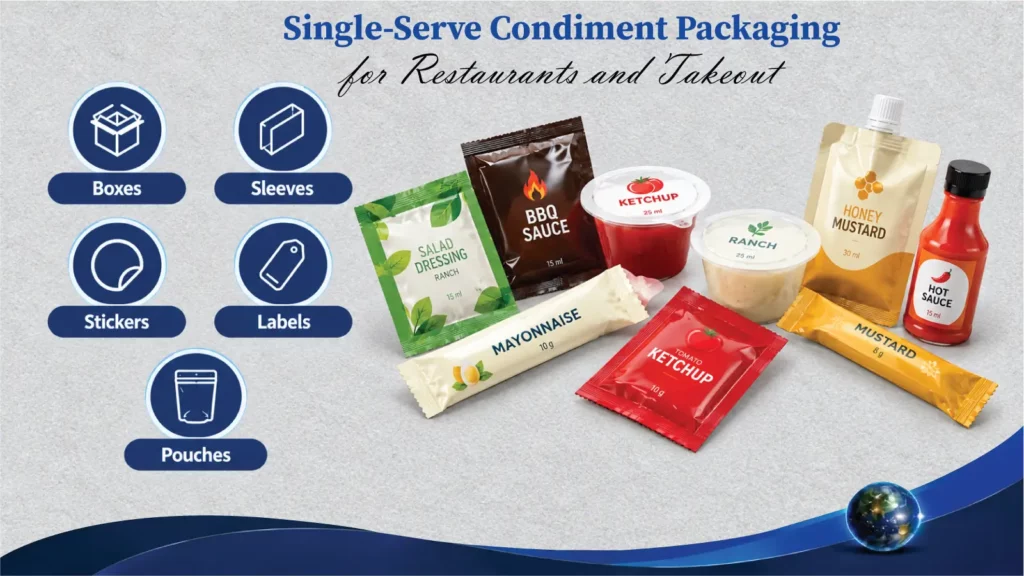
For restaurants serving burgers, fries, sandwiches, and takeaway meals, individual sauce sachets are a convenient option for portioned condiments. Single-serve condiment packaging for restaurants and takeout is commonly selected for ketchup, mustard, mayonnaise, barbecue sauce, hot sauce, and salad dressing. Let’s take a closer look at Custom Printed Sauce Pouches and discover the attractive finishes, vibrant colours, and features that make them stand out. Each sachet is sealed separately before distribution, with the quantity selected according to the serving requirements of the meal. Single-serve condiment packaging for restaurants and takeout is particularly practical during busy service periods, when individual portions are prepared alongside orders and customers prefer sealed servings for takeaway meals.
Explore Amazing Materials for Individual Sauce Packaging
The selection of material is an important consideration when ordering single-serve condiment packaging for restaurants and takeout. The composition of each sauce, its oil content, acidity, storage conditions, and expected shelf life should be reviewed before the material is approved. Common materials used in flexible sachets include BOPET, PET, BOPP, CPP, PE, LDPE, EVOH, aluminium foil for Custom Printed Foil Pouches, laminated films, and multilayer films.
Each material is selected according to the barrier, flexibility, printability, and sealing requirements of the product being filled. For single-serve condiment packaging for restaurants and takeout, the compatibility of the material structure with the sauce, filling process, and storage conditions should be confirmed before commercial production. For knowing a strong material option to preserve them, have a look at How To Reduce Leakage Risks In Sauce Packet Packaging to minimize the risk of packaging.
Identify Key Features of Restaurant Condiment Packaging
Different opening styles are considered according to the thickness of the sauce and the preferences of customers. View Condiment Packaging and discover packaging options, custom printing possibilities with their suitable usage. For single-serve condiment packaging for restaurants and takeout, the following features are worth comparing before making a final selection.
| Feature | Description | Suitable Use |
| Tear notch | A small cut near the edge is incorporated for easier opening. | Ketchup and mayonnaise sachets |
| Serrated edge | A specially cut edge is included for convenient tearing. | Individual sauce packets |
| Heat sealed | The edges are sealed through the application of heat and pressure. | Flexible condiment sachets |
| Spout | A dispensing opening is incorporated into a compatible pouch. | Larger sauce portions |
The selection of single-serve condiment packaging for restaurants and takeout should be based on opening convenience, seal integrity, portion size, and resistance to leakage. Restaurants should also review the performance of sample sachets before approving a production order.
Examine Custom Printing and Branding Options
Custom printing is worth considering when ordering single-serve condiment packaging for restaurants and takeout. The name of the restaurant, logo, colour scheme, and applicable product information may be printed directly onto the selected film. Dive into Condiment Pouches and discover the convenient formats, reliable sealing methods, and customization options available for restaurant sauces. The readability of the text should be checked against the available printing area, particularly when the sachet size is small. Printing methods are selected according to the material and production specifications. With single-serve condiment packaging for restaurants and takeout, the presentation of the brand should remain consistent with the restaurant’s established visual style. Required ingredient and allergen information must also be reviewed.
Increase Portion Control Across Restaurant Takeout Orders
Consistent serving quantities are important when managing food costs and customer satisfaction. Single-serve condiment packaging for restaurants and takeout is commonly selected for measured portions of sauces served alongside individual meals. Like, 7 g ketchup sachets may be selected for fries, while 10 g mayonnaise packets may be preferred for burgers, depending on serving preferences. Standardized quantities simplify preparation during busy periods and reduce the need for manual portioning. Let’s explore Sauce Pouch Packaging and uncover the material options, sealing features, and printing possibilities suited to different sauce products. For single-serve condiment packaging for restaurants and takeout, the quantity per sachet should be determined according to menu requirements, customer preferences, and the expected cost per serving.
Explore Sustainable Materials and Recycling Options
Sustainability is an important consideration when evaluating single-serve condiment packaging for restaurants and takeout. Some sachets contain multiple bonded layers for barrier protection, and these structures may not be accepted through conventional recycling programmes. Restaurants should ask suppliers about mono-material films, recyclable alternatives, recycled content where appropriate, and supporting environmental documentation. The suitability of any alternative must be confirmed for food contact and the apple sauce being filled. Explore Apple Sauce Pouches Bulk and discover the material choices suited to larger orders. For single-serve condiment packaging for restaurants and takeout, Eco-Friendly-Sachet-Packaging should reflect the actual material composition and the requirements of local collection facilities. Environmental claims must be accurate and evidence-based.
Understand Canadian Food Packaging Regulations
Before purchasing single-serve condiment packaging for restaurants and takeout, Canadian businesses should review applicable food safety, food-contact, and labelling requirements. The following Canadian legislation and regulations are important considerations for Mylar Bags For Food Storage:
- Food and Drugs Act: Review the applicable requirements concerning food safety and the prevention of misleading representations.
- Food and Drug Regulations, Division 23: Check the applicable provisions concerning materials used in food packaging.
- Safe Food for Canadians Regulations (SOR/2018-108): Review relevant requirements according to the food business activities and product category.
- Consumer Packaging and Labelling Act (R.S.C., 1985, c. C-38): Check applicable requirements for prepackaged non-food information and representations.
- Consumer Packaging and Labelling Regulations (C.R.C., c. 417): Review applicable requirements concerning declarations such as net quantity and product information.
Depending on the product and sales format, labelling details may include the common name, net quantity, ingredients, and allergen declarations. Supplier documentation should be reviewed to confirm the suitability of the material structure for the intended sauce and filling conditions. Environmental claims must also be accurate and supported by evidence. These checks help businesses assess single-serve condiment packaging for restaurants and takeout against the Canadian requirements applicable to their products.
Calculate Packaging Costs for Takeout Businesses
When budgeting for single-serve condiment packaging for restaurants and takeout, restaurants should consider more than the unit price. Printing charges, material specifications, minimum order quantities, freight costs, storage requirements, and potential wastage should also be included in the calculation. Larger orders may reduce the cost per sachet, but excess inventory can occupy valuable storage space and tie up working capital.
For single-serve condiment packaging for restaurants and takeout, quotations should be compared according to the same specifications, including packet dimensions, material composition, printing requirements, order quantities, and delivery times. Sample testing is recommended before a large production order. Get affordable solutions from Cheap Price Custom Packaging Companies for restaurants and food businesses. Contact Universal Packaging to get condiment packaging, including the required sizes, colours, printing specifications, and order quantities.
Conclusion
Selecting single-serve condiment packaging for restaurants and takeout involves reviewing material suitability, serving quantities, opening styles, sealing performance, printing requirements, and total costs. Restaurants should also consider food-contact compliance, applicable Canadian labelling rules, and the recycling options associated with the selected material. Sample testing is recommended before production, particularly when a new sauce or filling process is involved. With single-serve condiment packaging for restaurants and takeout, restaurant owners can establish consistent serving practices and a professional presentation of the brand. Universal Packaging is a Canadian supplier to contact regarding custom sachet specifications and ordering requirements.
Frequently Asked Questions (FAQs)
What is single-serve condiment packaging?
Single-serve condiment packaging consists of individually sealed sauce portions, including ketchup, mustard, mayonnaise, and salad dressing, for restaurant meals.
Which sauces are commonly sold in sachets?
Ketchup, mayonnaise, mustard, barbecue sauce, hot sauce, soy sauce, and salad dressing are commonly supplied in individual sachets.
What is the difference between sachets and spouted pouches?
Sachets typically have sealed edges and tear openings, while spouted pouches feature dispensing openings for controlled pouring.
How do restaurants choose the right packet size?
Packet size is determined according to menu requirements, serving quantities, sauce thickness, customer preferences, and food cost considerations.
Are condiment sachets recyclable in Canada?
Recyclability depends on material composition and local facilities. Restaurants should verify supplier documentation and municipal recycling guidelines before making claims.
Where can restaurants buy custom condiment sachets in Canada?
Restaurants can contact Universal Packaging in Canada to discuss custom sachet sizes, printing specifications, materials, and order quantities.
What should restaurants check before ordering condiment packets?
Restaurants should review food-contact suitability, seal integrity, portion size, print accuracy, minimum order quantities, delivery times, and applicable Canadian requirements.