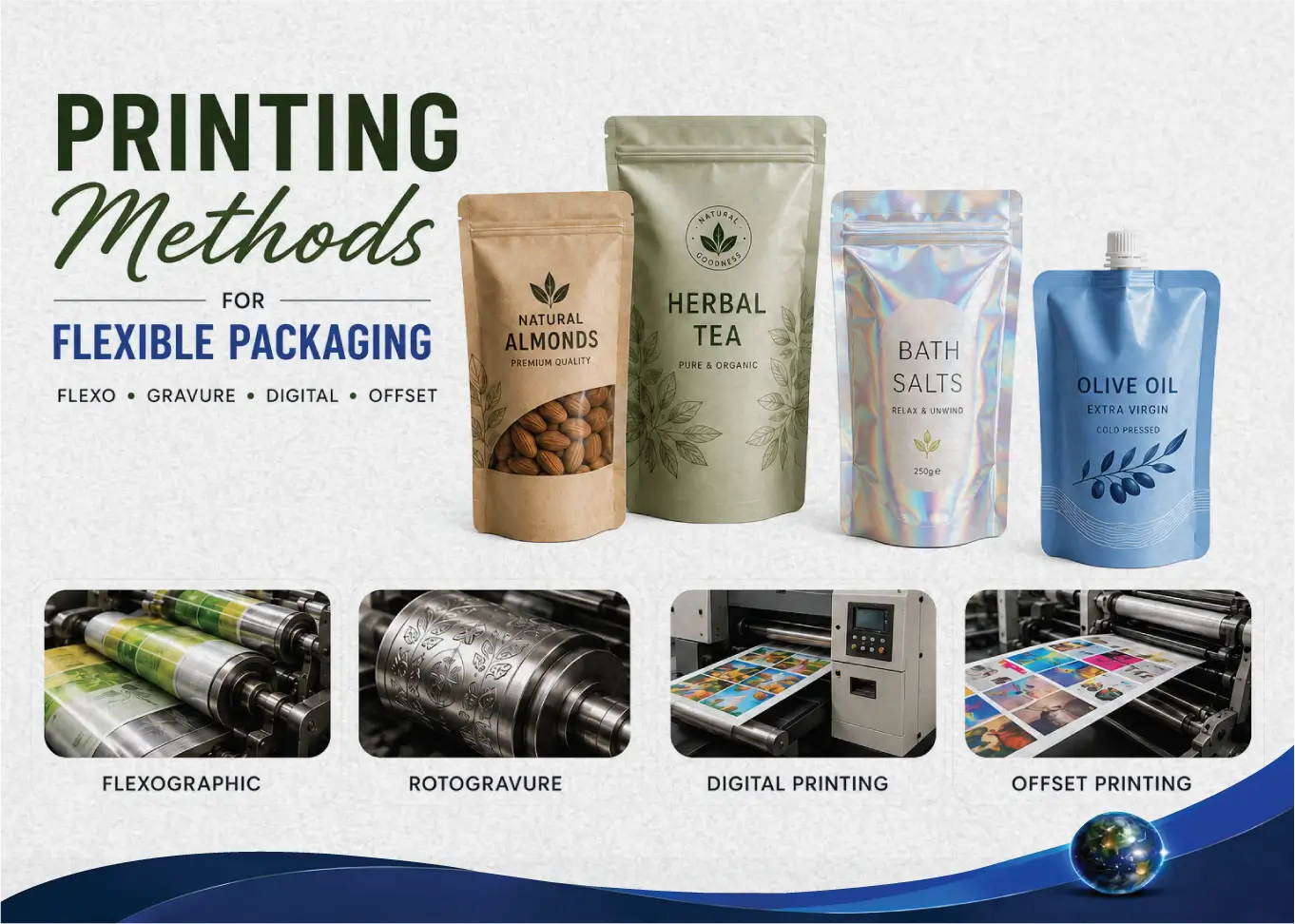
What is behind the bright colours and sharp details seen on a pouch or wrapper? Even after repeated folding and handling, the printed appearance is maintained with remarkable consistency. During production, careful attention is given to artwork, quality, and Printing Methods For Flexible Packaging. In the sections ahead, the processes behind these results are revealed, along with the factors through which the most suitable method is selected.
What Does Printing On Flexible Packaging Mean?
Printing is used for the implementation of designs, colours, artworks, and text on soft, bendable flexible packaging made from film, foil, and laminated paper. Compared with rigid boxes, lighter and more flexible surfaces are involved, so controlled ink application is required for even coverage. Before the printing process is explored further, a clear understanding of the materials, combinations, and uses of this packaging format may also be useful, as covered in What Is Flexible Packaging? A Complete Guide.
Different printing methods for flexible packaging are then selected according to material type, order size, required detail, budget, and production timeline.
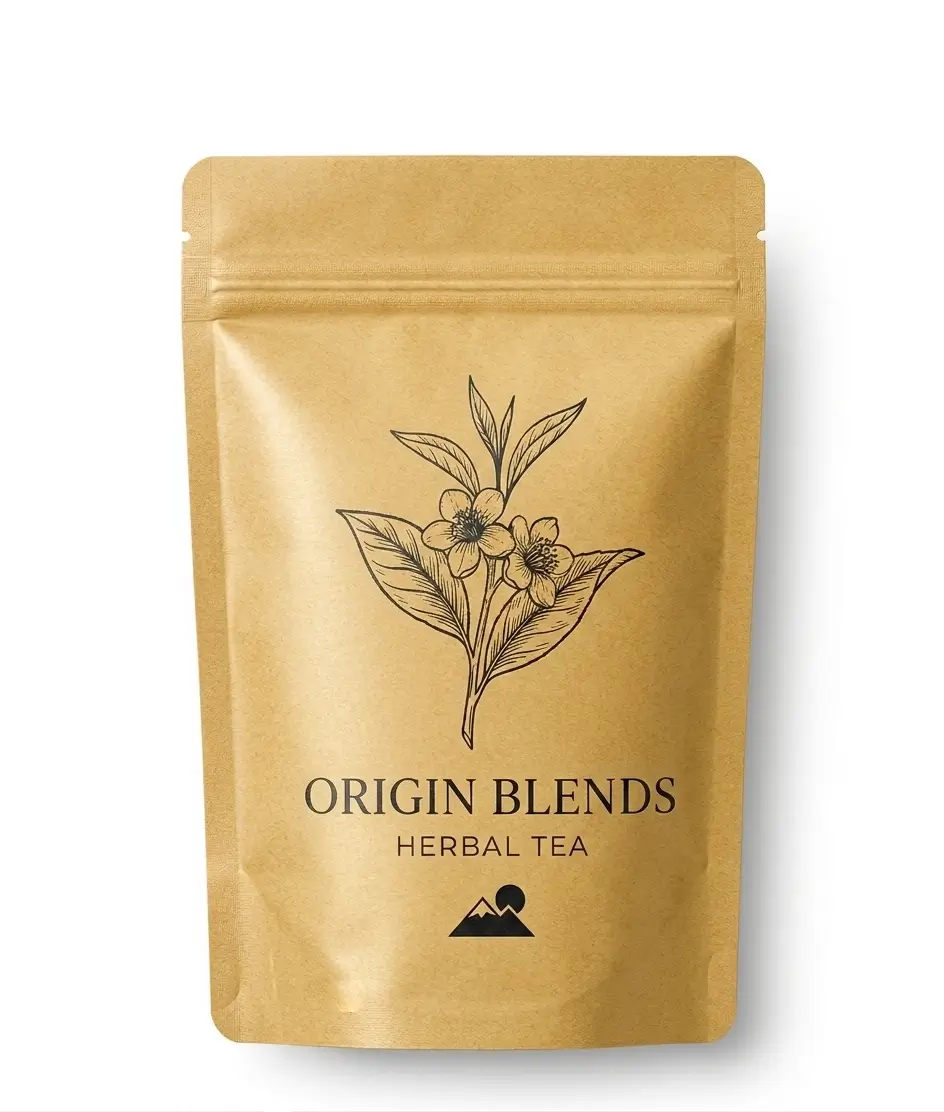
For formats such as Custom Printed Stand Up Pouches, careful alignment, colour control, sealing-area placement, and artwork preparation are usually required. Through these checks, clear results are maintained across the printed surface. A detailed understanding of printing methods for flexible packaging is therefore required before production is started.
An explanation of why the selection process matters is provided in the next section.
Why Choosing The Right Printing Method Matters?
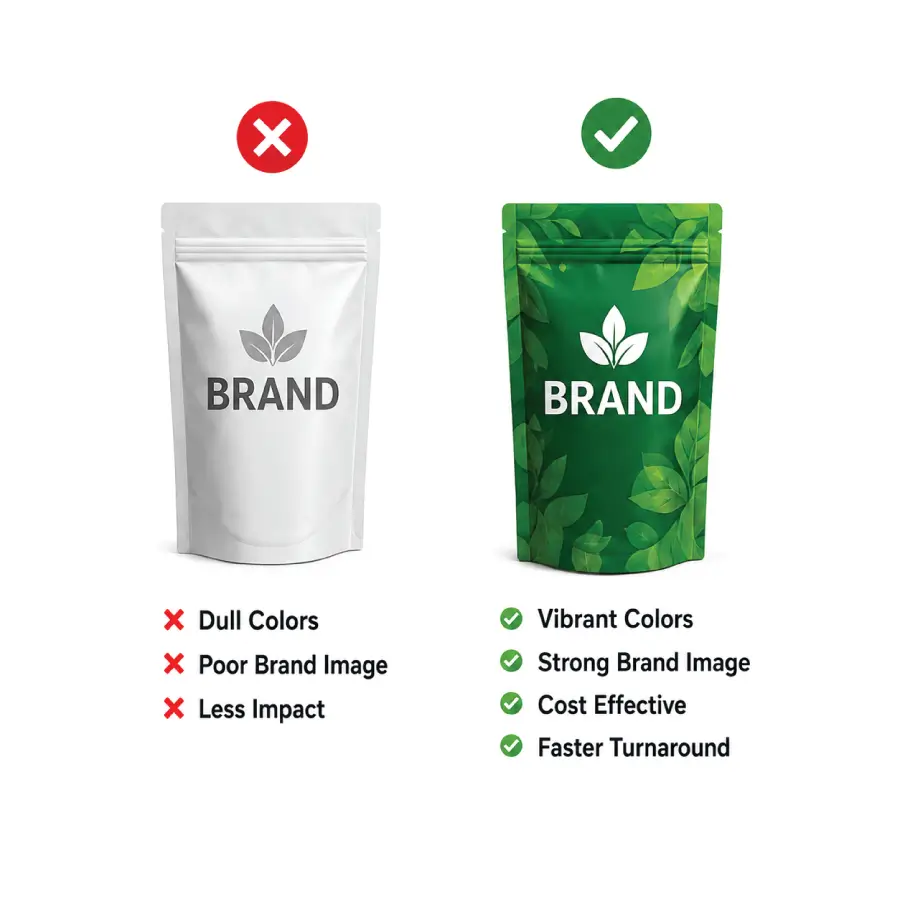
The correct selection among printing methods for flexible packaging is important because the identity of the product is shaped through consistent colour, accurate text, and clear detail. The image of the brand is strengthened when a professional and well-finished appearance is maintained. Costs are controlled when the selected process is matched with the required order size, while turnaround time is reduced when short runs are assigned to an appropriate production method.
“Packaging can be theater; it can create a story.” — Steve Jobs
For a format such as Custom Kraft Stand Up Pouch, the appearance of natural paper texture, fine text, and printed colour must be reviewed together. The perception of the brand is improved when the same quality level is maintained across every batch. Better control over waste, colour, and setup cost is also achieved when printing methods for flexible packaging are compared before an order is approved.
Types Of Printing Methods For Flexible Packaging
Several printing processes are used across the industry. Selection is completed according to production volume, substrate type, design complexity, colour requirements, turnaround time, and setup cost. Different levels of detail, consistency, personalization, and efficiency are achieved through these processes.
For formats such as Customized Spout Pouch, close attention is given to curved areas, spout placement, sealing zones, and distortion control. In the following sections, the major printing methods for flexible packaging are explained through their main benefits, technical characteristics, colour performance, and best use cases.
1. Screen printing for flexible packaging
In this process, ink is transferred onto the screen through a plate in which the design is made. Fast-drying inks are used, and efficient production is achieved across long runs. Among printing methods for flexible packaging, screen printing is commonly selected for high-volume orders and repeat production.
- Key Benefit:
High-speed production and consistent output are achieved through this method. - Material Compatibility:
A wide range of materials is handled effectively, including packaging films, foil, and paper. Applications involving Flexible Retort Pouch Packaging are also produced through carefully selected inks, laminations, and heat-stable materials. - Ink Compatibility:
Several ink systems are accommodated, including solvent-based formulations, water-based inks, and UV-curable options. For regulated applications, food-safe inks are selected according to contact, migration, and compliance requirements. - Printing Approach:
For many films, surface printing is completed on the outer layer, while reverse printing is completed on the inner side of a transparent film before lamination. The selected approach is determined by the required finish and level of protection. - Colour performance:
As included in the best printing methods for flexible packaging, its metallic and pastel shades are reproduced with reasonable accuracy. Suitability for food and beverage applications is achieved when colour targets and ink behaviour are controlled correctly. - Best Use Case:
This method is best suited for long production runs with simple to moderately detailed designs.
2. Rotogravure Printing for flexible packaging
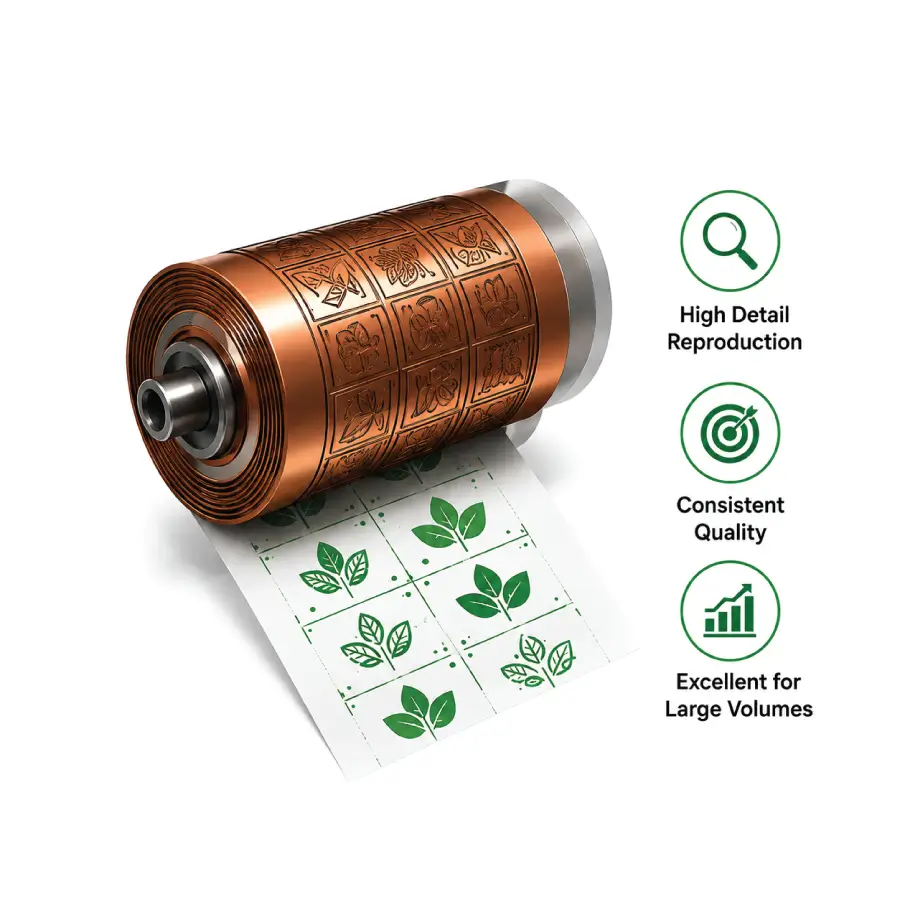
In this process, tiny cells are engraved into a copper cylinder. Ink is held within the engraved cells before being transferred onto the selected material. Among printing methods for flexible packaging, rotogravure is usually selected when exceptionally large production volumes and fine image detail are required.
- Key Benefit:
Excellent colour consistency and fine image detail are achieved through this process. - Image performance:
Smooth gradients, photographic images, and high-resolution graphics are reproduced with a high level of accuracy. - Material combinations:
As included in the best printing methods for flexible packagingComplex applications involving aluminum foil laminates and multi-layer packaging combinations are commonly produced through carefully controlled gravure conditions. Strong barrier performance is achieved when the correct films, coatings, adhesives, and sealing layers are combined. - Durability Requirements:
For demanding applications, heat resistance, moisture resistance, and print durability are reviewed before production. Testing is completed according to rubbing, handling, filling, storage, and transportation conditions. - Best Use Case:
This method is best suited for exceptionally large production runs, often reaching millions of metres.
The search phrase Custom Mylar Bags Near Me is often associated with suppliers offering printed barrier bags, but production suitability is still determined by order volume, material structure, and required print quality.
3. Digital Printing for flexible packaging
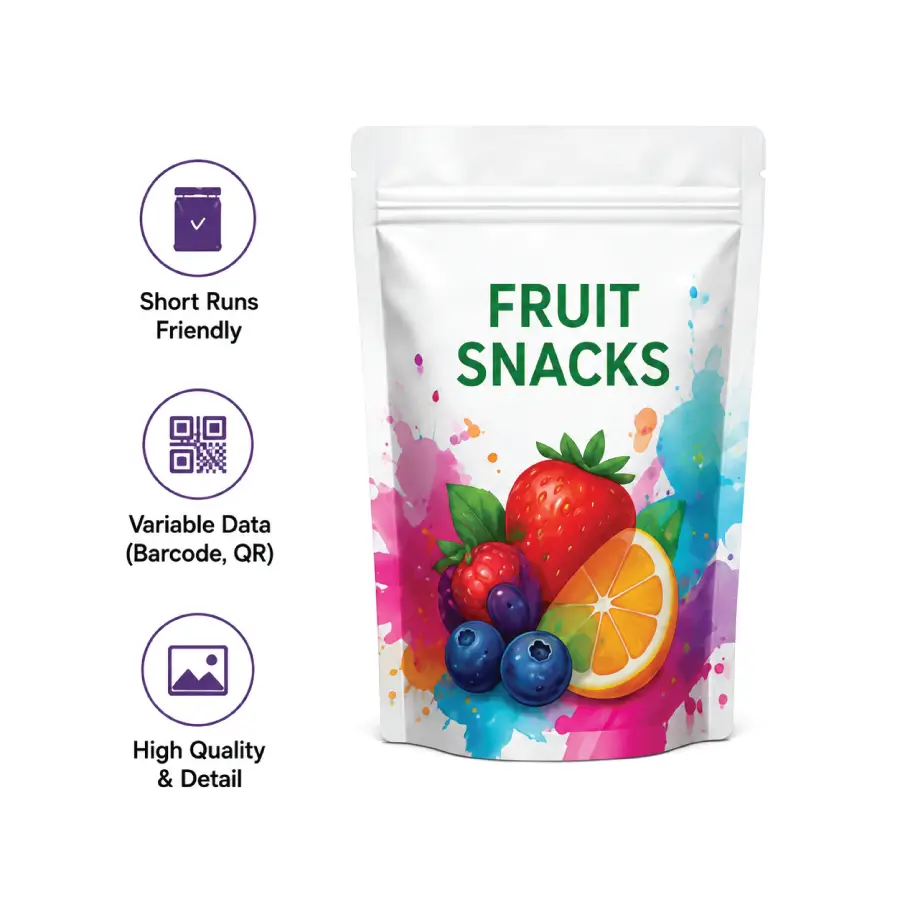
No plates or cylinders are used because artwork is printed directly through inkjet or toner-based technology. Fast preparation and greater flexibility are achieved for short production schedules. Within modern printing methods for flexible packaging, digital production is commonly selected for smaller quantities and frequent artwork changes.
- Key Benefit:
Fast turnaround and easy personalization are achieved through this method. - Variable Information:
Through variable data printing, different flavours, SKUs, barcodes, names, codes, and regional details are printed within the same production programme. - Artwork Changes:
Updates to packaging artwork are completed quickly between print jobs without additional plate or cylinder expenses. This approach is often selected for custom packaging printing when frequent design revisions are expected. - Short-Run Applications:
Small batches of custom-printed pouches are produced for trials, launches, seasonal campaigns, and market-specific requirements. Different versions of Custom Food Bags And Pouches are also prepared without lengthy setup periods. - Industry Applications:
Short-run snack packaging, pet food packaging, and pharmaceutical packaging are produced when multiple versions, rapid testing, or lower initial quantities are required. - Best Use Case:
This method is best suited for short production runs, product testing, personalized orders, and multiple design versions.
4. Offset Printing for Flexible Packaging
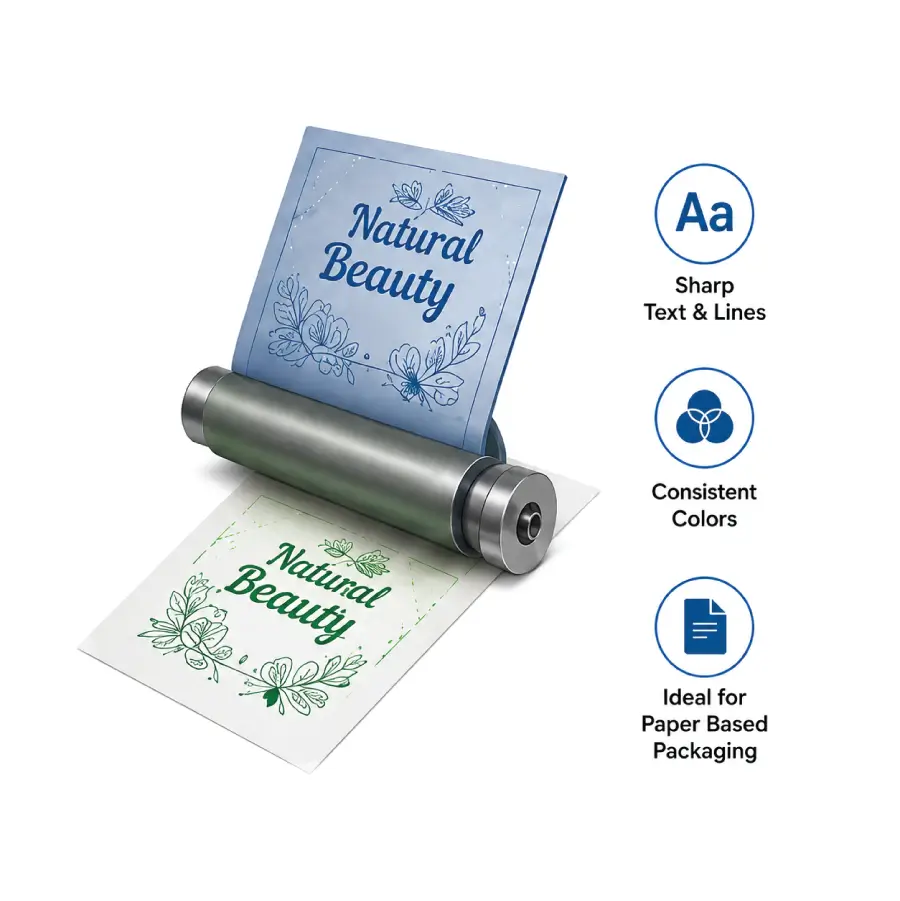
In offset production, ink is first transferred from a printing plate onto a rubber before being applied to the material. Among printing methods for flexible packaging, this option is mainly selected for paper-based flexible packaging.
- Key Benefit:
Sharp graphics and high-quality detail are achieved, particularly on coated paper-based surfaces. - Material Suitability:
Better results are generally achieved on paper than on flexible or stretchy film. - Detail performance:
As discussed in one of the best printing methods for flexible packaging, a fine text and small typefaces are reproduced clearly. Detailed ingredient information, instructions, and packaging print compliance content are therefore presented more effectively. - Finish Quality:
A smooth and glossy appearance is achieved on coated paper stocks. For premium packaging design, additional enhancement is often completed through specialty finishes such as varnish, foil effects, or selective coating.
- Application Range:
This method is frequently selected for paper wraps, sleeves, labels, and certain food packaging printing applications. Controlled pouch printing may also be completed when a suitable paper-based construction is used. - Best Use Case:
This method is best suited for medium production runs where sharp details and high-quality graphics are required.
For a closer look at available formats, explore Flexible Pouch Packaging options designed around the protection, presentation, and visibility of the product.
How To Choose Among Printing Methods For Flexible Packaging?
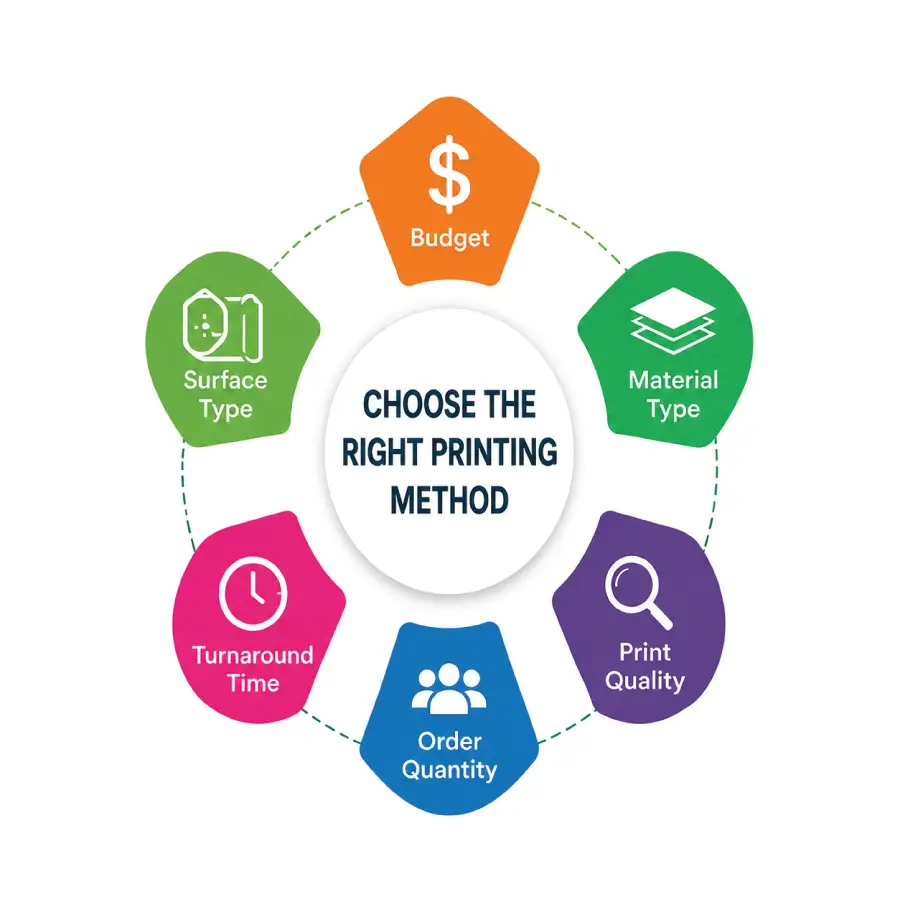
Several factors are considered when printing methods for flexible packaging are compared. Order volume, run length, substrate type, budget, turnaround time, design detail, and the requirements of the brand are reviewed before a final decision is made.
The visibility of the product on a shelf is also considered, particularly when clear graphics, accurate colour, or a stronger visual effect is required. The protection of the product is reviewed through material, seal, barrier, and resistance requirements.
Sustainability targets are included in the evaluation as well. Lower environmental impact is pursued through suitable ink systems, reduced waste, efficient run planning, and recyclable flexible packaging where appropriate. A balanced decision is reached when all available processes are assessed together with cost, quality, timing, and environmental targets.
“Recycling, packaging, businesses are changing all of those things because that’s what consumers want.” — Jerry Greenfield
Latest Trends In Printing Methods For Flexible Packaging
Several important changes are being seen across the flexible packaging industry. Greater focus is being placed on sustainability, production efficiency, and changing market demand.
- Sustainable Inks: Greater use of recyclable materials, sustainable inks, and efficient production is being seen across the industry.
- Printing Improvements: Reduced waste, water-based inks, better colour control, and improved energy efficiency are being prioritized.
- Growing Demand: Increased demand is being seen for stand-up pouches, spouted packs, retort formats, and custom food packaging.
Ready to turn the right printing choice into finished packaging? Explore Canadian Custom Packaging, where every detail is planned according to the requirements of the brand and the protection and presentation of the product. Contact us now to discuss your packaging project.
Conclusion
A complete overview of screen, gravure, digital production, and offset production is presented as part of the major printing methods for flexible packaging. Each process has been explained through its benefits, technical features, image quality, and most suitable production volumes. Through this information, a more informed decision is made when printing methods for flexible packaging are selected for future packaging requirements. Whether long runs, short batches, or personalized versions are needed, a suitable route is identified according to the identity of the product, the image of the brand, cost, quality, and timing.
Frequently Asked Questions (FAQs)
What are the main printing methods for flexible packaging?
Screen, rotogravure, digital production, and offset production are included among the main methods. Selection is completed according to order size, material, artwork, and required quality.
Which printing method is best for short runs?
A digital process is generally preferred for short runs because no plates or cylinders in printing machines are required before production begins.
Is a digital process cost-effective for flexible packaging?
Cost-effectiveness is generally achieved for smaller batches, although a higher per-unit cost is often found at large volumes compared with screen or gravure.
What is the difference between screen and gravure?
In the screen method, ink is transferred through a designed plate screen. In gravure, ink is transferred from engraved cells on a copper cylinder, through which finer detail and a higher initial cost are usually associated.
Is offset printing used on flexible film?
Yes, offset printing is used more commonly on paper-based materials because sharper results are generally achieved on paper than on stretchy film.
With which method is the best colour accuracy achieved?
Excellent colour consistency is widely associated with gravure, especially when high-quality results are required across very large volumes.
How is the right printing method chosen for a product?
The method is chosen according to order volume, type, budget, turnaround time, and the level of detail required in the design.
Are environmentally responsible inks and materials used?
UV-curable and lower-impact ink systems, recyclable combinations, and mono-material films are increasingly adopted across the industry.
By which factors is the cost of printing affected?
Cost is affected by order volume, material type, number of colours, design complexity, setup requirements, finishing, and the selected production method.