Think all mylar bags are the same? A closer look at their thickness tells a very different story. The answer lies in mylar bag thickness, measured in different sizes and having different capacities, such as 3.5g, 7g, 14g, and 28g. This small difference has a direct impact on protection, durability, storage, and even packaging costs. This mylar bag thickness comparison (3.5g, 7g, 14g, 28g) helps you understand how each option performs, making it easier to choose the right packaging for your product. Let’s dive in and discover which thickness best suits your packaging needs.
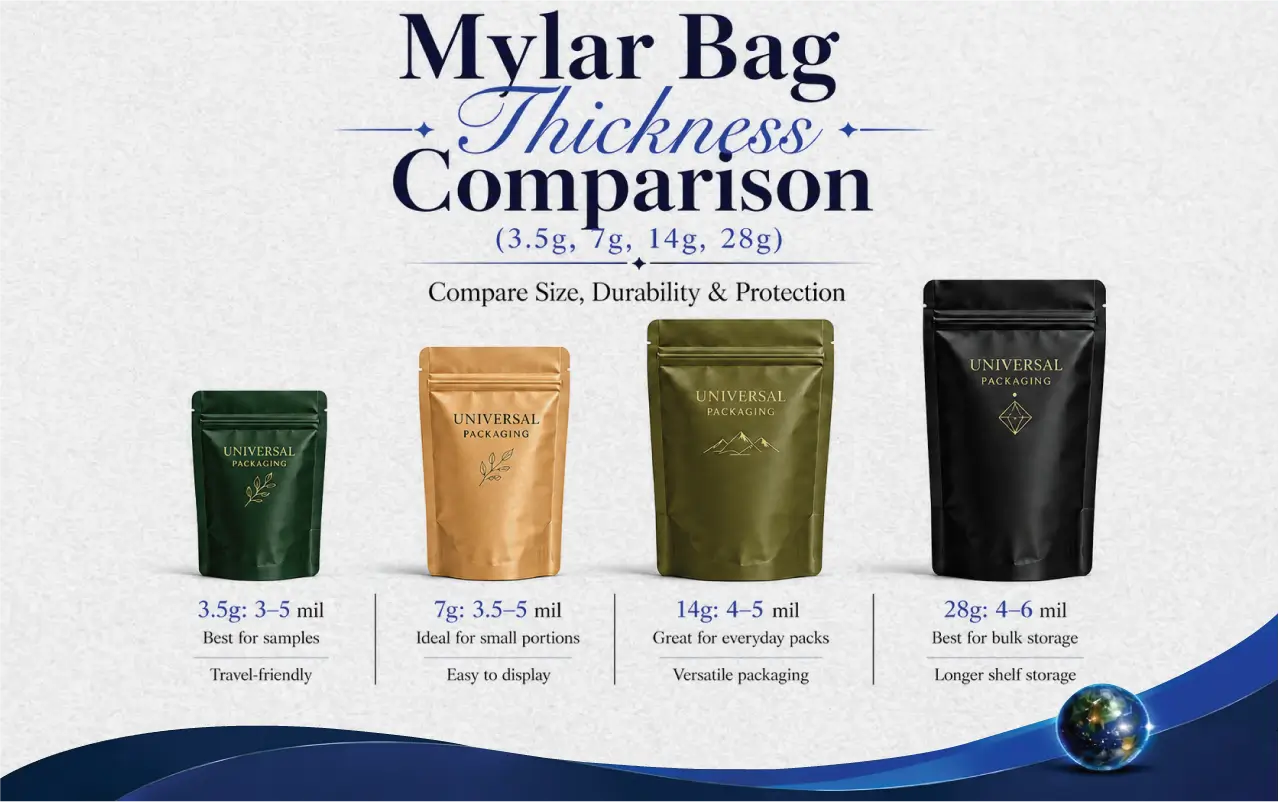
Mylar Bag Thickness Explained For Beginners
For most new buyers, the gram number on a mylar bag is a source of confusion. A higher gram number is linked with a thicker bag, while a lower gram number is linked with a lighter, more flexible bag.
A thin bag is suited to light, low-value items, while a thick bag is suited to heavier or more delicate items, where extra protection is required. This is exactly why a mylar bag thickness comparison (3.5g, 7g, 14g, 28g) is found to be so useful before a final decision is made, and why an understanding of which thickness best matches the packaging needs of the product is gained through it, regardless of whether Flexible Pouch Packaging or a more rigid format is under consideration.
CAPACITY:
- 3.5g – the lightest option, suited to small, low-cost items
- 7g – a balanced option, suited to everyday retail items
- 14g – a sturdy option, suited to items that need extra protection
- 28g – the heaviest option, suited to premium or bulky items

A wide range of packaging durability and compact packaging is generally covered within this mylar bag thickness comparison, from light film to heavy-duty laminate, with structured, wide-base formats such as Gusset Bags Wholesale also considered within this same range.
3.5 Mylar Bag Thickness And Benefits
Standard Thickness of the bag
A thin film layer is found in the standard 3.5g bag, and basic protection against light, dust, and minor moisture is provided through this layer. Its common thickness is 3–5 mil (76–127 microns). A basic level of barrier protection is generally built into the mylar film used for this bag, with light protection against everyday exposure. These performance characteristics are commonly explained through a mylar bag thickness comparison (3.5g, 7g, 14g, 28g).
Best Use Cases
- Small retail samples that need only light, short-term protection.
- Single-serving snacks or treats meant for quick, one-time use.
- Short-term storage items that are used within a brief period.
A heat seal closure is commonly used on this style of bag, and food-grade material is often selected to support safe, short-term storage protection. This mylar bag thickness comparison (3.5g, 7g, 14g, 28g) guides explains each section in detail.
Key Benefits of 3.5g Mylar Bag
A lower production cost is one of the biggest advantages connected with this bag, along with a light, easy-to-handle feel. A neat, minimal look is also achieved through the slim profile of this bag, and this profile is well suited to a clean, simple presentation of the product. A consumer convenience factor is also connected with this thickness, since 3.5g mylar bags are widely chosen for their light, easy-to-carry format.
A better understanding of these advantages is provided through a mylar bag thickness comparison (3.5g, 7g, 14g, 28g) before the 7g option is discussed.
7g Mylar Bag Thickness And Benefits
Standard Thickness of the bag
A mid-range size is generally chosen for the 7g mylar bag, with a slightly larger footprint than the 3.5g option. Its common thickness is 3.5–5 mil (89–127 microns). A bit more space for the product is created through this size increase, without the bag becoming bulky or difficult to manage on a shelf.
A balanced footprint of this kind is often suited to wholesale packaging programs, where a dependable, mid-range design is generally required. For this reason, this size is commonly included in a mylar bag thickness comparison (3.5g, 7g, 14g, 28g).
Best Use Cases
- Everyday retail packaging where balanced protection is generally needed.
- Small to medium snack portions sold through regular retail channels.
- Items where a moderate level of protection of the product is required.
A resealable zipper is commonly added to this style of bag, supporting everyday reuse and a smell proof seal between openings and also its thickness depends on mylar bag thickness comparison (3.5g, 7g, 14g, 28g).
Key Benefits of 7g Mylar Bag
A balance between cost and protection of the product is one of the strongest points connected with this option. A noticeable level of consistency is generally connected with 7g mylar bags, with this thickness made into a popular mid-tier option in a mylar bag thickness comparison (3.5g, 7g, 14g, 28g) as a result, and a steady order volume is also seen across Custom Smell Proof bags Wholesale at this thickness level. How far the level of protection of the product extends is answered next, in the 14g option.
14g Mylar Bag Thickness and Benefits
A Stronger bag for storing this capacity is generally suited to commercial packaging, similar to Custom Printed Gusseted Poly Bags that are used for bulkier, heavier products that need a stable base. For this reason, this thickness is commonly featured in a mylar bag thickness comparison (3.5g, 7g, 14g, 28g) when higher levels of durability are evaluated.
Standard Thickness of the bag
A thick, multi-layer film is found in the 14g bag, and strong resistance against moisture, light, and oxygen. Its common thickness is 4–5 mil (102–127 microns). Long-term storage is well used through a bag of this thickness, since freshness of the product is protected for an extended period.
A higher level of odor control is generally associated with this thickness, supporting demanding, long-term storage needs. These protective qualities are commonly highlighted through a mylar bag thickness comparison (3.5g, 7g, 14g, 28g).
Best Use Cases
- Medium to large retail products that need stronger daily protection.
- Items that are used for long-term freshness over an extended period.
- Bulkier accessories or parts that need a sturdier outer layer.
A tamper evident seal and child resistant closure are often added to this thickness, supporting compliance standards across regulated categories, making Child Proof Mylar Bags a popular choice in this thickness range. And hence also this type of mylar bag thickness comparison (3.5g, 7g, 14g, 28g) depends on the severe factors discussed in that blog.
Key Benefits of 14g Mylar Bag
A high level of durability is one of the clear advantages connected with this thickness from this guide of mylar bag thickness comparison (3.5g, 7g, 14g, 28g), along with strong resistance to tears and punctures. A premium feel is also achieved through the durable material, and a stronger sense of trust in the quality of the product is often created in the mind of the customer as a result; a trust factor also valued across Cannabis Storage Bags where product integrity is closely tied to brand credibility. A clear gain in packaging performance is generally associated with 14g mylar bags, since high-barrier packaging qualities are matched with everyday handling ease.
28g Mylar Bag Thickness And Benefits
A bulk packaging approach is often supported through this larger sizing, since custom stand up pouch bags in heavier formats are easily accommodated within this design, and a similar bulk approach is generally favoured for Bulk Custom Plastic Pouch With Spout formats used for liquid or semi-liquid products. For this reason, this thickness is commonly included in a mylar bag thickness comparison (3.5g, 7g, 14g, 28g).
Standard Thickness of the bag
The thickest film on this list is found in the 28g bag, and maximum resistance against moisture, light, punctures, and rough handling is offered through this heavy-duty layer. Its common thickness is 4–6 mil (102–152 microns). from overall mylar bag thickness comparison (3.5g, 7g, 14g, 28g).
A foil laminate layer is commonly found within this thickness, with demanding, industrial-level storage environments supported as a result, a quality also relied on across Flexible Retort Pouch Packaging Supplying for sterilized, heat-treated food and medical products. These protective qualities are commonly explained through a mylar bag thickness comparison (3.5g, 7g, 14g, 28g).
Best Use Cases
- Heavy or bulky retail items that need maximum surrounding strength.
- Long-distance shipping where rough handling is often expected.
- Industrial or commercial storage requiring the highest level of protection.
- Premium products where maximum protection of the product is required.
This thickness comparison involving this level is typically reserved for the most demanding packaging needs from all these mylar bag thickness comparison (3.5g, 7g, 14g, 28g). Selection of 28g mylar bags is generally common across categories where this thickness is well matched with demanding commercial and industrial needs.
Key Benefits of 28g Mylar Bag
The highest level of durability across this entire comparison is connected with the 28g bag, along with a strong, premium feel that is noticed the moment it is picked up. That mylar bag thickness comparison (3.5g, 7g, 14g, 28g) have a strong sense of reliability is generally connected with this thickness, and this premium feel is often paired with a foil-based, attractive finish, with Holographic Mylar Bags widely chosen at this thickness for a bold, shelf-standout look.
A better understanding of these advantages is provided through a mylar bag thickness comparison (3.5g, 7g, 14g, 28g) before a direct comparison of all four options is presented.
“Packaging can be theater, it can create a story.” — Steve Jobs
3.5g vs 7g vs 14g vs 28g Thickness Key Differences
A clear pattern is seen once the four thickness levels are placed side by side, as shown in the quick overview below. This mylar bag thickness comparison (3.5g, 7g, 14g, 28g) table is presented to make the decision process easier at a glance.
| Capacity | Thickness (Typical) | Quick Overview | Durability | Cost |
| 3.5g | 3–4 mil (76–102 microns) | The lightest, most flexible option in this lineup | Low | Lowest |
| 7g | 3.5–5 mil (89–127 microns) | A balanced option between flexibility and added strength | Moderate | Moderate |
| 14g | 4–5 mil (102–127 microns) | A sturdy option built for long-term freshness | High | Higher |
| 28g | 5–6 mil (127–152 microns) | The heaviest, most rugged option in this lineup | Highest | Highest |
A lower price point is generally connected with a lower gram number, while a higher price point is generally connected with a higher gram number, due to the added material involved in production. The right balance between cost and protection of the product is found through a careful review of packaging requirements.
For buyers looking to estimate packaging costs in the Canadian market, explore 2026 Custom Mylar Bag Pricing Guide for Canada for a detailed overview of the factors that affect pricing, including bag thickness, size, printing, and order quantity.
Best Mylar Bag Thickness for Your Product
Three simple questions are generally used to find the right thickness: what’s the weight of the product? How long does it need to stay fresh? And how far will it travel before reaching the customer?
- Light, low-cost, short-shelf-life items → 3.5g or 7g
- Everyday retail items with a moderate shelf life → 7g
- Items that require long-term freshness or extra durability → 14g
- Heavy, premium, or long-distance shipped items → 28g
A final decision is best made only after the needs of the product and the requirements of the brand are reviewed together, since damage is often caused when packaging is too thin, while unnecessary cost is often added when packaging is too thick. A clear window and a matte finish or glossy finish are also worth reviewing at this stage, since visual appeal is often considered during the final decision.
Retail display appeal and premium packaging presentation are also worth reviewing at this point, since these factors are often included in a mylar bag thickness comparison (3.5g, 7g, 14g, 28g). Ready to upgrade your packaging? Explore our Mylar Bags Custom Print solutions.
“My obsession is plastic packaging.” — Theo James
Ready to order Custom Packaging Calgary for your products? Contact us now to explore packaging solutions designed for your brand.
Conclusion
We have covered all of this in this blog in a different style, from the basics of the thickness of the mylar bag to a full breakdown of 3.5g, 7g, 14g, and 28g options. Each thickness level was matched with its ideal use case, dimensions, and benefits, followed by a direct comparison to make the final choice easier. The right mylar bag thickness is the one that is matched with the level of protection of the product, the requirements of the brand, and the budget in place.
Awareness of Eco-Friendly Pouches, recyclable materials, and sustainable packaging is also growing steadily among buyers across this category. Steady demand for custom mylar bags is also seen across everyday retail and wholesale categories alike. A reliable mylar bag thickness comparison (3.5g, 7g, 14g, 28g) remains one of the simplest ways through which packaging is matched with real needs of the products.
Frequently Asked Questions (FAQs)
What does the gram number on a mylar bag actually mean?
The gram number on a mylar bag typically refers to the approximate amount of product the bag is designed to hold, not the thickness of the material itself. For example, a 3.5g bag is intended for around 3.5 grams of product, while 7g, 14g, and 28g bags are designed for larger quantities. The thickness of a mylar bag is measured separately in mils or microns.
Which thickness of the mylar bag is best for small items?
A 3–5 mil material is often sufficient for basic needs, while thicker materials result in additional puncture resistance and barrier protection. A mylar bag thickness comparison (3.5g, 7g, 14g, 28g) is often reviewed before a final selection is made.
What is the difference between 7g and 14g mylar bags?
A 14g bag is thicker, sturdier, and better suited to long-term freshness, while a 7g bag is a balanced, everyday option. These differences are clearly explained through a mylar bag thickness comparison (3.5g, 7g, 14g, 28g).
Does mylar bag thickness affect the cost of packaging?
Yes, a higher gram number is generally connected with a higher cost, due to the extra material involved in production.
How is the thickness of the mylar bags measured?
Mylar bag thickness is typically measured in mils or microns rather than grams. Common thickness options are discussed above, with thicker materials that result in greater puncture resistance, durability, and barrier protection.
What factors should be considered before choosing a thickness?
Weight of the product, expected shelf life, and budget are the main factors considered before a final choice is made. A mylar bag thickness comparison (3.5g, 7g, 14g, 28g) is also worth reviewing during the decision process.
Can mylar bag thickness be customized to match a specific brand or product?
Yes, thickness is fully open to customization, alongside size, finish, and print, based on the identity of the brand and the presentation of the product.