Freeze-dried food is often judged by how it arrives, long before its taste is ever experienced. The first impression is formed by the packaging, where material, barrier strength, size, and presentation all play a part. A well-informed choice here shapes protection of the product, perception of the brand, and the customer’s buying decision. This guide explains How To Choose The Right Packaging For Freeze-Dried Food by covering every factor that deserves attention. Explore the right freeze-dried food packaging.
Quick Look Ahead
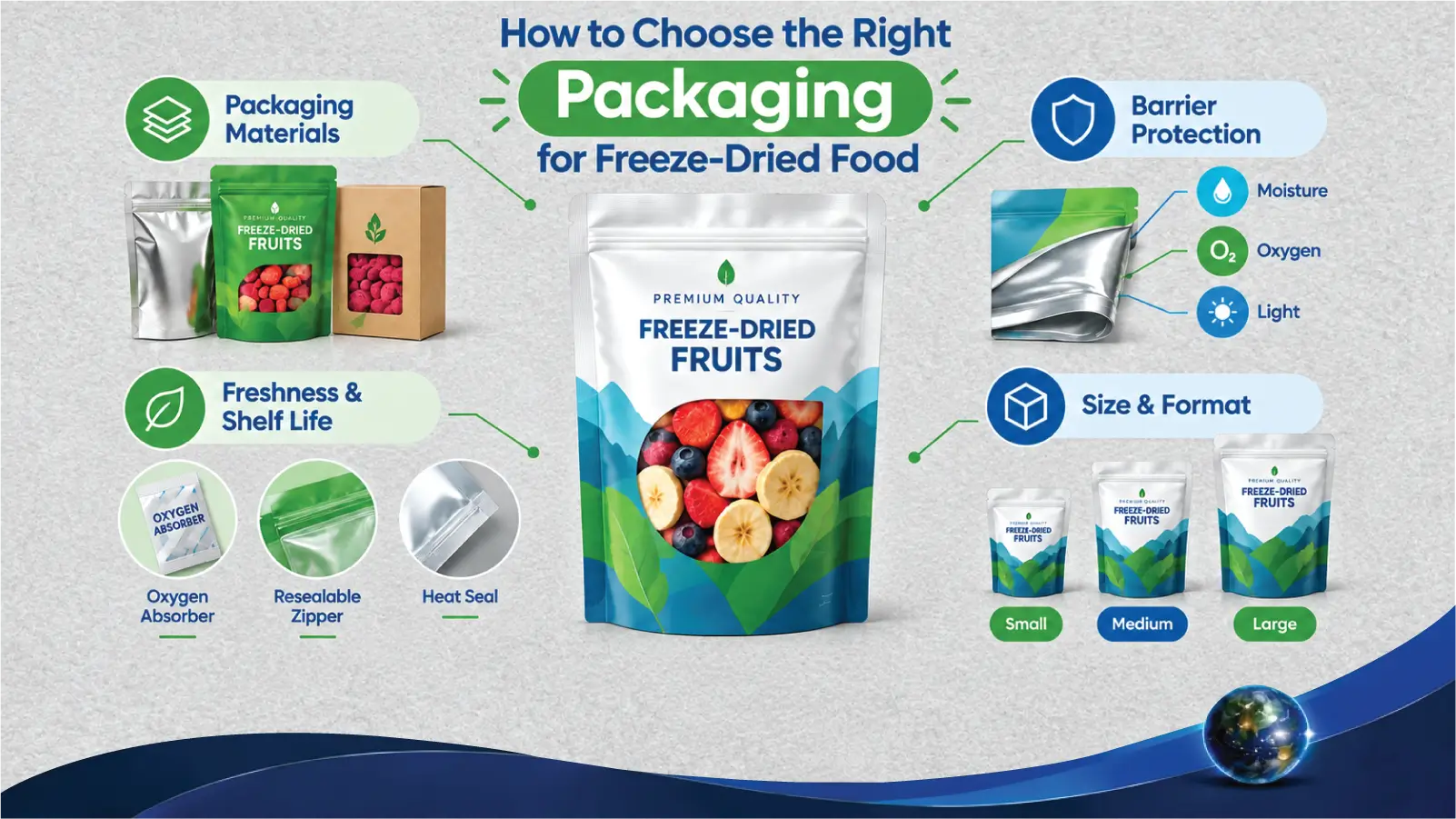
A quick look at how to choose the right packaging for freeze-dried food is offered below:
- Purpose: why protection, preservation, and promotion are combined.
- Materials: pouch and box formats matched to different freeze-dried products.
- Barrier performance: how packaging air, water, and light away from the food.
- Size and format: matching pouches and boxes to portion needs.
- Freshness: extending storage life through smart barrier choices.
- Regulations: compliance numbers and labeling requirements.
- Branding and design: logo placement and finish selection.
- Customization: personalization, closures, and seasonal formats.
- Sustainability: environmentally responsible packaging routes.
- Cost: balancing budget against quality.
- Target market: matching packaging to the intended audience.
Understanding The Purpose Of The Packaging
Before a single material is picked, the purpose behind packaging designed for freeze-dried food has to be understood first. Three needs are met at once: protection, preservation, and promotion. Protection is offered against physical damage during transit through shipping durability that keeps pouches and boxes intact across long distances. Preservation is achieved through a moisture barrier, an oxygen barrier, and airtight packaging designed into the structure so texture and flavour stay close to their original state.
Promotion is handled through the presentation of the product on a retail shelf, where brand recognition forms within seconds. This purpose is often demonstrated most clearly in Custom Stand Up Pouches, where structure and shelf presence are designed into a single format. Once this purpose is clear, the process of how to choose the right packaging for freeze-dried food is made considerably easier, and material selection is explored next.
Choosing The Right Packaging Format & Material
Different materials suit different needs, and this stage is where how to choose the right packaging for freeze-dried food usually begins for most brands.
Bags
- Foil-lined bags: A metallic layer is included for light and moisture protection.
- BOPET bags: BOPET is included for strength, stiffness, and dimensional stability.
- PET bags: PET is included for strength and structural stability, with additional barrier layers where required.
- PE bags: PE is commonly included as the heat-sealing layer in flexible packaging.
- OPP bags: OPP is included for stiffness, appearance, and handling resistance.
- Laminated barrier bags: Multiple film layers are combined for moisture, oxygen, light, and protection.
Boxes
- Corrugated shipping boxes: outer cartons designed for bulk transit and warehouse stacking.
- Rigid paper boxes: Sturdier paperboard is selected for premium or seasonal freeze drying assortments.
- Printed retail boxes: lightweight board used for shelf-ready single packs.
- Window-cut boxes: a die-cut opening added so the product is visible before purchase.
- Kraft paper boxes: Kraft paperboard is selected for a natural appearance and lightweight secondary packaging.
- Duplex board boxes: Duplex paperboard is selected for printed retail packaging with a smooth outer surface.
- Folding carton boxes: Foldable paperboard is used for compact retail packaging and efficient storage.
Wraps
- Foil wraps: A foil layer is used for individual freeze-dried bars or bites requiring light and moisture protection.
- Wax paper wraps: A food-grade waxed paper layer is selected for artisanal or small-batch freeze-dried treats.
- Plastic wraps: A flexible plastic film is used for lightweight wrapping and portion packaging.
- Paper wraps: Food-grade paper is selected for simple wrapping and secondary presentation.
- Cling wrap liners: A thin plastic film is placed as an inner layer before an outer pouch or box is sealed.
- Paper-plastic wraps: Paper and plastic layers are combined where both presentation and additional protection are required.
Sleeves
- Shrink sleeves: A plastic film sleeve is applied around a pouch or box neck for tamper indication and shelf presentation.
- Printed paperboard sleeves: Paperboard is formed into a sleeve for branding and secondary presentation.
- Foil sleeves: A thin foil layer is used for edge reinforcement and added protection.
- Cardboard sleeves: Cardboard is formed into an outer sleeve for added structure and retail presentation.
- Cardstock sleeves: Lightweight cardstock is selected for printed branding and simple secondary packaging.
Choosing a pouch or box is only the beginning. The material behind that format can make a major difference in moisture protection, oxygen resistance, durability, and shelf life. So, which materials actually perform best for freeze-dried products? That question is explored in Best Materials For Freeze-Dried Food Packaging, where the leading material options are compared in more detail.
Selecting The Correct Size And Format
Correct sizing is where how to choose the right packaging for freeze-dried food is fine-tuned even further. Crushing risk is increased when too much empty space is left inside the package, while delicate pieces are placed under unnecessary pressure when the package is too tight. A close-fitting size is especially important for single-serving packaging, where the contents should fit securely without excessive space or pressure.
Separate sections or dividers are suitable for multi-serving pouches when different portions need to be kept apart. A transparent window is included when visibility of the contents is preferred before purchase. A professional product range is distinguished through consistent package sizes, proportions, and presentation, making consistency an important part of how to choose the right packaging for freeze-dried food at scale.
“Good things come in small packages.” — Aesop
Protection From Moisture, Oxygen, And Light
Freeze-dried food is highly sensitive to moisture, so package durability is important. Barrier protection is often the most underestimated part of how to choose the right packaging for freeze-dried food. High-barrier packaging and sturdy outer structures reduce the entry of moisture, particularly for formats intended for outdoor and camping food. Light protection is provided by opaque or metallic layers, helping prevent nutrient degradation from UV exposure, while humidity control helps maintain a crisp texture.
Vacuum-sealed packaging is used to remove excess air, and laboratory tests for oxygen transmission rate and water vapour transmission rate are conducted to confirm the performance of the packaging structure. For long shelf-stable meals, Retort Packaging is often selected because it is designed to withstand sterilization temperatures without breaking down.
Preserving Freshness And Storage Life
Preserving freshness is another main factor of how to choose the right packaging for freeze-dried food that is rarely skipped. Shelf life is extended considerably once oxygen exposure, moisture, and light are properly controlled. An oxygen absorber and heat sealing are commonly combined so staleness and nutrient loss stay at bay. Formats such as Custom Mylar Bags are frequently chosen here since their layered structure blocks nearly all light and oxygen transfer.
For reliable freshness protection and a practical presentation, explore Freeze Dried Packaging options suited to different product requirements. Once freshness is addressed, food-grade compliance and regulatory requirements should be reviewed next.
Canadian Packaging Regulations And Specifications
For freeze-dried food bags in Canada, compliance with FDR B.23.001 is required for food-contact packaging safety. Labelling should also follow SFCR 205, 206, 208, 210(2), 218 and 221, along with FDR B.01.006, B.01.007, B.01.008 and B.01.012. Key packaging specifications include OTR, WVTR, seal strength, film thickness, puncture resistance, and package integrity. A Health Canada Letter of No Objection is voluntary and should not be presented as a mandatory certification.
Branding And Design Considerations
Reputation of the brand is often designed within the first few seconds of shelf exposure, which is why branding and labeling are treated as seriously as material selection. Logo placement, colour palettes, and typography are aligned so recognition carries across every touchpoint, from Custom Reverse Tuck Boxes to simpler retail formats. Even a straightforward format like Bottom Gusset Bags can carry strong shelf branding once labels and colour are applied consistently.
Custom packaging, whether matte or gloss finished, is chosen based on the perception being aimed for: minimal and clean for premium lines, or bold for everyday snack formats. Packaging design sits at the heart of how to choose the right packaging for freeze-dried food, and it is rarely an afterthought once a brand is ready to scale.
“Customers will occasionally buy products not because they want them but because of how they are presented to them.” — James Clear
Printing Techniques For Premium Packaging
Choosing an appropriate printing technique is part of how to choose the right packaging for freeze-dried food. Screen printing applies ink through a prepared screen for bold text and logos, while UV printing cures ink directly on the surface for finer detail, similar to techniques used on Custom Candy Packaging. These techniques translate well onto Flexible Pouches Packaging, where a flat surface holds fine detail without cracking. With foil stamping, a metallic finish is added, making it suitable for Luxury Rigid Boxes and premium gift formats. Spot UV coating is applied for glossy contrast against a matte surface, while a soft-touch coating is applied for a smooth, velvety finish that enhances the perception of the brand.
Customization Options For The Category
Personalized packaging is where a brand’s individuality is expressed, and this stage is often the most enjoyable part of how to choose the right packaging for freeze-dried food. Custom printed pouches are produced for interactive experiences, while easy-open features and a resealable zipper add practicality, similar to closures seen on custom packaging. Even BOPET Bags can be fitted with these closures without compromising their barrier performance. This is why how to choose the right packaging for freeze-dried food is treated as an evolving process, one many brands revisit each time a new product line launches.
Sustainable And Eco-Friendly Packaging Choices
Sustainability is a defining chapter in how to choose the right packaging for freeze-dried food today. Sustainable packaging is chosen for reduced impact, recyclable packaging is used across pouch films where possible, and post-consumer recycled content is designed in wherever supply allows. Kraft Stand Up Pouches are a common starting point here, since the base material is already recognized as more easily recyclable. Recycling symbols are printed clearly so consumers understand packaging recyclability at disposal; circular packaging materials in use; and eco-friendly materials replace conventional plastic films across many freeze-dried lines.
Balancing Cost And Quality
Budget planning is the practical side of how to choose the right packaging for freeze-dried food that ties everything together. A choice is nearly always faced between premium finishes and packaging cost limits. Custom Foil Pouches, for instance, often cost more per unit upfront but reduce spoilage-related losses over time. Order volume and market positioning are weighed together before a final call, since quality is rarely without consequence to recognition of brand down the line. Per-unit costs come down through bulk orders, thatis why wholesale routes are so often explored, whether through private-label packaging arrangements or fully custom lines.
Matching Packaging To The Target Market
Understanding how to choose the right packaging for freeze-dried food also means understanding the audience it serves. Premium freeze-dried meals are packaged with restraint and clarity in mind. Retail packaging for everyday grocery shelves looks approachable, while gifting formats such as display Boxes appear more considered. This final alignment completes the article of how to choose the right packaging for freeze-dried food from start to finish.
For personalized packaging support, material guidance, and custom solutions, explore Canada Custom Packaging to suit your requirements of product. Ready to plan your packaging? Contact us today to discuss your project and requirements.
Conclusion
From the first material choice to the final design details, every step shapes how the product is protected, presented, and remembered. A thoughtful decision creates greater confidence in the final packaging, while a rushed choice may lead to avoidable concerns later. With every factor now laid out, the only step left is putting this knowledge of how to choose the right packaging for freeze-dried food into practice. The right packaging brings together protection, presentation, and practical value for a stronger overall customer experience.
Frequently Asked Questions (FAQs)
Are food-grade materials used for all freeze-dried food pouches?
Food-grade materials are required whenever freeze-dried food touches the packaging directly, which is one of the first checks in how to choose the right packaging for freeze-dried food. Outer boxes or sleeves are generally kept separate from direct food contact.
What should be checked before placing a bulk order?
Compliance numbers, barrier performance, and sample quality are typically checked before a wholesale order is confirmed, since this step matters when learning how to choose the right packaging for freeze-dried food responsibly.
Can this packaging be personalized for specific occasions?
Yes, freeze-dried Food Packaging is customized for gifting, camping trips, and corporate use alike. Custom inserts and printed messages are commonly added for such occasions.
Does a resealable closure help extend freshness?
Yes, closing the seal properly each time reduces air exposure and slows staleness considerably once a pack has been opened.
Should tamper-resistant features be added to every product?
In most cases, yes, since such a feature reassures buyers that a pack has not been opened beforehand, which matters most for online orders where the product isn’t seen in person before delivery.
Why is size as important as design and finish?
A poor fit leads to damage in transit and a lower-quality unboxing moment overall, which is exactly why how to choose the right packaging for freeze-dried food starts with getting proportions right.
What packaging is best for freeze-dried food?
High-barrier pouches, foil-lined bags, and laminated packaging are commonly selected for moisture, oxygen, and light protection.
How should freeze-dried packaging be stored?
Packaging should be kept in a cool, dry area away from direct sunlight and excessive humidity.
Where can freeze-dried food packaging be purchased in Canada?
Freeze-dried food packaging is purchased from Canadian suppliers offering food-grade pouches, bags, boxes, and customized formats. Canada Custom Packaging is one option for exploring suitable packaging formats.