Ever been left wondering, after a half-eaten bag of jerky sits for a week, whether it’s still safe to eat and how long does beef jerky last in a ziplock bag before that question even needs asking? The truth is, How Long Does Beef Jerky Last In A Ziplock Bag is not answered by one single date because moisture, fat content, and the tightness of the seal all play an important role in maintaining freshness Keep scrolling to learn the factors that affect freshness and the storage tricks that extend the quality of beef jerky.
Shelf-Life Of Beef Jerky In Ziplock Bags
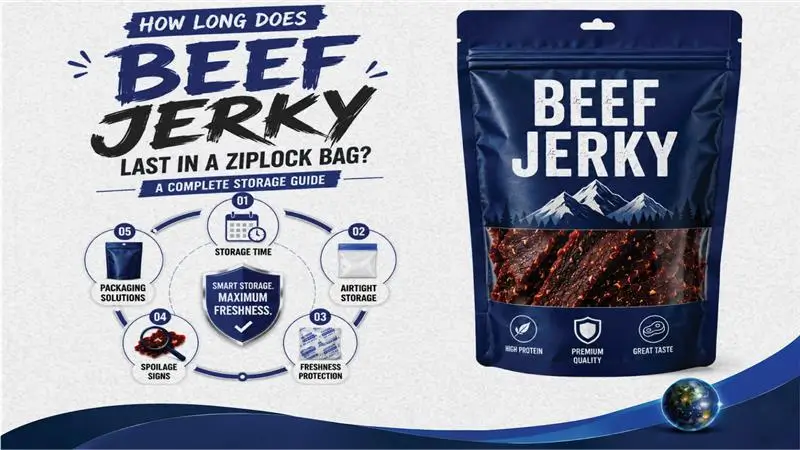
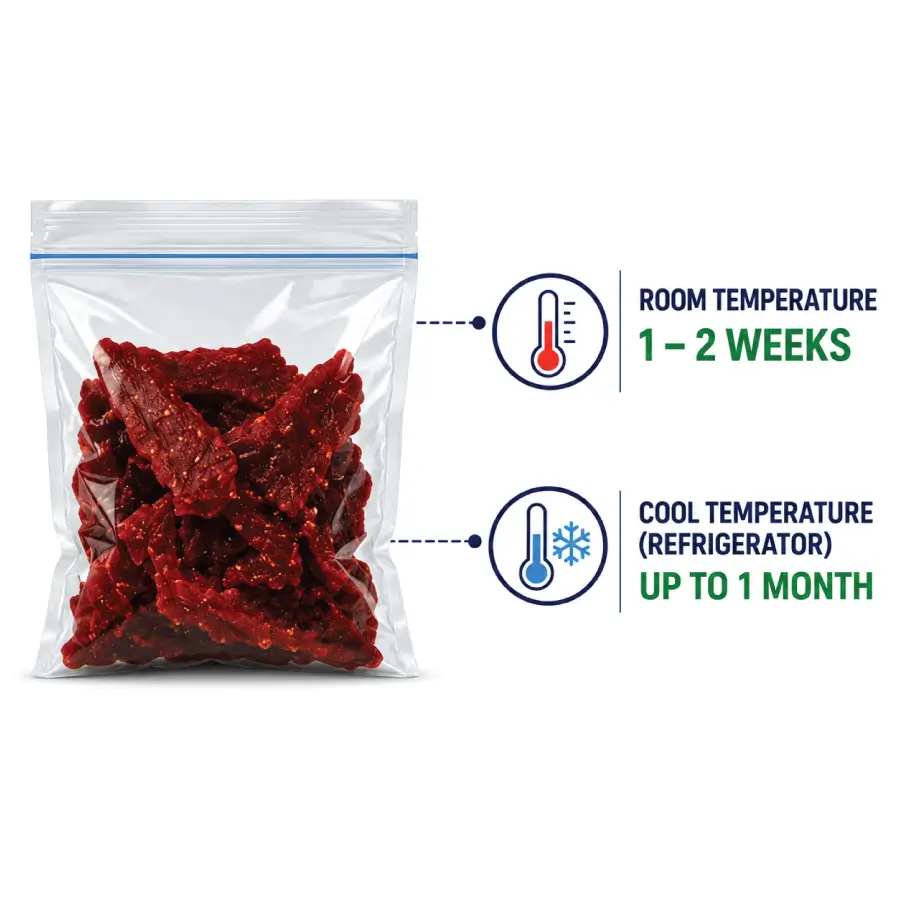
At room temperature, beef jerky sealed inside a ziplock bag is generally kept fresh for one to two weeks. When the bag is moved into the refrigerator instead, that window is extended, with commercial jerky often kept in good condition for close to a month. Cooler temperatures slow the growth of bacteria and mould, which is why a noticeably longer shelf life is achieved through refrigeration.
The question of how long does beef jerky last in a ziplock bag is best answered with a range rather than a fixed number, since actual freshness is affected just as much by how tightly the seal is closed and how much air is left trapped inside.
Store-Bought Vs Homemade Beef Jerky Shelf Life
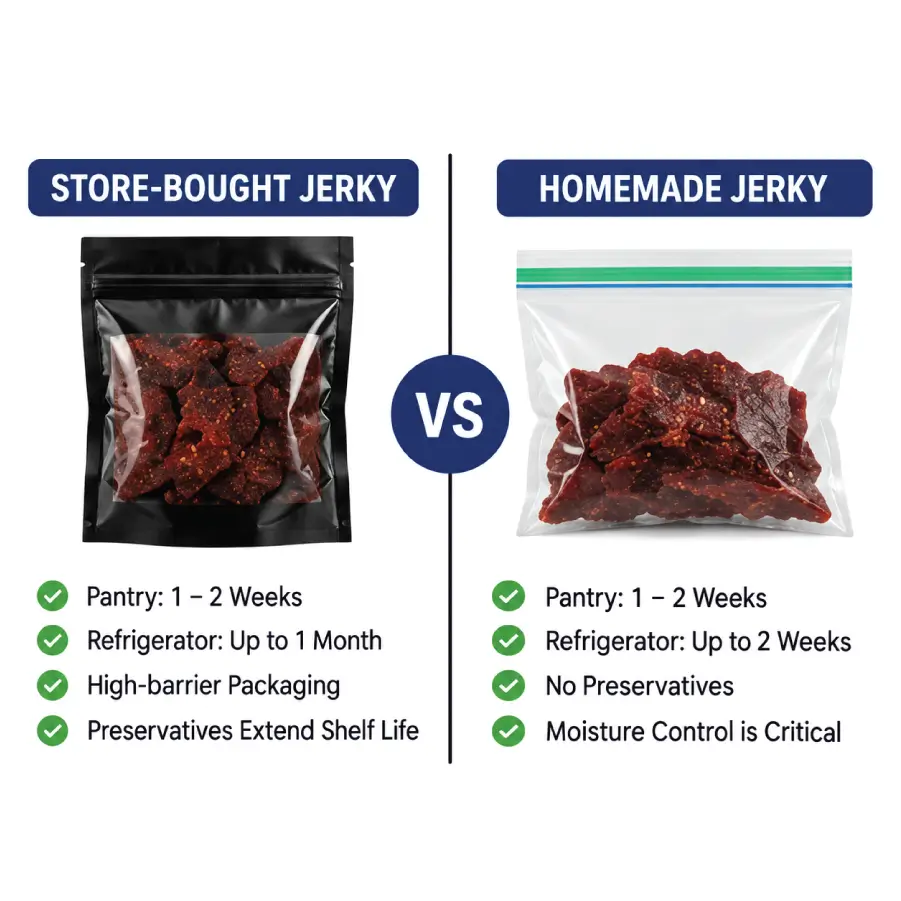
Store-bought and homemade jerky are compared here because how long does beef jerky last in a ziplock bag often depends on which type is being stored in the first place.
Store-bought beef jerky:
- Pantry: freshness is kept for about one to two weeks once the package is opened
- Refrigerator: that window is stretched to nearly a month
- Packaging: high-barrier packaging is typically used, slowing moisture and oxygen exposure
- Preservatives: included in most recipes, adding an extra buffer to shelf life
Homemade beef jerky:
- Pantry: freshness is generally limited to one to two weeks
- Refrigerator: a similar window applies, since no preservatives are added
- Moisture: home dehydration is less consistent than commercial drying, so moisture control becomes more critical
- Storage: a resealable zip lock bag is recommended, with as much air pressed out as possible
Signs Beef Jerky Has Gone Spoiled
- Smell: a sour or unusual odour is one of the earliest warning signs.
-
Mould: white powder or visible mould spots mean the jerky is no longer safe.
- Texture: a piece that has turned unusually soft or moist should be thrown out.
- Colour: noticeable discolouration beyond the usual dried appearance is another red flag.
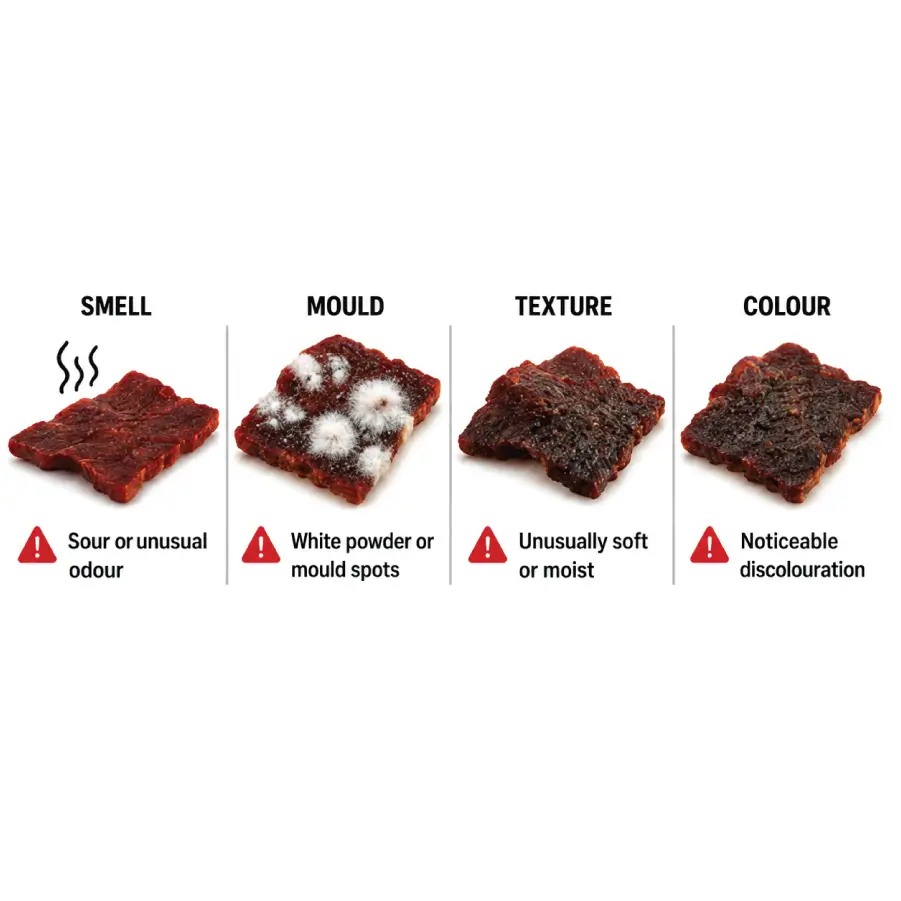
For the more knowledge of how long does beef jerky last in a ziplock bag, these signs are also a quick, practical way to double-check how long does beef jerky last in a ziploc bag or Custom Printed Stand Up Pouches in any specific case, regardless of what the general timeline suggests.
Storing Beef Jerky Longer (Air Removal Tip)
Excess air is squeezed out of the Ziploc bag before it’s sealed, and this one step is where a lot of freshness is preserved. Less oxygen trapped inside means less oxidation, and less oxidation is what keeps the flavour and texture of the jerky intact for longer.
Resealable packaging with a tight seal is chosen wherever it’s available, since a loose or worn seal lets air back in every time the bag is reopened. This single habit is often the real answer to how long does beef jerky last in a ziplock bag, more than any single stated timeframe.
Freshness is stretched a lot by air removal alone, but for jerky that needs to last months rather than weeks, freezing is the next piece worth understanding. Discover Jerky Pouches designed for airtight storage and better freshness protection of beef jerky.
What Are Oxygen Absorbers And Do They Work For Jerky?
An oxygen absorber packet is added inside the bag, and any leftover oxygen in the space is drawn out through it. Oxidation is slowed, and the risk of mould is reduced this way, so a longer shelf life is achieved overall.
This small addition is especially useful when jerky is stored for weeks at a stretch, since a stable, low-oxygen environment is maintained inside the bag, and it’s often the small detail that changes how long does beef jerky last in a ziplock bag with an absorber packet added versus without one. Once it’s clear what keeps jerky fresh, the next natural question is what actually causes it to spoil.
Freezing Beef Jerky For Long-Term Storage
Once beef jerky is placed into freezer storage, its freshness is extended dramatically; a typical range of six to twelve months is achieved this way, well beyond how long does beef jerky last in a ziplock bag kept at room temperature. Vacuum storage bags are recommended for this purpose, since nearly all the surrounding air is removed and freezer burn is kept to a minimum.
An airtight Ziploc bag also works when vacuum equipment isn’t on hand, as long as the seal is tight and as much air as possible is pressed out beforehand. Larger jerky batches are stored in Gusseted Mylar Bags for added space and freshness protection.
Common Causes Of Beef Jerky Spoilage
Moisture is the leading cause of spoilage, since incomplete drying during preparation leaves behind exactly the conditions bacteria and mould need to grow. A role is also played by fat content, as jerky with a higher fat percentage is more prone to rancidity through fat oxidation over time.
Storage conditions matter almost as much as the recipe itself, freshness is lost far faster when a bag is left in a warm, humid spot than when it’s kept cool and dry, which is exactly why how long does beef jerky last in a ziplock bag varies so much from one kitchen to another. With the causes of spoilage covered, here’s a look at the packaging choices that make the biggest difference.
For meal preparation and longer storage needs, Retort Bags For Sale are considered for shelf-stable beef jerky packaging where secure sealing and durability are important.
Dependent Options For Extended Beef Jerky Freshness
The freshness period of beef jerky is influenced by packaging quality, sealing methods, and barrier protection.
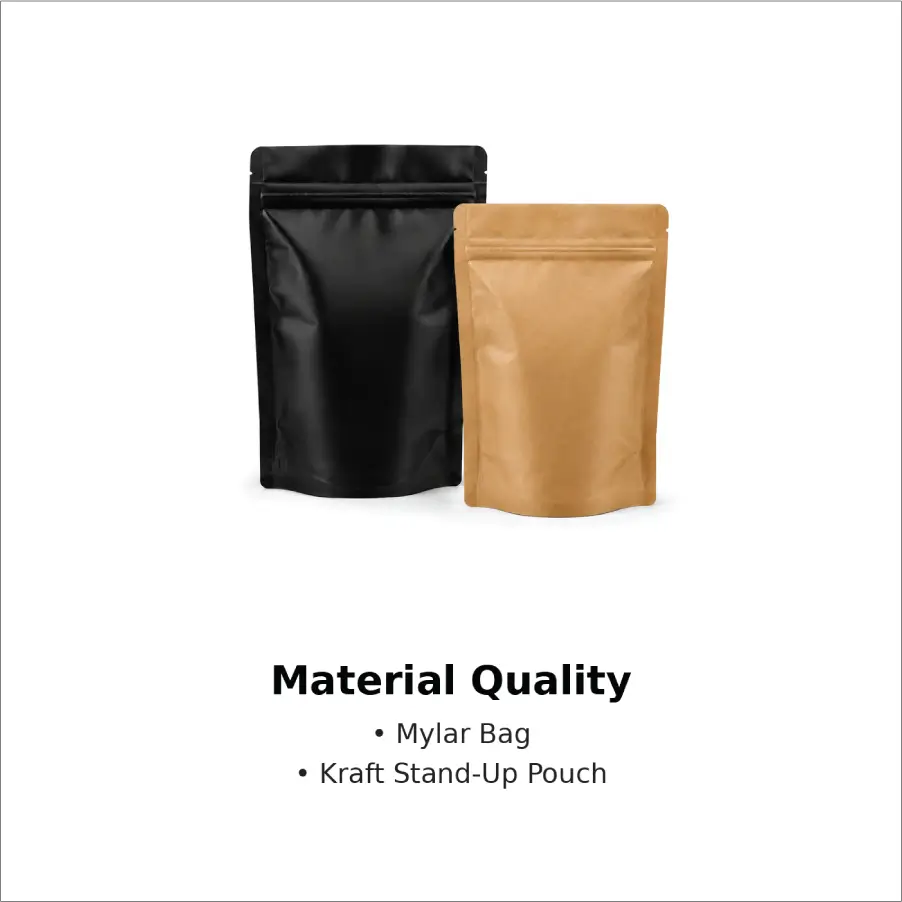
- Material Quality: The answer to how long does beef jerky last in a ziplock bag depends on packaging quality. Airtight storage is achieved through Mylar bags and Custom Kraft Stand Up Pouch with moisture and oxygen barrier layers.
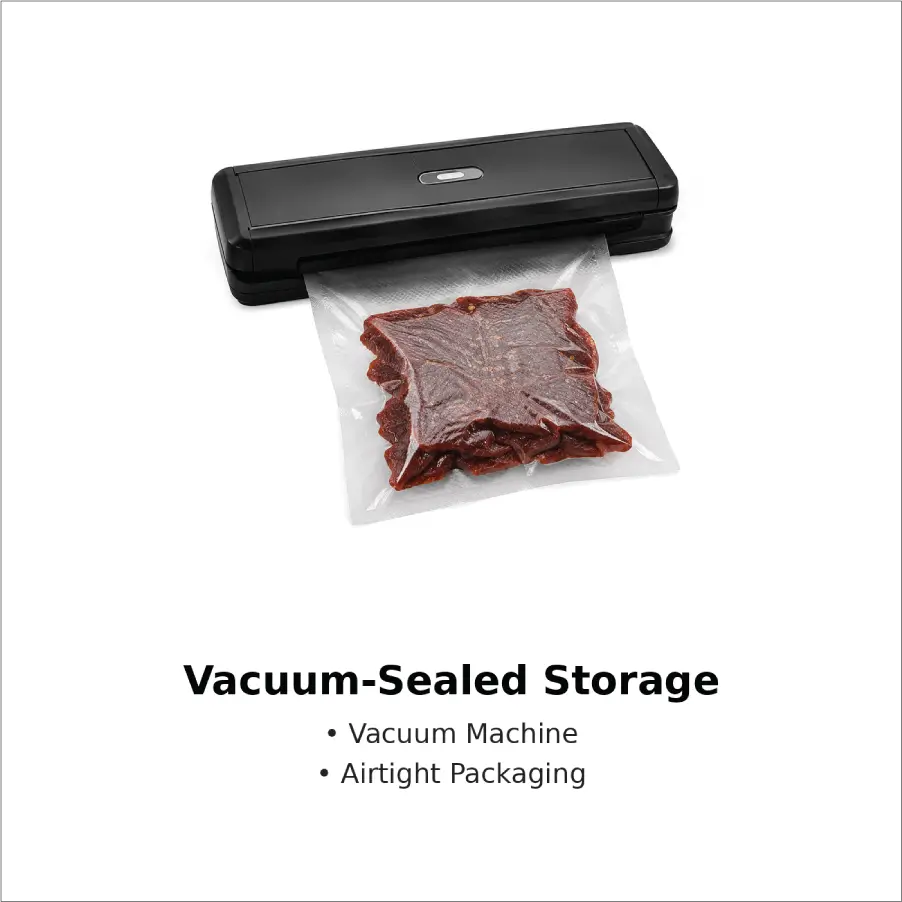
- Vacuum-Sealed Storage: Longer storage periods are associated with vacuum-sealed packaging, where surrounding air is removed to maintain freshness.
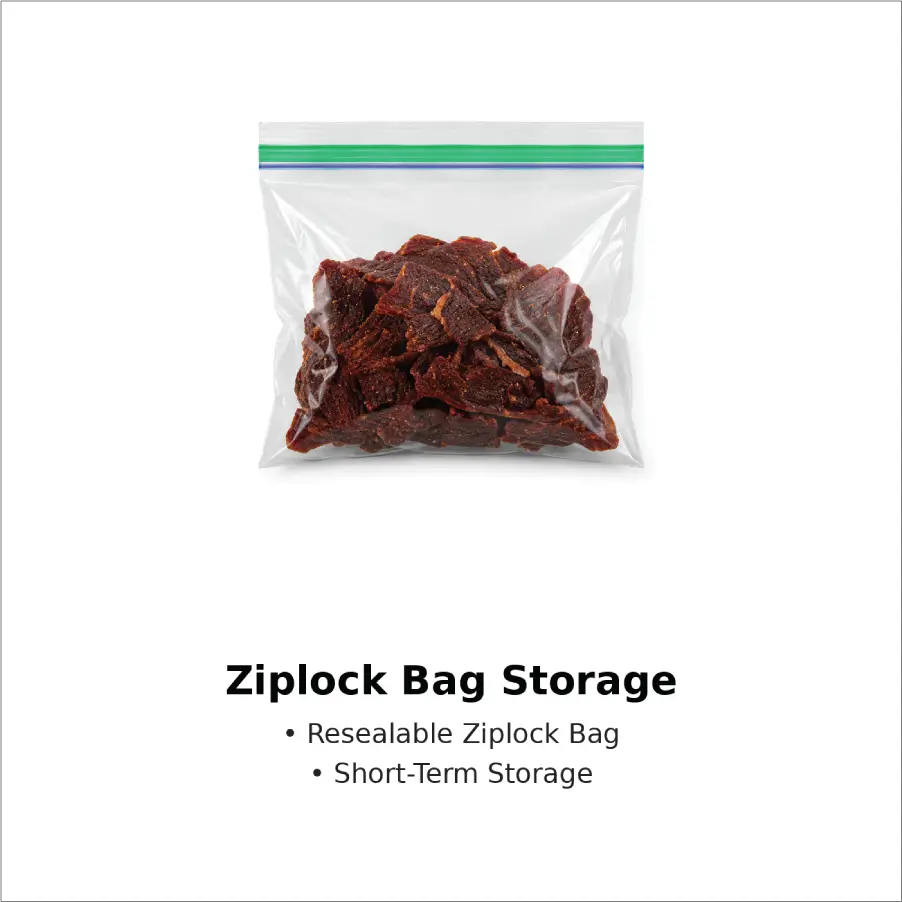
- Ziplock Bag Storage: Ziplock bags are used for short-term storage when beef jerky is consumed within a few weeks.
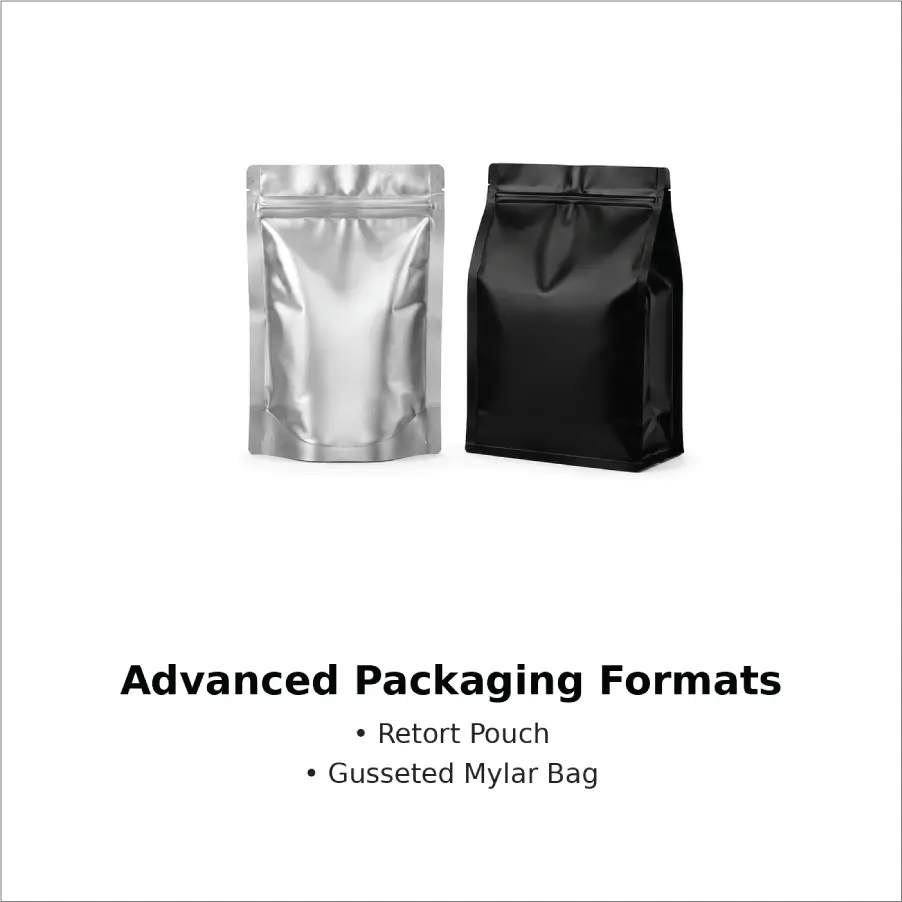
- Advanced Packaging Formats: Flexible Retort Pouch Packaging is used for shelf-stable products, while gusseted Mylar bags are used for larger jerky quantities.
- Food Safety and Durability: Better packaging durability and packaging integrity are achieved through vacuum-sealed options and food-grade packaging, including BPA-free plastic.

- Custom Food Packaging Choices: Different sizes and closure styles are available in Custom Food Bags And Pouches, while childproof pouches are used when extra safety is required.
Packaging thickness also plays an important role in freshness protection, especially when different bag materials are compared. The thickness of plastic used in beef jerky bags affects barrier performance, durability, and resistance against moisture and oxygen exposure. To understand how packaging material quality is measured, the next question to explore is How Thick Is The Plastic On A Beef Jerky Bag.
“Customers will occasionally buy products not because they want them but because of how they are presented to them.” — James Clear
Food Safety And Storage Guidelines Worth Knowing
How long does beef jerky last in a ziplock bag, also complete with the safety standards. Dried meat is generally covered under FDA food storage guidelines, which point toward cool, dry conditions and prompt refrigeration once a bag has been opened. Food safety starts well before storage, too clean hands and clean equipment during preparation are part of safe food handling, and this step reduces the bacteria that would otherwise shorten shelf life later on.
Food preservation methods such as proper drying, salting, and smoking work alongside good storage habits to extend beef jerky freshness, rather than replacing the need for a tight seal.
Food packaging standards also matter here, since bags rated for food contact are less likely to affect the quality retention of what’s stored inside them. With safety covered, it’s worth touching on why jerky has become such a go-to option for people on the move. For households where extra safety is important, Childproof Pouches are considered for secure storage of beef jerky and limited access by young children.
“Good things come in small packages.” _ Aesop
Looking for reliable packaging solutions in Canada? Explore Canadian Custom Packaging for durable jerky pouches and customized options designed according to the requirements of your brand. Contact now to discuss your packaging needs.
Conclusion
How long does beef jerky last in a ziplock bag has been fully covered in this blog, from pantry and refrigerator timelines to freezing, oxygen absorbers, and the small habits that quietly stretch freshness the furthest. A ziplock bag works well for short-term snacking, while vacuum-sealed or Mylar options are better suited to jerky kept for months at a time. Moisture, fat content, and a properly closed seal remain the three biggest factors behind spoilage. With these storage tips in mind, beef jerky is kept fresh, safe, and ready to eat for as long as possible.
Frequently Asked Questions (FAQs)
How long does beef jerky last in a ziplock bag at room temperature?
One to two weeks is the typical time period when it’s kept in the pantry at room temperature. As already discussed in the above guide of how long does beef jerky last in a ziplock bag.
What are the clearest signs that beef jerky has gone bad?
A sour smell, visible mould, white powder, or an unusually soft or moist texture are all treated as red flags. As already discussed in the above guide of how long does beef jerky last in a ziplock bag.
Is beef jerky safe to freeze?
Absolutely, freezing is one of the most effective ways to extend its shelf life well beyond how long does beef jerky last in a ziplock bag kept at cold temperatures.
Do oxygen absorbers actually help beef jerky last longer?
Yes, leftover oxygen inside the bag is drawn out by the packet, that slows oxidation and lowers the risk of mould. As already discussed in the above guide of how long does beef jerky last in a ziplock bag.
What’s the best way to remove air from a ziplock bag before sealing?
Air is pressed out by machines in factories while the bag is sealed nearly shut, leaving only a small gap for the last bit of air to escape. As already discussed in the above guide of how long does beef jerky last in a ziplock bag.
Is vacuum sealing better than a regular ziplock bag for beef jerky?
For longer storage, yes, nearly all air is removed through vacuum sealing, which isn’t fully matched by a standard ziplock bag. As already discussed in the above guide of how long does beef jerky last in a ziplock bag.
How long does beef jerky last in a ziplock bag bought from Universal Packaging?
Resealable pouches, mylar bags, and vacuum-seal bags, if jerky stored in any of them follows the same one-to-two-week pantry guideline once the bag is opened. For something more specific, get Custom Mylar Bags Near Me or retort bags for sale usually turns up local and online suppliers that carry both.