Do you know that the right food packaging material can directly impact the freshness of the product, safety, and shelf life? Plastic, foil, kraft paper, PET, and flexible films are all different options, with each material uniquely designed to meet specific packaging needs. This food packaging material comparison guide simplifies understanding which option works best for your product, budget, and sustainability goals. Let’s dive in and compare the best options below:
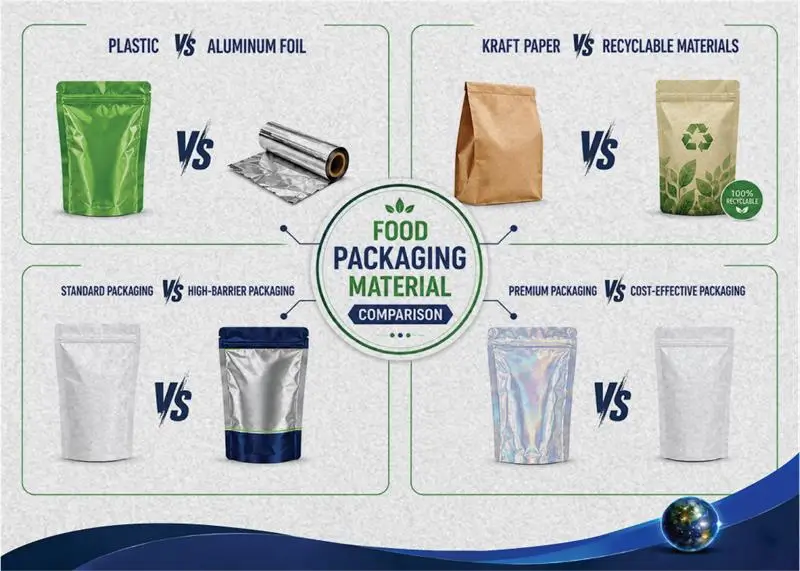
Comparison Of Best Food Packaging Materials
Food packaging is important for maintaining freshness, safety, and quality. A food packaging material comparison considers key factors such as durability, barrier performance, and sustainability. First, Plastic is lightweight and durable; aluminum foil has durable protection against moisture and light; kraft paper is eco-friendly; flexible films adapt to various shapes, and PET has multi-layer clarity. This food packaging material comparison highlights which materials are best suited to different storage, products, and handling needs.
Top Food Packaging Materials Explained
In a detailed food packaging material comparison, it becomes clear that each material serves a specific purpose.
- Plastic (Food-grade plastic): used mostly in making custom Mylar bags and pouches.
- Aluminum Foil (Foil layer): for barrier protection against air, moisture, and light.
- Kraft Paper: eco-friendly stock option mentioned for packaging.
- Flexible Packaging Films / Structures: multi-layer materials used in pouches.
- PET (Polyethylene Terephthalate): used in multi-layer Mylar structure.
- Recyclable Materials: used to design sustainable options.
Kraft Paper vs Plastic Packaging Comparison
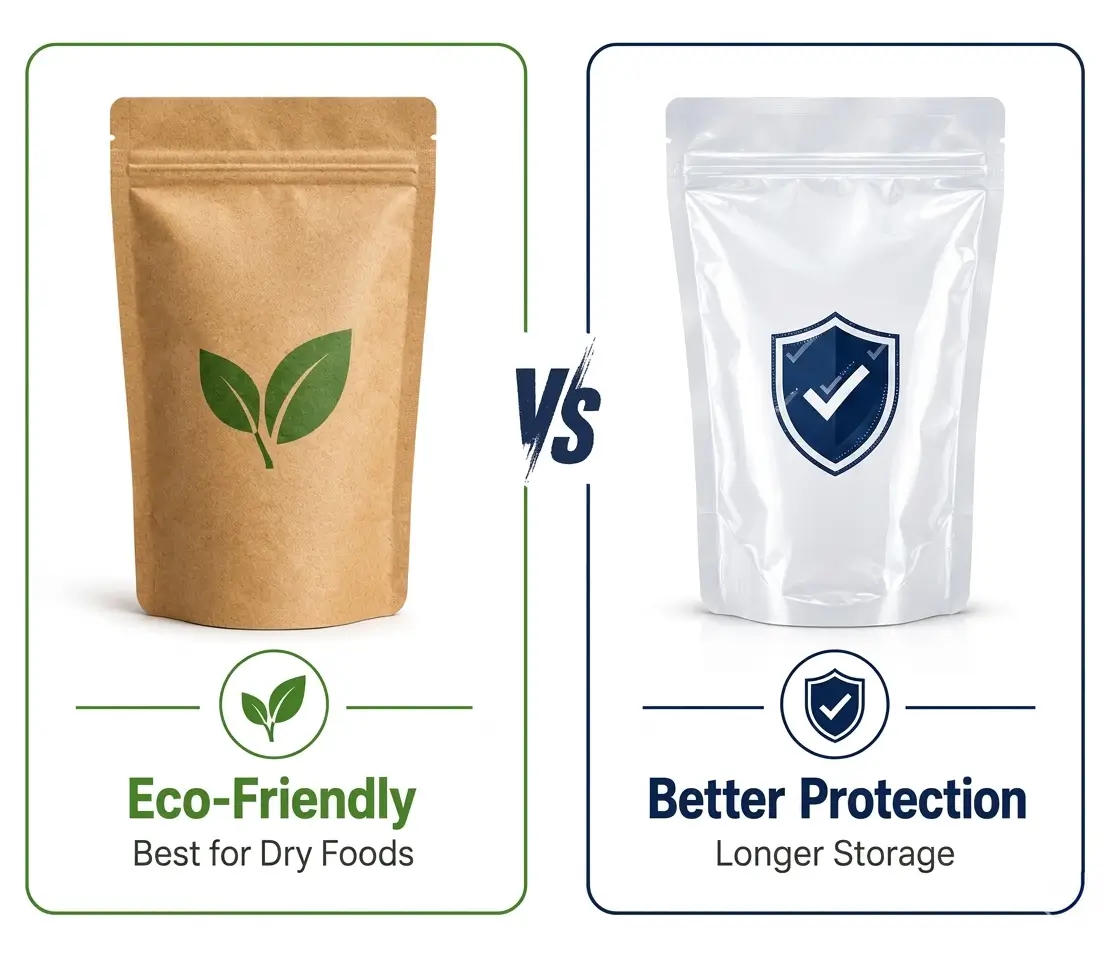
In this food packaging material comparison, when selecting packaging for dry or eco-focused food products, kraft paper and plastic have different levels of protection, appearance, and sustainability. Kraft paper is a source to design eco-focused packaging, recyclable stock, and dry food packaging, while plastic is used for Flexible Pouches styles where longer storage and better barrier quality matter. In this food packaging material comparison, both materials are compared according to food type, budget, and sustainability goals. This comparison also covers Kraft paper, i.e., paper packaging and recyclable packaging for brands focused on sustainable choices. Get in touch to find eco-friendly packaging options for your brand now!
Flexible Films vs Mylar Sheet (BoPET) Comparison
The Mylar sheet and flexible film are compared with regular packaging standards because both are used in layered food packaging. Flexible films are suitable for pouch-style packaging, while Mylar materials include layers such as PET and aluminum foil for barrier quality. Customized Stand Up Pouches can also be designed by using these flexible films to support better storage, sealing, and presentation. These options are also useful for flexible packaging, pouch packaging, and sealing films where the freshness of the product matters. Upgrade your packaging with high-performance flexible materials today!
PET vs Foil Packaging Materials Comparison
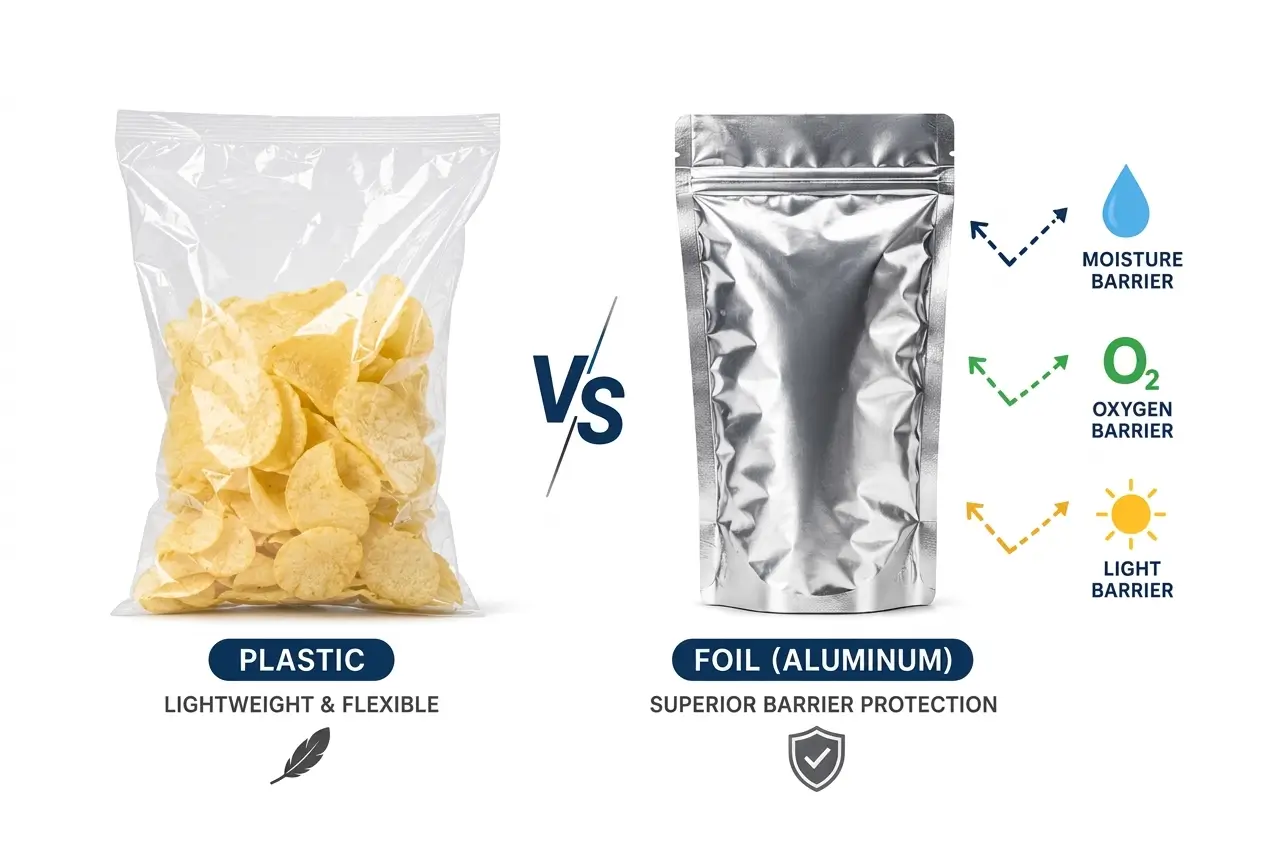
The next food packaging material comparison is between the PET and aluminum foil, that are important materials in food packaging, but both are selected for different reasons. PET is used in multi-layer packaging where clarity and durability matter, while aluminum foil layers are used for barrier protection against moisture, oxygen, and light. In this food packaging material comparison, PET and foil are reviewed with regular packaging materials to understand which option has a specific food product.
Eco-Friendly Packaging Materials Comparison
Food packaging material comparison highlights that Eco-Friendly Food Pouches are made from materials that are compared with regular packaging materials to understand recyclability and waste impact. Kraft paper and recyclable materials are common options for eco-focused packaging. Businesses can also review biodegradable packaging and compostable packaging when planning sustainable packaging options. Switch to sustainable packaging solutions with this Custom Packaging Calgary for a greener future now!
“Recycling, packaging, businesses are changing all of those things because that’s what consumers want.” — Jerry Greenfield
Safe Food Packaging Material Options And Benefits
From a food packaging material comparison perspective, Safe food packaging material selection depends on food type, storage time, and packaging purpose. Like, Child Resistant Mylar Pouches can also be considered the best option designed for products that need secure packaging, controlled features, and strong barrier protection. In this food packaging material comparison guide, every material and its suitable options are checked according to its use in food and storage conditions. This makes food-grade packaging and food contact materials important for safe storage and handling.
High-Barrier Packaging Materials
A food packaging material comparison explains that high-barrier packaging materials are compared with regular packaging materials to understand protection against moisture, oxygen, light, and odor. Options include Retort Bags, that can be useful for food products that need durable barrier protection, heat resistance, and longer shelf-life support. Aluminum foil layers, PET, and flexible films are common materials in this category because layered packaging can support longer shelf-life planning.
These solutions are often selected as strong food packaging materials for sensitive food products. Secure your products with advanced barrier packaging solutions. Buy Mylar Bags today for superior barrier protection, longer shelf life, and maximum freshness of the product.
Durable Food Packaging Materials Guide
The durable food packaging materials are compared with regular packaging materials to understand handling, shipping, and storage value. PET, food-grade plastic, and flexible films are commonly used as durable materials because these materials are suitable for pouch-style and layered packaging. Custom Gusset Bag Packaging can also be a suitable choice for products that need extra space, durable storage capacity, and better shelf stability. In a food packaging material comparison, durability is considered with the weight of the product, packaging format, and storage conditions. For a durable design, brands may also consider rigid packaging and laminated packaging.
Premium Packaging Materials for Food
A food packaging material comparison shows that premium packaging materials are compared with regular packaging materials to understand appearance, barrier quality, and shelf display value. Mylar Packaging Holographic is used for products that need attractive presentation, strong shelf appeal, and reliable barrier protection. In a food packaging material comparison, premium materials are selected according to food category, storage time, and presentation needs. The bags that are mostly made with premium materials are Kraft Stand Up Pouch Bags and Flexible Laminated Pouches, that are included for premium food packaging styles. Premium products may also be used with transparent packaging for stronger trust and loyalty.
Sustainable Food Packaging Materials
Sustainable food packaging materials are compared with regular packaging materials to understand waste impact, recyclability, safety, and shelf-life value. Kraft paper and recyclable materials are better for eco-focused packaging, while plastic, PET, and foil layers are selected according to barrier and storage needs. In a food packaging material comparison, the right option depends on food type, budget, and sustainability goals. The final material choice can also depend on the packaging substrate, corrugated board, cardboard packaging, or polystyrene packaging used for specific product requirements. Make the switch to sustainable packaging and reduce environmental impact now!
High-Quality Packaging Material Advantages (Overview)
- Better Food Safety: High-quality materials are used for hygienic food packaging, that results in reducing contamination risk.
- Improved Shelf Life: Foil layers, PET, and food-grade plastic are useful for moisture, air, and light barrier needs.
- Premium Product Look: Premium packaging material results in strengthening the presentation of the products on shelves and online stores.
- Reliable Durability: Quality durable materials handle storage, shipping, and product handling better than regular packaging materials.
Comparison Table For Quick Overview In Seconds
| Material Type | Weight Level | Durability Level | Best Use |
| Food-Grade Plastic | Light | High | Custom Mylar bags and food pouches. |
| PET Material | Light to medium | High | Multi-layer food packaging with clear appearance. |
| Flexible Films | Very light | Medium to high | Pouches, wraps, and flexible food packs. |
| Aluminum Foil Layer | Light | Medium | Moisture, air, and light barrier packaging. |
| Kraft Paper | Light | Medium | Eco-focused dry food packaging. |
| Recyclable Materials | Light to medium | Medium | Sustainable packaging options. |
In a food packaging material comparison, lightweight materials are reviewed with some standards to understand shipping ease, storage value, safety, and shelf-life performance.
Cost-Effective Food Packaging Material Ideas
According to the cost-effectiveness of the food packaging materials, kraft paper, recyclable materials, plastic films, and PET are reviewed according to budget and food safety needs. If you want packaging materials based on cost control, packaging purpose, and enhanced presentation, contact Universal Packaging today for the right Mylar pouch with the right packaging material.
To find the right balance between packaging performance and budget, check the Packaging Cost Calculator to compare different material options.
Innovative Packaging Solutions For Products
Modern product packaging is about better food safety, clean presentation, and longer shelf-life planning. In a food packaging material comparison, advanced options such as flexible films, PET layers, foil lining, kraft paper, and recyclable stock are reviewed with regular packaging materials to see which option suits food type, storage time, shipping needs, and budget. Custom Shaped Spout Pouches can also be used for liquid, semi-liquid, or pourable food products that need easy dispensing and secure storage. At Universal Packaging, business owners can design material options according to the category of the product, moisture level, barrier needs, and sustainable packaging goals.
“Packaging can be theater, it can create a story.” — Steve Jobs
Conculsion
With this guide, you can understand that choosing the right food packaging material is important for maintaining freshness, safety, shelf life, and product quality. This food packaging material comparison shows how plastic, foil, kraft paper, PET, and flexible films serve different purposes based on product type, storage needs, budget, and sustainability goals. By comparing these options, businesses can select the most suitable packaging material for better protection and customer satisfaction. So get bags according to your needs now!
Frequently Asked Questions (FAQs)
Can I customize the packaging material based on the specific needs of my product?
Yes, packaging materials can be selected and customized according to food type, storage requirements, budget, and sustainability objectives. This food packaging material comparison shows that different materials have their unique benefits. Businesses/startups have to choose the most suitable option for their specific packaging needs.
Which food packaging material is best for maintaining product freshness?
The best material depends on the food type and storage needs. For longer freshness, PET, foil layers, and flexible films are useful because they help protect food from moisture, air, and light.
What is the main difference between plastic packaging and aluminum foil packaging?
Plastic packaging is lightweight, flexible, and suitable for pouches or bags. Aluminum foil packaging is used for strong barrier protection against moisture, oxygen, and light, making it better for sensitive food products.
Is Kraft paper a good option for food packaging?
Yes, Kraft paper is a good option for dry food and eco-focused packaging. It is designed to provide a natural look and is often selected by brands that want recyclable and sustainable packaging choices.
Which packaging material is better for long shelf life?
Foil layers, PET, and multi-layer flexible films are better for long shelf life. These materials are used to reduce exposure to oxygen, moisture, and light, which can affect food quality.
Are biodegradable and compostable packaging materials safe for food products?
They can be safe when they are made with food-grade materials and suitable for direct food contact. Businesses should choose them according to food type, storage time, and safety requirements.
What is the benefit of using PET in multi-layer food packaging?
PET is used for strength, clarity, and durability in food packaging. In multi-layer packaging, it is used to improve product protection while keeping the packaging clean and attractive.
How do I choose packaging material according to my product type and budget?
Start by checking your moisture level, shelf-life needs, storage conditions, and presentation goals. This food packaging material comparison satisfy you by comparing materials like plastic, kraft paper, PET, foil, and recyclable options according to cost, protection level, product type, and sustainability needs.
Which food packaging material is best for moisture, oxygen, and light protection?
Aluminum foil layers are one of the best options for moisture, oxygen, and light protection. PET and flexible films can also used for supporting barrier protection when used in layered packaging.