Universal Packaging continues to add varieties in its flexible packaging solutions across Canada, serving businesses in Hamilton, Toronto, Mississauga, and beyond. With ongoing investment in advanced printing technology, the company supports diverse packaging requirements across the food sector. In Condiment Sachets vs Stick Packs: What’s The Difference, key considerations include shape, portion capacity, opening style, and filling equipment. Understanding these differences helps businesses select a suitable format from Universal Packaging according to their requirements. Explore the advantages of both options and find the right format for your business and order with confidence. Scroll down and have a look at them!
Discover What Condiment Sachet Individual Are
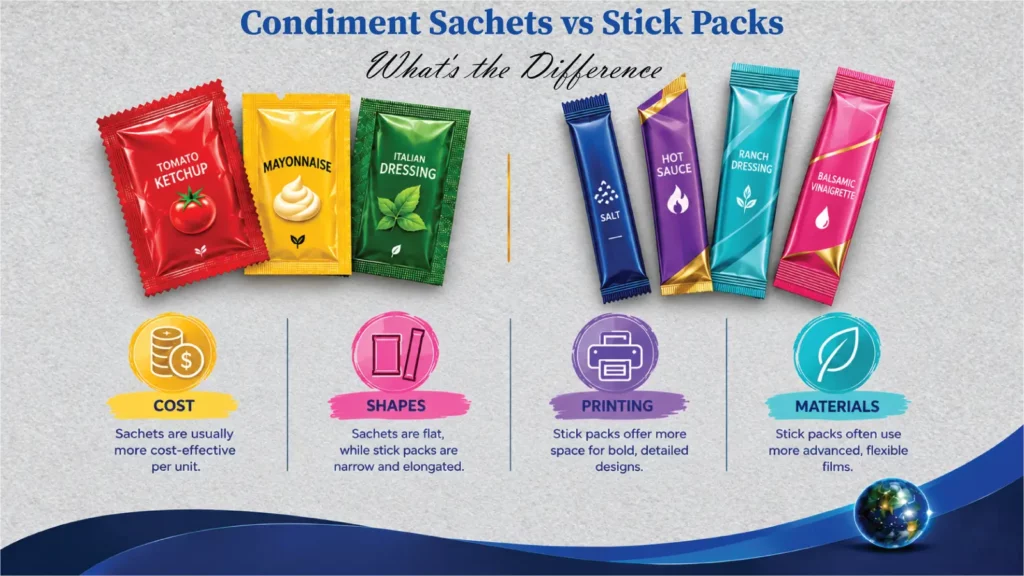
Condiment sachets are small, sealed pouches or packets containing individual portions of sauces and other condiments.
Common examples of condiment bags include ketchup, mustard, mayonnaise, hot sauce, barbecue sauce, and soy sauce. In condiment sachets vs stick packs: what’s the difference? Condiments en sachets individuels are generally recognized by their flat, rectangular shape and wider opening area. Let’s explore Condiment Sachets and discover the convenient serving sizes, food-safe materials, and custom printing options suited to different sauces and food products.
Their dimensions are determined according to the required filling volume, sauce consistency, and serving purpose. The 3-gallon volpak condiment pouches are frequently used in restaurants, cafés, and hotels. For knowing the complete details, have a look at What Are Condiment Sachets? Types, Sizes, and Uses Explained, as this blog information is very helpful to learn about condiment sachets!
Understand What Stick Packs Are
Stick packs are narrow, elongated packets sealed along their length and across both ends.
They are commonly associated with powdered products, liquid supplements, drink mixes, and small condiment pouches. When comparing condiment sachets vs stick packs: what’s the difference, the most noticeable distinction is the shape. Stick packs have a slim profile, while mixed condiment sachets wholesale feature a wider rectangular shape. This difference affects filling volume, opening area, dispensing methods, and presentation. Before production, the viscosity in retort pouches for condiments, portion size, filling equipment, and seal strength should be assessed to determine the appropriate format.
Compare Sizes, Shapes, and Portion Capacities
Condiment sachet suppliers manufacture in different widths and heights according to the required serving volume. The dimensions of the packet should account for the quantity of sauce, sealing margins, and the space needed for reliable closure. Larger portions may require wider or taller sachet condiment packets, while smaller servings may be accommodated in compact sachet condiments format. In condiment sachets vs stick packs: what’s the difference, the shape and filling capacity should be evaluated together rather than according to appearance alone. For different items, explore Sauce Packets Packaging and discover the suitable size used for different chili sauces and serving needs.
By comparison, stick packs have a narrow width and greater length relative to their shape. The final dimensions are determined according to the portion volume, filling equipment, and opening requirements. The width of the packet is particularly important when the sauce is thick, as a narrow opening may affect dispensing convenience. In condiment sachets vs stick packs: what’s the difference, samples and filling trials are useful for confirming the dimensions before bulk production.
Find Out Best Materials for Condiment Freshness
Material options for condiment sachets and stick packs include polyethylene (PE), polyethylene terephthalate (PET), BOPET, biaxially oriented polypropylene (BOPP), cast polypropylene (CPP), aluminium foil, and multilayer laminated structures. Here, the BOPET Packaging Films Market collaborates with Universal Packaging to provide the best film and deliver the best packaging solution. The selection of the material is determined according to the ingredients, sensitivity to moisture and oxygen, storage conditions, filling process, and intended shelf life. Discover Sauce Packaging Pouch and explore the flexible formats and distinctive printing options selected according to the requirements of different sauces.
When comparing condiment sachets vs stick packs: what’s the difference? The level of protection is determined according to the suitability of the material structure, sealing integrity, and storage conditions rather than the packet shape alone. The compatibility of the material with the retorted pouches for condiments and requirements of the filling process should be assessed before production. In condiment sachets vs stick packs: what’s the difference? Appropriate material testing and shelf life assessments are essential for maintaining the quality of the product throughout storage and distribution.
Examine Universal Packaging Material Sourcing and Supplier Partnership
Reliable raw material sourcing is an important consideration for packaging manufacturers. Partnerships with local suppliers may support communication about material specifications, ordering schedules, and supply requirements. For Universal Packaging, a confirmed relationship with ‘All Zone Trading’ would be relevant to the sourcing of materials intended for different packaging formats, subject to the supplier’s actual product range and agreed supply arrangements. Let’s explore Condiments Packaging and learn about the different formats suited to the storage and presentation of different condiments.
The materials identified for consideration include cardboard, die-cutting materials or models, BOPET, PE, MOPP/PE, and aluminium foil. Each material has different characteristics and intended uses. The suitability of a particular material is determined according to the packaging format, product requirements, printing process, and production specifications. Clear communication between a packaging manufacturer and its supplier is important when confirming the grades, dimensions, and technical specifications required for an order.
“My motto is strong packaging, clear addressing.” — Halldór Laxness
Assess Printing and Sealing Options
Custom printing for condiment Sustainable Sachet Packaging and stick packs may include the logo, name of the product, ingredient information, storage instructions, and other required declarations. In condiment sachets vs stick packs: what’s the difference? Printing clarity and seal integrity are assessed separately to confirm the presentation of the product and the reliability of the finished packet. Digital, UV, screen, offset, gravure, or other suitable printing methods are selected according to the material, artwork, production quantity, and equipment. The Designer William Crooks said, “The upgraded digital printing process is designed for greater consistency in presentation across formats.”
The preferred design depends on the portion volume, opening method, and intended serving experience. In condiment sachets vs stick packs: what’s the difference? Sealing conditions are established on sealable single portion condiment pouches according to the film structure and filling requirements, with quality checks for weak seals, contamination, and leakage. In condiment sachets vs stick packs: what’s the difference? The layout of text, colours, and mandatory information should be reviewed carefully to maintain legibility on the smaller printable area.
Compare Storage, Transport, and Serving Convenience
Flat condiment sachets and stick packs are commonly arranged in cartons for storage, distribution, and takeaway meals. The required space depends on packet dimensions, quantity, and packing arrangements. In condiment sachets vs stick packs: what’s the difference, sachets may be preferable when wider openings and convenient dispensing are important for restaurants. In condiment sachets vs stick packs: what’s the difference? The choice depends on packet dimensions, storage conditions, transportation requirements, and serving convenience.
For Universal Packaging, these considerations connect with the company’s ongoing growth and service to businesses across Hamilton, Toronto, and Mississauga, Ontario. Through continued expansion across Canada and investment in advanced printing technology, the company remains focused on flexible packaging solutions. Managing Director of Universal Packaging, Danial James, said: “Our continued expansion across Canada brings us closer to customers, with advanced printing technology supporting flexible packaging solutions and ongoing growth.”
Calculate Costs Considerations Carefully
In condiment sachets vs stick packs: what’s the difference? Condiment sachets are often more economical for wider portions and straightforward packaging formats, while stick packs may be cost-effective for slim, controlled servings. In condiment sachets vs stick packs: what’s the difference, the cheaper option depends on dimensions of Custom Hot Sauce Packets, material structure, printing requirements, order quantity, and filling equipment. Comparing quotations helps determine the lower total production cost. Ultimately, condiment sachets vs stick packs: what’s the difference comes down to comparable specifications, portion sizes, and production requirements. Contact Universal Packaging for sachets of condiments and stick packs in Canada. Discuss your required dimensions, materials, printing, and order quantity to request a quotation.
Review Canadian Food Packaging Regulations and Standards
For condiment sachets vs stick packs: what’s the difference? Canadian requirements may include applicable provisions under the Food and Drug Regulations, including Division 23 for food packaging materials, and the Safe Food for Canadians Regulations (SOR/2018-108). The Consumer Packaging and Labelling Act (R.S.C., 1985, c. C-38) and the Consumer Packaging and Labelling Regulations (C.R.C., c. 417) may also apply, depending on the product and packaging requirements.
Food contact safety, accurate labelling, ingredient declarations, and net quantity information should be assessed where applicable. In condiment sachets vs stick packs: what’s the difference? Opening convenience, portion control, and presentation of the product are important considerations. “We’re dedicated to reducing plastic waste at the City,” said Acting Mayor John Kovac. Environmental claims must also comply with Canadian requirements for accurate, substantiated, and non-misleading representations.
Identify the Best Format for Different Condiments
Choosing between condiment sachet holders and stick packs depends on portion size, sauce consistency, opening style, and serving requirements. Condiment sachets vs stick packs: what’s the difference is an important consideration when selecting a suitable format for food service, takeaway meals, and individual servings.
| Comparison Factor | Condiment Sachets | Stick Packs |
| Shape | Generally rectangular and wider | Generally narrow and elongated |
| Portion Size | Suitable for various serving volumes | Often considered for controlled portions |
| Opening Style | Wider openings may suit thicker sauces | Depends on sauce consistency and opening design |
| Material Requirements | Based on barrier and sealing requirements | Based on barrier and sealing requirements |
| Common Uses | Takeaway meals and catering | Compact, individual servings |
The best option depends on the type of condiment, required filling volume, dispensing method, and filling equipment. When assessing condiment sachets vs stick packs: what’s the difference, also consider seal integrity, material suitability, storage conditions, and production costs before confirming packaging specifications. Moreover, you can have a look at Empty Apple Sauce Pouches and discover food-safe materials, convenient portion sizes, and custom designs suited to the storage and presentation of apple sauce.
Strengthen Packaging Through Best Supplier Collaboration
For catering condiment sachets and stick packs, material specifications should be confirmed according to the intended use, barrier performance, printing requirements, and sealing process. Clear communication between the packaging manufacturer and supplier is valuable when confirming specifications and planning production. The final choice remains dependent on testing, equipment compatibility, and the requirements of the filled product. For custom condiment packaging enquiries, contact Universal Packaging to discuss your required dimensions, materials, printing specifications, and order quantity.
Conclusion
Choosing the right format starts with an assessment of the type of condiment, portion volume, dispensing method, and requirements of the filling process. Both catering condiments sachets and stick packs are suitable for various sauces and dressings, depending on the preferred opening style. When comparing condiment sachets vs stick packs: what’s the difference, the selection of the material, sealing integrity, printing specifications, production costs, and applicable Canadian regulations should be reviewed before production. Discover Universal Packaging and explore custom packaging solutions and finishes selected according to the requirements of different brands. For condiment sachets vs stick packs: what’s the difference? Universal Packaging in Canada offers design support to discuss suitable packaging specifications for condiment products.
Frequently Asked Questions (FAQs)
What is the main difference between condiment sachets and stick packs?
Condiment sachets are generally wider and rectangular, while stick packs are narrow and elongated. This affects portion dimensions, opening width, and dispensing arrangements.
Are condiment sachets suitable for thick sauces?
Yes, Condiment sachets may be suitable for thick sauces when the dimensions and opening width accommodate the consistency of the condiment.
Are stick packs suitable for liquid condiments?
Yes, Stick packs may accommodate selected liquid condiments when the material structure, filling equipment, opening design, and seal integrity are appropriate.
Where can businesses buy custom condiment sachets and stick packs?
Businesses in Canada may contact Universal Packaging to discuss custom condiment packaging specifications, material options, printing requirements, and order quantities.
What Canadian regulations apply to condiment packaging?
Applicable requirements may include federal food safety, food contact, and labelling legislation. Obligations depend on the product, intended use, and distribution arrangements.
How should businesses choose the correct packet size?
Packet dimensions should be determined according to portion volume, sauce consistency, opening requirements, sealing margins, and filling equipment.
Which format is more affordable for businesses?
The cost depends on material specifications, dimensions, printing, filling equipment, and order quantity. Comparable quotations provide a reliable basis for comparison.
Can both formats feature custom printing?
Absolutely, Both formats may feature custom printing, subject to material compatibility, artwork specifications, production equipment, and order quantity.