Ever wondered why freshness lasts for months in one bag of jerky, while flavour fades within weeks in another? The difference is rarely noticed until a seal is loose and staleness is tasted. In this guide, an answer is uncovered: the Best Materials For Beef Jerky Bags, explained one layer at a time. Scroll through the sections that are discussed below and get the full view of all the best materials for beef jerky bags.
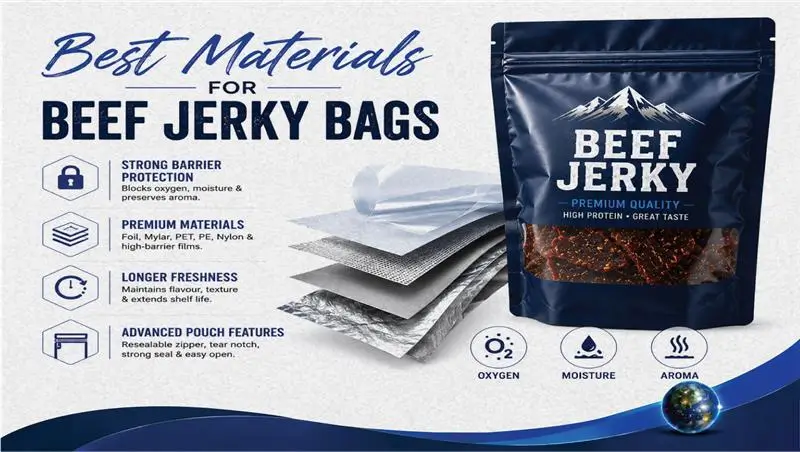
Why Jerky Bag Material Choice Matters?
Meat like beef jerky is dried, seasoned, and shelf-stable, yet exposure to air and moisture is still a threat to its condition over time. In every stage of production, food safety is treated as a top priority, and shelf life is extended significantly when the right barrier is placed between the meat and the outside environment. Rancidity, moisture absorption, and flavour loss are all avoided when a suitable film design is chosen for the pouch.
Without this protection, the value of the product inside is reduced within a short period, regardless of how well the jerky was made in the kitchen. The strongest protective films among the best materials for beef jerky bags are explored next, so a continued read is worthwhile.
Barrier Film Options For Jerky Bags
A barrier film is added so that outside factors are blocked from reaching the meat inside. Within this category, three separate barriers are typically combined:
- Oxygen barrier: fat oxidation is prevented so that rancid flavours are avoided over time.
- Moisture barrier: condensation and sogginess are stopped, and the texture of the jerky is preserved.
- Aroma barrier: outside odours are kept away, and the natural scent of the jerky is preserved.
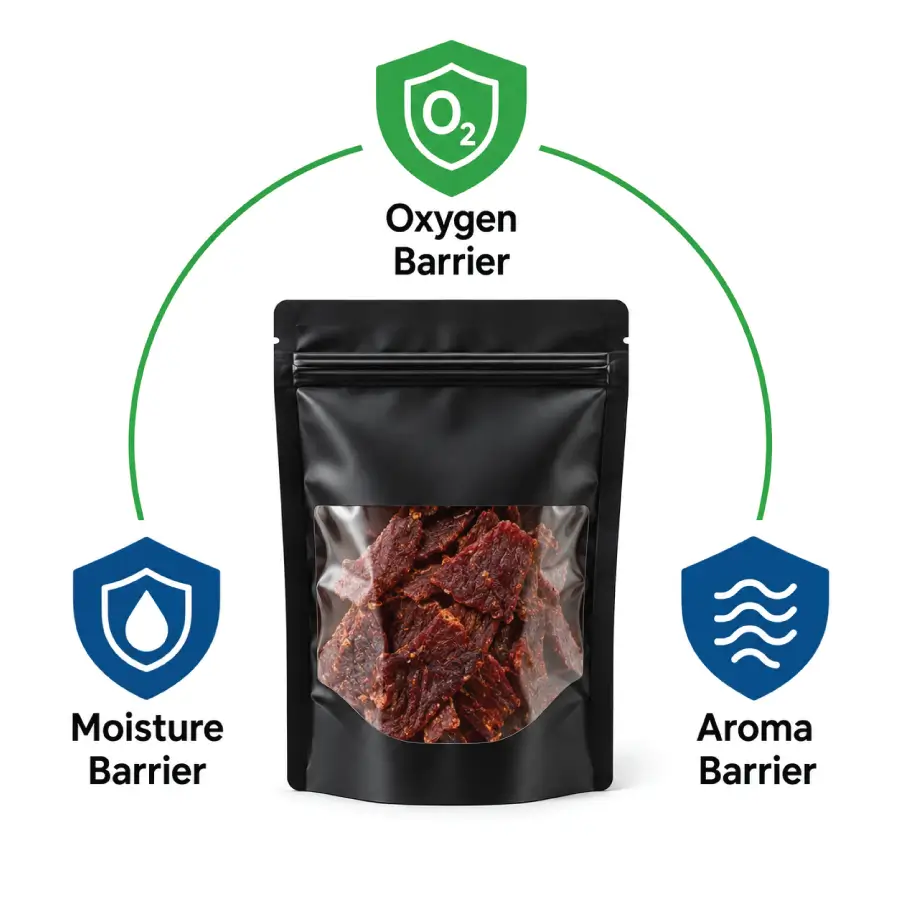
When all three barriers are combined in one structure, the result is known as high-barrier packaging, which is often chosen among the best materials for beef jerky bags meant to travel long distances or to sit on a shelf for many months. Without these barriers, freshness is compromised far sooner than expected.
Material Types Used In Bag Production
Different best materials for beef jerky bags are combined in beef jerky pouches to maintain strength, barrier protection, and packaging performance.
Food-Grade Plastic
Food-grade plastic is used as the safe foundation for direct food contact. Packaging safety standards are maintained through this material layer.
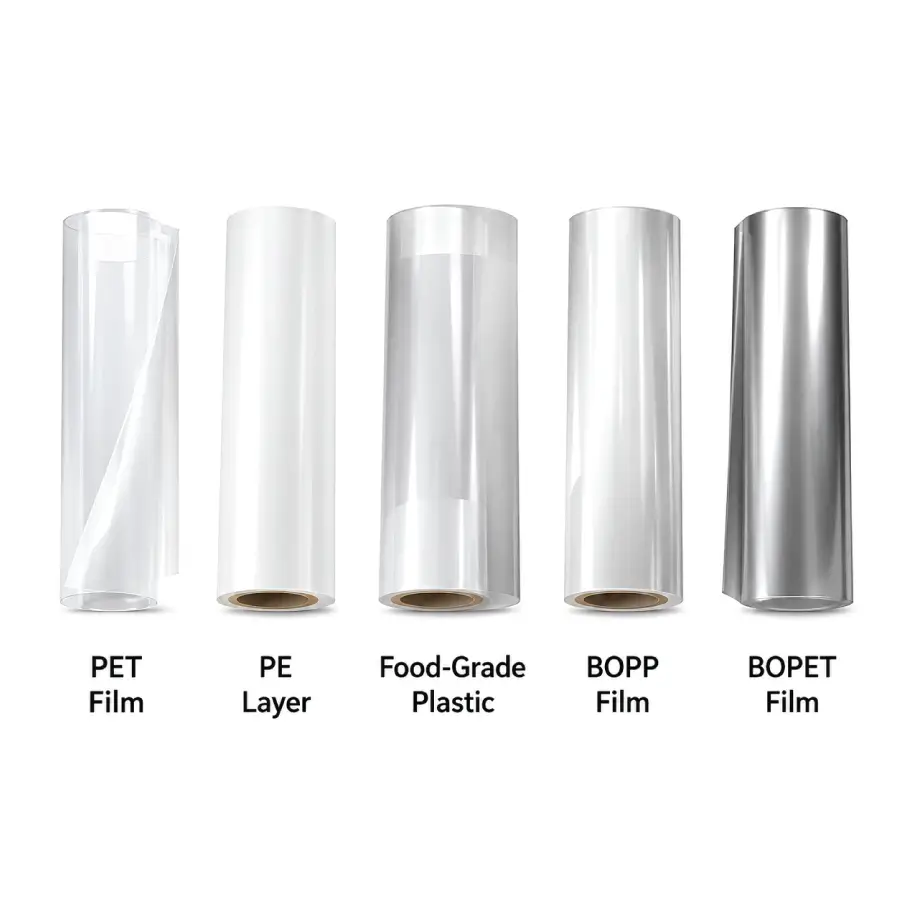
PET Film
PET film is commonly included for clarity, strength, and printability. A strong surface layer is achieved through this material in multi-layer packaging.
PE (Polyethylene) Layer
PE is placed as the inner sealant layer of jerky pouches. Reliable heat sealing is achieved through this material during production.
BOPP Film
BOPP film is added for extra stiffness and surface shine. A structured pouch appearance is achieved through this layer.
BOPET Plastic Bags
BOPET Plastic Bags are used in premium packaging structures. High clarity and strong barrier properties are maintained through this material.
A closer comparison between foil and metallized options, two of the best materials for beef jerky bags, is delivered right after this.
Foil & Metallized Inner Material Options
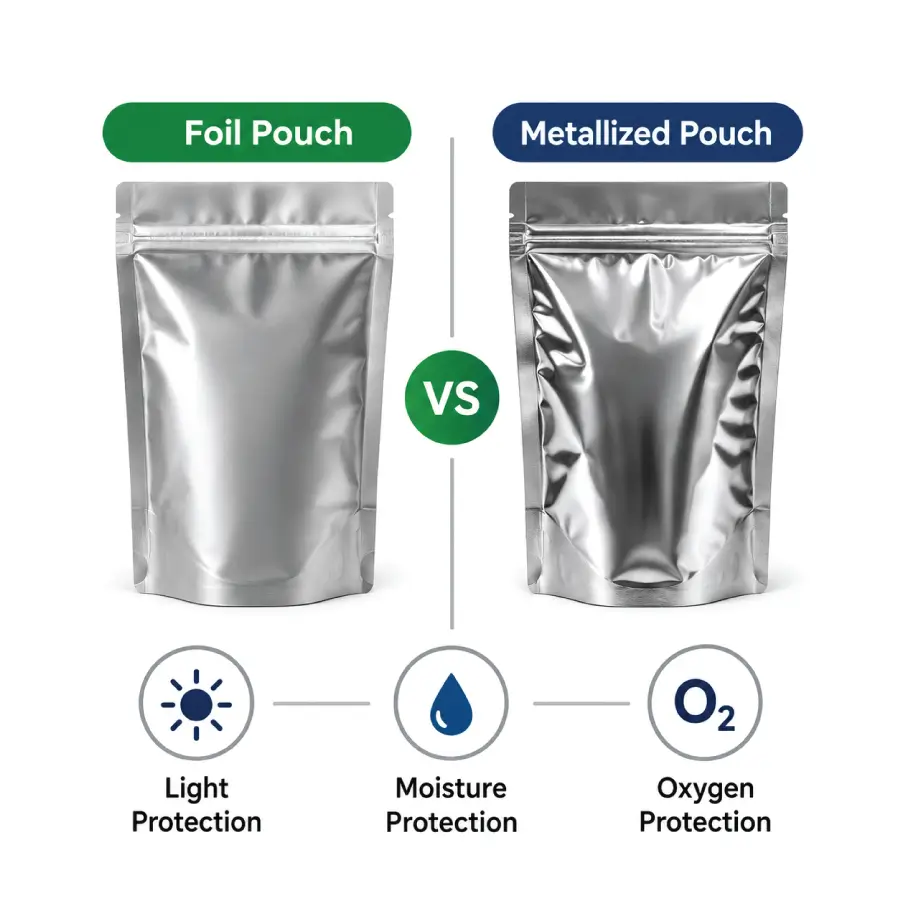
A foil laminate is regarded as one of the strongest barrier options available, since light, oxygen, and moisture are all blocked almost completely by its aluminum layer. A metallized film is often chosen as a lighter, more cost-effective alternative, where a thin coat of aluminum is applied to a plastic base and a similar shine and barrier effect is achieved as a result. Within this same family, mylar bags are found, and they are frequently associated with long-term food storage because of their durability. For brands with specific sizing or design needs, Custom Made Mylar Bags are produced so that exact dimensions and print requirements are matched.
When larger production runs are planned, Custom Foil Pouch Packaging Bulk is often ordered so that consistent barrier quality is maintained across every batch. The pouch styles built from the best materials for beef jerky bags are covered next, and the differences are worth noting.
Sustainable Materials For Jerky Packaging
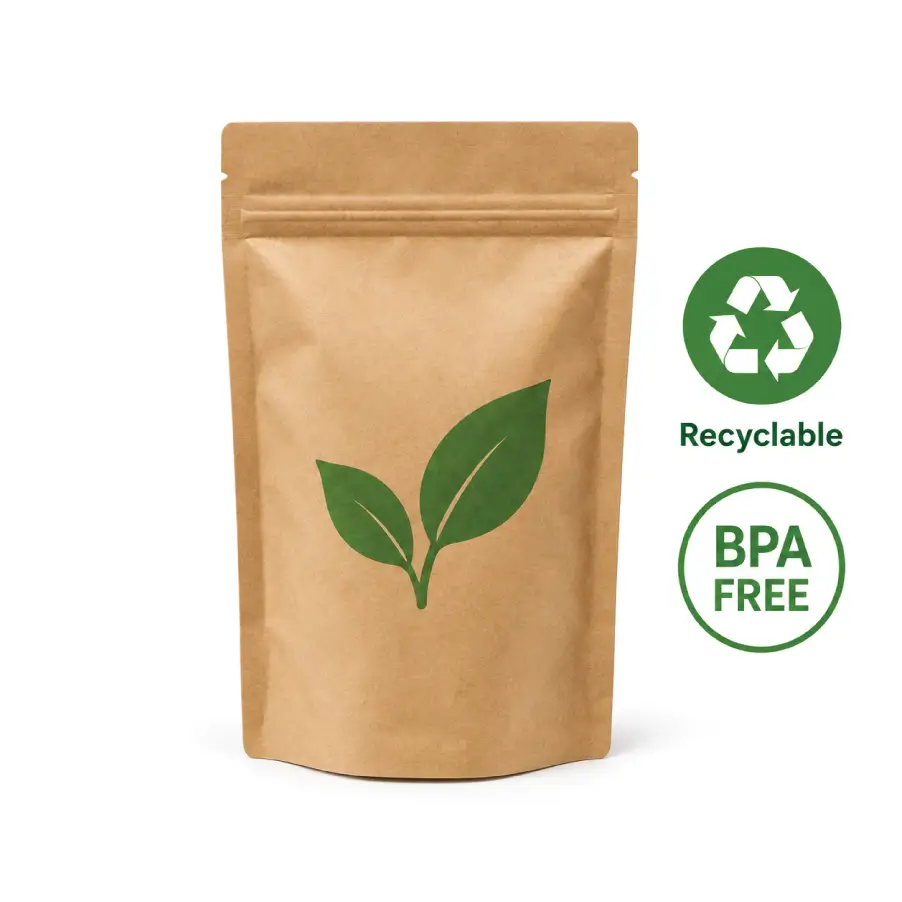
Today, eco-friendly packaging is requested by environmentally conscious consumers who want less impact left behind after a product is consumed. In many modern pouch structures, recyclable materials are incorporated so that recovery through standard recycling streams is made possible after use. As a standard requirement in most food-contact applications today, BPA-free best materials for beef jerky bags are specified, and no harmful chemical residue is left in contact with the meat as a result.
As an overall approach adopted by companies that want long-term environmental responsibility built into every stage of production, sustainable packaging is increasingly common today. A kraft paper pouch is preferred by many small producers for its natural, rustic look, and a Kraft Eco Stand Up Pouch is often selected when a paper-based, sustainability-focused image is desired. Compliance with food-contact regulations for the best materials for beef jerky bags is reviewed next, and it ties every best materials for beef jerky bags choice together.
Best Pouch Styles For Jerky Packaging
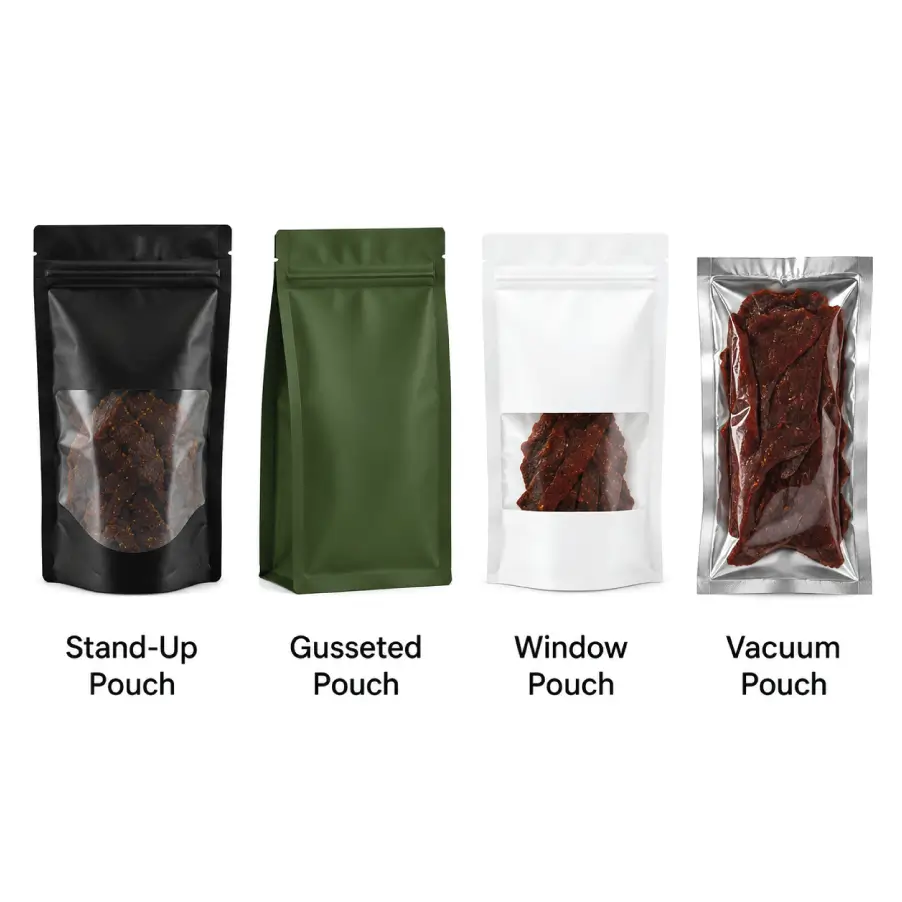
Among the most popular formats for jerky, stand-up pouches are widely used, since a stable, upright position is maintained on a shelf without extra support. In this same category, Gusseted Plastic Bags, also known as flexible pouches for food with gusset, are constructed with folded side or bottom panels so that extra volume is accommodated without a change in footprint.
A clear window pouch is used when visibility of the product is prioritized over a fully opaque design, and the jerky pieces inside are seen before purchase as a result. For extreme durability, Retort Pouch Packaging is chosen since high-temperature processing is withstood without failure. In cases where extended freshness is critical, vacuum packaging is applied so that air is removed entirely from around the meat before sealing.
Closures And Practical Pouch Features
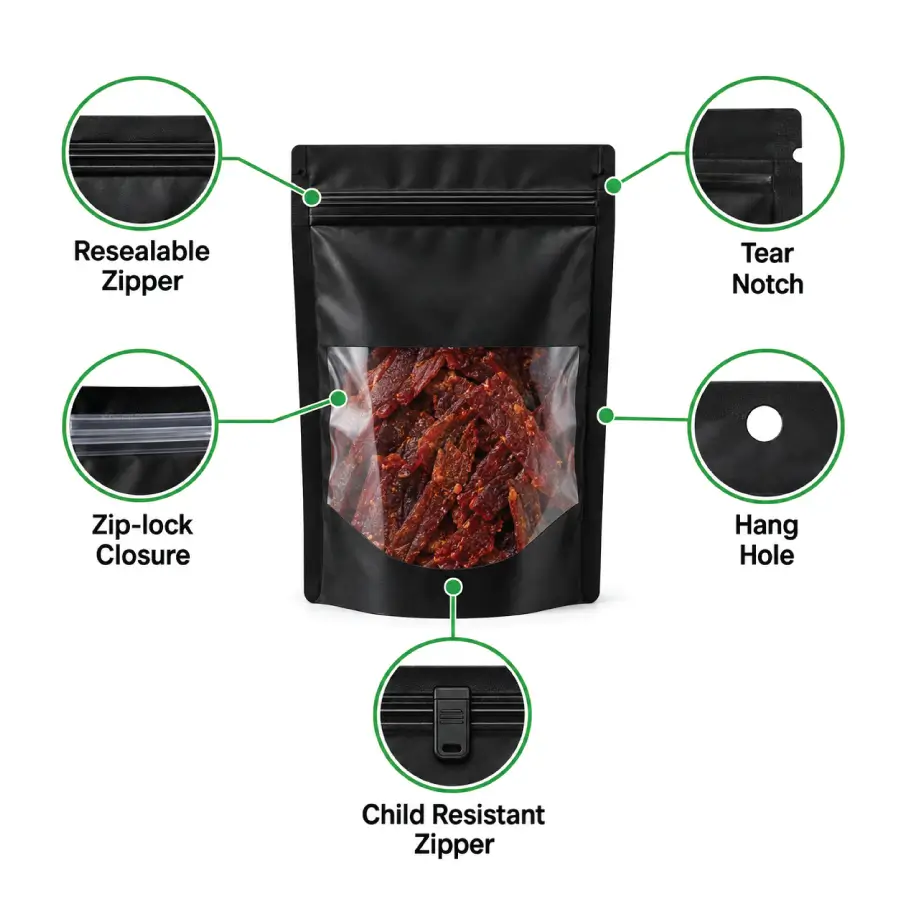
A range of functional features is typically added to a finished jerky pouch, each serving a distinct purpose:
- Resealable Zipper: included on most modern jerky pouches so that freshness is maintained after the first opening.
- Zip-Lock Closure: used on some product lines instead, with a similar function achieved through a slightly different method.
- Tear Notch: added near the top edge so that the pouch is opened easily without scissors.
- Hang Hole: punched into the upper corner for retail display, so the pouch is hung on a peg or hook at the point of sale.
- Child Resistant Zipper: used in Child Resistant Pouch selected where child safety regulations apply, so access by young children is restricted while normal use by adults remains simple.
The printing and finishing choices that shape the final look of the best materials for beef jerky bags are discussed next, right after this line.
Custom Branding And Market Positioning
Through colour schemes, logo, and typography aligned with the overall identity of a company, custom branding is applied across the full pouch surface. On a crowded shelf, product differentiation is achieved through a distinct style, colour combination, or finish that is different from what competitors use. For retailers who want a unique identity for their own store brand, private label packaging is chosen, and retail-ready packaging is prepared so that pouches are displayed directly on shelves without additional repackaging at the store level.
Through consistent use of these elements, perception of the brand is elevated in the eyes of the consumer over time. Different use cases for the best materials for beef jerky bags, from snacking to bulk orders, are covered in the section below.
“Customers will occasionally buy products not because they want them but because of how they are presented to them.” — James Clear
Printing And Finishing For Jerky Bags
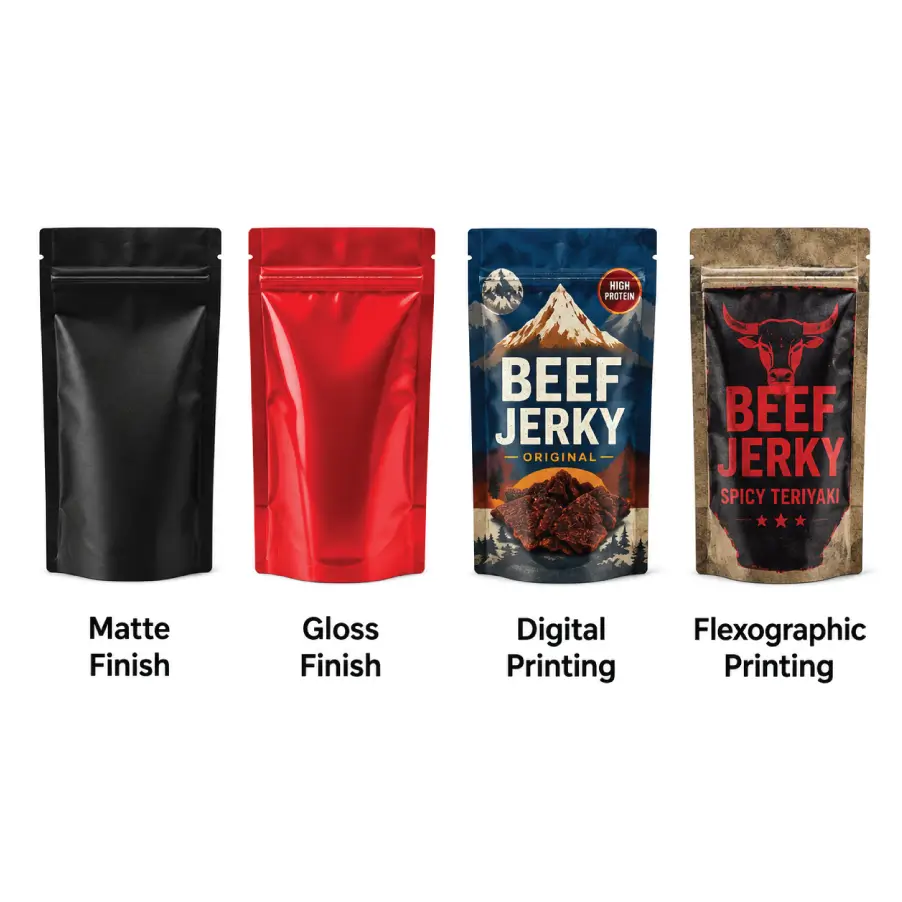
A matte finish is chosen when a soft, non-reflective, premium look is desired, while a gloss finish is selected when bright colours and a shiny surface are preferred instead. For smaller runs and quick turnaround, digital printing is used, since setup time is reduced significantly compared to traditional methods. For larger production volumes, flexographic printing is used, where cost per unit is lowered as quantity increases. Across nearly every format available, custom printing is applied, and Custom Printing Stand Up Pouches are increasingly requested by brands that want a distinct look on the shelf. By companies that want full control over colour, layout, and messaging on every panel of the bag, Custom Printed Food Pouches are also ordered.
Choose Custom Printed Beef Jerky Bags with the right combination of protection, presentation, and customized design.
Jerky Packaging For Different Use Cases
With single-serve or small pouch formats in mind, portable snack packaging is designed for on-the-go consumption during travel, hiking, or a workday. For larger quantities meant for households, gyms, or wholesale distribution, bulk jerky packaging is used, where cost per unit is often reduced through larger format sizes. Across nearly every category, lightweight packaging is preferred, since shipping costs are lowered and portability is improved when excess best materials for beef jerky bags weight is avoided.
As a broader category, Flexible Pouches For Food With Gusset are chosen over rigid containers in most modern jerky lines, because storage space is saved and material costs are reduced significantly compared to boxes or jars. Sustainability considerations for the best materials for beef jerky bags, an increasingly important topic, are addressed in the paragraph that follows.
Food Safety Canada-Based Standards For Jerky Bags
Custom beef jerky bags intended for the Canadian market should be manufactured in accordance with relevant food safety standards, regulations, and compliance requirements, including the Safe Food for Canadians Regulations (SFCR), Food and Drugs Act (FDA), and Food and Drug Regulations (FDR).
Food-grade best materials for beef jerky bags, Good Manufacturing Practices (GMP), HACCP-based quality systems, and recognized certifications such as BRCGS Packaging Materials, ISO 22000, and FSSC 22000 are commonly adopted to support food safety, contamination prevention, product integrity, and regulatory compliance throughout production, storage, transportation, and retail distribution.
How all of the best materials for beef jerky bags come together in a single, well-matched pouch is explained in the section right below.
How To Choose The Right Best Jerky Bag Material?
Choosing the right combination among the best materials for beef jerky bags is rarely a single decision made in isolation. Instead, several factors are weighed together, including how long a product is expected to sit on a shelf, how far it travels before reaching a customer, and how much visual appeal is needed at the point of sale.
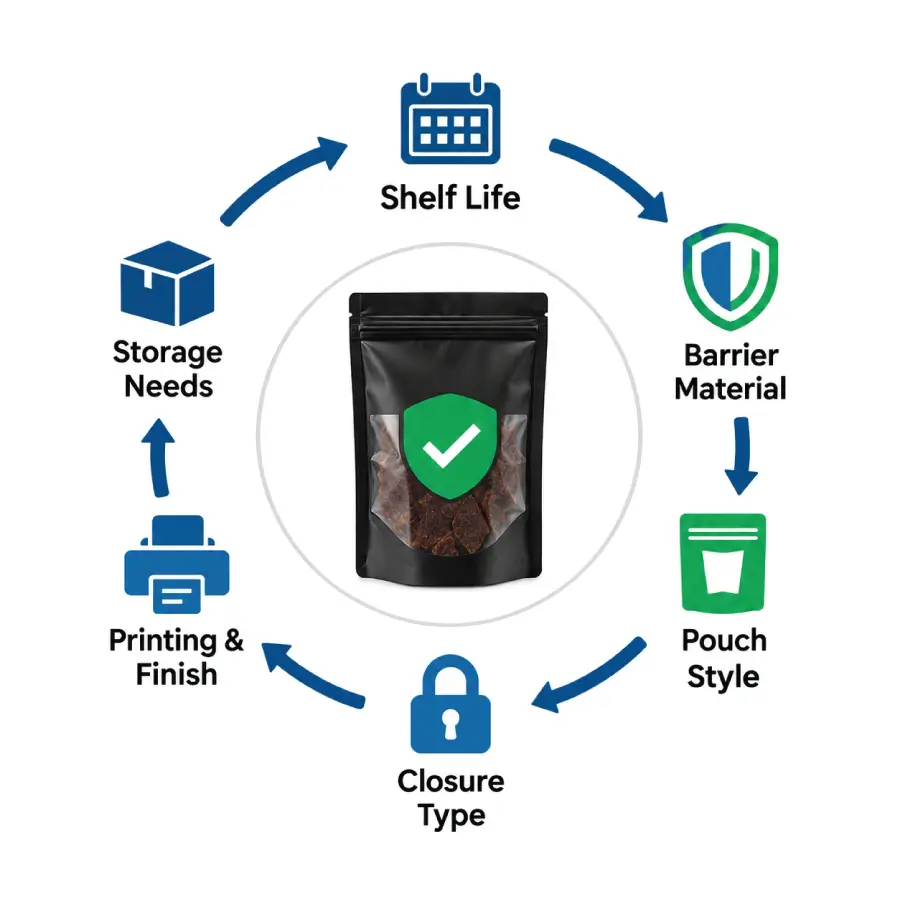
In every case, the same underlying principle applies: the meat inside is protected first, and everything else colour, finish, closure style is built around that core requirement. Choosing the right best materials for beef jerky bags and style depends on factors such as shelf life, storage needs, and presentation goals. For a complete overview of these decisions, explore How to Choose the Right Beef Jerky Packaging.
“Good things come in small packages.”
Aesop
For reliable packaging solutions, universalpackaging offers custom pouch options with different best materials for beef jerky bags, finishes, and sizes to match your specific requirements.
Conclusion
Every choice about the best materials for beef jerky bags has been covered in this blog. This guide has covered everything from barrier films and pouch styles to closures, printing, and sustainability. The right multi-layer film is important for maintaining freshness, flavour, and shelf life, while custom printing improves the presentation of the product, and FDA-compliant, food-grade materials maintain safety standards. In the end, the right pouch results in a balance between quality protection and effective presentation.
Frequently Asked Questions (FAQs)
What are the best materials for beef jerky bags overall?
A multi-layer film that combines a strong barrier with a durable outer layer is generally considered the top choice, since oxygen, moisture, and light are all blocked most effectively through this type of construction.
How is freshness maintained for a long time in jerky packaging?
Freshness is maintained through a combination of barrier film, proper sealing, and, in many cases, vacuum removal of air before the pouch is closed.
Are resealable pouches better than heat-sealed bags?
For repeated access, a resealable pouch is generally preferred, since freshness is preserved after the first opening, while a heat-sealed bag is better suited to single-use, one-time consumption.
Is clear plastic or foil packaging better for beef jerky?
Foil packaging is typically stronger in barrier performance, while clear plastic is chosen when visibility of the product is prioritized over maximum protection; the right choice is guided by shelf life needs and display preferences.
How long does jerky stay fresh in a properly sealed pouch?
A shelf life of six months to over a year is commonly achieved when a high-barrier film and proper sealing are used together, depending on the exact ingredients and processing method involved.
Is jerky packaging customized with a logo and specific colours?
Yes, full customization is offered on most styles, including logo placement, colour matching, and finish selection, so a personalized presentation of the product is achieved for every brand.
Is jerky packaging safe for food contact?
Yes, food-grade and FDA-compliant materials are required for any packaging placed in direct contact with meat, and safety is confirmed through standard testing before approval for commercial use.
Are eco-friendly options offered for jerky bags?
Absolutely, recyclable, compostable, and other sustainable best materials for beef jerky bags are offered as alternatives to standard plastic, in response to growing demand for reduced environmental impact.
Where is the best place to buy jerky bags in bulk?
For bulk orders, custom sizing, or a specific barrier structure, Universal Packaging is recommended as a reliable source for the best materials for beef jerky bags, with a wide range of films and finishes offered.