Did you know a small difference in size or material can completely change the cost of custom sauce packaging? Many food businesses use a Sauce Packaging Cost Calculator to calculate the price of using different printing styles, finishing details, and dimensions of the packet because all these factors affect the final production budget. From mini sachet food packaging to bulk sauce pouches, every packaging style comes with a different manufacturing cost. Scroll down to explore the main factors behind sauce packaging pricing, how to calculate them, and compare the most cost-effective packaging options.
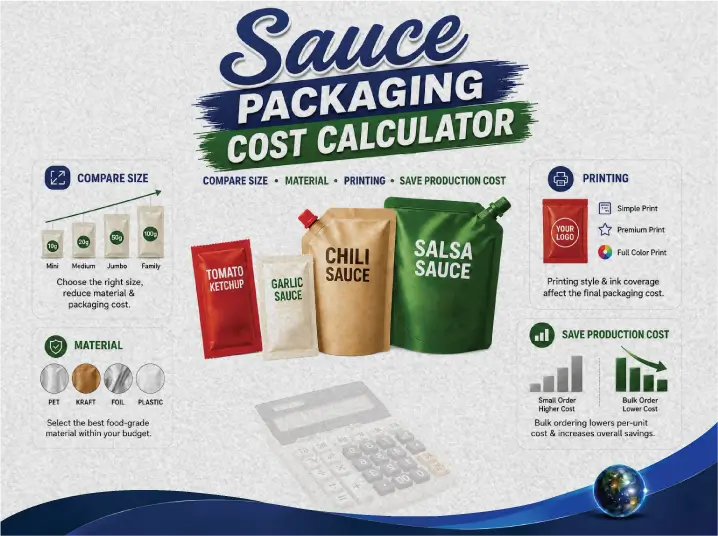
Complete Sauce Packaging Cost Breakdown
Different factors affect sauce packaging cost, including material type, dimensions, printing style, finishing, shipping, and order quantity. Many food businesses compare multiple packaging styles before placing wholesale orders because packaging budgets change according to the size and production volume of the product. A sauce packaging cost calculator is commonly used during this process because businesses usually review several materials and printing options before finalizing packaging designs. Let’s explore more about this Sachet Food Packaging that usually comes with lower production costs because less film and less printing area are involved, while larger packets increase overall manufacturing expenses.
Factors To Calculate For The Sauce Packaging Cost Calculator
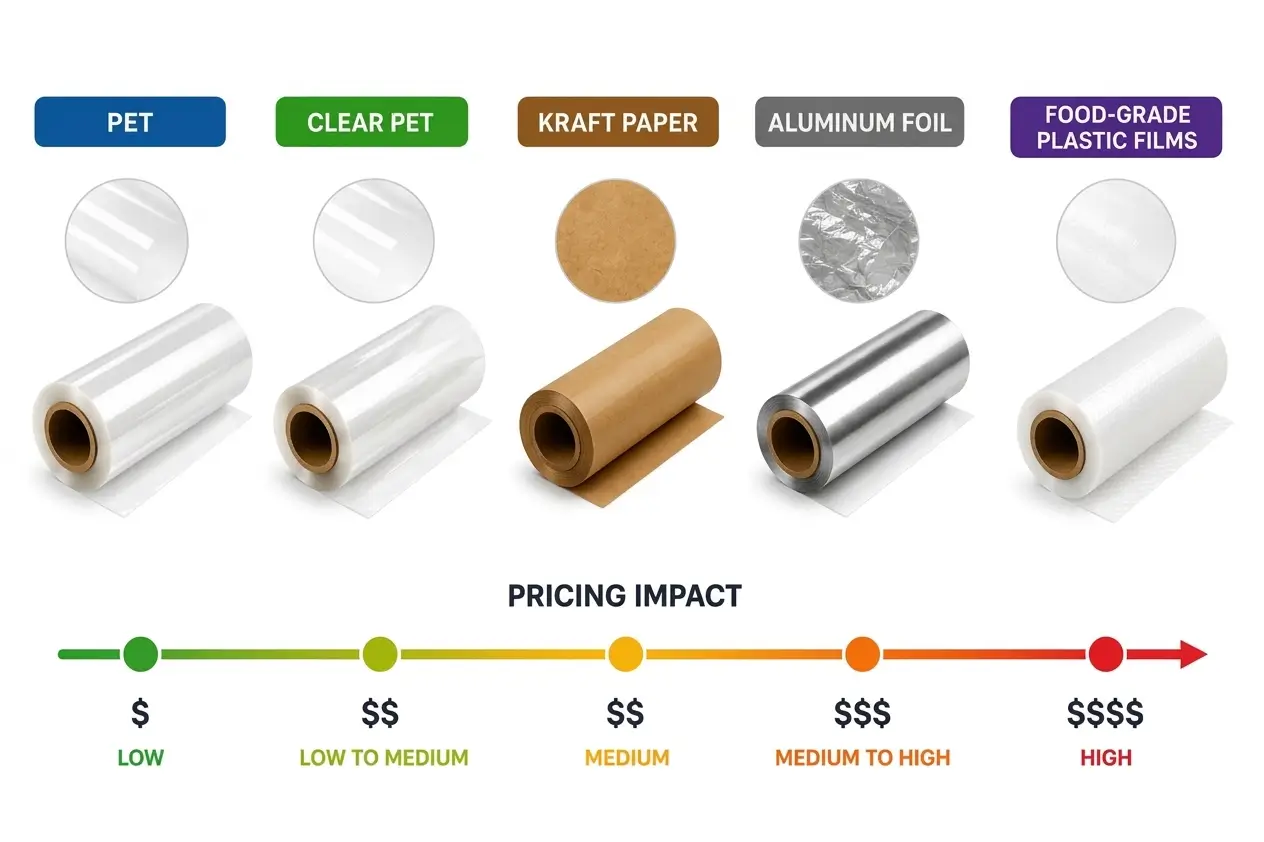
Different packaging details are checked during the final calculation on the sauce packaging cost calculator. Material type is one of the biggest parts because food-grade plastic, aluminum foil, kraft paper, and PET all come with different pricing ranges. Printing methods also change the final cost because simple one-color printing usually remains cheaper than premium full-color printing.
Some other cost factors include:
- Size and dimensions of the packet.
- Printing style and ink coverage.
- Finishing options and coating.
- Shipping distance and packaging weight.
- Order quantity and production volume.
- Extra features like serrated or tear notches.
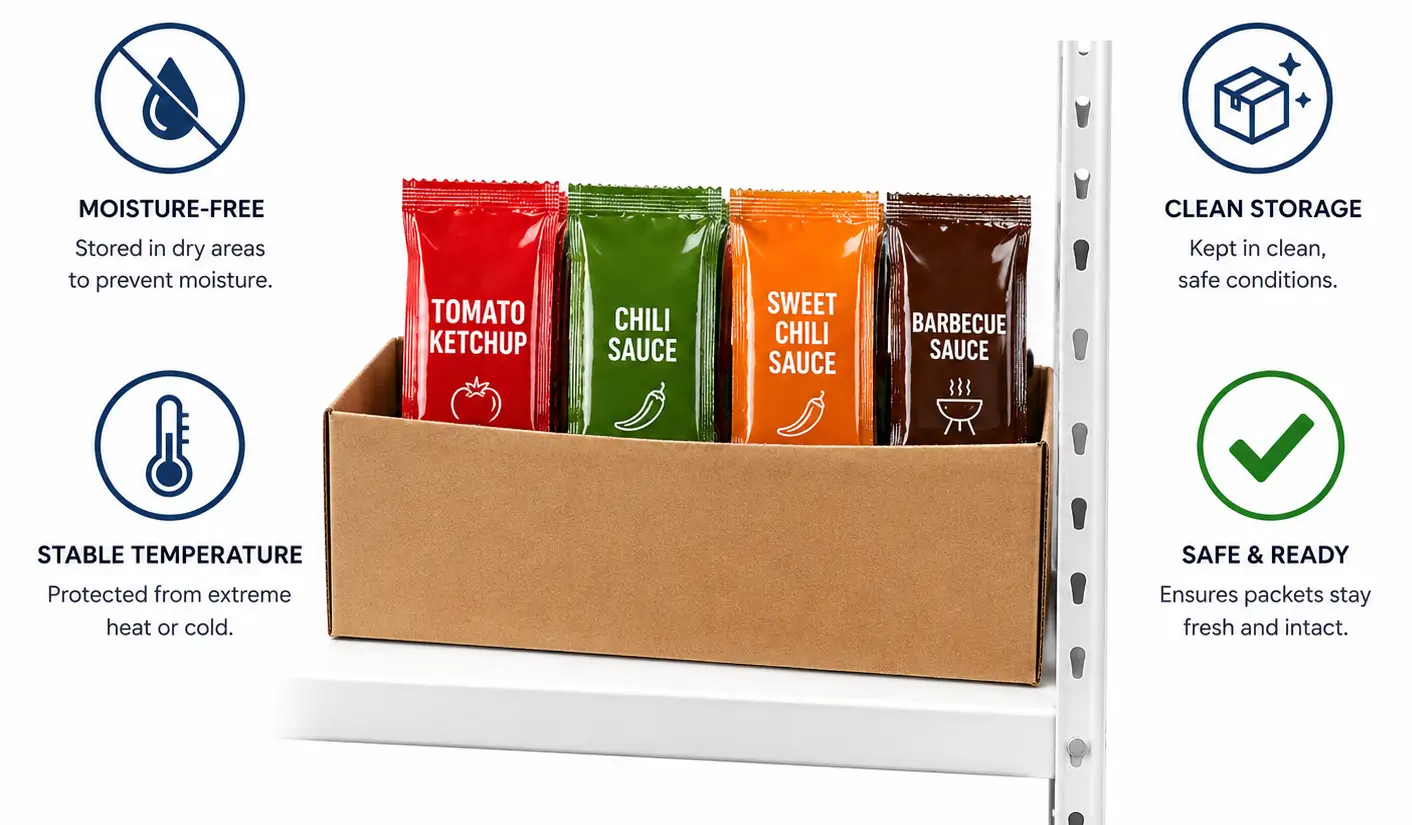
All these points are usually reviewed before finalizing custom sauce packet orders.
Material Selection And Pricing Impact
Food-grade materials are a key factor in sauce packaging pricing because each material has different production costs. PET, clear PET, kraft paper, aluminum foil, and food-grade plastic films are commonly used for custom sauce packets. Lightweight flexible films usually cost less than thick multilayer options. Businesses compare material choices through a sauce packaging cost calculator to understand budget changes. Plastic pouches, foil sachets, and tear notch designs are also used during selection needs. However, material is only one part of the total cost, as size also changes production pricing for custom sauce packaging orders.
If you want to understand how food-safe packaging converts into a perfect result, you can check the Food-Safe Packaging Checklist. In this checklist, we have covered all important points related to checking food-safe packaging standards while selecting materials, sizes, and packaging options for sauce packets.
Size And Dimensions Of The Sauce Packet
The size directly changes material usage and filling cost. Small sauce sachets are designed with less film, less ink, and less storage space. Large packets usually increase production expenses because more material and larger printing areas are included during manufacturing. Packaging dimensions and size of the packet are also major factors in that sauce packaging cost calculator comparisons are commonly reviewed before selecting the final packet structures. Common sizes of these sachets include mini sachets, medium packets, jumbo packets, and family-size pouches. Small packets are mostly selected for ketchup, mayonnaise, garlic sauce, and takeaway meal kits. Large packets are often selected for restaurants, catering services, wholesale food businesses, condiment packaging, and bulk sauce packaging projects.
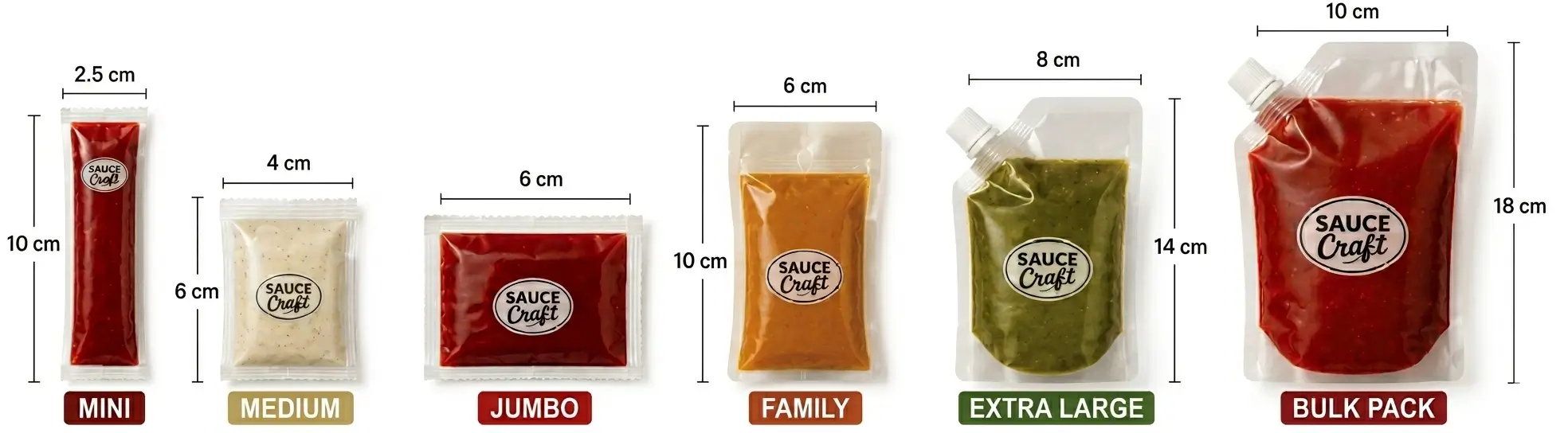
Mini and Extra Small Sauce Packets
Commonly selected for takeaway meal portions because smaller dimensions use less packaging material.
Medium Wide and Medium Tall Packets
Mostly used for regular food service packaging with slightly larger sauce portions.
Large Square and Jumbo Packets
Generally selected for catering services, fast food packaging, and restaurant packaging projects.
Family-Size and Bulk Sauce Pouches
Widely used for wholesale food packaging, commercial kitchen storage, retail packaging, and meal delivery packaging requirements.
All these details are kept in mind for the sauce packaging cost calculator.
Printing Specifications And Its Effects On Cost
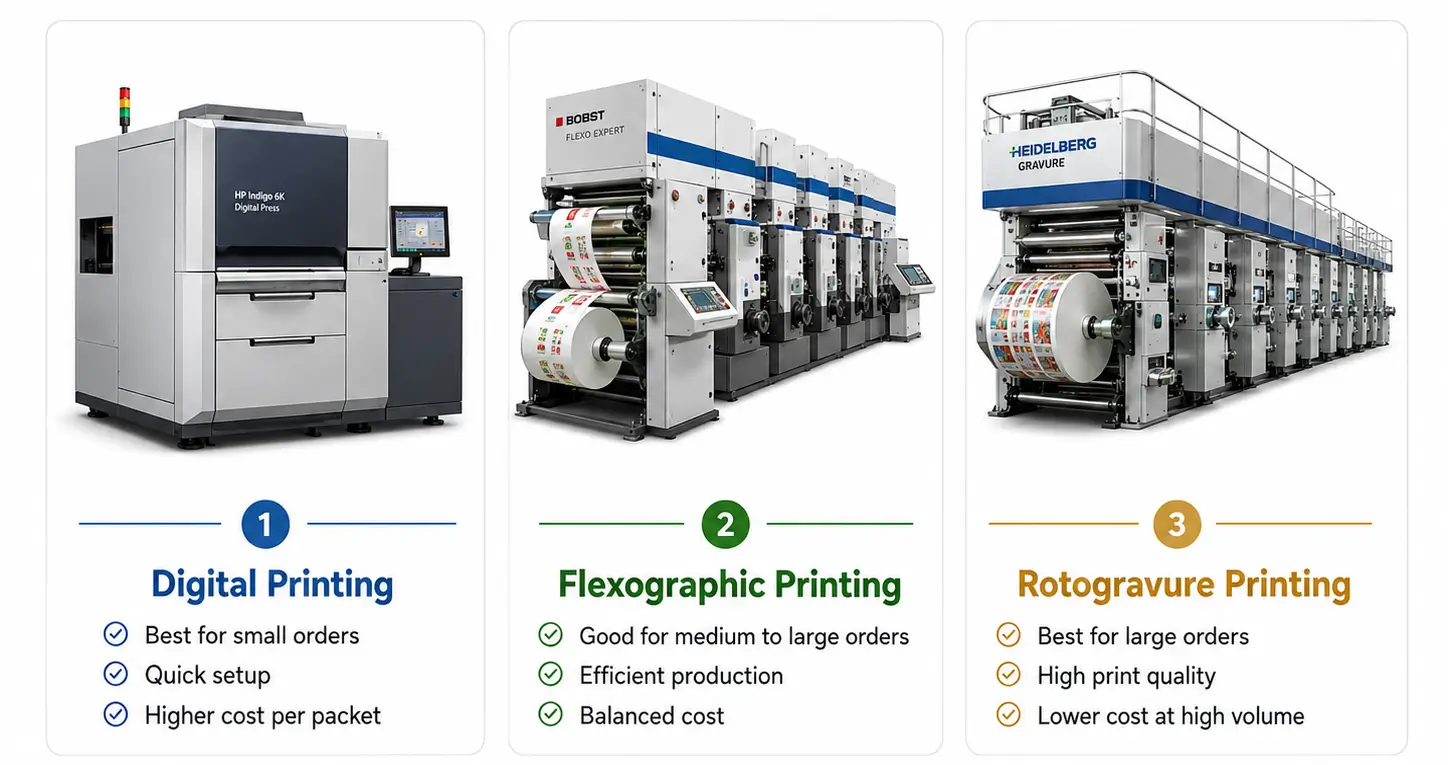
Custom printing style affects the sauce packaging cost, and also plays a key role in adding to the sauce packaging cost calculator plan. Plain packets are cheaper, while full-color printing results in an increase in cost due to more ink and a longer process. Printing methods like digital, flexographic, and rotogravure depend on order size. Finishing options like glossy or matte also change pricing. A sauce packaging cost calculator is used to compare printing and finishing costs before final orders. Proper printing selection helps in better cost planning and packaging consistency. Each printing choice directly impacts the final look and production budget of sauce packets.
“My motto is strong packaging, clear addressing.” — Halldór Laxness
Finishing Options And Extra Expenses
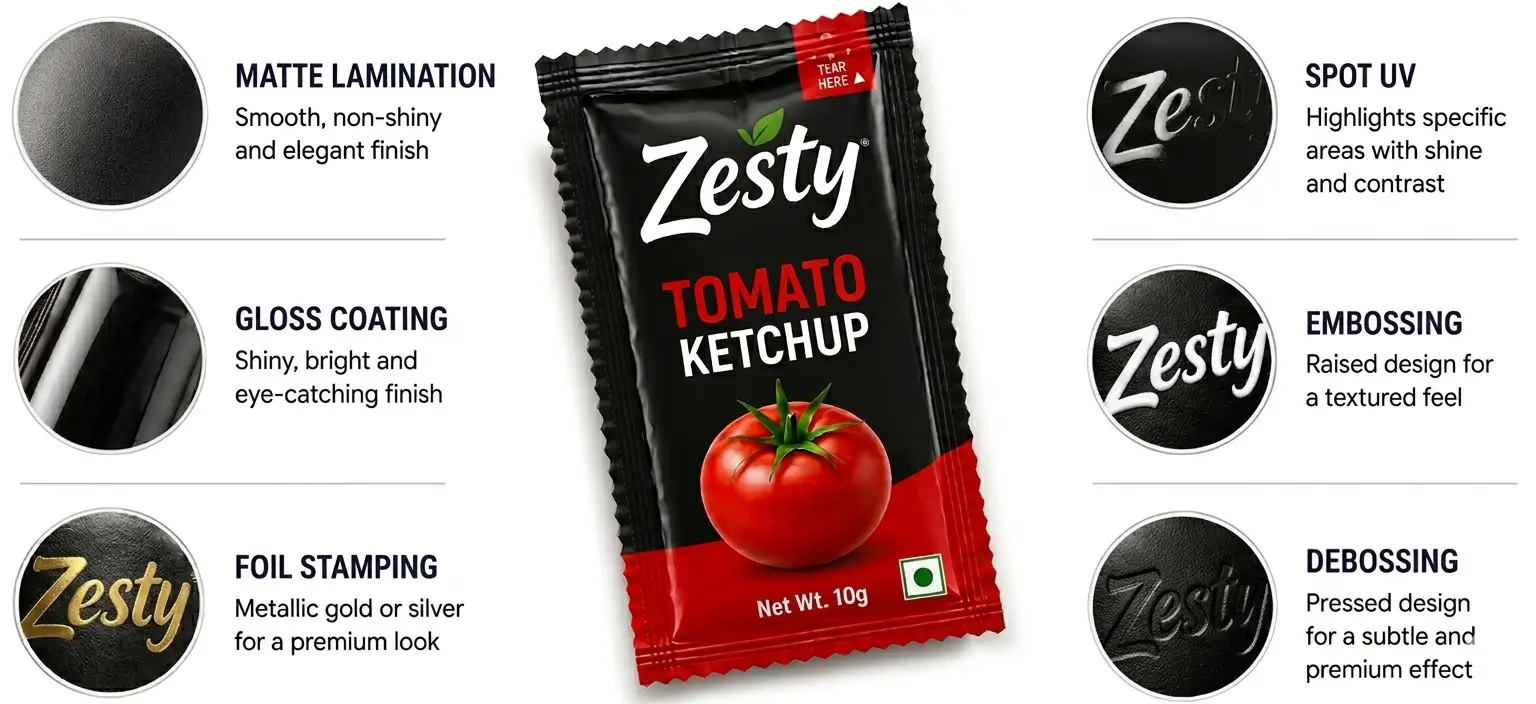
Premium finishing styles also result in increasing the expenses of the packaging because additional production stages are included. Matte lamination, gloss coating, spot UV, foil stamping, embossing, and debossing are commonly selected for premium sauce packet designs. Simple packets without finishing usually stay more affordable for fast food businesses and takeaway packaging projects. Businesses often compare finishing costs through a sauce packaging cost calculator before selecting final packaging details because decorative finishing, cost-effective packaging, custom branded packets, and branding design increase overall manufacturing pricing.
Order Quantity And Bulk Savings
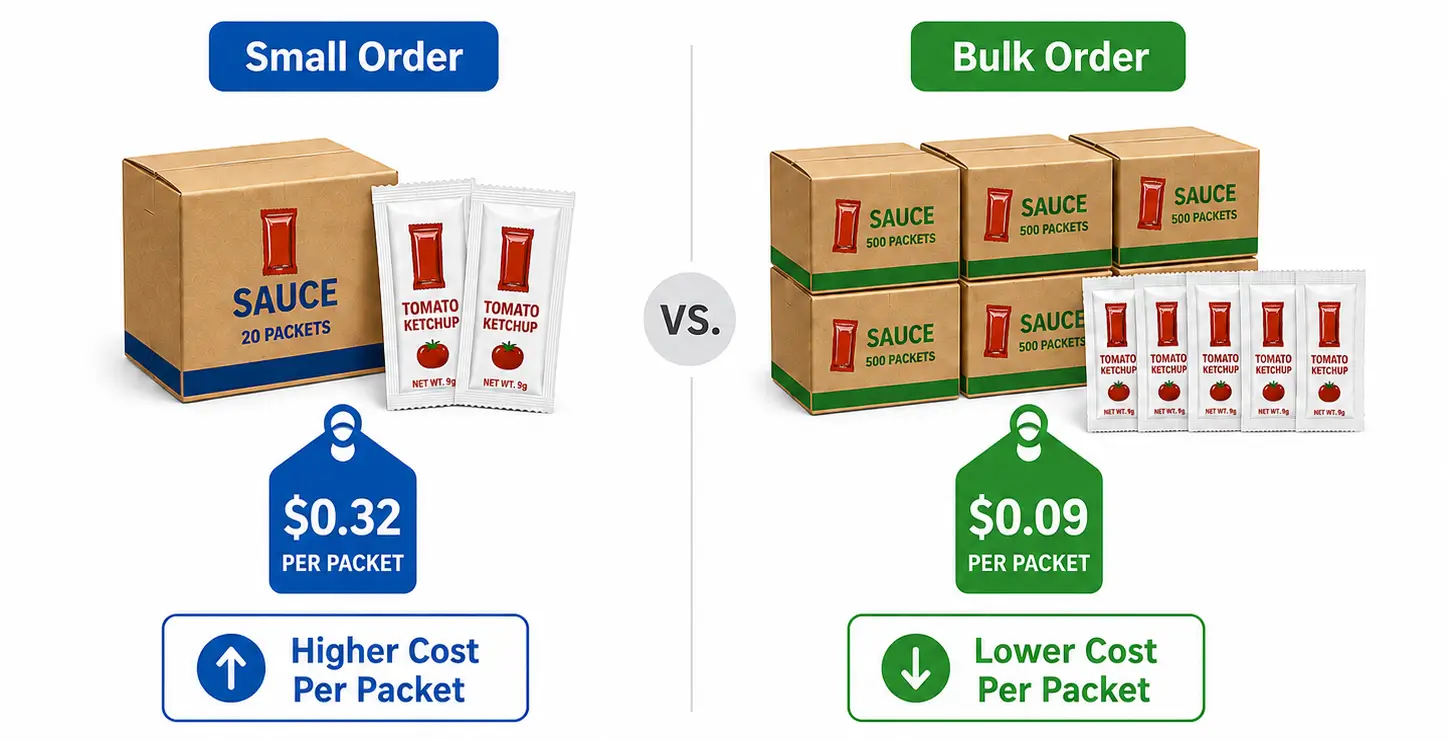
Large production quantity directly affects the cost per packet because wholesale production lowers manufacturing expenses. Small custom orders usually come with higher pricing because setup costs are divided into fewer units. Wholesale production generally reduces per-piece cost because large quantities use materials more efficiently during manufacturing. Many restaurants, food service industry suppliers, and food packaging companies use a sauce packaging cost calculator to compare small production runs with bulk orders before placing final packaging requests. If you are looking for better planning and pricing options, you can explore Custom Packaging Solutions Companies to find more suitable packaging support for your business needs.
Shipping And Logistics Cost Factors
Transportation charges are part of the packaging budget and depend on weight, size, and delivery distance. Lightweight packets usually reduce shipping costs due to lower volume and weight. Flat-packed sachets are commonly used for easy storage and transport. Many businesses compare these costs through a sauce packaging cost calculator before final decisions. In some cases, Flexible Retort Pouch Packaging Supplying is also used for heat-resistant and long shelf life packaging during long-distance transport. Shipping is not the only extra expense in custom sauce packaging because additional packet features also affect the total manufacturing budget.
Additional Features Affecting Pricing
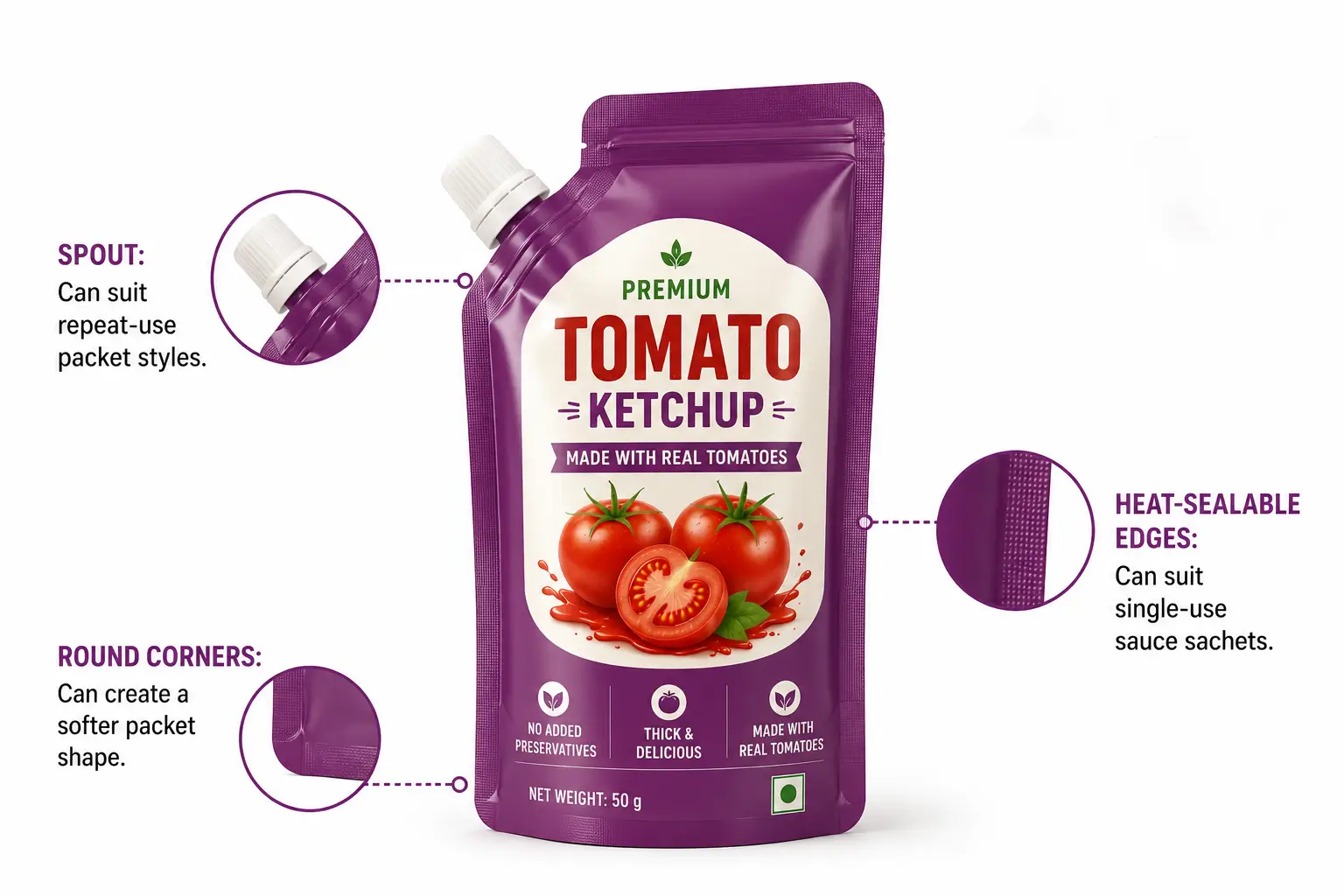
Extra packaging features usually increase manufacturing cost due to added production steps. Spout, rounded corners, serrated notches, and tear notches are commonly used in premium designs. Heat-sealed packets are also widely used for sauce packaging. In some setups, Empty Sauce Packets are used for basic filling and distribution planning. Businesses often compare these options through a sauce packaging cost calculator before final selection because custom features increase overall production cost. Many businesses review these features through a sauce packaging cost calculator before selecting final packaging specifications because customized additions also result in increasing production expenses.
Best Low-Cost Materials For Sauce Packets
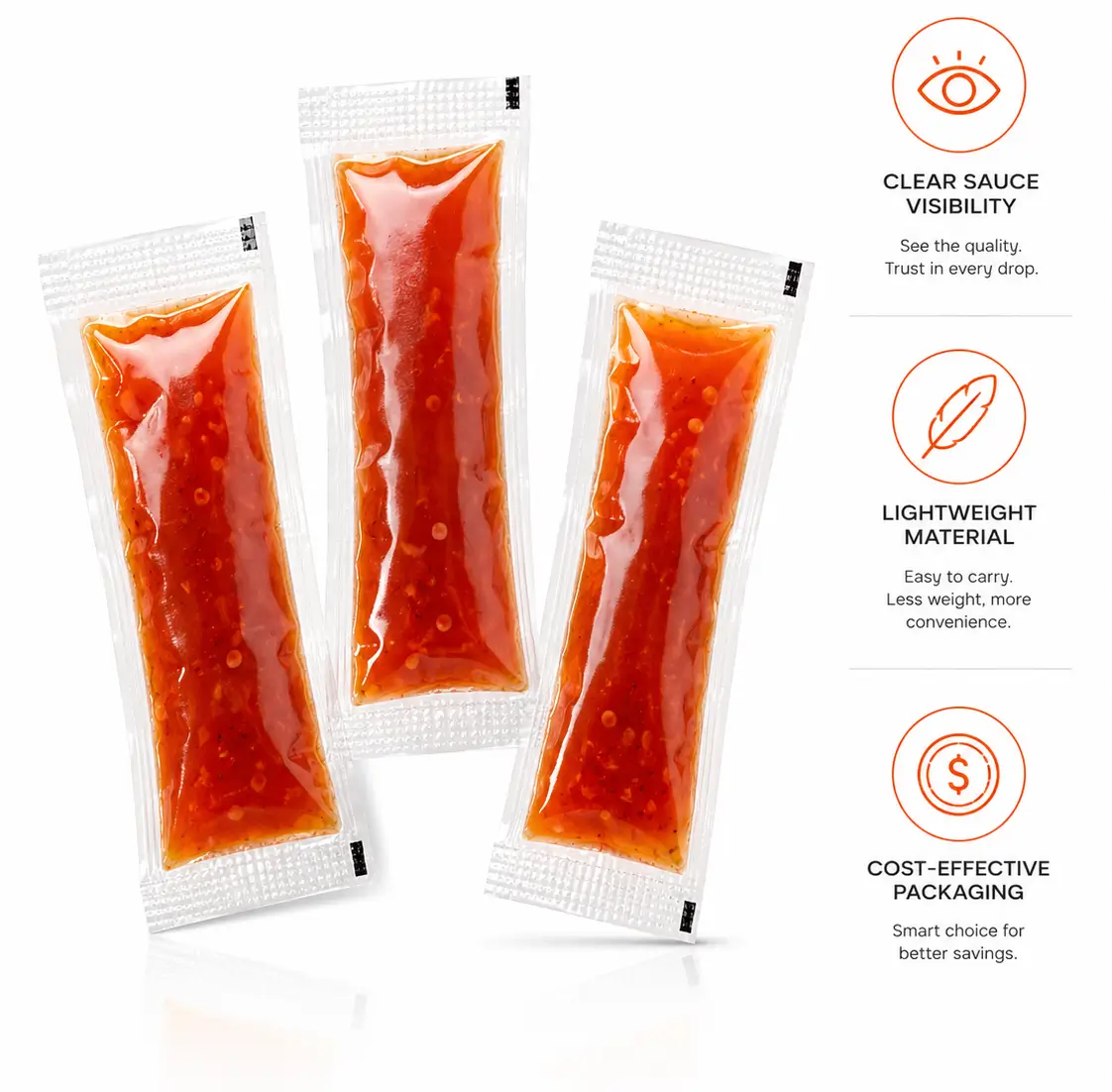
Affordable packaging materials are commonly selected by businesses looking for economical sauce packaging solutions. Plastic sachets and clear PET packets are widely used for ketchup, mayonnaise, chili sauce, and soy sauce because they stay within lower budget ranges. Brown Kraft and transparent packets are also chosen for simple printing and fewer finishing needs. Many businesses compare these options through a sauce packaging cost calculator before final selection. In many setups, Product Pouches Packaging is also used for flexible and cost-aware packaging needs. Eco-friendly, recyclable, and food-safe materials are also considered for long-term packaging standards. Low-cost materials reduce production expenses, but different industries still choose packaging based on their product and usage needs.
Industries Using Custom Sauce Packets
Restaurants, takeaway services, catering businesses, meal delivery companies, retail food brands, and condiment manufacturing industries commonly use custom sauce packets for food packaging. Different industries select different packet dimensions and materials according to product quantity and distribution methods. Many businesses use a sauce packaging cost calculator while comparing packaging styles because every industry works with different production budgets, commercial sauce packets, and packaging preferences. In the same way, similar packaging formats like Custom Baby Food Pouches are also used in the food industry, where safe portion control, material selection, and packaging size play an important role in production planning and cost comparison.
How Custom Packaging Results In Improving Presentation
Printed sauce packets are commonly selected for organized presentation and branded food packaging. Different colors, logos, artwork layouts, and packet finishes are added according to packaging themes and food categories. Printed packets are widely used in restaurants, takeaway counters, retail stores, and food delivery packaging. Many companies compare custom printing styles through a sauce packaging cost calculator because printing coverage and finishing details change the final production budget.
OVERALL:
Cost-Effective Packaging Tips For Food Businesses
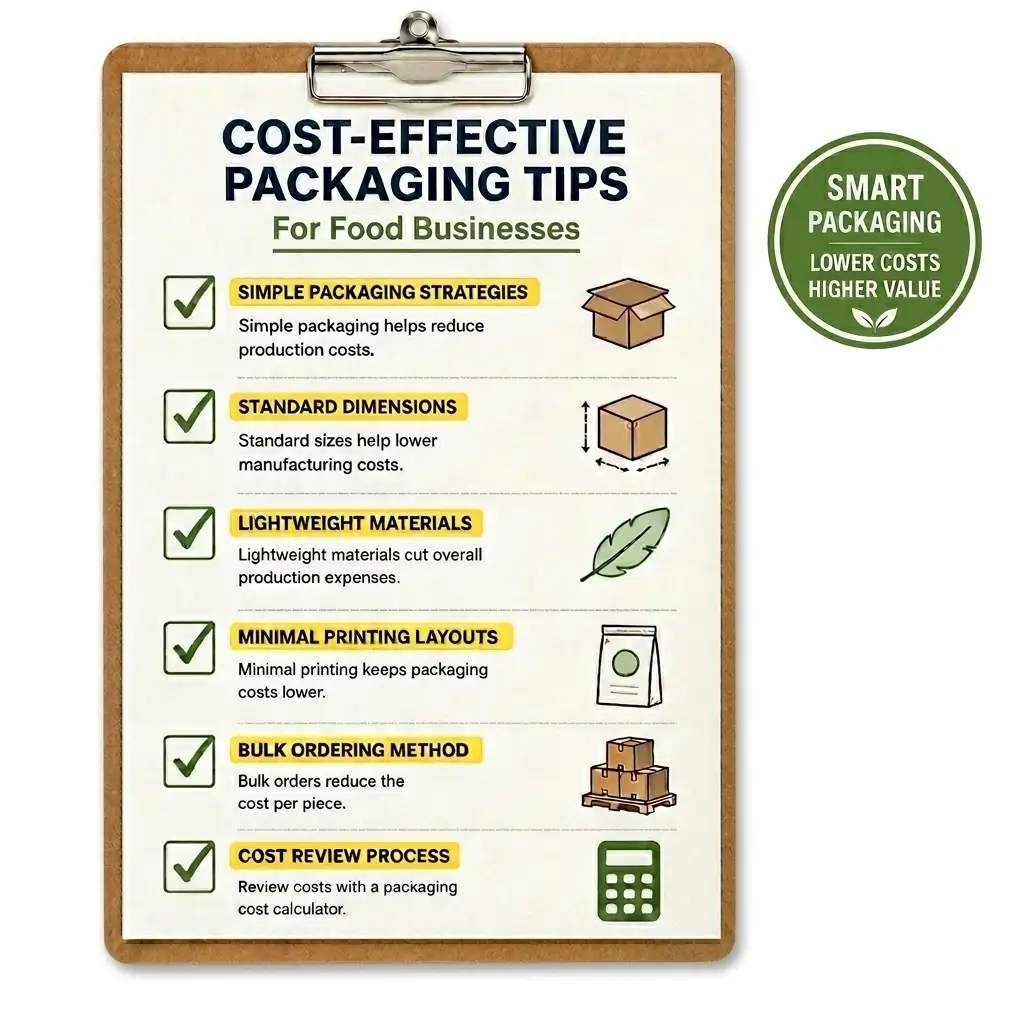
- Simple Packaging Strategies: These are commonly used by food businesses seeking lower production costs.
- Standard Dimensions: Standard dimensions are often selected because these choices reduce manufacturing costs.
- Lightweight Materials: Lightweight materials are widely used because they help reduce overall production expenses.
- Minimal Printing Layouts: Minimal printing layouts are chosen to keep packaging costs lower and more controlled.
- Bulk Ordering Method: Bulk ordering is another common method because large production runs reduce per-piece pricing.
- Cost Review Process: Many companies review these savings methods through a sauce packaging cost calculator before finalizing orders.
Conclusion
This article has covered all major factors that affect sauce packaging cost, including material, size, printing, finishing, shipping, and quantity. Small sachets usually stay lower in price, while multilayer premium packets result in increasing overall manufacturing expenses. Restaurants, catering businesses, takeaway services, retail food companies, and condiment manufacturers regularly compare packaging budgets because different products require different packaging styles. A sauce packaging cost calculator is widely used during this process because a detailed cost comparison becomes easier before placing large production orders.
Frequently Asked Questions (FAQs)
How can I calculate the exact cost of sauce packaging for my own product?
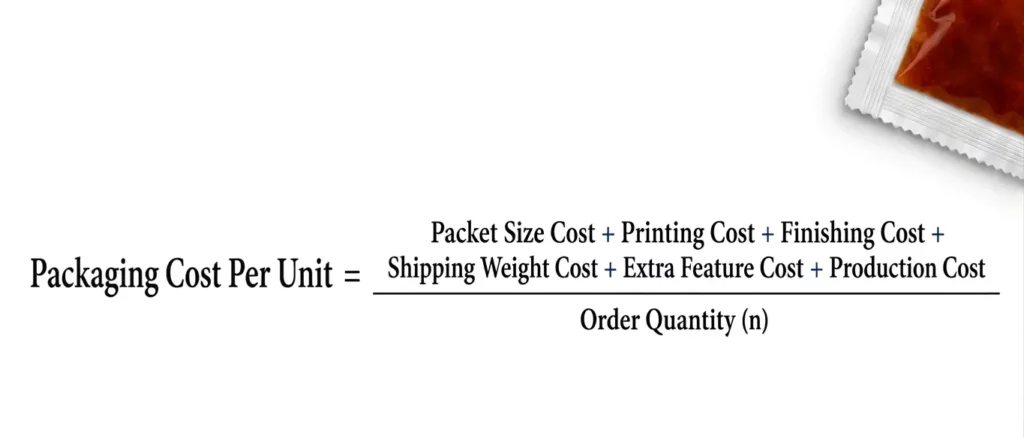
You can calculate it by adding the material cost, printing cost, size cost, finishing cost, shipping charges, and production quantity. All these parts together decide the final packaging price.
Which material is the most budget-friendly for sauce packets?
Plastic sachets and clear PET materials are usually the most budget-friendly because they use less raw material and have simple production requirements. These materials are widely used in basic food packaging.
How much does printing style change the final packaging price?
Printing style can change the cost a lot because simple printing is cheaper, while full-color or custom designs result in increased ink usage and production time. More complex designs always increase total cost.
Is digital printing better for small sauce packaging orders, according to the cost?
Yes, digital printing is better for small orders because it has a lower setup cost and works well without large production runs. It is commonly used for sample or low-quantity orders.
How does bulk ordering reduce per-sachet cost in real production?
Bulk ordering results in reducing per-piece cost because large quantity production spreads setup and material costs across more units. Bigger orders always bring better unit pricing.
Which sauce packet sizes are most commonly used in food businesses?
Mini sachets, medium packets, and small pouches are most commonly used for ketchup, mayonnaise, and takeaway sauces. These sizes are standard in most food services.
How do shipping charges impact total packaging cost?
Shipping charges result in increasing with weight and size, so lighter and compact packets usually cost less to transport. Distance and delivery method also affect the final shipping cost.
Can a sauce packaging cost calculator give accurate pricing for all designs?
It gives a close estimate by comparing material, size, printing, and quantity, but the final price may change based on custom requirements. It is mainly used for quick cost comparison.
Hocam Ellerinize Saglık Güzel Makale Olmuş Detaylı
All the best
Enjoy every single day