Learning how to make popsicle bags involves several stages, from choosing suitable food-grade film to completing the final quality inspection. The process is planned according to the type of frozen product, filling method, storage conditions, and required format. For anyone researching, careful attention to the material, dimensions of the bag, details of printing, and quality of the seal is important. A clear understanding of How To Make Popsicle Bags also keeps each production stage organized while maintaining a neat presentation of the product.
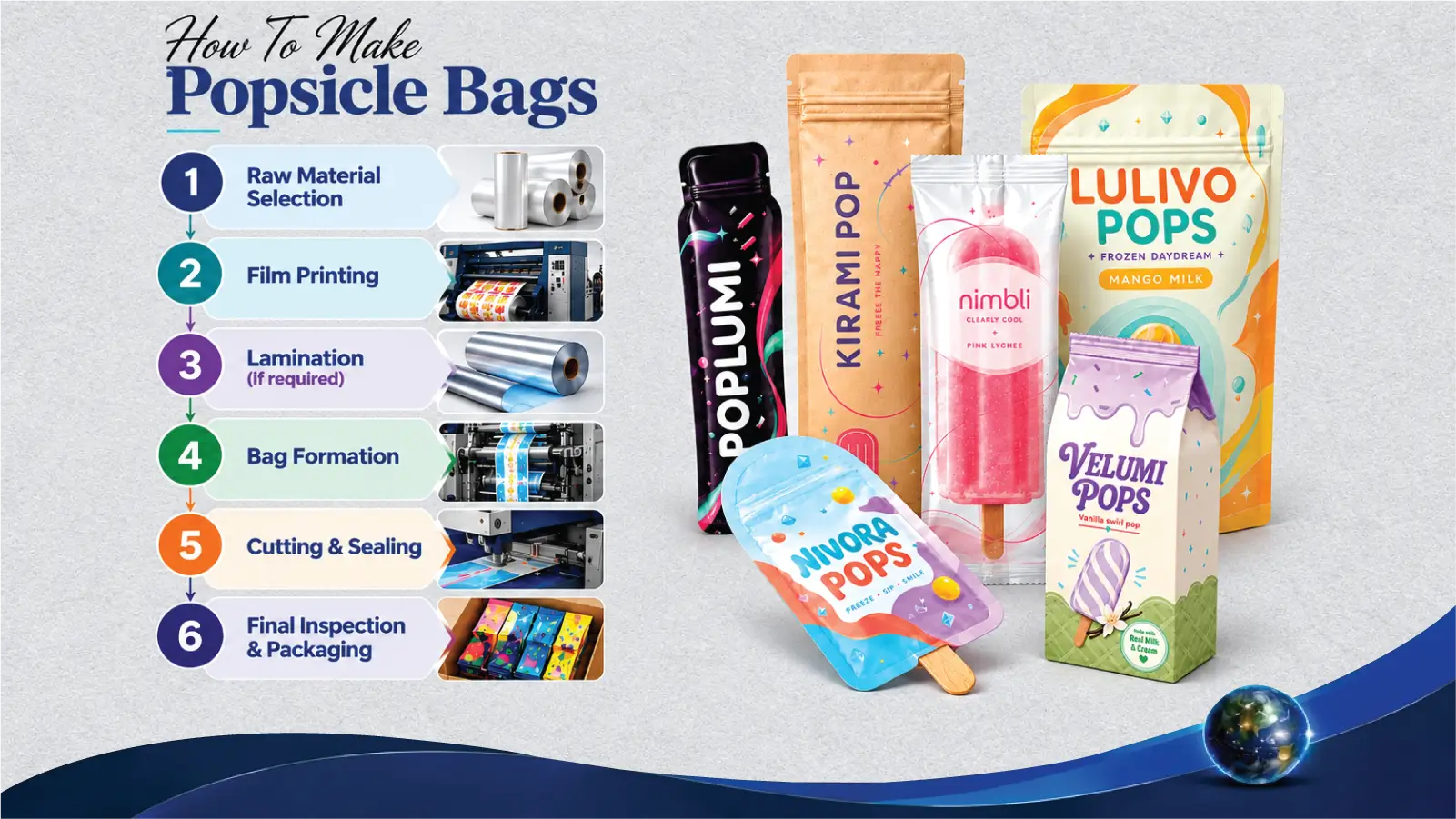
Quick Steps In 60 Seconds
Here is a quick overview of how to make popsicle bags before moving through the main production stages:
-
Selection And Preparation Of Materials:
Food-grade film is selected according to the intended application, while measurements of the bag and cutting specifications are established.
-
Preparation Of Printing And Lamination:
Artwork is prepared according to the dimensions of the bag, while details of printing and inclusion of laminated film are finalized where required. Let’s explore Custom Popsicle Packaging Design and review the colour choices, artwork details, and format options for a distinctive presentation of the product and reputation of the brand.
-
Formation And Sealing Of Bags:
Practical features are included according to specifications, followed by formation of the bag, application of heat sealing, and finishing of edges.
-
Inspection And Final Preparation:
Finished bags are checked for dimensions, quality of the seal, clarity of printing, accuracy of colour, and condition of the material before final packing.
With these four stages, how to make popsicle bags becomes easier to follow from preparation of materials through inspection of the finished bags.
Choose Suitable Material For Popsicle Bags
The first stage in how to make popsicle bags involves the selection of suitable food-grade film. Polyethylene, LDPE, PET, BOPP, and BOPET are among the materials considered according to the requirements of the frozen product. Let’s explore Eco Friendly Popsicle Bags and see the practical materials for the packaging of frozen treats. The choice of material is based on freezing conditions, filling requirements, flexibility, thickness, and sealing specifications. During how to make popsicle bags, the structure of the material is also reviewed according to storage and transportation conditions. The quality of the material is particularly important for maintaining suitable protection of the product during handling and frozen storage.
Measure And Cut Materials With Precision
Accurate measurement is an important stage in how to make popsicle bags, particularly when the dimensions of the bag are based on the size of the frozen treat. Measurements of length, width, filling space, and sealing areas are established before cutting begins. During how to make popsicle bags, specifications for cutting are followed so the finished pieces remain consistent throughout production.
Suitable allowances around the sealing areas are also considered. Consistency in the dimensions of the Custom Made Wrappers contributes to neat finishing and suitable presentation of the product across the complete production batch. Other packaging options, like boxes in different sizes and dimensions, are required for them. Let’s review Printed Ice Pop Boxes with suitable materials for a recognizable image of the brand.
Prepare Artwork For Advanced Printing
Artwork preparation is another important part of how to make popsicle bags, especially when details of flavour, information on ingredients, graphics, logos, and required labelling information are included. The artwork is prepared according to the dimensions of the bag and specifications of printing. During how to make popsicle bags, placement of text, graphics, logos, and colour elements is reviewed before printing. Clear readability is important for the presentation of the product and recognition of the brand. Let’s discover Clear Popsicle Packaging Bags and look at their transparent appearance with suitable materials. Screen, digital, offset, gravure, and UV printing may be considered according to the structure of the material and requirements of the project.
“I like the whole package to be good. It’s a rarity that that happens, so I end up not working a lot.” — Robin Wright Penn
Include Laminated Film When Required
Laminated film is considered during how to make popsicle bags when a multi-layer structure is required for the intended application. Different layers may be combined according to requirements of sealing, barrier performance, protection of printing, and conditions of frozen storage. For how to make popsicle bags, lamination is not necessarily required for every packaging format. The structure of the Wholesale Mylar bags material is therefore established according to the requirements of the product and specifications of production. Compatibility between the layers is also reviewed before formation of the bag so the finished structure remains suitable for its intended application.
Add Practical Features To Popsicle Bags
Practical features form another consideration in how to make popsicle bags, particularly when requirements of opening, handling, and filling are part of the project. Tear notches, easy-open details, resealable features, and specific sealing arrangements may be included according to the selected format. Let’s take a closer look at Zip Ice Popsicle Bags and explore their resealable format for frozen treats.
During how to make popsicle bags, the position of each feature is established according to the dimensions of the bag and method of filling. You can add stickers to them with barcodes and details. The finished format is also reviewed according to conditions of frozen storage and transportation. Careful positioning of features contributes to a neat presentation of the product and consistent appearance.
Apply Heat Sealing For Secure Edges
Heat sealing is an important stage in how to make popsicle bags, particularly because the quality of the seal is directly related to the secure closure of the filled bag. Temperature, pressure, and dwell time are established according to the structure of the material. During this full procedure of how to make popsicle bags, conditions of sealing are checked before larger quantities are produced.
The strength of the seal, consistency of the edges, and appearance of the sealed areas are then inspected. Let’s discover Custom Logo Popsicle Wrappers and explore their presentation with secure seals for a consistent reputation of the brand. Proper closure is especially important around the filling area before freezing, storage, and transportation of the finished product.
Cut And Finish Individual Popsicle Bags
After sealing, cutting and finishing form the next stages in how to make popsicle bags. The sealed film is separated according to the required dimensions of the bag, while clean edges are maintained throughout the process. For how to make popsicle bags, accuracy in cutting is important for consistent appearance across the finished batch. Any specified notches, openings, or finishing details are completed according to the requirements of the format.
The condition of the edges is then reviewed for loose film, uneven cuts, incomplete sealing, or other visible issues before final inspection. You can add sleeves to packaging for more detail; let’s review Custom Made Popsicle Sleeves and explore their customized designs, colour choices, and format options for the presentation of the product.
“Big things come in small packages!” — Stacey King
Check Overall Quality Before Final Packaging
Quality inspection is essential in how to make popsicle bags, with several aspects of the finished bags reviewed before final packing. The dimensions of the bag, strength of the seal, clarity of printing, accuracy of colour, condition of the material, and appearance of the finished edges are checked according to established specifications.
During how to make popsicle bags, samples from the production batch may also be inspected according to applicable quality procedures. Any identified defects are documented before shipment. Consistent inspection contributes to reliable presentation of the Frozen Food Packaging and a professional image of the brand.
Follow Canadian Packaging Requirements Carefully
Canadian requirements are an important consideration in how to make popsicle bags, particularly when the finished bags are intended for food products sold in Canada. For how to make popsicle bags, applicable. Canadian requirements may include applicable provisions under the Food and Drug Regulations, including Division 23 for food-contact packaging, the Safe Food for Canadians Regulations (SOR/2018-108), and the Consumer Packaging and Labelling Act (R.S.C., 1985, c. C-38) together with the Consumer Packaging and Labelling Regulations (C.R.C., c. 417).
Where applicable, packaging and environmental claims must also comply with Canadian requirements governing accurate and non-misleading representations. Guidance from the CFIA and relevant federal regulations should also be reviewed when specifications of packaging and details of labels are finalized. For ordering the Custom Popsicle Bags For Small Businesses, you can get the best packaging with amazing features. So, speak to professionals now to get packaging immediately to meet your specific demands!
Conclusion
A clear understanding of how to make popsicle bags starts with suitable material selection and continues through measurement, artwork preparation, lamination, feature inclusion, heat sealing, cutting, and quality inspection. Each stage is completed according to specifications of the product and requirements of packaging. For Cheap Custom Packaging Companies researching how to make popsicle bags, attention to the dimensions of the bag, structure of the material, quality of the seal, and details of printing is especially important. With suitable planning, the finished bags are prepared for frozen storage, transportation, and consistent presentation of the product across different flavours.
Frequently Asked Questions (FAQs)
What type of material is suitable for popsicle bags?
Food-grade polyethylene, aluminium, PE, LDPE, PET, BOPP, and BOPET are considered according to freezing conditions, sealing requirements, and specifications of Cardboard Sleeves For Food Packaging.
Is laminated film required for every popsicle bag?
No, laminated film is considered according to requirements of barrier protection, sealing, printing, durability, and frozen storage conditions.
What printing options are suitable for popsicle bags?
Screen, offset, digital, and UV printing are considered according to the structure of the material, artwork specifications, colour requirements, and production quantity.
Why is heat sealing important for popsicle bags?
Heat sealing forms a secure closure along the edges, with temperature, pressure, and dwell time established according to the structure of the material.
How is the quality of popsicle bags checked?
The dimensions of the bag, quality of the seal, clarity of printing, accuracy of colour, and condition of the material are inspected.
Which features are suitable for popsicle bags?
Tear notches, easy-open details, resealable formats, and specific sealing arrangements are considered according to the requirements of handling and packaging.
Are Canadian requirements important for popsicle bags?
Yes, applicable Canadian food, labelling, packaging, and food-contact requirements should be reviewed according to the product and intended market.
What information should be included on popsicle bag artwork?
Details of flavour, information on ingredients, allergen declarations, net quantity, required labelling information, and details of the brand may be included.
Where can I buy custom popsicle bags?
Custom popsicle bags are offered by Universal Packaging, with options for materials, dimensions, printing, sealing, and finishing according to specifications.