A pouch of freeze-dried food may look sealed and ready on the shelf, yet its flavour, texture, and crunch are gradually affected by the conditions surrounding it once it leaves the production line. Small differences in material choice can mean the difference between a product that stays fresh for months and one that loses its crunch within weeks. For this reason, the Best Materials For Freeze-Dried Food Packaging are chosen with shelf life, safety, and the overall presentation of the product in mind. Keep reading to discover which materials are best suited for protecting freeze-dried food and maintaining its quality during storage.
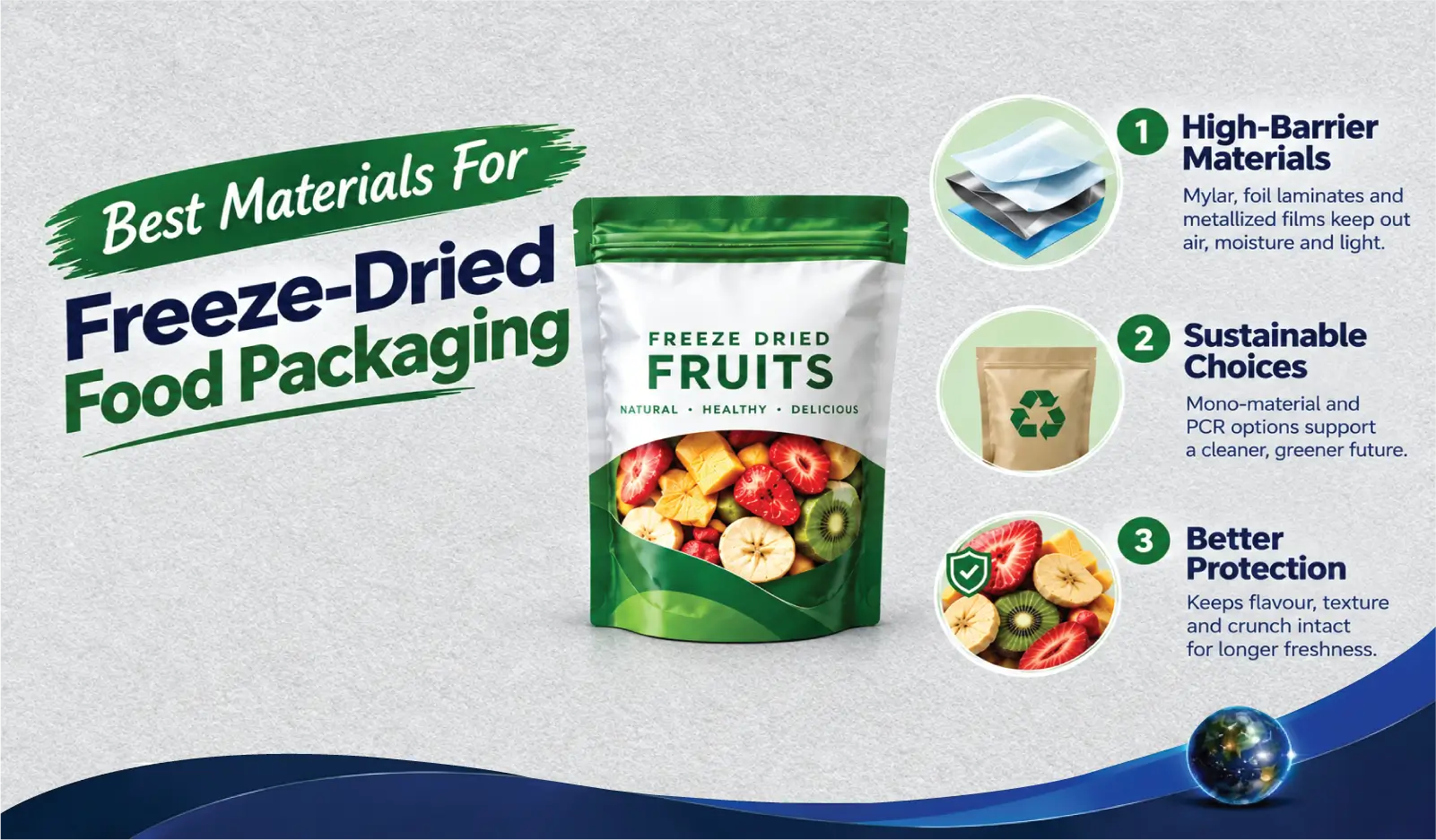
Everything You’ll Learn Here
This overview lays out the best materials for freeze-dried food packaging from every angle, before a single format is chosen.
- Top materials: PET (polyester) and PE (polyethylene) offered for simple, cost-friendly layers.
- Sustainable options: mono-material packaging and post-consumer recycled (PCR) material offered for eco-friendly lines.
- Compliance: CFIA food-contact requirements, HACCP, and applicable Canadian standards followed for the North American market.
- Additionals: a comparison table, FAQs, and a personalized buying guide, offered at no extra cost.
Top Materials Used For Freeze-Dried Food Packaging
When the best materials for freeze-dried food packaging are weighed, barrier properties, appearance, and food-grade materials are considered together. High-barrier packaging is treated as the starting point of most conversations, since freeze-dried food is sensitive to air, moisture, and light. Below, each material is explained one by one.
1. Mylar for Long-Term Storage
Mylar is recognized as one of the strongest choices among the best materials for freeze-dried food packaging, particularly where survival food and long-term food storage are the goal. A multi-layer, foil-lined design is preferred here, since strength is maintained even in rough handling, and near-total protection from light is reached once a reflective layer is bonded onto the base film. Heat-sealed packaging is often chosen for this format, and the reputation of the brand is strengthened through a pouch that feels dependable in hand. Custom Size Mylar Bags are also picked for smaller, single-serving snacks.
“Good things come in small packages.” — Aesop
2. Aluminum Foil Laminates for Everyday Protection
For daily retail packaging runs, an aluminum foil laminate is regarded as a dependable and moderately priced pick among the best materials for freeze-dried food packaging. A clear outer layer is sometimes bonded on top for extra tear resistance, and a smooth outer film is left open for logo work through screen and UV printing. Camping & backpacking food lines are often designed from this same foil-lined base for trail-ready meals, since the needs of the brand are met without unnecessary expense.
3. Laminated Pouches as a Versatile Material
Laminated pouches are shaped into stand-up pouches, gusset formats, and flat sleeves with ease. A polypropylene (PP) middle layer is selected where extra rigidity and clarity are desired, and screen printing, UV printing, and digital printing are all offered on these surfaces. Window packaging and a resealable zipper closure are achieved without extra tooling costs, and Clear Gusset Bags are folded from a similar base for chunky, freeze-dried pieces such as fruit and vegetables. Laminated pouches are counted among the best materials for freeze-dried food packaging whenever adaptability is the priority.
4. KraftMaterial for Sustainable Lines
A raw, natural brown colour is kept on the outer ply for a simple, earthy look, and recyclable packaging structures are designed on this base to support sustainable packaging goals. Food-safe inks are used, since the quality of the product is not compromised during printing, and Kraft Stand Up Pouches Canada are sometimes shaped from this same stock for a rustic, gift-like presentation. This build is placed firmly among the best materials for freeze-dried food packaging for brands that value an eco-friendly identity.
5. Vacuum and Retort-Grade Films for Protective Shipping
A shipping-first review of the best materials for freeze-dried food packaging usually starts here.
A vacuum packaging film is chosen where protective, long-distance shipping is the main concern, especially for bulk military & emergency food orders. A multi-ply barrier is placed between two flat films, and airtight packaging is achieved without excess weight added to the structure. Retort Food Packaging is used where high-temperature sterilization of ready-to-eat pouches is required, and spoilage during transit is minimized through this layered structure. This format is regarded as one of the best materials for freeze-dried food packaging when durability during travel is required.
6. Metallized Film for Light-Blocking Protection
A thin metallized film is bonded onto a base layer for a mirror-like finish, and a strong light barrier is reached at a near-complete level once this layer is combined with a foil pouch structure. UV protection is treated as essential rather than optional across most freeze-dried lines, and private label packaging runs are preferred by brands promoting a consistent look across a full range. This build is considered one of the best materials for freeze-dried food packaging for colour-rich ingredients.
7. BOPET-Based Laminates for Durable Packaging
A BOPET Bag is identified by a clear, high-clarity outer film paired with a stronger inner sealant layer. This combination is valued for food packaging where strength and print clarity are both required, and Pantone colours are matched precisely on the coated side. Larger batch orders are often placed on this same stock through Flexible Pouches Wholesale runs. A BOPET-based laminate is placed among the best materials for freeze-dried food packaging for mid-range and premium lines alike.
8. Foil Films for Cost-Effective Packaging
A foil film is formed from a recycled base layer with a coating applied on top for a smoother, tighter seal. This option is kept in mind whenever a tighter production budget is set, and oxygen absorbers or desiccant packets are sometimes added alongside pouches with higher moisture sensitivity. A Custom Foil Pouch is also formed from this stock where mixed, loose snacks are packed, and this format is counted among the best materials for freeze-dried food packaging when affordability is placed above premium presentation.
9. Cardstock for Lightweight Outer Sleeves
A cardstock outer sleeve is chosen where an inner pouch is already relied upon for the barrier work, and a firm, printable surface is added on top for branding purposes. Screen and UV printing are both suited to this stock, and a crisp, retail-ready presentation of the product is achieved at a low added cost. Cardstock is counted among the best materials for freeze-dried food packaging for lightweight snack lines where shelf appeal is prioritized over heavy protection.
10. Cardboard for Everyday Retail Boxes
A cardboard outer box is widely used across everyday freeze-dried lines, paired with a foil or laminated inner pouch to carry the actual barrier function. A lightweight, cost-friendly structure is offered through this combination, and stacking on retail shelves is handled well due to the rigidity of the material. Cardboard is placed among the best materials for freeze-dried food packaging where a balance between cost and presentation of the product is sought.
11. Corrugated Board for Shipping and Bulk Packs
A corrugated board structure is relied upon for its fluted middle layer, through which extra cushioning and stacking strength are provided during transit. Bulk and subscription-box freeze-dried orders are often packed within corrugated outers, since damage during shipping is reduced through this layered build. Corrugated board is regarded as one of the best materials for freeze-dried food packaging for larger orders where transit protection is prioritized.
12. Rigid Paperboard for Premium Presentation
A rigid paperboard shell is chosen for premium and gift-style freeze-dried lines, where a sturdy, high-end feel is prioritized above cost savings. A dense, wrapped board construction is typically used, and the perception of the brand is raised through a box that feels substantial in hand. Rigid paperboard is placed among the best materials for freeze-dried food packaging for gifting and limited-edition lines alike.
Looking for packaging designed for your freeze-dried food? Custom Freeze Dried Packaging is personalized according to the material, size, barrier protection, and finish required for the product. Explore your packaging options today.
Sustainable Packaging Trends for Freeze-Dried Food Brands
Across the industry, a shift toward recyclable formats is being observed year after year, and mono-material structures are increasingly favoured over mixed-plastic laminates. Recycling symbols are still printed on most film-based pouches, and packaging recycling programs continue to expand, though a fully mono-material alternative is being tested by many suppliers. As a result, the perception of the brand is raised when a visible commitment to responsible sourcing is shown through material choice, not just marketing language. Pet food lines are moving toward this same paper-backed, resealable direction, further shaping how the best materials for freeze-dried food packaging are selected industry-wide.
“Customers will occasionally buy products not because they want them but because of how they are presented to them.” — James Clear
A quick side glance is offered below at the best materials for freeze-dried food packaging.
Material Comparison Table
| Material | Barrier Level | Best Suited For | Sustainability |
| Mylar | Very high | Long-term storage, survival food | Moderate |
| Aluminium foil laminate | High | Everyday, moderate-cost runs | Moderate |
| Laminated pouches | Moderate to high | Stand-up, printed pouches | Moderate |
| Kraft stock | Moderate | Sustainable, gourmet lines | High |
| Vacuum and retort film | Very high | Shipping, emergency food | Moderate |
| Metallized film | High | Light-blocking, colour retention | Moderate |
| BOPET laminate | High | Durable, printed retail runs | Moderate |
| Foil film | Low to moderate | Cost-effective packaging | Low to moderate |
| Cardboard | Low to moderate | Secondary and retail packaging | High |
| Paperboard | Low to moderate | Folding cartons and food boxes | High |
| Rigid paperboard | Low to moderate | Premium boxes and presentation packaging | High |
| Corrugated | Low | Shipping and protective outer packaging | High |
| Cardstock | Low to moderate | Sleeves, inserts, and lightweight packaging | High |
Choosing from several packaging materials is only the first step. Once barrier protection, shelf life, sustainability, and presentation of the product have been considered, a more important question remains: How to Choose the Right Packaging for Freeze-Dried Food. A closer look at food type, storage period, oxygen and moisture sensitivity, shipping conditions, and packaging requirements is therefore worthwhile before the final material is selected.
Need reliable packaging for your freeze-dried food line? Custom Packaging Vancouver is personalized according to your size, material, printing, and barrier requirements. Contact us today to get started.
Conclusion
Everything about the best materials for freeze-dried food packaging has been covered in a different style than the usual list format. Mylar, aluminum foil laminate, laminated pouches, kraft stock, vacuum and retort film, metallized film, BOPET laminate, and barrier-coated film were each explained individually, followed by sustainability and compliance points. A comparison table was also offered for a quick, side-by-side view, since the best materials for freeze-dried food packaging are rarely a single, one-size-fits-all answer.
Frequently Asked Questions (FAQs)
Are freeze-dried food pouches recyclable?
Most mono-material and PCR-based pouches are accepted through select recycling streams, though curbside acceptance still depends on the local facility.
What is the best material for long-term freeze-dried storage?
A mylar-based design ranks among the Best Materials for Freeze-Dried Food Packaging when years of storage are the goal, since strong barrier protection is well supported.
Does a foil pouch protect freeze-dried food from light?
Light protection is usually built into foil and metallized structures, since clear film alone is not fully resistant to UV exposure.
Which is better for everyday packaging, PET or PE?
PET is generally chosen for clarity and strength, while PE is preferred where a softer seal and lower cost are needed.
How long is the shelf life of freeze-dried food in flexible pouches?
Shelf life is extended when a strong barrier and a properly sealed closure are combined, though exact timing depends on the food formula.
Is vacuum-grade film suitable for shipping freeze-dried meals?
Yes, this format is regarded as one of the most reliable choices for long-distance transit, since puncture resistance is built in.
How much can a freeze-dried pouch be personalized?
Custom Food Pouch Packaging is personalized through size, thickness, printing, closures, and finishing, with the packaging structure selected according to the requirements of the product.
Where can custom freeze-dried food pouches be purchased?
A dedicated packaging partner is recommended as a source for the best materials for freeze-dried food packaging, with pricing offered for larger runs.