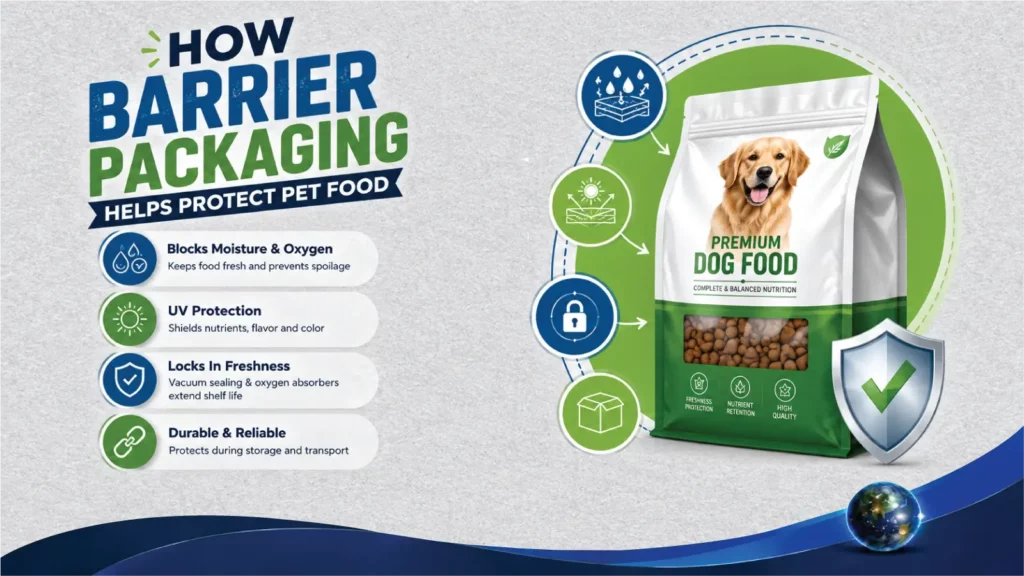
A sealed pet food pouch may look simple from the outside, but what lies beneath the surface is far more interesting. Within the packaging of the product, multiple barrier layers are placed, with specific protective roles assigned against oxygen, moisture, light, and contamination. But how is this protection designed, and what role is played by each layer? How Barrier Packaging Helps Protect Pet Food is explained from the inside out, showing how each layer contributes to the protection and quality of pet food through barrier packaging.
What You’ll Learn
- Moisture and Oxygen Barriers: How these films are used to keep pet food fresh
- Light Protection: How degradation caused by UV exposure is prevented
- Vacuum Sealing: How freshness is locked in through airtight seals
- Oxygen Absorbers: An advanced method through which freshness retention is extended
- Durability: How pet food is protected against damage during transport
- Barrier Film Technology: How multi-layer films are constructed and why they matter
- Custom Pouch Formats: Which packaging styles are offered across dry, wet, and treat-based pet foods
- Regulations and Sustainability: Canadian compliance standards and eco-friendly packaging choices
This is the full breakdown of how barrier packaging helps protect pet food, and each piece is explained one at a time below.
Moisture Barrier And Oxygen Barrier Films
Freshness starts with two very basic Competitors moisture and oxygen. A moisture barrier film is relied upon so that outside humidity is kept away from dry pet food, since sogginess and mould growth are prevented this way. At the same time, an oxygen barrier layer is designed into flexible packaging so that fats and oils inside pet food are shielded from oxidation, and rancid flavour is avoided as a result.
Polyethylene and polypropylene are commonly layered together, since a food-grade packaging structure is created through this combination, and Custom Stand Up Pouches No Minimum order are often designed using this same layered approach, which makes it easier for smaller pet food brands to access strong protection early on. Taste, texture, and nutritional value are all preserved for a much longer period once these two barriers are combined. How barrier packaging helps protect pet food becomes easier to understand once moisture and oxygen are addressed first, and the next layer of protection, light, is worth exploring too.
Light And UV Protection Benefits
After moisture and oxygen, light is another quiet threat that is often overlooked. UV protection layers are added to packaging so that vitamins and sensitive nutrients are shielded from sunlight exposure, and this is one of the clearest examples of how barrier packaging helps protect pet food in everyday use. Aluminum foil barrier material and metallized film are used in many structures, since light penetration is blocked almost completely by these materials, while Bag Custom Foil Pouch is chosen specifically when maximum light protection is the top priority. Colour and flavour are both preserved for longer once light exposure is reduced, and nutrient loss is minimized long before the bag is ever opened by a pet owner.
Vacuum Sealing And Airtight Protection
At this point, sealing technique becomes just as important as the material itself, and this stage is another core part of how barrier packaging helps protect pet food.
- Vacuum sealing: Is carried out so that air is removed from the package before it is closed
- Airtight protection: Is achieved once heat sealing is applied along every edge of the pouch
- Seal integrity: Is tested carefully, since a compromised seal defeats the purpose of every barrier layer discussed above
- A resealable zipper or tear notch: Is often included, since freshness is meant to be maintained even after the pouch is first opened
How barrier packaging helps protect pet food is shown clearly through vacuum sealing alone, though freshness retention is pushed even further with one more tool.
Freshness Retention Through Oxygen Absorbers
Oxygen absorbers are placed inside sealed pouches so that any remaining traces of oxygen are pulled out of the environment, and extended shelf life is achieved when these absorbers are paired with high barrier packaging. Custom Mylar Bag Design is frequently requested for treats and freeze dried formulas, since these formats are able to work well alongside oxygen absorbers for maximum protection.
Aroma retention is supported at the same time, since the natural scent of the food is what draws a pet toward the bowl in the first place- a sensory side of how barrier packaging helps protect pet food that is easy to miss- and grease resistance is designed into the inner layer, since high-fat formulas are common across dry pet food and treats. Freshness is extended well beyond what a simple seal is able to achieve on its own. Freshness is one concern, though durability during shipping and handling is a separate challenge altogether, and this too is part of how barrier packaging helps protect pet food.
Puncture Resistant And Durable Packaging
Packaging is also expected to survive a long journey before it reaches the shelf. This is an important part of how barrier packaging helps protect pet food, especially when sharp pet food edges and rough handling are involved. Puncture resistance is built into flexible packaging, while laminated films are made with multiple layers for a balance of strength and flexibility. Mylar Pouches Food Storage are often selected for their durability and strong barrier protection. When a durable structure is combined with effective barrier protection, the risk of transport damage and contamination is reduced. Flexible Retort Pouch Packaging Distributors are also used for wet pet food requiring heat processing after sealing.
Multi Layer Barrier Film Technology
Several thin films are combined together at once, and the technical framework behind the protection of pet food through barrier packaging is formed through them.
Multi Layer Packaging
Several plastic film layers are used to design multi layer packaging, and a different job is assigned to each one.
A Laminated Film Structure
A laminated film structure is formed when polyethylene, polypropylene, and metallized film are bonded together.
Wholesale Gusset Bags
Wholesale gusset bags are ordered in bulk by larger pet food manufacturers, since this same multi layer construction is scaled efficiently across larger volumes.
Material Efficiency
Several thin films are combined to form the protective structure, explaining how barrier packaging helps protect pet food.
Custom Printed Packaging
Custom printed packaging is applied to the outer layer, and screen printing or UV printing is commonly used for sharp, personalized branding.
How barrier packaging helps protect pet food is really explained by this layered structure, and it also shapes which outcomes are expected further down the line, starting with shelf stability.
Shelf Stability And Food Safety Standards
Every barrier layer discussed so far is working toward one single outcome. Shelf stability is achieved once moisture, oxygen, and light are all controlled together, and extended shelf life is offered to both dry pet food and wet pet food through this combined approach. Dog food packaging and cat food packaging are held to the same core safety standards, even though formulations differ from one another, and Child Resistant Mylar Pouches are specified for certain formulations where accidental access needs to be limited.
Post consumer recycled content is now being introduced into many structures without safety being reduced. Food safety and shelf stability are treated, ultimately, as two sides of the same barrier packaging strategy, and this is where how barrier packaging helps protect pet food is proven in practical terms.
Safety naturally leads into a bigger conversation: sustainable and wholesale packaging choices.
Sustainable And Wholesale Packaging Choices
Environmental responsibility is becoming a real requirement, not just a preference.
- Sustainable packaging: Is developed through recyclable packaging materials wherever a full barrier is still maintained
- Packaging recycling: Is supported through store drop off recycling programs offered in many communities
- Recyclable packaging: Is chosen more often as regulations and consumer expectations continue shifting
- Flexible pouches Canada: Bilingual labelling is personalized on these pouches for wholesale and bulk orders alike, and compliance requirements are met through this approach
- Bulk and wholesale orders: Are personalized for growing pet food brands, since cost per unit is reduced through larger volumes
The needs of the brand and the requirements of the environment are balanced within the same packaging decision, another quiet example of how barrier packaging helps protect pet food over the long run. For larger pet food orders, the right packaging structure is selected according to barrier, durability, and customization requirements. Explore our Wholesale Pet Food Bags for packaging solutions prepared for growing production needs and bulk orders.
Custom Printing And Other Options
As part of how barrier packaging helps protect pet food, the outer surface of the pouch is also considered valuable space for presentation and information.
- Custom printed packaging: Is designed so that the presentation of the product is strengthened on the shelf
- Screen printing and UV printing: Are used instead of older methods, since sharper detail and better durability are offered by both
- A clear window: Is added so that the product inside is visible without the bag being opened
- A QR code: Is personalized onto the packaging, since ingredient information or sourcing details are shared this way
- Matte finish and gloss finish options: Are offered depending on whether a premium look or a natural look is preferred.
Through these choices, the visibility of the product and the recognition of the brand are both strengthened at once, another quiet layer within how barrier packaging helps protect pet food. When the outer appearance and barrier requirements have been considered, the choice between kraft and mylar becomes another important packaging decision. To understand which option is better suited to different pet food applications, the comparison of Kraft Vs Mylar Bags For Pet Food Packaging is the next topic to explore.
“Good things come in small packages.” — Aesop
Canada Packaging Regulations And Certifications
Now, a discussion of how barrier packaging helps protect pet food is incomplete without the legal framework behind pet food packaging in Canada. Division 23 of the Food and Drug Regulations governs food packaging materials, while Sections B.23.001 and B.23.003 address substances that may be harmful to health and certain PVC formulations containing restricted octyltin compounds. A Letter of No Objection from Health Canada is voluntary but is often sought as supporting evidence for packaging compliance.
Bilingual labelling in English and French is required under the Consumer Packaging and Labelling Act, while Sections 52 and 74.01 of the Competition Act address false or misleading claims. The Health of Animals Regulations also apply where animal-derived ingredients are imported or exported. Together, these requirements make regulatory compliance an important part of pet food packaging planning and show how barrier packaging helps protect pet food.
“Customers will occasionally buy products not because they want them but because of how they are presented to them.” — James Clear
Conclusion
This blog covered how barrier packaging helps protect pet food through moisture, oxygen, light, puncture resistance, sealing, oxygen absorbers, and multi-layer film technology. Sustainable options, custom printing, pouch formats, and Canadian regulations were also discussed to show how freshness, safety, and presentation are maintained together. Once your packaging requirements are finalized, explore our Custom Packaging options for a personalized solution.
Frequently Asked Questions (FAQs)
How is barrier packaging defined, in easy-to-understand terms?
Barrier packaging refers to flexible packaging designed from multiple layers, where moisture, oxygen, and light are all blocked at once. This is the starting point behind How barrier packaging helps protect pet food across dry, wet, and treat-based products.
How is moisture kept out of dry pet food bags?
A dedicated moisture barrier layer is designed into the film structure, since humidity from the surrounding air needs to be blocked before it reaches the kibble. Without it, sogginess and mould are far more likely, which is why this step sits at the heart of how barrier packaging helps protect pet food.
Does light exposure really affect pet food quality?
es, it does. Vitamins and certain nutrients are gradually broken down when UV light is allowed to reach the food, which is another way barrier packaging helps protect pet food is demonstrated in practice.
Are oxygen absorbers safe to include inside pet food packaging?
Yes, food-grade oxygen absorbers are widely used and considered safe. They are placed inside sealed pouches so that any leftover oxygen is pulled out after sealing is complete, another small but important step in how barrier packaging helps protect pet food.
What packaging format is best for wet pet food?
Flexible retort pouch packaging is generally preferred for wet pet food, since it is able to withstand heat processing while a full barrier is still maintained throughout, a format-specific answer to how barrier packaging helps protect pet food.
Can custom stand up pouches be ordered with no minimum quantity?
In many cases, yes. Custom stand up pouches with no minimum order are increasingly offered to smaller and newer pet food brands, which is one more practical side of how barrier packaging helps protect pet food.
Where is pet food packaging offered, with formats suited to multiple products?
Pet food packaging, including stand up pouches, mylar bags, gusset bags, and foil pouches, is typically sourced from specialized flexible packaging suppliers and wholesale packaging distributors across Canada. Many of these suppliers also offer universal packaging formats that are adapted to dry, wet, and treat based products alike.
Is sustainable or recyclable pet food packaging actually effective?
It is, provided the barrier performance is not compromised. Recyclable packaging with post consumer recycled content is now being developed without freshness protection being reduced.