On a shelf, two bags of dog food are placed side by side, and a noticeably different feel is experienced in the hand. Softness and a crinkly, flexible-plastic texture are felt from one bag, while a plain, paper-like feel is given by the other bag. This small difference is where the bigger topic of Kraft Vs Mylar Bags For Pet Food Packaging is entered. Freshness, sustainability, cost, and the reputation of the brand are all shaped by this single material choice. The full comparison is presented below, one detail at a time.
Kraft Bags For Pet Food: Concept And Structure
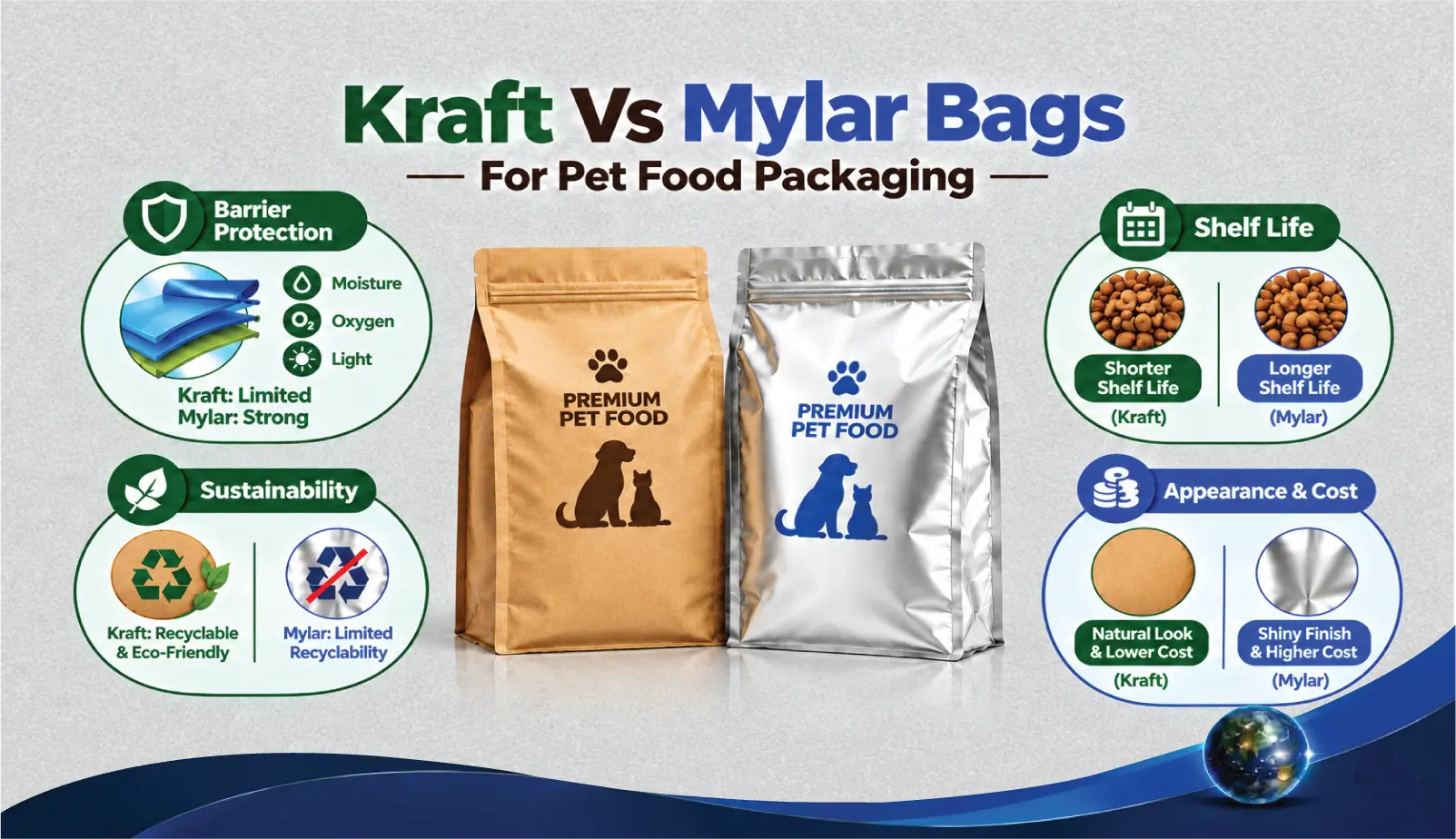
A kraft bag is a paper-based format made from wood pulp, and its brown, textured surface is widely recognized in food-grade packaging walkways. Recyclability is high when this material is left unlaminated, which is why kraft paper bags are often chosen where the perception of the brand benefits from an eco-friendly, natural story. Since this format is paper first, the next definition looks at a very different starting material.
Mylar Bags For Pet Food: Concept And Structure
A mylar bag, on the other hand, is designed from a polyester film that is metallized during production. High resistance to moisture, oxygen, and light is built into this structure, and because of this, mylar bags are frequently selected for dry pet food, freeze-dried treats, and other products where pet food freshness over a long period is the priority. With both formats now defined, the kraft vs mylar bags for pet food packaging debate can be examined feature by feature, and this feature-by-feature approach to kraft vs mylar bags for pet food packaging is exactly what the rest of this guide is built around.
Key Differences Between Kraft & Mylar Bags
A quick, side-by-side comparison of kraft and mylar bags is offered below, and each major factor is broken down in the sections that follow. Barrier protection, shelf life, appearance, sustainability, cost, durability, and printing are all covered, one topic at a time.
Barrier Protection: Kraft vs Mylar Bags
- Moisture resistance: Kraft has only a limited barrier against moisture unless a polyethylene lining or aluminium foil layer is incorporated beneath the paper.
- Oxygen protection: A stronger oxygen barrier is associated with metallized Mylar structures, making them more suitable for products requiring extended protection.
- Odour control: Greater odour barrier protection is generally associated with metallized film structures than with plain kraft paper.
- Overall barrier strength: Stronger protection against moisture, oxygen, light, and odour is generally associated with Mylar and Foil Pouches, while additional inner layers are required for similar protection with kraft.
For a closer look at how moisture, oxygen, light, and odour affect the freshness of pet food, the next section provides further detail on barrier protection. How Barrier Packaging Helps Protect Pet Food explains how barrier structures are considered for pet food freshness and storage.
Shelf Life Comparison: Kraft vs Mylar
A shorter shelf life is typically associated with kraft bags unless a multi-layer packaging structure with an inner liner is included. A much longer shelf life, on the other hand, is delivered by Mylar bags, and long-term storage of dry pet food, cat food packaging, and dog food packaging is supported particularly well by this format. In this sense, kraft vs mylar bags for pet food packaging becomes a question of how long freshness to be maintained, and this timing question is central to almost every kraft vs mylar bags for pet food packaging conversation had with a packaging supplier. Given this contrast, appearance and branding are considered next, since looks still matter to a buyer standing in the aisle.
Appearance and Branding: A Style Difference
A natural, rustic, and eco-friendly appearance is offered by kraft, and this look is frequently paired with premium pet treats packaging and organic branding. A shiny, metallic finish, in contrast, is offered by mylar, and an industrial or technical impression is created as a result, which suits bulk and functional formats well. Once again, kraft vs mylar bags for pet food packaging is about a brand wanting to stand out on the shelf, and this shelf story is a big reason kraft vs mylar bags for pet food packaging is coming up in packaging design meetings. With appearance covered, sustainability is examined next, and it changes the picture considerably.
“Customers will occasionally buy products not because they want them but because of how they are presented to them.” — James Clear
Sustainability: Which Bag Is Greener?
Biodegradability and recyclability are offered by kraft paper bags whenever lamination is kept to a minimum, and this is one reason sustainable packaging strategies are frequently designed around this material. Recyclability is far more limited with mylar, since Flexible Pouch recycling for metallized film is not widely established, and a bigger environmental footprint is often the result.
Where kraft vs mylar bags for pet food packaging intersects with a circular economy mindset, kraft is usually favoured, though compostable packaging and biodegradable packaging alternatives are being developed for mylar-style structures too, and this evolving side of kraft vs mylar bags for pet food packaging is worth revisiting each year as materials improve. The cost side of this decision is unpacked in the section right after this one.
Cost Difference Between Kraft and Mylar
- Lower cost: Kraft is generally associated with smaller production runs and simpler packaging structures.
- Higher barrier cost: Mylar is generally associated with a slightly higher cost because of its multi-layer packaging construction.
- Small-batch savings: Lower material and production costs are generally associated with simpler kraft structures and smaller order quantities.
- Long-term value: The higher cost of mylar is generally linked with stronger barrier protection and extended freshness requirements.
In almost every packaging cost comparison, this is where kraft vs mylar bags for pet food packaging is decided by budget alone, and for many startups, kraft vs mylar bags for pet food packaging is really a first-year cash flow question in disguise. Durability, however, is just as important as price, and that comparison is next.
Durability Comparison: Kraft vs Mylar Bags
Tearing and moisture damage are common risks for kraft bags whenever a protective lining is left out. Puncture resistance and shape retention, by contrast, are demonstrated well by Mylar, particularly in stand-up pouches, Side Gusset Bags, and other structured formats. A resealable zipper, a tear notch, and heat sealing are all commonly added to both materials to extend usability after the first opening. In terms of ruggedness, kraft vs mylar bags for pet food packaging tends to favour mylar, and this ruggedness factor is often the deciding line in kraft vs mylar bags for pet food packaging for brands that ship long distances, though the printing and customization angle is where kraft back, as shown next.
Printing and Customization Options Compared
Matte, earthy tones are produced beautifully on kraft, since ink is absorbed directly into the paper texture, and screen printing is often chosen for this rustic effect. Vibrant, glossy colour, on the other hand, is achieved on mylar through UV printing, and a reflective surface is used to make custom printed bags stand out on crowded shelves. Custom Mylar Bag Printing and custom food stand up pouches are both popular where bold, personalized branding is the goal, and print quality is often the deciding factor once kraft vs mylar bags for pet food packaging reaches the final design stage. With visual identity settled, the practical use cases for each format are outlined next.
For brands planning larger pet food packaging orders, Wholesale Pet Food Bags are offered in different materials, sizes, and pouch structures to match specific requirements of packaging. The right wholesale format is selected according to the product, order quantity, barrier requirements, and desired presentation.
Regulations, Certifications, and Canada Packaging Specifications
Pet food packaging sold across Canada is not governed by one single regulation; several federal laws are applied together. Bilingual labelling and net quantity declarations are made mandatory under the Consumer Packaging and Labelling Act, while false or misleading claims are prohibited under the Competition Act (Sections 52 and 74.01). Animal-derived ingredients are placed under the Health of Animals Regulations, administered by the CFIA.
Food-contact compliance for the packaging material itself is generally addressed separately, and this side of compliance is typically handled under U.S. FDA regulations rather than Canadian ones, since many packaging suppliers manufacture to FDA food-contact standards for cross-border sale.
Under this framework, a Declaration of Compliance is confirmed through 21 CFR Part 176 (Section 176.170 for aqueous and fatty foods, Section 176.180 for dry food such as kibble), and this compliance is typically backed by ISO 17025-accredited lab reports. Mylar and other PET-based films are placed under Part 177.1630 and Part 177.1520, with Part 178 applied to adhesives. Common certifications also referenced in the industry include BRCGS Packaging Materials, ISO 22000 Food Safety, FSC-certified paper, and EN13432 or ASTM D6400 for compostable claims.
Quick Comparison Table
With every regulation and certification number accounted for, the full kraft vs mylar bags for pet food packaging picture is captured below.
| Feature | Kraft Bags | Mylar Bags |
| Barrier protection | Limited without lining | Strong across moisture, oxygen, odor |
| Shelf life | Shorter | Much longer |
| Appearance | Natural, rustic | Shiny, metallic |
| Sustainability | Biodegradable, recyclable | Limited recyclability |
| Cost | Lower | Higher |
| Durability | Tears without lining | Puncture resistant |
| Printing | Screen printing, matte finish | UV printing, glossy finish |
| Best suited for | Premium, small batch, treats | Bulk, long-term storage |
For personalized pet food packaging requirements, Custom Packaging Calgary offers different materials, sizes, printing options, and pouch structures according to the needs of the product. For packaging specifications, pricing, or order details, connect with Universal Packaging today and discuss the right packaging format for your pet food line.
“Good things come in small packages.” — Aesop
Conclusion
Everything about kraft vs mylar bags for pet food packaging has been covered, from barrier protection and shelf life to sustainability, cost, printing, and Canadian packaging regulations. Both materials are shown to carry real strengths, and the right pick is guided by freshness needs, budget, and the recognition goals of the brand. For larger packaging requirements, BOPET Bags Wholesale is also offered for pet food applications requiring durable, high-barrier film structures. Whether a natural aesthetic or a high-barrier structure is prioritized, this comparison of kraft vs mylar bags for pet food packaging is intended to make that final decision considerably easier.
Frequently Asked Questions (FAQs)
What is the main difference between kraft and mylar bags?
The main difference lies in barrier strength and appearance, and this is really the heart of kraft vs mylar bags for pet food packaging. Kraft is paper-based with a natural look, while mylar is a metallized film built for stronger protection against moisture and oxygen.
Are kraft bags recyclable?
Yes, kraft paper bags are recyclable when left unlaminated. Once a poly or foil lining is added, recyclability is reduced significantly, so unlaminated kraft is preferred for sustainable packaging goals.
Do mylar bags keep pet food fresher for longer?
Yes, a much longer shelf life is generally achieved with mylar because of its strong moisture barrier, oxygen barrier, and odor barrier compared to standard kraft paper.
Which option is more cost-effective for small pet food brands?
Kraft is usually more cost-effective for smaller production runs, while mylar becomes more valuable when long-term freshness and bulk quantities are the priority.
Can a resealable zipper be added to both kraft and mylar bags?
Yes, a resealable zipper, press-to-close zipper, slider zipper, child-resistant zipper, Velcro-style zipper, tear notch, and heat sealing are commonly added to both formats to improve everyday usability once the bag has been opened.
Are stand-up pouches offered in both kraft and mylar materials?
Yes, Stand Up Pouch Custom, a kraft stand up pouch with window, and other structured formats are all offered across both material types depending on branding and budget needs.
Is custom printing offered on both kraft and mylar bags?
Yes, screen printing suits kraft matte, earthy finish well, while UV printing is typically used on mylar to achieve a vibrant, glossy result on its reflective surface.
Which material is better for premium pet food branding?
Kraft is generally favoured for premium pet food branding because of its natural, artisanal appearance, though mylar with personalized printing is also chosen for a bold, modern shelf presence.
Do childproof bags designed for pet supplements or medicated treats?
Yes, Childproof Bags with reclosable features child-resistant zipper are offered for pet supplements and medicated treats, and these formats are tested against recognized child-resistant packaging standards.
Where should kraft and mylar pet food bags be bought from?
Universal Packaging is where kraft and mylar pet food bags, including custom packaging design, Custom Food Stand Up Pouches, side gusset bags, flexible pouch options, and foil pouches, are sourced. Different packaging formats are offered according to material, size, printing, barrier, and closure requirements, making it easier for pet food brands to select a suitable packaging structure.