What makes one chocolate bar stand out on a crowded shelf while another receives attention from eco-conscious customers? Much of the difference is found in the packaging of the product, where wrapping styles, box structures, colours, materials, and finishing details are carefully considered. Across the chocolate industry, these packaging choices influence the perception of the brand and the presentation of the product for the target audience. The key details of these Eco-Friendly Chocolate Packaging Options are explored below, including practical ideas for creating distinctive and suitable chocolate packaging.
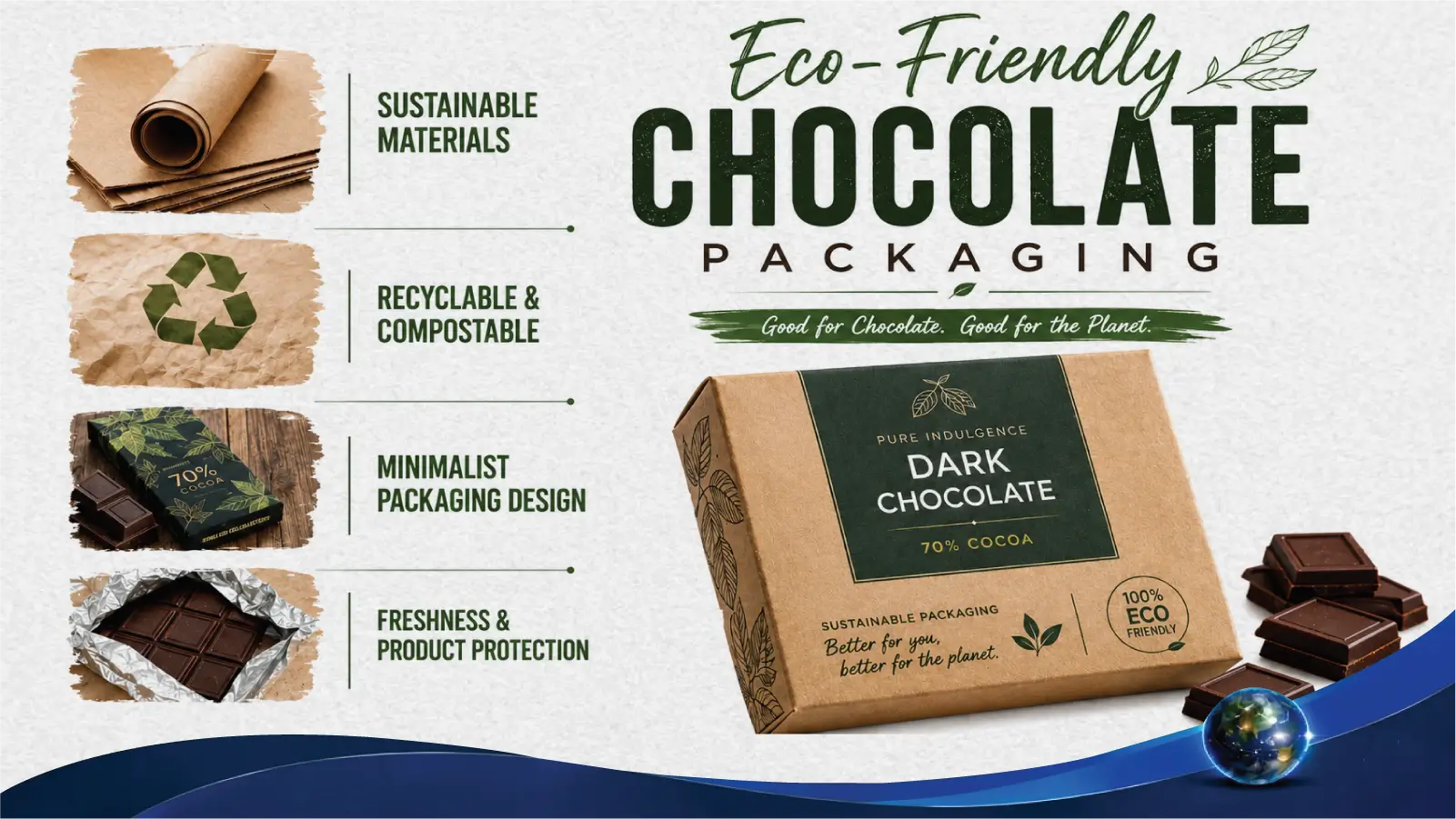
Key Reasons Eco-Packaging Matters Today
- Waste reduction: packaging waste is reduced through recyclable and compostable materials.
- Responsible sourcing: better material sourcing is encouraged through FSC-certified paper and recycled content.
- Consumer expectations: greater trust is developed when environmentally responsible choices are clearly communicated.
- Recycling: easier disposal is achieved through clear recycling instructions and suitable material selection.
- Reputation: the reputation of the brand is strengthened when sustainability commitments are reflected through packaging decisions.
Why Chocolate Brands Need Eco-Packaging
Greater attention is now being given to sustainability across the chocolate industry. Waste reduction, responsible sourcing, recycling, and consumer expectations are being considered more carefully during packaging decisions. The reputation of the brand is also influenced by the way environmental responsibility is communicated.
Sustainable Chocolate Packaging Formats
Different chocolate products are packaged in formats such as bags, boxes, wraps, sleeves, labels, stickers, packets, and header cards.
Chocolate Bags And Packets
Chocolate bags and packets are prepared from materials such as recycled kraft paper, cellulose, compostable paper, and PLA where suitable food-contact and disposal requirements are met. Resealable structures are also included where freshness after opening is required.
Chocolate Boxes And Sleeves
Chocolate boxes and sleeves are commonly prepared from FSC-certified cardboard, recycled kraft paper, recycled paperboard, and compostable paper materials. These structures are suited to retail presentation and gifting, while material selection is matched with the requirements of the brand.
Chocolate Wraps And Foil Packaging
Chocolate wraps are prepared using thin aluminium foil, cellulose, cellophane, or paper-based materials, depending on the required barrier and presentation. Thin aluminium foil is often paired with paper or other layers where protection from light, oxygen, and moisture is required.
Chocolate Labels And Stickers
Labels and stickers are prepared from recycled paper, FSC-certified paper, compostable paper, or cellulose-based materials. Adhesive selection is also reviewed according to the packaging structure and intended application.
Chocolate Header Cards
Header cards are prepared from FSC-certified cardboard, recycled kraft paper, and recycled paperboard. These formats are commonly attached to bags or hanging packets where product information and presentation are required together.
Materials That Are Used In Making These Formats
Each format is matched with suitable eco-friendly materials according to protection, presentation, food-contact requirements, and the needs of the brand.
Cellulose And Cellophane
Cellulose and cellophane are paper-like transparent materials derived from plant-based cellulose. Their use is considered for wraps, windows, and inner packaging where transparency and a lower-plastic material choice are preferred.
PLA (Polylactic Acid)
PLA is a plant-based bioplastic commonly produced from renewable sources such as corn starch or sugarcane. Its suitability is assessed according to food-contact requirements, compostability conditions, and the disposal system in the intended market.
Compostable Paper Material
Compostable paper materials are used for selected bags, wraps, sleeves, and boxes where suitable compostability certification is documented. Material composition and local composting conditions are reviewed before an environmental claim is made.
Recycled Kraft Paper
Recycled kraft paper is considered for bags, sleeves, labels, packets, and other paper-based formats. Its natural appearance is often associated with sustainable chocolate packaging, while food-contact suitability is confirmed according to the intended application.
FSC-Certified Cardboard
FSC-certified cardboard is sourced from responsibly managed forest systems and is commonly considered for chocolate boxes, sleeves, header cards, and display packaging. The certification status is verified before FSC-related claims are included on packaging.
Biodegradable Materials For Chocolate Wrapping
The foundation of any wrapping strategy is based on the raw materials selected for it, and chocolate packaging materials are considered at this stage. Food-grade packaging is treated as a necessary requirement across the confectionery industry because materials that come into contact with food are subject to strict safety standards. Paperboard chocolate boxes are used as a sturdy, printable base for structured cartons, while foil wrappers are placed around bars for a premium finish and added protection.
Barrier packaging is incorporated to limit exposure to oxygen, light, and odour, while moisture-resistant layers are included to reduce humidity exposure. Kraft paper is often selected for a natural, earthy presentation, while glassine paper is used as a smooth, grease-resistant inner liner. Similar material considerations are reviewed for Cardboard Chocolate Display Boxes prepared for retail displays, where visibility of the product and structural strength are considered together.
Minimalist Mono-Material Packaging Design Tips
Chocolate packaging design is treated, as the visual voice of a brand, and this is where custom chocolate packaging is most often requested by growing confectionery businesses. Packaging typography is carefully selected, so that a name is read clearly even from a distance, while a thoughtful colour palette is worked into every panel so that shelf presence is instantly created. The same visual principles are commonly reflected in Chocolate Bars Boxes For Sale, where typography, colour balance, and presentation are expected to remain consistent across different retail collections. Logo placement is planned with intention as a result, and finishing techniques are frequently added, including:
- Embossing: a raised texture that is felt as much as it is seen.
- Foil stamping: a metallic accent that is applied for a luxurious edge.
- Spot UV: a glossy highlight that is placed over specific design features.
- Screen and UV printing: methods through which sharp, vibrant artwork is produced on boxes and wrappers.
Storytelling of brand is in every inch of a box, and packaging copy is written so that a personalized connection is formed with the reader before a single square of chocolate is tasted. Similar branding approaches are also carried into Custom Printed Tuck Boxes, where the identity of product is presented through carefully planned layouts and printed finishes.
“Good things come in small packages.” — Aesop
Recycled Paper And Kraft Solutions
Protection of the product is treated as a top priority once design work is complete, because a beautiful box means little if what is inside has spoiled. Freshness preservation is achieved through careful material pairing, and shelf life is extended when barrier layers are properly combined. Heat protection is also factored in for warmer climates, since chocolate is known to melt quickly when it is left in direct sunlight.
Tamper-evident packaging is added as a seal through which trust is reassured before a box is opened, while resealable packaging is included as a closure through which portions are kept fresh after the first use. Easy-open packaging is prioritized in many formats so that s avoided at the point of opening, and the unboxing experience is turned into a memorable part of the overall presentation. A comparable level of presentation is often expected from Pillow Boxes With Logo, particularly when chocolates are prepared for gifting or promotional campaigns. It becomes clear, given this, why regulations exist to formalize these protective standards, and that is exactly where attention should be turned next.
Canada Packaging Regulations And Certifications
The specifications, regulations, and laws referenced here are matched specifically to packaging products intended for the Canadian market, and the following numbers are commonly cited:
- SOR/2022-138: the Single Use Plastics Prohibition Regulations, under which single-use plastics are restricted across Canada
- CAN/BNQ 0017-088: the standard under which compostable packaging is verified so that compost quality is protected
- ISO 17088 and ISO 18606: the frameworks now used by the Bureau de Normalisation du Québec to replace the older certification structure
FSC-certified paper is often selected as a preferred substrate, since responsible forestry sourcing is confirmed through this label. Food contact safety is verified separately from compostability at the same time, and allergen labeling along with nutrition labeling is mandated so that a consumer’s needs are always respected. Sustainable chocolate packaging and recyclable packaging, because of these layered requirements, are paired with eco-friendly inks, so that a fully compliant, low-impact result is achieved from sourcing through disposal. The branding and buying behaviour behind these choices deserve equal attention now that the compliance side is covered.
Consumer Demand For Sustainable Packaging
Consumer perception is shaped long before a product is tasted, and purchase intent is often influenced by a single glance at a shelf.
- Confectionery Packaging: Confectionery packaging is treated as a silent salesperson, while chocolate bar packaging is designed to be recognized instantly by returning customers.
- Luxury Chocolate Packaging: Luxury chocolate packaging is layered with premium finishing touches, whereas everyday product lines are supported through simpler, cost-effective retail packaging.
- Gift & Seasonal Packaging: Gift packaging is created for celebratory occasions, while seasonal chocolate packaging is rotated throughout the year to match holidays and cultural events.
- Creative Packaging Ideas: Creative seasonal presentations are also explored through DIY Lollipop Packaging, especially when confectionery assortments are prepared for events and limited-edition releases.
Looking for cost-effective packaging solutions in larger quantities? Explore Chocolate Boxes Wholesale to learn how bulk packaging options can reduce costs, maintain quality, and support the growing needs of chocolate businesses.
“Customers will occasionally buy products not because they want them but because of how they are presented to them.” — James Clear
Sustainability Vs. Cost Packaging Challenges
A higher upfront cost is often faced, admittedly, when eco-friendly materials are chosen over conventional plastic, since certified paper, compostable films, and specialty inks are typically priced above standard alternatives. Material selection is also reviewed carefully when Chocolate Bomb Packaging Shop collections are planned, since protective performance and sustainable presentation are expected to remain balanced. This cost is frequently offset over time, however, since the reputation of the brand is strengthened and repeat purchase intent is generated when sustainability is visibly demonstrated.
A balance is required even so, and smaller businesses are encouraged to start with a single high-impact change, such as a switch to kraft paper or FSC-certified paper, before a full packaging overhaul is attempted. Similar sustainability considerations are increasingly being applied to Mushroom Chocolate Bar Packaging, where environmentally responsible materials are receiving greater attention across specialty product categories.
Whether you need sustainable packaging or fully customized chocolate boxes, Universal Packaging is ready to support your next project. Reach out today and start creating packaging that leaves a lasting impression.
Conclusion
Raw materials, sustainable packaging options, and Canadian certification requirements have all been discussed throughout this blog, with a clear focus on sustainability, protection of the product, and compliance. From recycled kraft paper and compostable materials to spot UV finishing and recognized Canadian standards, each feature is considered as part of effective chocolate packaging. Eco-friendly options also require careful attention to material selection, recyclability, compostability, and food-contact suitability. For further guidance, Common Mistakes in Chocolate Packaging Design covers common issues that may also affect sustainable packaging choices.
Frequently Asked Questions (FAQs)
What are the most common eco-friendly chocolate packaging options for small brands?
Kraft paper and paperboard boxes are usually considered among the easiest eco-friendly chocolate packaging options for smaller operations to start with, since costs are kept manageable while sustainability goals are still addressed.
Is compostable packaging the same as recyclable packaging?
No, these two terms are treated differently. Compostable packaging is broken down under specific composting conditions, while recyclable packaging is processed through separate collection and reprocessing systems.
Are foil wrappers still considered eco-friendly?
Foil wrappers are generally recyclable when they are kept clean and separated from paper layers, though thinner, mono-material alternatives are now being preferred by many sustainability-focused brands.
Where can chocolate packaging options be bought?
Universal chocolate packaging is offered through specialized packaging suppliers, wholesale printing companies, and custom box manufacturers. Wholesale Candy Packaging is also widely offered with custom printing and food-safe material options.
What is the difference between paperboard and rigid board/paper?
Paperboard is thinner and more cost-effective, while Custom Printed Rigid Boxes are thicker, sturdier, and generally reserved for premium or gift-oriented presentation.
How is shelf life affected by packaging choice?
Shelf life is directly influenced by barrier quality, since oxygen and moisture exposure are the two biggest factors behind early spoilage. The same barrier principles are also considered for Packaging For Edibles to support product quality during storage.
Can seasonal packaging still be sustainable?
Yes, seasonal chocolate packaging is made sustainable through the same compostable, recyclable, and FSC-certified materials used year-round, with only the artwork and colour palette adjusted for the occasion.
Where Can Chocolate Packaging Be Sourced for Chocolate Products?
Chocolate packaging is sourced through specialized packaging suppliers, wholesale printing companies, and custom box manufacturers. Options such as Wholesale Candy Packaging are offered with personalized printing and food-safe material choices.