Surprisingly food and other specific products are now being packed in flexible, resealable packaging instead of rigid packaging. Across the food, supplement, and cannabis industries, flexible pouches are being preferred over traditional formats. But the question arises, What Is Flexible Packaging? A Complete Guide to this solution is being discussed in this article. Read on for a complete overview of the materials, benefits, manufacturing methods, and future trends associated with flexible packaging.
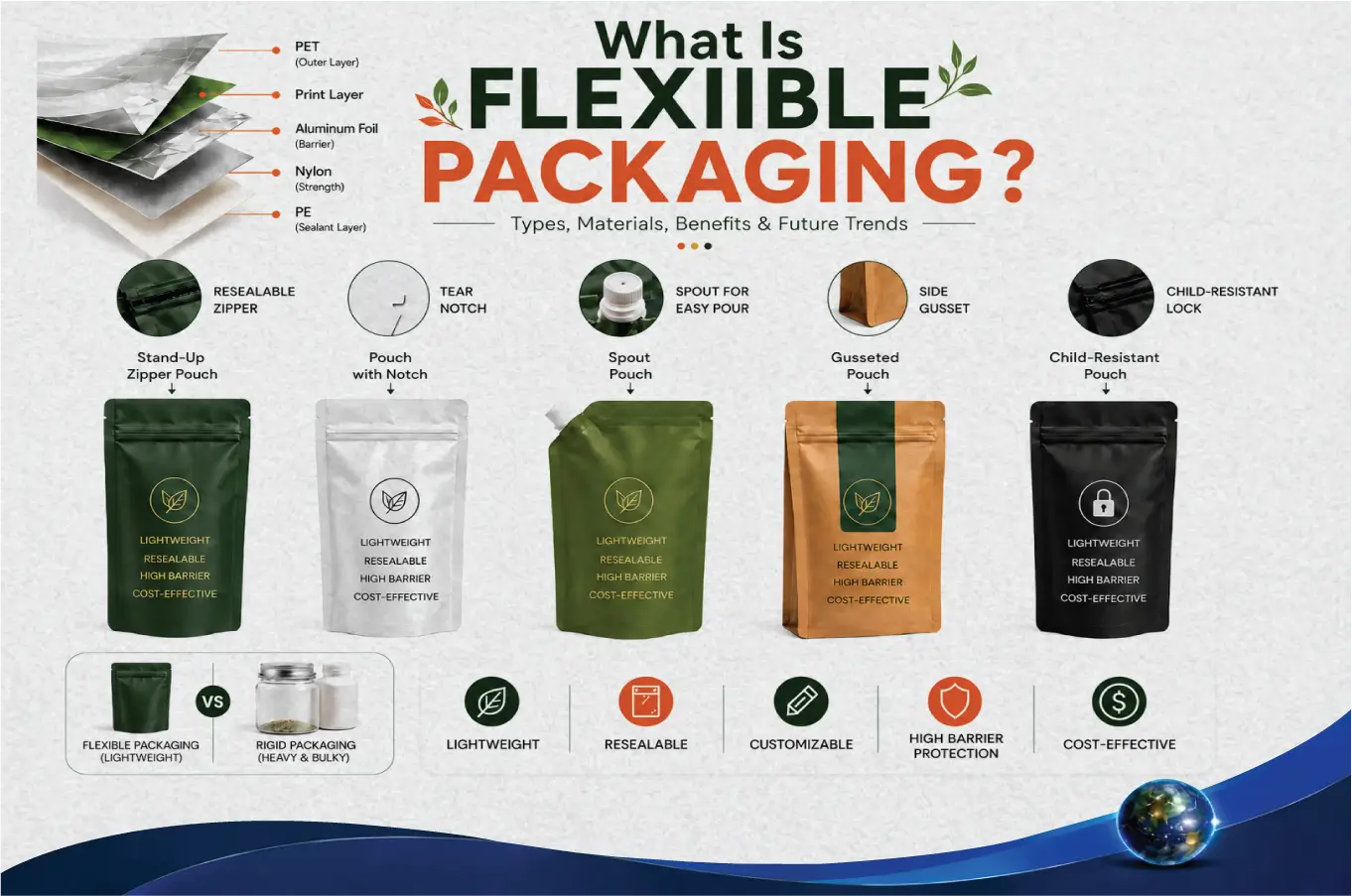
Understanding Flexible Packaging: The Basics
This section of what is flexible packaging? a complete guide starts with knowing the basics.
Flexible packaging is said as;
Any packaging format that is made from materials like plastic films, aluminum foil, or paper capable of being bent, folded, or shaped easily.
Include flexible pouches, wrappers, and bags. Unlike rigid boxes, flexible pouches and bags are designed with soft films, foils, or laminates. This type of packaging is widely used across industries such as food, pharmaceuticals, and cannabis, where a lightweight, flexible pouch is preferred over rigid options.
Types Of Flexible Packaging You Should Know
In this part of what is flexible packaging? a complete guide, the main pouch formats are explained. Several formats are included under the flexible packaging category, with each one designed for a specific purpose.
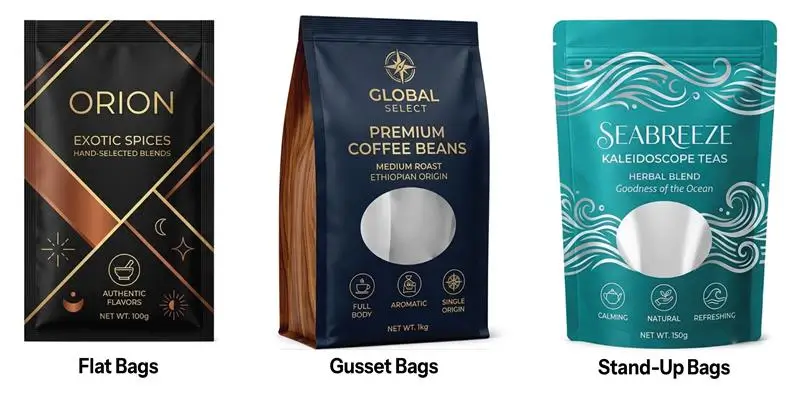
- Stand-Up Pouches: A flat, gusseted bottom is built into stand-up pouches, through which an upright position is maintained on the shelf. High visibility of the product is achieved through this format, along with efficient use of shelf space. Custom Stand Up Pouches, with an eco-friendly look that is often paired with a clear window for product visibility.
- Flat Mylar Bags: Flat mylar bags, also known as flat pouches, are made without gussets, and a simple two-sided structure is formed as a result. A cost-effective option is provided through this style, and it is often used for lightweight or smaller products.
- Gusseted Mylar Bags: What is flexible packaging? a complete guide also discusses how expandable side or bottom folds are included in gusseted mylar bags, through which extra volume is accommodated. Bulkier products, such as pet food or coffee beans, are commonly packed using this format.
- Zipper Mylar Bags: A resealable zipper strip is designed into zip-lock mylar bags, through which freshness is maintained after the first use. Tear notches are also common in this convenience packaging format, that is preferred for products consumed over multiple sittings, such as snacks or herbs.
- Child-Resistant Mylar Bags: Special resealable features are incorporated into child-resistant mylar bags, through which accidental access by children is prevented. This format is required in industries such as cannabis and pharmaceuticals, where safety regulations must be followed.
- Custom Shape Mylar Bags: Unique shapes and structures, beyond standard rectangular designs, including spouts for pourable products, are offered through Custom Mylar Bags. A distinct display of the product is achieved through this format, through which a strong presence is created on crowded shelves.
- Spout Pouches: A pour spout is fitted onto Spout Pouches, through which controlled dispensing of liquids and semi-liquids is achieved. This format is commonly selected for sauces, beverages, and liquid personal care products.
- Retort Packaging: High-temperature sterilization is achieved through Retort Packaging, through which shelf-stable storage is achieved for ready meals and wet pet food without the need for refrigeration.
Now that the pouch styles are clear, let’s explore the materials behind them.
What Materials Are Used In Flexible Packaging?
As covered in what is flexible packaging? a complete guide, several materials are combined in layers to form flexible packaging, where laminated structures and multilayer packaging films are engineered so that each layer, whether plastic film, foil, or paper, is assigned a specific purpose within the structure.
- Polyethylene (PE): This material is used as a sealant layer, through which heat-sealing and moisture resistance are achieved.
- Polypropylene (PP): Clarity and heat resistance are provided through this material, and it is often used for printed outer layers.
- Polyethylene Terephthalate (PET): Strength and printability are offered through this material, and it is commonly used as an outer layer within laminated structures.
- Aluminum Foil Barrier: A barrier against light, oxygen, and moisture is created through this material, through which shelf life is extended.
- Nylon (BOPA): Puncture resistance and oxygen barrier properties are added through this material.
- Paper-Based Flexible Packaging: Thin paper layers are increasingly combined with plastic film, through which a more recyclable packaging film structure is achieved for select product categories.
With the right materials in mind, the next step is understanding how these pouches are actually manufactured.
How Is Flexible Packaging Made? (The Manufacturing Process)
In this step of what is flexible packaging? a complete guide, the changing of film into a finished product is explained. Multiple film layers are combined through lamination, through which strength, barrier protection, and printability are achieved within one structure.
Raw plastic resin is first melted and formed into thin sheets through extrusion. At this stage, an important question is often raised: how are colours, logo, and detailed graphics applied to thin packaging films? A detailed explanation is provided in Printing Methods For Flexible Packaging, where rotogravure, flexographic, and digital printing are examined according to print quality, production volume, cost, and the requirements of the brand. After printing, the layers are bonded through lamination, the rolls are cut into usable sizes through slitting and sheeting, and the pouches are finally shaped and sealed with heat.
Once the manufacturing process is understood, it becomes easier to understand the benefits of this packaging style.
Benefits Of Flexible Packaging
According to what is flexible packaging? a complete guide Several notable advantages are offered through flexible packaging compared with traditional packaging. The main benefits are outlined below:
- Cost-Effective: Lower production costs are achieved through flexible packaging, since less raw material is required and manufacturing processes are generally less expensive.
- Customization: A high level of customization is offered through flexible packaging, with materials, sizes, colours, and printing options all available for selection. Through this flexibility, shelf appeal and visibility of the product are improved, and consumer engagement with the target market is strengthened.
- Sustainability: Increasingly eco-friendly options are offered through flexible packaging, with biodegradable films and sustainable material sources increasingly selected by businesses, through which growing consumer demand is met.
- Protection and Preservation: Excellent protection of the product is provided through flexible packaging, through which freshness, protection, and quality of the product are maintained during transport. Resistance against moisture, light, and air is built into many materials, through which shelf life is extended.
“Packaging can be theater; it can create a story.” — Steve Jobs
Explore Flexible Pouches prepared according to the requirements of the brand, with careful attention given to the protection and presentation of the product.
Top Industries Using Flexible Packaging Today
As highlighted in what is flexible packaging? a complete guide: Flexible packaging is widely used across a broad range of industries due to the practicality and protection of the product offered.
Food Making Industry:
Snack bags, coffee pouches, and frozen Food Packaging are commonly packed in flexible packaging solutions.
Pharmaceuticals Industry:
Madicine packs and unit-dose sachets are relied upon for sterility and accurate dosage amounts on each sachet.
Cannabis & CBD Industry:
The cannabis industry uses this flexible packaging through which compliance and safety are maintained.
Personal Care and Cosmetic Packaging:
Cosmetic packaging like face masks or sponges is packed in pouches, reducing material use compared to rigid bottles.
Agriculture and Industry:
Bulk bags and stretch film are used for the transport of grains, fertilizers, and industrial goods.
Retail and E-Commerce:
Many retail shops select tamper-proof custom Mylar bags for packaging small retail products and accessories.
Since flexible packaging is used across so many industries, a comparison with rigid packaging is worth exploring next in that what is flexible packaging? a complete guide.
Flexible Vs Rigid Packaging: Key Differences
This comparison, part of what is flexible packaging? a complete guide is helpful when a decision is being made for a specific product. A premium feel is often associated with rigid packaging, while a smaller shipping footprint is achieved through flexible packaging due to its lighter weight. Easier recycling is generally associated with rigid packaging, though this gap continues to narrow as sustainable flexible formats are developed.
| Factor | Flexible Packaging | Rigid Packaging |
| Material Use | Less material is required | More material is required |
| Production and Shipping Costs | Generally reduced | Comparatively higher |
| Durability | Moderate durability is offered | Higher durability is offered |
| Protection | Suitable for everyday products | Stronger protection for fragile items |
| Design Flexibility | Greater flexibility via shape and print | Limited to standard shapes |
| Shelf Presence | Modern, customizable feel | Premium feel often associated |
| Shipping Footprint | Smaller, due to lighter weight | Larger, due to added weight |
| Recyclability | Improving through sustainable formats | Generally easier to recycle |
Once the differences are clear in this what is flexible packaging? a complete guide, sustainability becomes an important factor to consider further.
Sustainable Flexible Packaging And Recycling Trends
As discussed in what is flexible packaging? a complete guide, ongoing improvements toward sustainability are being made within the flexible packaging industry, through which environmental impact is reduced over time. A single type of plastic is used instead of mixed laminates, through which recycling is made easier. Post-consumer recycled (PCR) plastic is increasingly incorporated into packaging films by many brands, and plant-based films, such as PLA, are explored for compostable alternatives. Less energy is required for production and transport as well, due to the lighter weight and compact form of flexible packaging.
“Recycling, packaging, businesses are changing all of those things because that’s what consumers want.” — Jerry Greenfield
Future Trends Shaping The Flexible Packaging Industry
Looking ahead, what is flexible packaging? a complete guide would not be complete without covering the following trends:
- Recyclable Material Pouches: Continued growth is expected in this format, through which recyclability is improved.
- Smart Packaging Features: QR codes and valves are added, through which increased information is provided to consumers.
- Expansion into New Categories: Categories once dominated by rigid containers, such as beverages, are increasingly being explored for flexible formats.
For packaging aligned with the requirements of the brand and the protection of the product, explore Custom Packaging Calgary and contact us now to discover anf get new variety in flexible packaging options.
Conclusion
Within this detailed overview of what is flexible packaging? a complete guide: Every major aspect of flexible packaging has been explained in an easy style. From the basics and types of pouches to future trends, each topic was broken down in a simple way. Industries relying on flexible packaging were explored, along with a comparison against rigid alternatives, sustainability trends, and future advancements. For a product requiring reliable, cost-effective, and customizable packaging, flexible pouches remain a strong option worth considering.
Frequently Asked Questions (FAQs)
What is flexible packaging?
As explained throughout what is flexible packaging? a complete guide is discussed. Flexible packaging is defined as a packaging format made from materials that can be bent or shaped without being damaged, such as bags and pouches made of films, foils, and laminates.
What materials are commonly used in flexible packaging?
Polyethylene, polypropylene, polyester, and aluminum foil are among the materials most commonly used in flexible packaging structures. As we already know from the above what is flexible packaging? a complete guide.
Is flexible packaging recyclable?
As explained in what is flexible packaging? a complete guide to recyclability is discussed, as it depends on the structure used. The recyclable material designs are generally easier to recycle, while multi-layer laminates are more difficult to process through standard recycling.
What is the difference between flexible and rigid packaging?
As outlined in what is flexible packaging? a complete guide of their difference is also discussed. Less material and lighter weight are associated with flexible packaging, while greater structural strength is offered through rigid packaging.
Why are mylar bags used for cannabis and food storage?
A strong barrier against moisture, light, and oxygen is provided by mylar bags, through which freshness is extended.
How long does flexible packaging keep products fresh?
As noted in what is flexible packaging? a complete guide: shelf life varies by product and material used, though extended freshness is generally achieved through barrier films that block moisture, light, and air.
Can flexible packaging be customized for any brand?
Yes, as detailed in what is flexible packaging? a complete guide, a wide range of customization options is offered through flexible packaging, including size, shape, colour, finish, and printed design, through which the reputation of the brand is reflected on the final product.
What industries use flexible packaging the most?
As covered in what is flexible packaging? a complete guide: food, pharmaceuticals, cannabis, personal care, and agriculture are among the industries where flexible packaging is most widely used.
Is flexible packaging more affordable than rigid packaging?
Yes, lower production and shipping costs are generally associated with flexible packaging, due to reduced material use and lighter weight, as noted in what is flexible packaging? a complete guide.