Want to learn about condiment sachets? Here, let’s learn about What Are Condiment Sachets? Types Sizes and Uses Explained answers your questions in a clear and friendly way. Explore types, size options, common uses, and features of sachets for food service businesses. Choosing unsuitable sachets may lead to leakage and reduced customer satisfaction. Explore reliable packaging options with Universal Packaging and find the right fit for your needs. Scroll down to explore the complete guide now!
Understand the Concept of Condiment Sachets
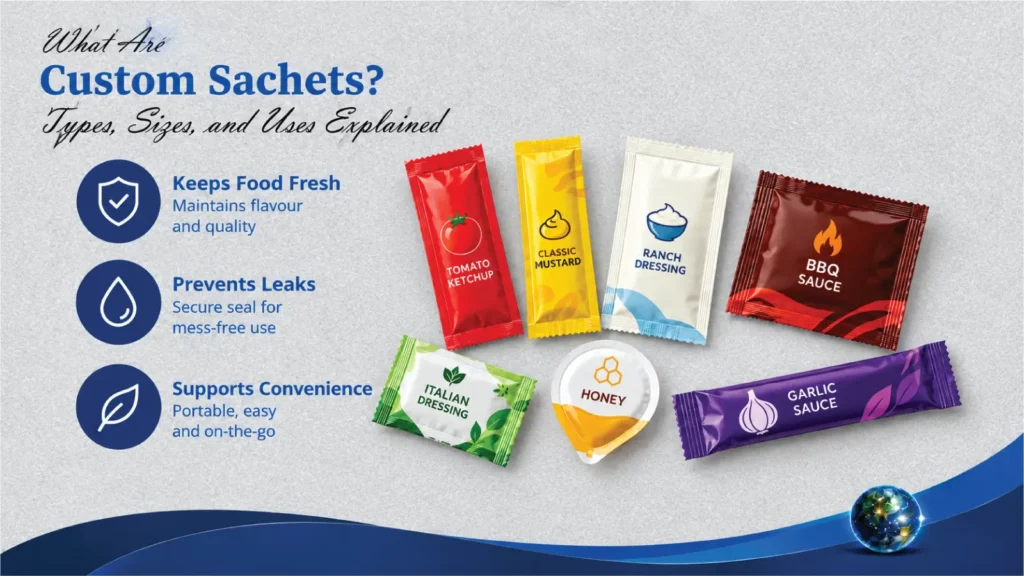
Condiment sachets are sealed, flexible packets filled with measured portions of sauces, dressings, pastes, or seasonings. The quantity inside depends on the type of condiment sachet holders and the intended serving. When exploring what are condiment sachets? types sizes and uses explained, it is important to distinguish single-serving sachets from larger pouches intended for multiple portions. A suitable food-contact material is selected according to the contents and storage conditions. The definition of what are condiment sachets? types sizes and uses explained; therefore, it includes both the portioned contents and the flexible outer layer.
Explore the Main Types of Condiment Sachets
Several formats are offered for different dispensing and serving preferences.
1. Spout Sachets
Controlled pouring is a key feature of spout sachets, which have a small nozzle for dispensing sauces. This format is worth considering for thicker catering condiment sachets, dipping sauces, and larger portions. The position and opening size of the spout should be selected according to the viscosity of the sauce and the intended serving method. Review Custom Sauce Pouches and understand the flexible formats, reliable sealing options, and custom printing details that contribute to the quality of the product and reputation of the brand. When exploring what are condiment sachets? types sizes and uses explained, assess whether this format suits your filling process and dispensing requirements.
2. Window Sachets
A transparent panel distinguishes window sachets from other formats by making the contents visible. This design is worth considering when the colour or appearance of a condiment matters to customers. The size of the window should be assessed alongside light sensitivity, shelf-life expectations, and barrier requirements. For businesses researching what are condiment sachets? types sizes and uses explained, the selection of a window format should reflect the properties of the sauce and the intended storage conditions.
3. Flat Sachets/Stick Packs
A slim profile makes flat sachets a practical option for individual catering condiments sachets. Common Sauce Packets include ketchup, mustard, hot sauce, vinegar, and seasonings, depending on the specifications. The dimensions of the sealable single-portion condiment pouch should be confirmed before production to support portion accuracy. When reviewing what are condiment sachets? types sizes and uses explained, consider flat formats for individual meals, takeout orders, and food-service counters.
4. Shaped Sachets
Custom outlines distinguish shaped sachets from standard rectangular formats. The shape may be selected according to the presentation of the product or the image of the brand. However, the design should remain practical for filling, sealing, storage, and handling with different types of sauces, like apple sauce, mayonnaise, ketchup, and other condiments. Check out Custom Apple Sauce Pouches and discover the attractive printing options with pouch styles that contribute to the quality of the product. what are condiment sachets? types sizes and uses explained, shaped formats are worth considering when distinctive presentation is an important part of the packaging brief.
5. Zipper Sachets
Resealable closures are the defining feature of zipper sachets, which are intended for products that require repeated access. These sachets are generally more appropriate for larger condiment portions than very small, single-serving packets. The quality of the zipper, seal integrity, and suitability of the material should be assessed according to the sauce and storage conditions. For businesses exploring what are condiment sachets? types sizes and uses explained, this format deserves consideration when convenient storage is important. Explore Chili Sauce Packaging solutions include sachets with zipper features that contribute to the presentation of the product.
6. Child-Resistant Sachets
Specialized opening mechanisms distinguish child-resistant sachets from ordinary flexible packets. These formats are intended to make access more difficult for young children and should be considered where the product category or applicable regulations justify such protection. The effectiveness of the closure must be assessed through appropriate testing, and all relevant legal requirements must be met. what are condiment sachets? types sizes and uses explained, it is important to distinguish child-resistant formats from standard condiment sachets, which do not automatically provide this protection.
For a detailed comparison of the specific formats, read Condiment Sachets Vs Stick Packs: What’s The Difference, to get the full guide.
Examine Key Features of Condiment Sachets
When exploring what are condiment sachets? types sizes and uses explained, consider features such as spouts, zipper closures, tear notches, serrated edges, and heat sealing. Spouts support controlled pouring, while zipper closures are suited to sachets intended for repeated opening. Tear notches and serrated edges make opening more convenient, depending on the design. Heat sealing forms secure closures along the edges.
The selection of the material should reflect the condiment sachet individuel to oxygen, moisture, and light. BOPET film is commonly used for Bopet Packaging, with a laminated structure of condiment sachets to achieve print clarity, dimensional stability, and barrier performance alongside compatible sealing layers. These features deserve attention when comparing what are condiment sachets? types sizes and uses explained for different food-service requirements.
Understand Common Sizes of Condiment Sachets
The quantity of sauce inside a sachet depends on serving expectations, the consistency of the condiment Sachet Packaging solution, and the requirements of the business. When reviewing what are condiment sachets? types sizes and uses explained, confirm the fill volume and dimensions of the sachet with your supplier.
| Sachet Dimensions | Approx. Fill Volume | Sachet Dimensions | Approx. Fill Volume |
| 1.5″ × 2″ | 2–5 mL | 1.5″ × 2.5″ | 3–6 mL |
| 2″ × 2″ | 3–6 mL | 2″ × 2.5″ | 5–8 mL |
| 2″ × 3″ | 6–10 mL | 2.5″ × 3″ | 8–12 mL |
| 2.5″ × 3.5″ | 10–15 mL | 3″ × 3.5″ | 12–18 mL |
These examples are not universal standards. Accurate specifications are essential when comparing what are condiment sachets? types sizes and uses explained. For further guidance on what are condiment sachets? types sizes and uses explained, contact universalpackaging to get the perfect custom size and finishing options.
Discover Common Uses of Condiment Sachets
As explained in what are condiment sachets? types sizes and uses explained, the serving quantity should correspond to the intended dish. Condiment sachet suppliers are commonly found packaging across different food-service settings, with the choice of sauce depending on the meal and customer preferences.
- Restaurants and Cafés: Ketchup, mustard, and mayonnaise are commonly served with burgers, sandwiches, and fries.
- Takeout and Food Delivery: Individually sealed sachets are packed alongside meals, keeping sauces separate until serving.
- Catering Services: Portion-controlled dressings, sauces, and seasonings are prepared for individual meals and events.
- Fast-Food Outlets: Barbecue sauce, hot sauce, and other dips are served alongside popular quick-service meals.
- Institutional Food Services: Individually portioned condiment sachets wholesale are supplied according to meal plans and serving requirements.
These examples demonstrate the practical role of condiment sachets in everyday food service. Let’s explore Condiments Packaging and discover the material options and sizes that contribute to the presentation of the brand. When reviewing what are condiment sachets? types sizes and uses explained, consider the meal type, portion quantity, and serving environment before selecting a suitable format.
Understand Canadian Regulations for Condiments En Sachets Individuels
Businesses selling food in Canada should review applicable packaging safety and labelling requirements before production. The regulatory guidance relevant to what are condiment sachets? types sizes and uses explained should be checked with Health Canada and the Canadian Food Inspection Agency (CFIA). Canadian requirements may include applicable provisions under the Food and Drug Regulations, including Division 23 for food-contact packaging, and the Safe Food for Canadians Regulations (SOR/2018-108).
The Consumer Packaging and Labelling Act (R.S.C., 1985, c. C-38) and the Consumer Packaging and Labelling Regulations (C.R.C., c. 417) may also apply, depending on the product and circumstances. Where applicable, packaging and environmental claims must comply with Canadian requirements governing accurate and non-misleading representations. For what are condiment sachets? types sizes and uses explained, businesses should confirm which requirements and exemptions apply to their specific products.
Conclusion
The selection of condiment sachets depends on the type of food, serving quantity, dispensing preferences, and storage conditions. Flat, three-seal, spout, window, shaped, zipper, and child-resistant formats have different features to consider. The selection of the material should reflect food-contact suitability and barrier requirements, while the dimensions of the sachet should correspond to the intended fill quantity. Before ordering, review seal strength, printing specifications, and applicable Canadian regulations. This approach summarizes what are condiment sachets? types sizes and uses explained and supports informed purchasing decisions.
Frequently Asked Questions (FAQs)
What are condiment sachets used for?
Mixed condiment sachets contain individual portions of sauces, dressings, and seasonings for restaurants, takeout orders, catering services, and convenient food service.
What sizes are available for sachet condiments?
Illustrative serving quantities range from 5 mL to 30 mL or more, depending on the condiment, supplier specifications, and serving requirements. The above article explains what are condiment sachets? types sizes and uses explained, including the table is explained properly.
Which types of sachet condiment packets are most common?
Flat sachets and three-seal sachets are common choices, while spout, window, and shaped formats suit particular dispensing and presentation preferences.
Are condiment sachets recyclable in Canada?
Recyclability depends on the material structure and local collection facilities. Many multilayer sachets face recycling limitations, so verify claims carefully. This overview of what are condiment sachets? types sizes and uses explained also covers Canadian food safety and labelling considerations for businesses planning to order custom sachets.
Where can businesses buy retort pouches for condiments?
Businesses in Canada can contact Universal Packaging to discuss custom condiment sachets, printing options, dimensions, materials, and order requirements.
Are 3-gallon Volpak condiment pouches suitable for hot sauces?
Yes, provided the selected material and sealing method are suitable for the sauce and its intended storage conditions.
Which materials are suitable for condiment bags?
Food-contact flexible films and laminates are common options. Suitability depends on the condiment, barrier requirements, storage conditions, and intended use.
What should businesses check before ordering retorted pouches for condiment?
Confirm portion quantity, sauce consistency, food-contact suitability, barrier performance, seal strength, dimensions, printing requirements, and applicable Canadian labelling rules.