Understanding How To Choose The Right Packaging For Different Sauces starts with identifying the needs of your product and clients. Sauce packaging includes pouches, sachets, bottles, jars, boxes, sleeves, stickers, and labels. Each option has a different purpose depending on the consistency of the sauce, amount of portion size, storage conditions, and presentation goals. When learning how to choose the right packaging for different sauces, consider food safety, material compatibility, sealing performance, transportation, costs, and Canadian labelling requirements before confirming your final packaging choice.
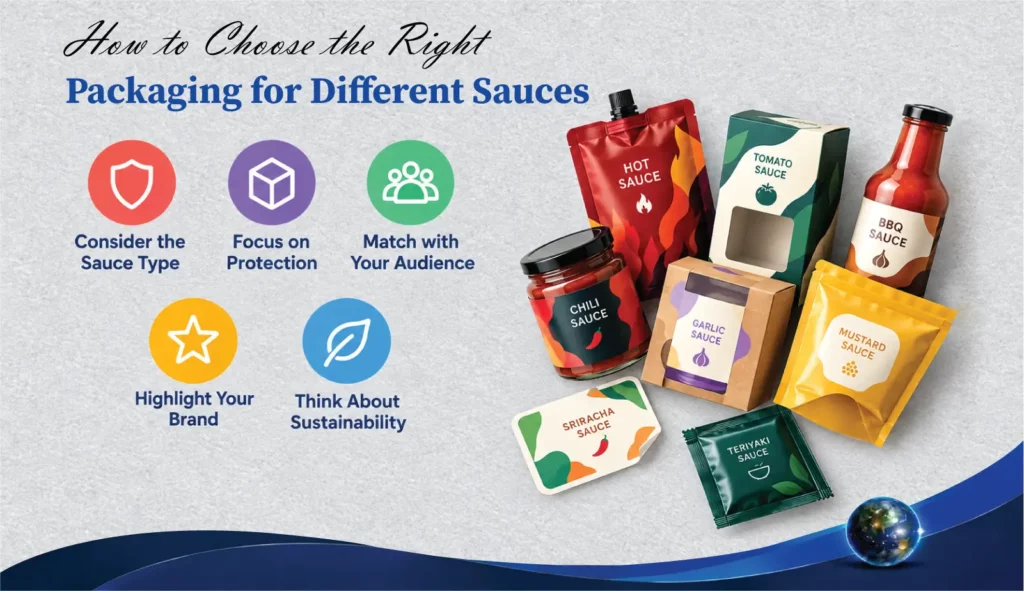
Identify the Sauce Type and Consistency
The first step in how to choose the right packaging for different sauces is to examine the viscosity of the sauce. Thin ketchup, vinegar-based dressings, and liquid hot sauces are commonly packed in sachets, bottles, or flexible pouches. Thick mayonnaise, barbecue sauce, and creamy dips may need wider openings or suitable dispensing caps. Jars are frequently considered for chunky salsa and thicker sauces. When deciding how to choose the right packaging for different sauces, assess the acidity (pH) of the sauce, oil content, ingredients, and compatibility with food-contact materials before confirming the format. Discover more Sauce Packaging options by considering them for different sauces and condiment products.
Determine the Required Portion Size
Portion size is an important consideration in how to choose the right packaging for different sauces. Sachets for single-serve sauces are frequently selected for takeout meals, restaurants, catering, and condiment portions. Medium-sized bottles and pouches are often suitable for household use, while larger containers are commonly chosen for foodservice kitchens and bulk orders. The quantity per serving should be assessed before confirming the dimensions of the package. Take a closer look at Condiment Sachets and explore their convenient portion amount and uses for restaurants and takeaway meals. Another factor in how to choose the right packaging for different sauces is dispensing convenience, particularly when customers need to pour, squeeze, or serve the sauce without unnecessary waste.
Assess Storage Conditions and Shelf Life
Storage conditions play an important role in how to choose the right packaging for different sauces. Check whether the sauce requires refrigeration, room-temperature storage, freezing, or hot filling. The expected shelf life, exposure to light, oxygen sensitivity, and moisture levels should be assessed before the material is finalized. Suitable moisture and oxygen barriers are particularly important for sauces sensitive to oxidation or quality changes. When considering how to choose the right packaging for different sauces, confirm temperature tolerance through supplier specifications and appropriate product testing. Let’s explore Custom Sauce Pouches options and discover the protective materials for different sauce products. Evaluate the complete package under the intended storage and transportation conditions.
Compare Pouches, Boxes, Sleeves, Stickers, and Labels
Different packaging formats serve different purposes. Explore Condiment Packaging and discover the suitable formats, custom printing options, and features for presenting different sauces and condiments. The following table compares their common uses to help you narrow down your options.
| Packaging Type | Suitable Uses | Main Considerations |
| Pouches | Ketchup, mayonnaise, hot sauce, dressings, and single servings | Barrier properties, seal strength, dispensing method, and leak resistance |
| Boxes | Bottled sauces, gift sets, multipacks, and promotional collections | Board strength, internal fit, transport protection, and presentation |
| Sleeves | Glass or plastic sauce bottles and jars | Bottle fit, surface coverage, printed information, and visual presentation |
| Stickers | Promotional packs, jars, bottles, and gift sets | Adhesion, surface compatibility, moisture resistance, and design |
| Labels | Sauce bottles, jars, boxes, pouches, and containers | Legibility, required food information, adhesive performance, and placement |
For knowing the explanation of each type, for clearer information. Have a look at Different Types Of Condiment Packaging with proper images of each of them.
Explore Material Compatibility with Each Sauce
Material compatibility is central of how to choose the right packaging for different sauces. Food-grade packaging materials must be suitable for contact with the specific sauce and its ingredients. Flexible packaging may contain laminated films made with polyethylene (PE), polypropylene (PP), PET plastic, kraft, or other compatible layers. An aluminium foil barrier on Custom Foil Pouches may be considered when additional protection against light, moisture, or oxygen is necessary. To determine how to choose the right packaging for different sauces, confirm food-contact compliance, temperature tolerance, and ingredient compatibility through appropriate testing.
Check Leakage Prevention and Seal Strength
Reliable closures are a priority in how to choose the right packaging for different sauces. Inspect seal integrity, leak prevention, and the suitability of closures for the selected format. Heat-sealed pouches should be tested under the intended filling conditions, while bottles and jars need compatible caps and closures. Tamper-evident seals may be appropriate when evidence of opening is important. Resealable closures and spouts with dispensing caps are worth considering for Biodegradable Sachet Packaging. Another essential step in how to choose the right packaging for different sauces is conducting leak, pressure, drop, and transportation tests before production.
Consider Heating, Refrigeration, and Transportation Needs
Temperature tolerance must be assessed when learning how to choose the right packaging for different sauces. Hot-fill packaging should be suitable for the filling temperature, while refrigerated sauces need compatible materials and adhesives that remain stable under cold and moist conditions. Different kinds of sauces, like apple, mayonnaise, and ketchup, are packed properly for storage.
Explore Empty Apple Sauce Pouches and discover the secure closures considered for storing and serving apple sauce. Transportation also deserves attention because vibration, stacking, pressure, and temperature changes may affect the package. Suitable outer boxes and dividers are frequently considered for bottles and jars shipped together. When deciding how to choose the right packaging for different sauces, test closures, labels, sleeves, and films under realistic storage and shipping conditions before approving the final specifications.
Calculate Packaging Costs for Your Budget
Budget planning is another important part of how to choose the right packaging for different sauces. Compare the cost per package, printing charges, closures, labels, outer boxes, filling expenses, shipping, and minimum order quantities. Consider the total cost instead of comparing the price of the empty package alone. Custom printed sauce packaging may involve setup charges that vary according to the printing method and order quantity. When evaluating how to choose the right packaging for different sauces, request quotations for comparable materials, dimensions, finishes, and quantities. Also assess recyclability and packaging waste reduction alongside performance and affordability.
Evaluate Branding and Presentation of the Product
The presentation of the product matters when considering how to choose the right packaging for different sauces. Clear typography, suitable colours, readable labels, and consistent artwork contribute to the reputation of the brand. Custom printed sauce packaging may be selected for a distinctive appearance across Custom Mylar Bags, bottles, boxes, and sleeves. Stickers are useful for promotional details, while labels are generally applied for product information. Product visibility is another consideration when transparent containers are appropriate. To understand how to choose the right packaging for different sauces, ensure that design choices suit the intended audience and all claims remain accurate and non-misleading.
Assess Label Requirements Under Canadian Regulations
Canadian food labelling requirements are an essential consideration in how to choose the right packaging for different sauces. Depending on the product, applicable legislation may include the Food and Drug Regulations, Safe Food for Canadians Regulations, Consumer Packaging and Labelling Act, and associated regulations. Review ingredient and nutrition labelling, net quantity declaration, allergen declaration, batch or lot coding, and best-before or expiry date information where applicable. Bilingual labelling requirements may also apply. When deciding how to choose the right packaging for different sauces, consult current Canadian Food Inspection Agency guidance and verify the requirements for the specific sauce before approving the label design.
Confirm Packaging Suitability Before Bulk Ordering
Before confirming a bulk order, review the following Canadian requirements and packaging checks as part of how to choose the right packaging for different sauces:
-
Food and Drug Regulations:
Review applicable provisions, including Division 23, concerning food packaging materials and food-contact safety.
-
Safe Food for Canadians Regulations (SOR/2018-108):
Verify applicable food safety and preventive control requirements for the sauce and its packaging process.
-
Consumer Packaging and Labelling Act (R.S.C., 1985, c. C-38):
Check the applicable requirements for accurate and non-misleading packaging information.
-
Consumer Packaging and Labelling Regulations (C.R.C., c. 417):
Confirm applicable requirements for declarations, net quantity, and other mandatory label information.
-
Environmental Claims and Recycling:
Ensure environmental claims are accurate and non-misleading, and review applicable requirements for recyclability statements and recycled content.
Before production begins, confirm the applicable requirements with the relevant Canadian authorities and your packaging supplier. For custom sauce pouches, sachets, boxes, sleeves, stickers, and labels, contact us to get packaging according to your choice.
Conclusion
Selecting suitable sauce packaging requires careful consideration of consistency, portion size, material compatibility, storage conditions, seal integrity, transportation, costs, and Canadian labelling rules. Understanding how to choose the right packaging for different sauces helps you compare primary containers with secondary packaging. For reliable custom sauce packaging to meet your business needs, contact universalpackaging for design assistance, printing options, and competitive pricing. The best way to choose how to choose the right packaging for different sauces is to compare samples, verify specifications, and test the complete package before placing a bulk order.
Frequently Asked Questions (FAQs)
What is the best packaging for liquid sauces?
Flexible pouches and suitable bottles are common choices for liquid sauces. The final selection depends on viscosity, storage conditions, portion size, and dispensing requirements.
Are sauce pouches suitable for thick sauces?
Yes, suitable sauce pouches are often selected for thicker sauces. Confirm the opening size, material compatibility, dispensing method, and seal integrity before production.
When should I choose boxes for sauce products?
Boxes are useful for gift sets, multipacks, and secondary protection. Select appropriate board strength and internal spacing according to the quantity and weight.
What is the difference between sauce sleeves and labels?
Sleeves provide printed coverage around part or most of a container, while labels are applied to selected surfaces for branding and information.
How do I prevent sauce packaging from leaking?
Choose compatible materials, check closures, and test seals under realistic conditions. Suitable filling temperatures and regular quality checks also reduce leakage risks.
What information is required on sauce labels in Canada?
Depending on the product, labels may require ingredients, allergen declarations, net quantity, a common name, and Nutrition Facts information under applicable Canadian rules.
Where can I buy custom sauce packaging in Canada?
You can order custom sauce pouches, boxes, sleeves, stickers, and labels from Universal Packaging in Canada, with printing and design support for your business.
Are stickers suitable for sauce bottles?
Yes, stickers are suitable when the adhesive is compatible with the bottle surface and moisture conditions. Important product information should remain readable.