Looking for the perfect packaging for your condiments? Explore the different types of condiment packaging to find suitable options for your products. Discover pouches, wrappers, sachets, boxes, sleeves, stickers, and labels, along with Canadian packaging requirements. Avoid unsuitable materials, unclear labelling, and packaging choices that may affect the presentation of the product. Scroll down and take a view of packaging in just 60 seconds!
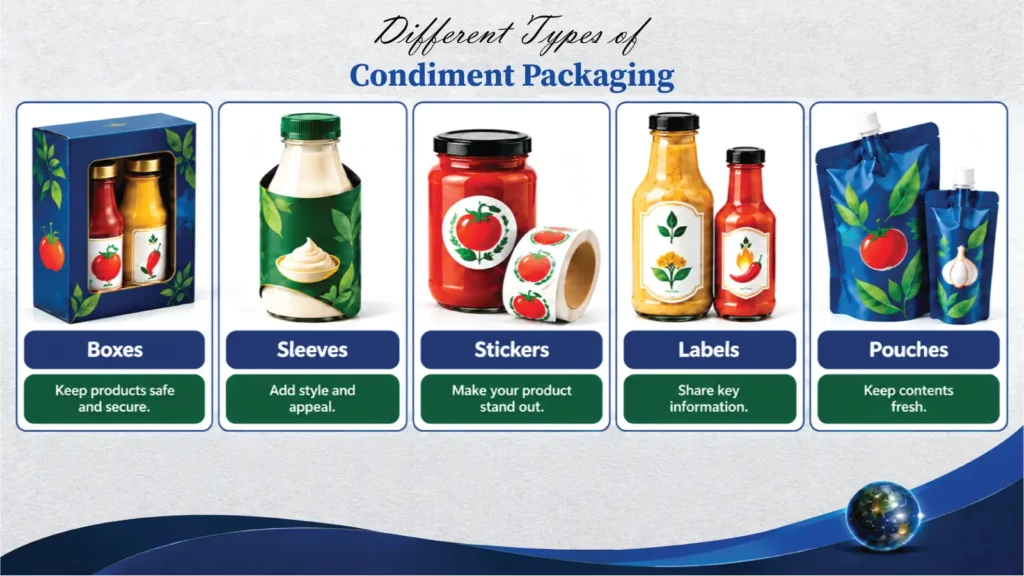
Complete Overview of Condiment Packaging in 60 Seconds!
This overview of the different types of condiment packaging covers formats suited to the consistency of the product, serving size, storage conditions, and presentation requirements. Food-safe materials and suitable seals are important for sauces, dressings, and seasonings prepared for retail or food-service distribution.
- Condiment Pouches: Flexible packaging formats are suitable for sauces, dressings, and selected seasoning products.
- Condiment Wrappers: Lightweight wrapping formats are appropriate for individual portions and selected dry condiments.
- Condiment Boxes: Structured cartons are suitable for gift sets, multipacks, and assorted condiment collections.
- Condiment Sleeves: Printed sleeves are suitable for outer packaging presentation and decorative coverage.
- Condiment Stickers: Custom stickers are appropriate for graphics, identification of the flavour, and promotional information.
- Condiment Labels: Labels are suitable for the display of ingredients, allergen declarations, and other required information.
Colours, names, and consistent typography can be selected according to the presentation of the product and reputation of the brand. When comparing the different types of condiment packaging, material compatibility, Canadian labelling regulations, and local recycling guidance should also be considered. As different packaging contains different categories of risks, such as leakage, for that, let’s find out How To Reduce Leakage Risks In Sauce Packet Packaging for getting the perfect packaging.
1. Explore Versatile Pouches, Wrappers, and Sachets
Flexible formats are common in food-service, takeaway, and retail packaging. Let’s discover Condiment Bags and explore their practical sizes, suitable material structures, and custom printing options for food-service. Within the different types of condiment packaging, flexible options vary according to the quantity of the condiment, the required barrier properties, and the intended storage conditions.
Stand-Up Pouches
An upright position in Mylar Bags is maintained through a bottom gusset when the pouch is filled. For the different types of condiment packaging available in flexible formats, suitable barrier materials and secure seals are important for the protection of the product during storage and transportation. Custom printing and resealable closures can be selected according to the consistency of the condiment and the required storage conditions.
Spout Pouches
A fitted spout is suitable for controlled pouring of compatible liquid condiments. Within the different types of condiment packaging, the material of the pouch and the strength of the seals should be matched to the viscosity of the product. The products included apple sauce, ketchup, mayonnaise for spout, making it more easy access. Let’s explore Apple Sauce Pouches and discover the dispensing features and food-contact materials for convenient portion control. This format is appropriate for selected sauces, dressings, and other pourable condiments.
Flat Sachet Packets
Single-serving sachet packets are commonly selected for takeaway meals, restaurant orders, and catering portions. Custom Sachet Packaging formats are among the different types of condiment packaging considered for portion-controlled distribution. Rectangular shapes are widely used, while custom dimensions can be specified according to the required serving size. Printed colours, names of the flavours, and information about the product can be arranged according to the available printing area.
Zipper Pouches
A resealable closure is suitable for compatible dry seasoning blends, condiment powders, and selected thicker products. When assessing the different types of condiment packaging, the packaging material should be appropriate for the moisture sensitivity of the product and the intended storage conditions. Closure strength and the dimensions of the pouch should be confirmed before production.
Gusseted Bags
Expandable side or bottom panels are suitable for packaging larger quantities of selected condiment products. The gusset bags also also recommended with foil, hence these Foil Pouches are commonly considered for dry seasoning mixes, powdered blends, and certain food-service applications. The different types of condiment packaging in this category should be assessed according to the weight of the product, material strength, and expected handling conditions.
Shaped Packets
Distinctive outlines are an alternative to conventional rectangular condiment packets. Among the different types of condiment packaging, custom-shaped packets can be developed for promotional samples and portion-controlled products, provided that the structure remains suitable for filling and sealing. Colours and printed graphics can be coordinated with the presentation of the product. These are suitable for any sauce and condiment product. So, let’s take a closer look at a Sauce Packaging Pouch and explore suitable materials and convenient options for different sauces.
Window Bags
A transparent section is suitable when visibility of the packaged contents is desirable, particularly for selected dry condiment blends and seasonings. For these different types of condiment packaging, the window material should be compatible with the remaining layers of the packaging. Window placement and printed artwork should be planned according to visibility requirements and the available space for product information.
“Big things come in small packages!” — Stacey King
2. Discover Strong Boxes for Condiment Packaging
Box packaging is suitable for condiment gift collections, bundled products, promotional kits, and selected retail assortments. When comparing the different types of condiment packaging, the choice of box structure should be based on the dimensions of the packaged items, the required level of protection, and the intended presentation of the product.
Folding Bags
Foldable paperboard construction is suitable for condiment multipacks and selected collections of bottles or jars. Within the different types of condiment packaging, printed artwork, information about the product, and colour combinations can be arranged across the available panels. The thickness of the board and the dimensions of the carton should correspond to the weight of the product and the conditions of distribution.
Two-Piece Boxes
A separate lid and base create a structured format for premium condiment collections and gift sets. These are among the different types of condiment packaging suitable for organised product presentation. Custom inserts can be included for the placement of bottles, jars, or smaller packages. Material thickness and internal dimensions should be selected according to the size and weight of the packaged items.
Window Boxes
A transparent panel is suitable for the display of selected items inside the box. Among the different types of condiment packaging, this format is appropriate for condiment gift sets and retail collections where visibility of the contents is desirable. Window dimensions and board construction should maintain suitable support and protection for the packaged items.
Display Boxes
A structured box is suitable for the presentation of condiment products in retail stores and promotional settings. Box dimensions and opening styles should be selected according to the size and arrangement of the displayed items.
Gable Boxes
A peaked top and integrated handle-style structure distinguish gable boxes from conventional cartons. Within the different types of condiment packaging, these boxes are suitable for promotional condiment sets, event giveaways, and selected takeaway collections. Let’s explore Packaging For Sauces and discover the suitable pouch, sachet, and container formats for different sauce consistencies, storage conditions, and serving sizes. The strength of the board and the closure design should correspond to the weight of the contents and the intended handling conditions.
3. Highlight Custom Sleeves and Stickers for Condiments
Decorative sleeves and stickers are suitable for product identification and coordinated visual presentation. Among the different types of condiment packaging, material selection, shape, and adhesive compatibility should be assessed according to the packaging surface, moisture exposure, and storage environment.
Shrink Sleeves
Printed film is shaped around a compatible container through the application of controlled heat. This format is suitable for extensive printed coverage on condiment bottles and selected jars. When choosing among the different types of condiment packaging, film compatibility, application temperature, and the shape of the container should be assessed before production.
Die-Cut Sleeves
Custom-cut openings and distinctive outlines are suitable for selected condiment multipacks and gift sets. For these different types of condiment packaging, the dimensions of the sleeve should correspond to the size of the packaged items and the outer structure. Suitable board thickness and accurate cutting are important for a neat fit.
Shaped Stickers
Custom outlines, including circles, ovals, and distinctive shapes, are suitable alternatives to standard rectangular stickers. These stickers can be applied to compatible bottles, jars, boxes, and outer packaging. The different types of condiment packaging that include stickers should be assessed for adhesive suitability according to the surface material, exposure to moisture, and storage temperature.
Comparison Table of Condiment Packaging Types
| Packaging Type | Best Uses | Key Features |
| Pouches | Ketchup, mustard, mayonnaise, hot sauce | Flexible format, leak resistant seals, resealable options |
| Sachets | Salt, pepper, ketchup, mustard, soy sauce | Small portions, convenient distribution, heat sealed edges |
| Boxes | Condiment gift sets, bottle multipacks, takeaway condiment kits | Organized presentation, product grouping, printed branding |
| Sleeves | Sauce jars, condiment bottles, multipacks | Space for product information, branding, promotional graphics |
| Stickers | Sauce bottles, jars, pouches, sample packs | Custom shapes, promotional graphics, decorative accents |
| Labels | Ketchup bottles, hot sauce jars, mustard containers | Ingredient information, nutrition facts, barcodes, brand details |
Follow Canadian Packaging and Recycling Guidelines
Canadian requirements may include applicable provisions under the Food and Drug Regulations, including Division 23 for food-contact packaging, the Safe Food for Canadians Regulations (SOR/2018-108), and the Consumer Packaging and Labelling Act (R.S.C., 1985, c. C-38) together with the Consumer Packaging and Labelling Regulations (C.R.C., c. 417). The different types of condiment packaging should be reviewed according to the intended use and the relevant regulatory requirements.
- Food-contact materials: Packaging materials should be confirmed as suitable for the condiment, filling temperature, and intended storage conditions.
- Bilingual information: Mandatory information on most consumer prepackaged foods must appear in English and French, subject to applicable exemptions.
- Recycling guidance: Local collection rules should be checked for the complete package, including films, labels, adhesives, coatings, and closures.
- Product protection: Seal integrity, leakage prevention, moisture resistance, and durability during transportation should be assessed.
Health Canada publishes guidance on food packaging materials, while the Canadian Food Inspection Agency provides information about food labelling requirements. Additional provincial requirements, including those applicable in Quebec, should be reviewed where relevant. Contact Universal Packaging today to discuss suitable custom condiment packaging options for your business.
Conclusion
The different types of condiment packaging include flexible pouches, wrappers, sachets, boxes, sleeves, stickers, and labels. Each format is suitable for particular product characteristics, packaging structures, and market requirements. A suitable choice should balance the protection of the product, material compatibility, practical handling, visual presentation, and Canadian regulatory considerations. Let’s discover Canada Custom Packaging and explore printing options and material selections suited to the Canadian market and packaging requirements. Thoughtful packaging selection can support customer confidence and strengthen the reputation of the brand.
Frequently Asked Questions (FAQs)
What are the main types of condiment packaging?
The different types of condiment packaging commonly include stand-up pouches, flat sachets, spout pouches, folding cartons, sleeves, stickers, and informative labels for different condiment formats.
Are stand-up pouches suitable for sauces?
Yes, stand-up pouches are suitable for selected sauces when compatible materials, secure seals, and appropriate storage conditions are specified.
What is the difference between sleeves and labels?
Sleeves generally cover more of a container’s surface, while labels are applied to specific areas for identification and required information.
Which packaging is suitable for ketchup and mustard?
Flat sachets are suitable for single servings, while compatible spout pouches and bottles are appropriate for larger quantities and dispensing.
Are bilingual labels required in Canada?
Most consumer prepackaged foods require mandatory information in English and French, subject to specific regulatory exemptions and additional provincial rules.
Which materials are suitable for condiment packaging?
Suitable materials depend on acidity, oil content, viscosity, filling temperature, storage conditions, and verified food-contact compatibility.
How can condiment packaging be made more recyclable?
Consider locally accepted materials and simpler structures, then verify recycling guidance for the complete package through the relevant municipal programme.
Where can I buy custom condiment packaging?
Contact Universal Packaging to discuss custom condiment pouches, sachets, boxes, sleeves, stickers, labels, printing options, and order specifications.