Searching for the right way to use Oxygen Absorbers And Freeze-Dried Food Packaging together for long-term freshness? The key factors behind extended food storage are discussed clearly, along with proper sealing, moisture control, and oxygen reduction. Scroll down to explore how oxygen absorbers and freeze-dried food packaging are combined for reliable food storage.
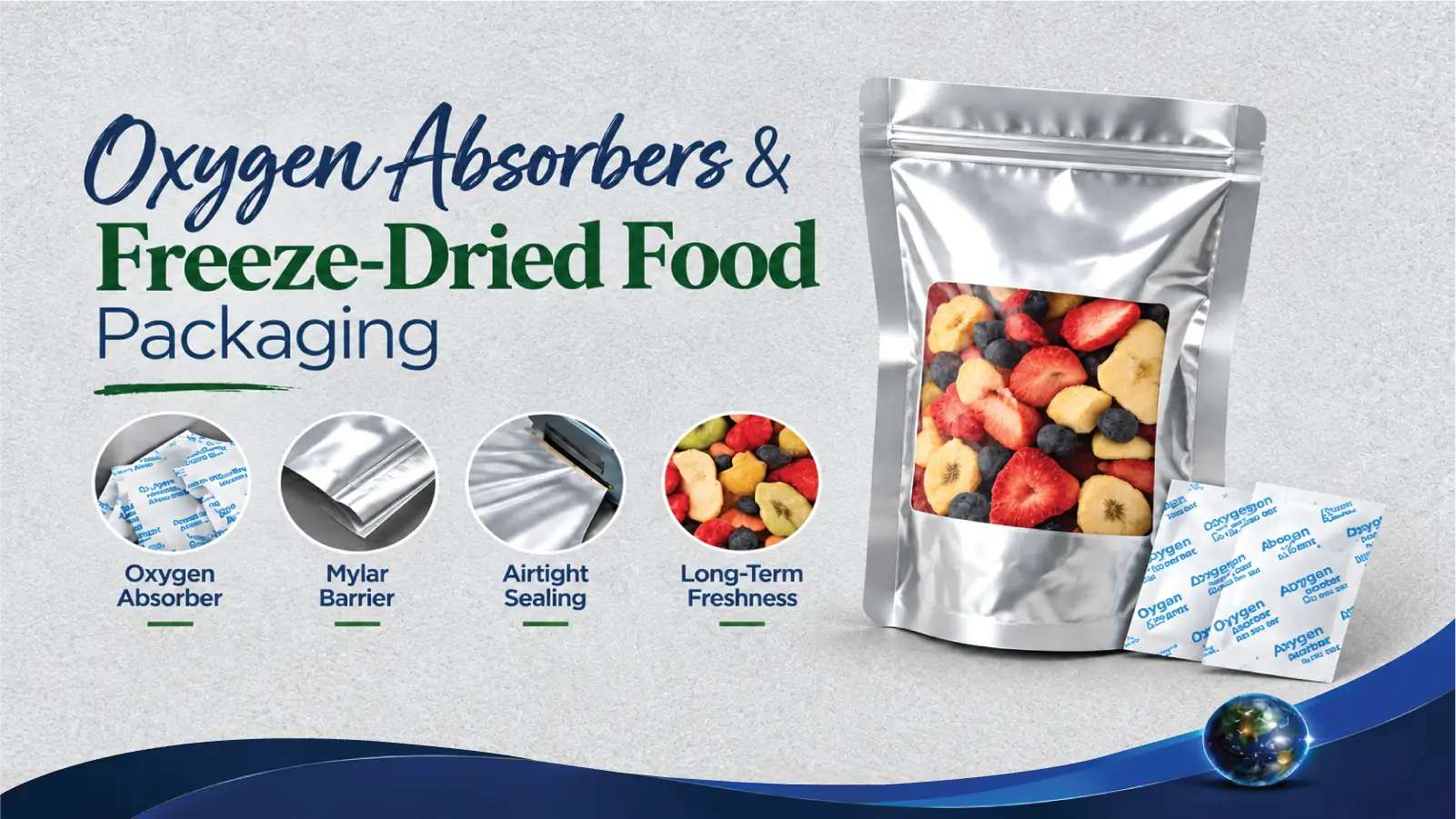
Choosing Packaging Options For Freeze-Dried Foods
Four storage formats (pouches, bags, wrappers & boxes) are considered by most packers, yet very different results are recorded from each one over a decade. Wall structure, light exposure, weight, and handling risk are compared before any bulk order is placed, and Flexible Customized Pouches are often included for brands seeking a lighter alternative to rigid formats. Once those factors are understood, oxygen absorbers and freeze-dried food packaging are matched correctly to the storage goal.
Before those comparisons are covered in detail, the full range of Packaging For Freeze Dried Food relevant to freeze-dried food is discussed here, along with the specific types that fall under each one.
Bags and Pouches for Freeze-Dried Food Storage
Bags and pouches form the primary barrier around freeze-dried food, and several specific types are used depending on material and end use. Most decisions around oxygen absorbers and freeze-dried food packaging begin at this category, since the pouch or bag chosen determines everything that follows:
- Mylar bags: built from a polyester film (PET) laminate, an aluminum foil laminate, and a polyethylene (PE) layer, so an oxygen barrier, a moisture barrier, and a light barrier are combined in one wall, the format most associated with oxygen absorbers and freeze-dried food packaging. Custom Mylar Bags Toronto orders are placed according to project requirements.
- BoPET bags: these rely on the same biaxially oriented PET film used as the base layer in most Mylar constructions.
- Retort pouches: these are specified where heat processing is required, since standard Mylar film is not rated for that level of exposure.
- Foil pouches: these are used where a dedicated foil liner is needed, since board stock alone is not an oxygen barrier.
- Kraft stand-up pouches: these Kraft Stand Up Pouches Wholesale are ordered for portability, since they are lighter to carry than jars or rigid containers.
- Side gusset bags: folded panels are added along the sides, so extra volume is offered without a change to the bag’s overall footprint.
- Vacuum pouches: thicker, textured film is used here, and this format is combined with a vacuum sealer where air is drawn out before the final seal is closed.
- Childproof zipper bags: a stiffer, higher-resistance zipper mechanism is built into these, and additional labeling is required wherever a household with small children is the intended market.
“Our pleasures are not material pleasures, but symbols of pleasure – attractively packaged but inferior in content.” — Alan Watts
For a wider comparison of formats within this category, explore Best Pouch Styles for Freeze-Dried Food to see how stand-up, gusseted, and flat-bottom designs are compared for different storage needs.
Boxes for Freeze-Dried Food Packaging
Boxes are used as outer protection rather than the primary barrier, with types common in oxygen absorbers and freeze-dried food packaging:
- Corrugated Boxes: crush resistance is offered here, so inner pouches are shielded during transit and stacking.
- Bulk cartons: hold multiple sealed bags or jars for palletized storage, often alongside Custom Foil Pouch Packaging Wholesale orders that supply the inner liner.
- Rigid retail boxes: used where a printed outer box is needed around a single pouch or jar for shelf presentation.
- Die-cut boxes: a custom shape is cut for a specific product, so a snug fit is created around irregular or multi-item packs.
- Window boxes: a clear panel is inserted into one face of the box, so the product or pouch inside is shown without the box being opened.
Wrappers for Freeze-Dried Food Protection
Wrappers are typically single-layer and used for individual portions rather than bulk storage, with types common in oxygen absorbers and freeze-dried food packaging:
- Single-serve wrappers: wrapped directly around bars or small portions before an outer pouch or box is added.
- Film wrappers: thin plastic or foil film used as a first layer of protection, though rarely relied on as the sole barrier.
- Shrink wrap: heat is applied to draw the film tightly around an item or a multi-pack bundle, so a snug, tamper-evident outer layer is formed.
- Twist wrap: the film ends are twisted rather than sealed, and this format is chosen for individually portioned candies or small snack pieces.
Sleeves for Freeze-Dried Food Branding
Sleeves are generally added for branding and shelf appeal rather than barrier performance, with types common in oxygen absorbers and freeze-dried food packaging:
- Shrink sleeves: heat-applied film that wraps fully around a jar or bottle-shaped container.
- Printed cardboard sleeves: slid over a pouch or box, often used to display branding without changing the packaging structure.
- Neck sleeves: a smaller shrink band is fitted around the neck or closure of a jar or bottle, and this is generally used as a tamper-evident seal rather than for branding alone.
- Perforated sleeves: a tear line is added to a full-body sleeve, so quick removal is offered once the tamper-evident seal has been checked.
Labels for Freeze-Dried Food Compliance
Labels carry compliance and product information, with several types used depending on the packaging surface:
- Adhesive labels: applied directly to bags, pouches, or jars to display batch dates and nutritional information.
- Printed direct labels: information printed straight onto the packaging film itself during production, rather than added afterward.
- Wrap-around labels: a single label is applied around the full circumference of a jar or tub, so more surface area is used for compliance details and branding together.
- Tamper-evident labels: a label is designed to visibly tear or leave residue when removed, so the safety of the product is confirmed before it reaches the buyer.
Step-By-Step Process To Pack Freeze-Dried Food
A repeatable routine is followed by experienced packers, and shortcuts are avoided at every stage. This sequence applies to standard Mylar bags, though Retort Pouches follow a modified heat-processing step of their own. Cooling, filling, absorber placement, heat sealing, and verification are treated as five linked steps rather than loose habits, and oxygen absorbers and freeze-dried food packaging are completed consistently across every batch as a result.
STEP 1: Cool Food Completely Before Packing: Food is cooled to room temperature before sealing to prevent condensation.
STEP 2: Fill Pouch and Leave Headspace: Pouches are filled to roughly eighty percent, with a clean seal zone and straight fill line.
STEP 3: Add Correct Size Oxygen Absorber: Absorbers are added last, while unused units are resealed quickly.
STEP 4: Seal Bag Using Heat Sealer: An impulse sealer results in a six millimetres seal, with the weld held flat for two seconds.
STEP 5: Test Seal Integrity After Sealing: Seals are checked by pressure, sight, and a gentle tug before storage.
Once those five steps are followed in order, oxygen absorbers and freeze-dried food packaging are logged with pack dates and stored without doubt.
How To Select The Right Oxygen Absorber Size
Absorber capacity is decided by trapped air, barrier grade, and room conditions, never by guesswork. A closer look at suitable options is offered through Mylar Bags For Freeze-Dried Food before this calculation is run against a bag size. Through this method, oxygen absorbers and freeze-dried food packaging are sized with confidence instead of habit.
Match Absorber CC to Volume: Absorber capacity is matched to pouch air volume: 300 cc for one-heavy bags, 100 cc for quart-size bags.
Calculate Headspace for Accurate Sizing: Total pouch capacity minus settled product level gives the air gap, treated as trapped air.
Choose Absorber Based on Barrier: Foil laminates with low oxygen transmission rate (OTR) suit standard sizing; weaker films need larger units.
Consider Storage Temperature and Humidity: Packing is done below fifty percent relative humidity, with storage between ten and twenty-one degrees Celsius.
Common Packaging Mistakes To Avoid
Most failures are traced back to five repeated errors rather than to bad luck or poor product: thin film, overfilled pouches, exposed absorbers, warm batches, and misplaced trust in vacuum machines. Once these habits are corrected, oxygen absorbers and freeze-dried food packaging are relied upon for the full storage term.
Ignoring Oxygen Moisture Barrier Quality:
Cheap film can sacrifice barrier protection, so WVTR is checked, and five mil or thicker laminates are recommended for oxygen absorbers and freeze-dried food packaging.
Skipping Headspace Before Sealing Bag:
Overfilled pouches can contaminate the weld and restrict airflow, so a clean two inch gap is left before sealing, a rule that applies to Flat Bottom Gusset Bags as much as standard flat pouches.
Exposing Absorbers to Air Early:
Absorbers lose capacity when exposed early, so small batches are opened while the remainder stays sealed with a desiccant packet.
Sealing Food Before It Cools:
Hot food can create internal condensation, so cooling is completed before absorbers are added.
Relying on Vacuum Seal Alone:
Vacuum sealing can leave roughly one percent oxygen behind, so absorbers are still added as part of the combined system.
Canada Packaging Regulations And Certifications
In Canada, food packaging is regulated closely, and compliance is expected before a product reaches a retail shelf, which is why every decision around oxygen absorbers and freeze-dried food packaging is checked against local rules first:
- Food-safe compliance: food-safe packaging is required for direct contact with freeze-dried food, and FDA food-contact compliance is referenced by many Canadian brands as a benchmark.
- Material compatibility: the film and the food content are checked carefully, since a mismatch is a common cause of flavour taint or spoilage, and this is why Custom Bopet Bags are tested against the specific product before a production run is approved.
- Labeling requirements: nutritional information, allergen warnings, and disposal instructions are expected on nearly every pouch, and Childproof Ziplock Bags carry additional labeling for households with small children.
- Recycling disclosure: recycling symbols are placed on the pack when recyclable packaging or a mono-material pouch is used, with recycled content disclosed where present.
- Extended producer responsibility: these rules are followed by many provinces across Canada, with waste reduction targets tied directly to them.
Once these points are understood, a decision on the best pouch styles for freeze-dried food is made with far more confidence.
When reliable packaging is needed for long-term food storage, Cheap Custom Packaging Companies are worth comparing for material quality, customization, and suitable pouch formats. For packaging options matched to your product requirements, explore the available solutions and contact us now to discuss your project.
Conclusion
Everything covered in this blog was shaped around a single goal: dried meals that are kept safe for decades through reliable oxygen absorbers and freeze-dried food packaging. Material choices were compared, packing steps were sequenced, absorber sizing was calculated, frequent mistakes were corrected, and Canadian rules were mentioned with exact references. Once headspace, barrier grade, and seal quality are controlled together, shelf life is extended, waste is reduced, and the perception of the brand is lifted noticeably.
Frequently Asked Questions (FAQs)
How long is freeze dried food kept inside mylar bags?
Twenty five years or longer is reported with a thick foil laminate, correct absorber sizing, and a clean weld, the standard expected from oxygen absorbers and freeze-dried food packaging. A cool, dark room is required, since heat and sunlight shorten shelf life.
What thickness is recommended for long-term food storage?
Five mil to seven and a half mil laminates are recommended for stronger barrier protection. Thinner three mil film suits short rotation only.
How many absorbers are needed for a one large bag?
One 300 cc unit is normally sufficient for a bag filled to eighty percent, the standard reference across most oxygen absorbers and freeze-dried food packaging calculations. Extra capacity is still added for a safety margin.
What packaging suits backpacking meals and camping food?
Stand Up Pouches Food Packaging and flat Mylar pouches are generally suggested, since lighter weight and resealable options are offered.
What happens when the absorber is undersized?
Residual oxygen left inside the pouch leads to oxidation, rancidity, and colour change, the exact failure that correct oxygen absorbers and freeze-dried food packaging sizing prevents. Generous sizing is always the safer route.
Are resealable zipper pouches suitable for decades of storage?
A resealable zipper is offered mainly for convenience after opening. A heat-sealed weld is still required above the zipper for long-term storage.
Are mylar pouches recyclable in Canada?
Multilayer flexible packaging is hard to recycle through kerbside streams, since layers are bonded together, a common trade-off in oxygen absorbers and freeze-dried food packaging. Store drop-off programs and PCR content help meet waste reduction targets.
How is branding handled on custom pouches?
Custom printing is completed through screen and UV printing, with artwork and private label details personalized to the brand, and Custom Food Pouches With Logo among the most frequent orders.
Where are these pouches bought?
Orders are placed directly with Universal Packaging, where bags, pouches, wrappers, sleeves, labels, and boxes are offered together for standing on oxygen absorbers and freeze-dried food packaging needs. Custom sizes and designs are quoted on request.