Why is one bag of pet food found fresh and crunchy months after purchase, while another is found stale, oily, or rancid within weeks? Much of that outcome is linked to the packaging decisions made before the food reaches the final stage. Among the Common Mistakes When Choosing Pet Food Packaging, the wrong material or a rushed decision is often noticed only after customer complaints, returns, or a failed shelf audit are experienced. Scroll further, because the details below show where these mistakes are identified and avoided.
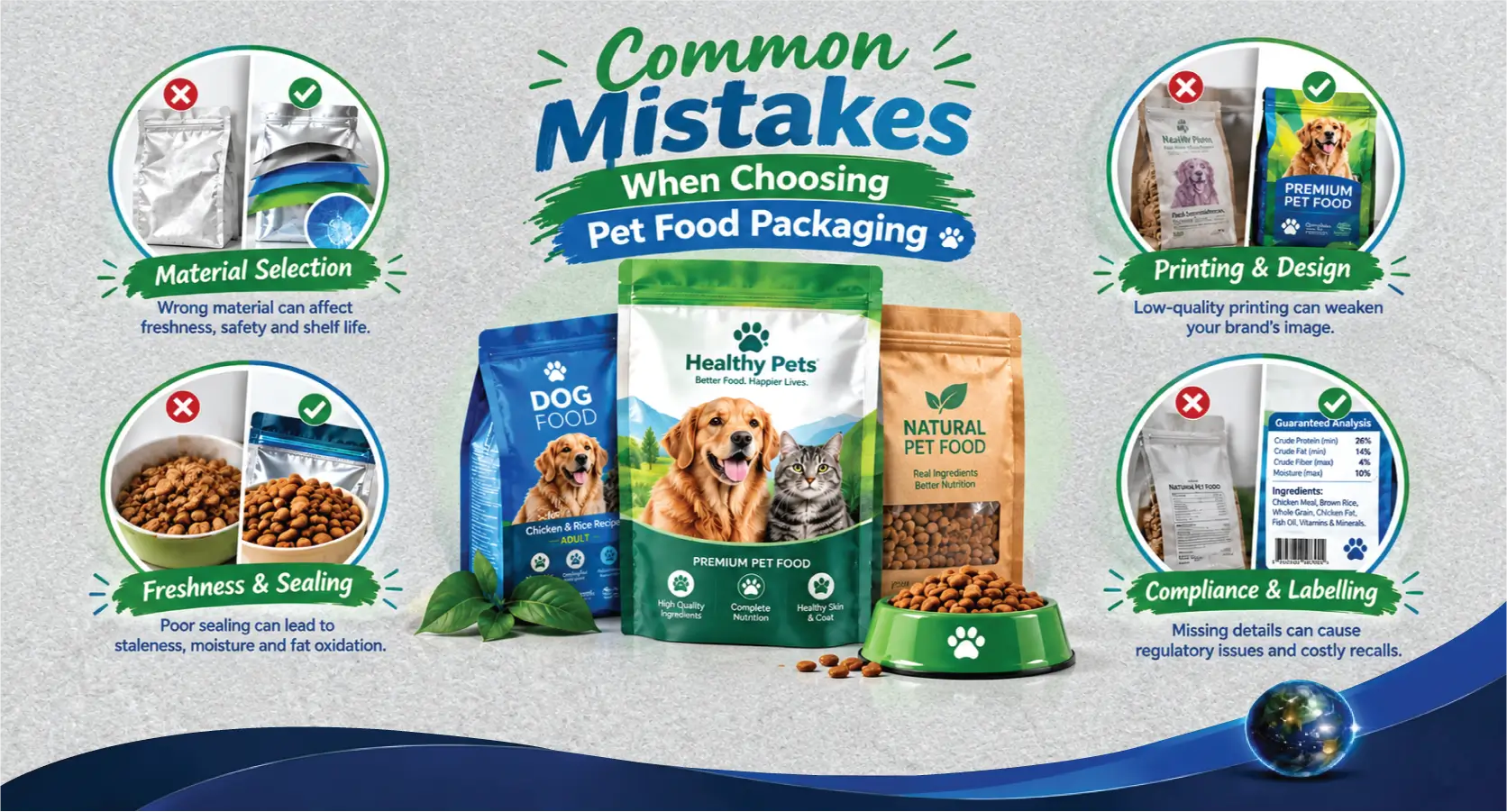
What Common Mistakes Are Covered In This Guide
- Material Selection: How the right packaging material is chosen according to the moisture, oxygen, freshness, and storage requirements of pet food.
- Packaging Requirements: Why the performance of pet food packaging is affected when food-grade materials, moisture barriers, and safety standards are ignored.
- Portion Sizes: How customer satisfaction and the buying experience are influenced by incorrect sizing and portion control decisions.
- Airflow Design: Why the freshness of kibble and fat oxidation are affected when airflow management and moisture control are handled poorly.
- Printing Quality: How the presentation of the product and the reputation of the brand are affected by low-quality printing choices.
- Finish and Design Details: Why shelf appeal is affected by rushed finishes, unsuitable designs, and poor visual choices.
- Durability and Protection: How the performance of the packaging is affected by weak materials and limited strength during handling and transport.
- Sustainability Choices: Why modern packaging expectations are affected when recyclable materials, compostable options, and eco-friendly practices are ignored.
- Packaging Format Selection: How suitability for retail, pet stores, and online channels is affected when the wrong pouch or bag format is chosen.
- Cost and Quality Balance: Why the quality of the packaging and long-term value are affected by poor budgeting decisions.
- Compliance and Labelling: How compliance issues are created when regulations, labels, and required packaging details are missed.
1. The Wrong Material Is Selected for Pet Food Packaging Requirements
A poor start is often made when food-grade packaging is not confirmed at the material stage, and this is counted among the common mistakes when choosing pet food packaging.
- Moisture and oxygen barrier: rancidity and staleness are avoided for a longer period when a reliable moisture and oxygen barrier is incorporated into the structure of the bag, such as Mylar Food Pouches.
Food safety: compliance is treated as required, since food-grade material standards are attached to every material used for kibble, treat, or raw-diet packaging. - Fat and grease-resistant coating: oil from high-fat kibble and treats is kept from soaking through when a grease-resistant coating is applied to kraft paper or a set of Flexible Kraft Pouches.
Most of the common mistakes when choosing pet food packaging are prevented once the material stage is finalized correctly, long before printing or labelling is discussed.
2. Portion Sizes Are Ignored in Pet Food Packaging Design Decisions
Portion control is often treated as an afterthought, yet it is still counted among the common mistakes when choosing pet food packaging, since customer satisfaction is directly affected by this oversight.
- Portion control: consistent serving sizes are maintained through accurate portion control across small-breed, standard, and bulk formats.
- Consumer convenience: repeat purchases are encouraged when consumer convenience is placed ahead of guesswork in sizing, especially for measured feeding routines.
- Bulk packaging: large volumes are handled efficiently when bulk packaging is chosen for multi-pet households, breeders, and shelters.
This step is often skipped by brands, and the same common mistakes when choosing pet food packaging are then repeated on every reorder, since a mismatched portion size is rarely noticed until complaints are received from customers.
3. Pet Food Packaging Freshness and Quality Are Affected by Poor Design
Loss of crunch and fat oxidation are among the most complained-about outcomes, and this is repeatedly listed among the common mistakes when choosing pet food packaging.
- Oxygen barrier: freshness is locked in when an oxygen barrier is balanced correctly against the fat content of the formula, since high-fat kibble is prone to faster oxidation once exposed to air.
- Window cutout: the visibility of the product is improved when a window cutout is added without the seal being compromised.
- Heat sealing: an even, airtight seal is achieved through heat sealing, by which mould and clumping caused by trapped humidity are prevented.
This testing step is often skipped, and it is one of the common mistakes when choosing pet food packaging that is noticed fastest in customer reviews, well before printing decisions are considered.
4. Printing Quality Is Overlooked in Custom Pet Food Packaging Design
Weak visuals are still one of the common mistakes when choosing pet food packaging, especially where the reputation of the brand is meant to stand out next to dozens of competing bags on a pet-store shelf.
- Screen and UV printing: sharp, long-lasting graphics are produced through screen and UV printing, which is preferred over older, lower-definition methods.
- Printing Techniques: Consistent colour reproduction is achieved through suitable printing techniques, including CMYK, digital printing, rotogravure printing, flexographic printing, UV printing, and screen printing, with colour consistency maintained across different print runs.
- High-quality printing: the reputation of the brand is strengthened when high-quality printing is paired with Custom Mylar Bags With Logo and a clear presentation of key claims such as grain-free, high-protein, or breed-specific.
Weak print quality is one of the common mistakes when choosing pet food packaging, and it is noticed by buyers within seconds of picking up the bag, so colour and finish choices are given just as much attention as the print method itself.
“Customers will occasionally buy products not because they want them but because of how they are presented to them.” — James Clear
5. Finish And Design Details Are Rushed
A rushed finish is another one of the common mistakes when choosing pet food packaging, and it is often noticed only after production is complete.
- Matte finish and gloss finish: a distinct shelf presence is created when a matte finish or gloss finish is matched to the intended positioning, from premium boutique brands to everyday value lines.
- Foil stamping and embossing: a premium feel is added through foil stamping and embossing, particularly for limited-edition or gift-style pet food and treat packaging.
A rushed finish is one of the common mistakes when choosing pet food packaging, and the cost of correcting it is lowest at an early stage and highest once a full print run is already stored in a warehouse.
6. Durability Is Underestimated in Pet Food Packaging Selection and Design
Structural weakness is repeatedly named among the common mistakes when choosing pet food packaging, particularly for bags that are stacked in warehouses, shipped, or carried home by hand.
- PET film and BOPP film: added strength is provided when PET film, BOPP film, or BOPET Flexible Packaging is layered with kraft paper, that reduces tearing and puncture risk from sharp kibble edges.
- Material Durability: Strength and protection are maintained through cardboard or corrugated materials, with the structure tested under handling, storage, and shipping conditions.
- Retort-grade pouches: cold storage and reheating stability are required for raw, wet, or frozen diets, which is why Retort Pouches For Sale are chosen over standard laminated film for these formats.
Underestimating durability is one of the common mistakes when choosing pet food packaging, and it is only noticed after a full pallet has already been damaged in transit, since sustainability is now expected just as strongly by most pet owners.
7. Sustainability Is Often Left Out When Choosing Pet Food Packaging
Eco-conscious buyers are lost over this issue, and it is counted as one of the common mistakes when choosing pet food packaging in the current market.
- Recyclable packaging and compostable materials: long-term appeal is built when recyclable packaging or compostable materials are selected over standard multi-layer plastic.
- Eco-friendly inks: environmental impact is reduced when eco-friendly inks are used across the entire print run.
- Lightweight packaging: transport costs and carbon footprint are lowered when lightweight packaging is combined with a right-sized outer box for retail display.
Leaving sustainability out of the brief is one of the common mistakes when choosing pet food packaging, and it is hardest to correct later; afterward, attention is turned to whether the packaging format itself is suited to where the product is sold.
8. The Wrong Format Is Chosen For The Setting
Format mismatches are still counted among the common mistakes when choosing pet food packaging, since different selling environments require different packaging formats.
- Bags & Pouches: Stand-up pouches, kraft pouches, mylar bags, and resealable bags are considered for pet food, treats, and specialty diets where flexible packaging is preferred.
- Boxes: Cardboard and corrugated boxes are considered where added structure, stacking strength, and protection during storage or shipping are required.
- Wrappers: Flexible wrappers are considered for individual treats, bars, chews, and smaller pet food portions where compact packaging is preferred.
- Labels & Sleeves: Labels and sleeves are used for product information, branding, and shelf presentation, with the required details displayed according to the packaging format.
For small pet food brands, personalized packaging is considered an important part of the presentation of the product and the reputation of the brand. Custom Pet Treat Bags are a practical option when professional presentation, suitable barrier protection, and personalized branding are required.
9. Quality And Cost Are Poorly Balanced
An imbalance between cost and quality is frequently cited among the common mistakes when choosing pet food packaging, especially by smaller or newer pet food brands.
Poor budgeting is one of the common mistakes when choosing pet food packaging, and it is noticed as thin margins months later; cost decisions are only finalized once samples are tested under real storage and shipping conditions. For small and growing pet food brands, choosing the right packaging is not only about avoiding costly mistakes; practical packaging options are also considered according to limited budgets, order volumes, and the needs of the brand. If affordable and effective options are being explored, Pet Food Packaging Ideas For Small Businesses offers useful guidance on packaging formats and design approaches for brands that are starting or scaling their pet food business.
10. Labelling And Compliance Is Missed
The final and most costly of the common mistakes when choosing pet food packaging is a missed labelling or compliance requirement.
- Guaranteed Analysis (GA): shopper and regulator trust is maintained when the guaranteed analysis for protein, fat, fibre, and moisture is displayed clearly and is matched with lab-tested values.
- Nutritional adequacy statement and ingredient list: confusion and complaints are reduced when a nutritional adequacy statement, full ingredient list, and feeding guidelines are arranged in a way by which label readability is not reduced, whether on a standard pouch or Custom Mylar Bags With Logo.
- Barcode: accurate product identification and retail scanning are supported when a clear, correctly formatted barcode is printed on the packaging of the product.
A missed compliance detail is one of the common mistakes when choosing pet food packaging, and the highest cost is associated with it, since it is discovered only after stock is already on shelves; attention is turned next to the specific rules by which pet food packaging is governed across Canada.
Certifications and Regulations for Pet Food Packaging in Canada
Compliance in Canada is not treated as optional, and fines, rejected shipments, or removal from shelves are faced when common mistakes when choosing pet food packaging are made.
- Consumer Packaging and Labelling Act (CPLA): administered by the Competition Bureau, requirements are specified under this act for how pet foods are marketed to consumers, including how the product is named, bilingual (English and French) labelling, and the information that must appear on the label.
- CFIA oversight: the importation of pet foods containing animal products is regulated by the Canadian Food Inspection Agency, and the Enhanced Animal Health Safeguards are enforced by this agency, under which specified risk materials are restricted in any food fed to animals, including dogs and cats.
- Guide for the Labelling and Advertising of Pet Foods: standards such as the Guaranteed Analysis format are set out in this voluntary guide, developed with the Competition Bureau; it is not legally binding, but it is followed by most manufacturers as an industry norm.
- Extended Producer Responsibility (EPR): recycling fees and packaging-recovery obligations are applied province by province, which influences the choice of recyclable or compostable film structures for pet food bags.
Looking for packaging that matches the needs of your product and brand? Explore Custom Packaging Solutions Companies for personalized packaging options, material guidance, and practical formats for your business. Let’s bring your packaging requirements to life. Get in touch with us today.
“Good things come in small packages.” — Aesop
Conclusion
Every aspect of pet food packaging is covered, including materials, design considerations, and Canada-specific regulations, in a structured and practical way. The common mistakes when choosing pet food packaging are reduced when food-grade packaging, correct sealing methods, honest sustainability claims, and proper labelling are considered together. Better compliance, stronger customer trust, and a positive impression on every pet owner are supported through this approach, along with a presentation of the product that is kept consistent from the shelf to the bowl.
Frequently Asked Questions (FAQs)
Are stand-up pouches suitable for pet food packaging?
Yes, Custom Stand Up Pouches With Window are widely used for kibble and treats because shelf stability is offered along with a strong moisture barrier. Avoiding suitable barrier protection is among the common mistakes when choosing pet food packaging.
By how much is shelf life improved with a moisture and oxygen barrier?
Shelf life is extended noticeably when a strong moisture and oxygen barrier is combined with correct heat sealing. Common mistakes when choosing pet food packaging often involve this barrier being overlooked, which can cause faster fat oxidation, staleness, and reduced palatability.
Why is a window cutout popular for treat and raw-diet packaging?
A window cutout is preferred for treats and raw or freeze-dried diets, including on a White Kraft Stand Up Pouch With Window, because the visibility of the product is offered without a full plastic front panel being required. Freshness and texture are judged by buyers before purchase as a result.
Is pet food packaging personalized for a specific brand?
Yes, personalization is offered through custom printed packaging, personalized artwork, and formats such as custom mylar bags with a logo. Logo, colours, and finishes are adjusted to match the requirements of the brand and the pet species it targets.
Is good print durability offered through kraft paper packaging for pet food?
Kraft paper is generally strong, though print durability is improved further when it is paired with a laminated film layer or BOPET flexible packaging. Ignoring suitable print protection is among the common mistakes when choosing pet food packaging, particularly in humid storage conditions.
Where are child-resistant formats positioned within pet food packaging?
A Childproof Mylar Bag is increasingly requested for supplement-infused treats and medicated formulas. Overlooking this option is one of the common mistakes when choosing pet food packaging for brands entering the functional-treat category.
How are Side Gusseted Bags used for bulk pet food packaging?
Side Gusseted Bags are considered practical for bulk packaging because extra volume is accommodated by the gusset while resealing convenience is maintained for multi-pet households and larger breeds. Skipping this format for bulk orders is one of the common mistakes when choosing pet food packaging that smaller brands make when scaling up.
Which pouch format is associated with the best barrier for wet or raw pet food?
Best Foil Pouches and retort pouches for sale are generally recommended for wet, raw, or freeze-dried formulas, since protection against oxygen, moisture, and light is provided through a high-barrier structure more effectively than through standard laminated film.