What actually keeps a bag of pet food fresh for months during storage? The Best Materials For Pet Food Bags are chosen for reasons that go far beyond appearance. Every layer of film, every seal, and every closure is selected with protection of the product in mind. Scroll down, because the details behind each option are about to be broken down one by one.
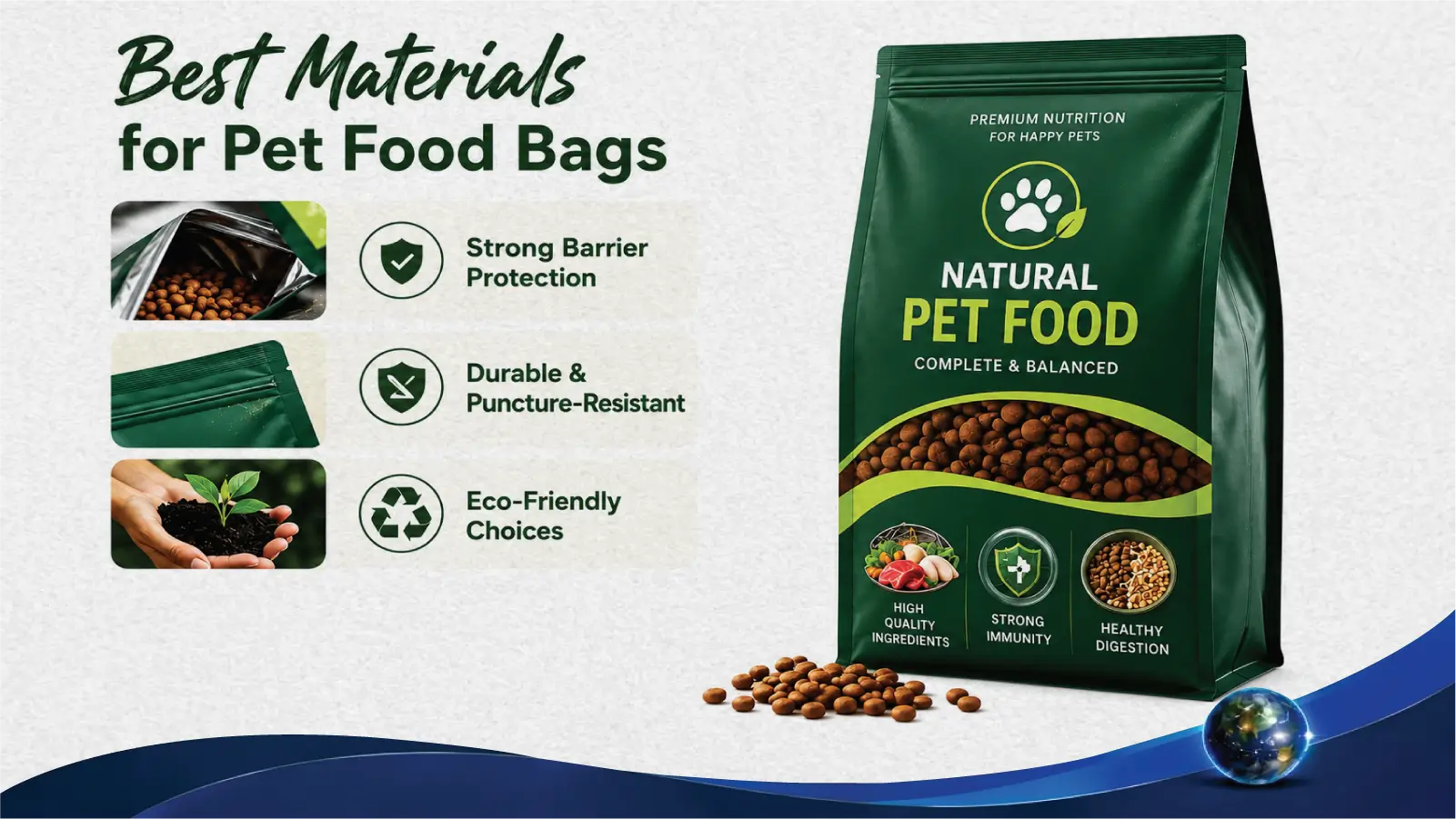
Quick Overview Of Pet Food Packaging Material Guide
A summary of the best materials for pet food bags is offered below before the deeper sections are explored.
- Purpose: Protection of the product against moisture, oxygen, and pests is the main function of any pouch or bag.
- Material range: kraft paper, polyethylene (PE), polypropylene (PP), and laminated films are among the most common options offered.
- Barrier needs: an oxygen barrier and a moisture barrier are required for both dry pet food and wet pet food.
- Format variety: stand up pouches, flat bottom bags, gusseted bags, and window pouches are offered in several formats.
- Closures: zipper closure systems, heat sealing, and a tamper evident seal are commonly included on most bags.
- Printing methods: screen and UV printing are preferred over older methods for sharp detail on dog food bags and cat food bags.
- Compliance: food contact safety and FDA compliance standards are followed throughout production.
- Sustainability: recyclability, mono material packaging, and material reduction are increasingly requested by pet brands.
Before the best materials for pet food bags are explored one by one, it helps to see how each is used in practice.
Common Materials Used In Pet Food Packaging
Kraft Paper with Poly Lining
- What it is: a natural paper layer combined with a thin poly lining for added moisture resistance.
- Who uses it: brands that want a premium, earthy presentation of the product on retail shelves.
- Why it’s used: the reputation of the brand is strengthened through a rustic, eco-conscious look, and FSC-certified paper is often specified for added credibility.
Paper is rarely enough for long shelf life, which is why best materials for pet food bags often move toward laminated films next.
Multi-Layer PET/PE Laminate
- What it is: a laminated film structure built from polyester and polyethylene layers.
- Who uses it: manufacturers of dry pet food that need dependable protection of the product over several months.
- Why it’s used: a strong oxygen barrier and moisture barrier are formed through this multi-layer packaging, and freshness is maintained for longer periods.
This laminate is a dependable pick among the best materials for pet food bags formulated for everyday dry kibble. For sharper printed graphics, a different laminate is worth a look next.
BOPP/PE Laminate Film
- What it is: a biaxially oriented polypropylene film paired with a polyethylene sealant layer, with a similar structure also seen in BOPET Bags.
- Who uses it: brands focused on shelf appeal for cat food bags and pet treat bags.
- Why it’s used: a matte finish or gloss finish is achieved with this material, and vivid colour reproduction is possible through rotogravure printing or digital printing.
This makes BOPP/PE laminate one of the best materials for pet food bags where branding and shelf appeal come first. Consequently, when strength for heavier loads becomes the priority, a woven material is the better fit.
Polypropylene (PP) Bags
- What it is: a tightly woven fabric made from polypropylene fibres, often laminated on the inside.
- Who uses it: bulk suppliers and wholesale distributors who move large volumes in Flexible Pouches Wholesale formats.
- Why it’s used: puncture resistance is significantly increased, and heavy loads are handled without tearing during transport.
PP remains one of the best materials for pet food bags chosen for bulk and wholesale distribution. Therefore, for products that demand the highest level of protection, a foil based option is considered next.
Aluminum Foil Laminate
- What it is: a metallized film or true foil layer sandwiched between protective outer and sealant layers.
- Who uses it: premium and export brands that rely on Retort Food Packaging for extended shelf stability.
- Why it’s used: an extremely high barrier against light, oxygen, and moisture is created, and a Custom Foil Pouch format is often chosen for treats and jerky.
This structure places aluminum foil laminate among the best materials for pet food bags requiring maximum shelf stability. Meanwhile, for brands with sustainability goals, a lighter and greener option is explored below.
Bio-Based Compostable Film
- What it is: a plant-derived, biodegradable film engineered as an alternative to traditional plastics.
- Who uses it: eco focused pet brands that prioritize sustainable packaging and reduced packaging waste.
- Why it’s used: compostable packaging is chosen when a smaller environmental footprint is targeted, without a major compromise on protection of the product.
This option is increasingly counted among the best materials for pet food bags favoured by sustainability focused brands.
“Good things come in small packages.” — Aesop
With the main material options compared, consideration is now given to packaging formats and specifications suited to different pet food products. More details about Pet Food Packaging are covered through different formats, barrier levels, closures, and material combinations. These factors are considered together according to the requirements of the product and the needs of the brand.
Pet Food Bag Material Comparison
| Material | Key Property | Best Format |
| Kraft paper with poly lining | eco friendly presentation | stand up pouches |
| Bio based compostable film | full compostability | Clear Gusset Bags |
| Multi layer PET/PE laminate | strong barrier films | flat bottom bags |
| BOPP/PE laminate | sharp print quality | window pouches |
| Woven PP | high puncture resistance | gusseted bags |
| Aluminum foil laminate | maximum barrier protection | Custom Size Mylar Bags |
This table summarizes several of the best materials for pet food bags side by side for quick comparison.
Moisture And Oxygen Barrier Properties
When best materials for pet food bags are compared side by side, barrier performance is usually the deciding factor. best materials for pet food bags are ultimately judged by how well moisture, oxygen, and odour are kept out. Meanwhile, an odour barrier is built into tightly sealed multi layer packaging so that cross-contamination of scent between products is prevented. In addition, with vacuum packaging, air is removed entirely from the pouch, and the rate at which fats break down in wet pet food is slowed considerably as a result. Once barrier performance is settled, durability during handling becomes the next concern.
Durability And Puncture-Resistant Material Options
Best materials for pet food bags are also expected to survive rough handling between the factory floor and the store shelf. Additional strength is added through woven polypropylene construction, often seen in BOPET bag and Mylar Childproof Bags formats, and heat sealing is applied consistently so that leaks are prevented during transport and storage. Furthermore, a tamper evident seal discourages unauthorized opening, and trust with the end customer is built as a result. On select treat packaging lines, a child resistant closure is also included so that accidental access by children is prevented.
Eco-Friendly And Recyclable Bag Materials
Sustainability is now part of nearly every conversation about best materials for pet food bags across the industry.
- Mono material packaging: a single resin type is used so that recyclability is improved without added complexity.
- Material reduction: thinner films with equal strength are engineered to lower overall plastic use.
- Compostable packaging: full breakdown under composting conditions is achieved with select bio based films.
- FSC certified paper: responsibly sourced fibre is used for Kraft Stand Up Pouches Canada style formats.
These approaches reflect a broader shift toward greener best materials for pet food bags across the industry. Sustainability is only part of the picture, and legal compliance is where attention turns next.
Canadian Packaging Regulations And Certifications
Best materials for pet food bags sold across Canada must be selected with applicable Canadian feed regulations and packaging requirements in mind. The Feeds Regulations, 2024 (SOR/2024-132) establish requirements for feed labelling, including required information, language, placement, presentation, and claims. Packaging materials that come into contact with feed must also be suitable for their intended use. The Health of Animals Regulations may apply to certain pet-food products containing animal products or by-products, particularly in relation to import requirements. AAFCO guidance may also be referenced voluntarily, but it should not be presented as a Canadian regulatory requirement. Therefore, material selection should consider the specific pet food, packaging format, intended use, and applicable Canadian requirements.
Selecting The Best Material For Pet Food Bags
At this stage, best materials for pet food bags are narrowed down according to a handful of practical factors. Type of product is the first factor considered, since dry pet food and wet pet food each call for a different barrier level. Volume is weighed next, as small Custom Food Pouch Packaging runs differ considerably from large Flexible Pouches Wholesale orders. Meanwhile, requirements of the brand around colour, finish, and personalized artwork are matched to screen or UV printing, and cost of the material is balanced against long term protection of the product. Finally, Custom Stand Up Pouches Canada and Custom Size Mylar Bags are chosen when a distinct shelf presence is wanted.
Additional Packaging Considerations
Once the material has been narrowed down, other packaging factors are considered before the final option is chosen. For a complete guide, How To Choose The Right Pet Food Packaging covers bag format, size, closure, barrier level, printing method, and other important selection factors. This step-by-step process makes it easier to match the best materials for pet food bags to a specific product line. This next step brings the material discussion together with the wider packaging requirements of the product.
“Customers will occasionally buy products not because they want them but because of how they are presented to them.” — James Clear
For requirements of packaging that involve personalized sizes, materials, closures, and printing, consideration is given to the specific needs of the product. Custom Packaging Vancouver is a suitable next step when packaging specifications and production requirements are ready to be discussed. For further details, get in touch with the team today.
Conclusion
We have covered everything in this blog about the best materials for pet food bags, presented in a mix of styles from quick bullet points to a detailed material-by-material breakdown. Material selection, barrier protection, and packaging formats were also compared to clarify which option suits different pet food products. Barrier performance, durability, sustainability, and Canadian regulation were each addressed with real numbers that matter for any brand selling across the country. In the end, the right choice depends on the product, the budget, and the goals set for the packaging.
Frequently Asked Questions (FAQs)
What is the best material for dry pet food bags?
A multi-layer PET/PE laminate is generally preferred, since a strong barrier is offered against moisture and oxygen. It remains among the top best materials for pet food bags for dry pet.
Are stand up pouches better than flat bags for pet treats?
Stand-up pouches are usually chosen for better shelf visibility, while flat bottom bags are picked when cost is the main concern.
Is kraft paper strong enough for pet food packaging?
Kraft paper individually is not considered high-barrier packaging, so a poly lining or laminate is usually added.
Are compostable pet food bags as durable as plastic bags?
Compostable packaging is showing steady improvements in performance, though puncture resistance may remain lower than that of traditional laminate films.
What closure types are used for resealable pet food bags?
A zipper closure is the most common choice, alongside child resistant closures for select treat lines.
Is a foil laminate necessary for wet pet food packaging?
Retort Food Packaging with a foil laminate is usually required for wet pet food that undergoes high temperature processing.
How is packaging waste reduced in pet food bag production?
Material reduction, thinner film gauges, and mono material packaging are among the main methods used.
Where to buy custom pet food packaging bags?
Universal Packaging is a reliable source for Custom Stand Up Pouches Canada, Kraft Stand Up Pouches Canada, and Custom Foil Pouch options. These remain some of the most requested best materials for pet food bags among Canadian brands.