One pouch with teared pckaging or one bad batch of food is often enough to make a pet owner stop trusting a brand, and the reason is rarely the food itself. Behind every pouch, bag, or box, a long list of choices is gradually made, from seal strength to barrier film, long before a product ever reaches a shelf. Whenever the question of How To Choose The Right Pet Food Packaging is raised, it turns out far more is involved than most people would ever expect. Ever wondered what really happens before the final result? Scroll down, because the answer might surprise you.
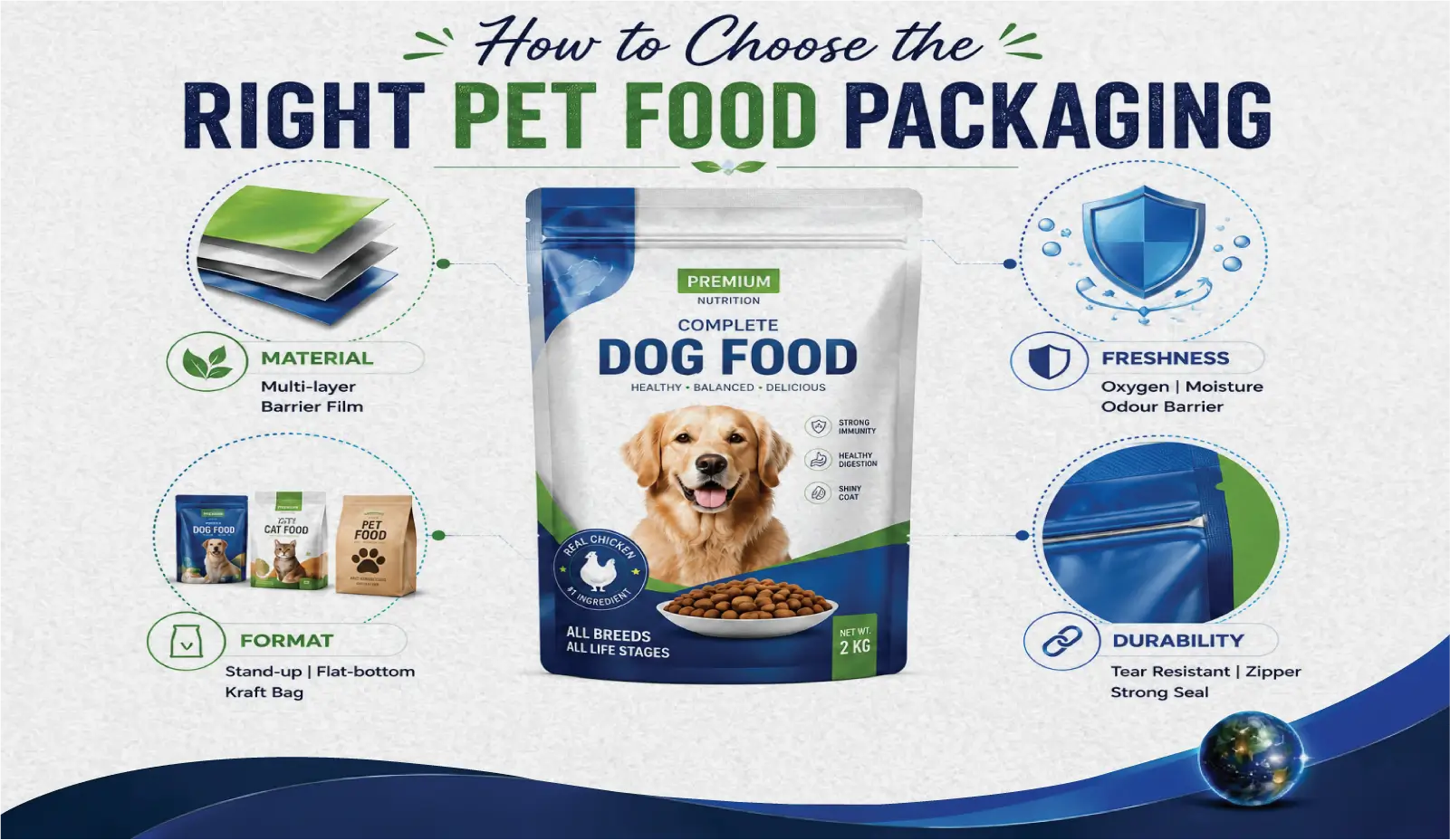
Quick Overview: How To Choose The Right Pet Food Packaging
Before the finer details are explored, a short overview is offered below so the bigger picture is understood first. In short, these are the main points considered whenever the right pet food packaging is chosen.
- Material first: food grade material and multi layer barrier films are checked before anything else is decided.
- Format next: stand up pouches, kraft paper bags, or flat bottom bags are compared for according to the type of product.
- Freshness: an oxygen barrier, a moisture barrier, and a strong seal are relied upon.
- Durability: tear resistance and pest resistance are checked for shipping and storage.
- Convenience: zipper closures and easy-open designs are preferred by most pet owners.
- Labelling: ingredient information, feeding instructions, and batch codes are confirmed.
- Compliance: Canadian regulations and certifications are verified for every format.
- Sustainability and cost: recyclable materials are weighed against the budget of the brand.
Curious how each of these points breaks down into real, practical decisions? The next section explains how to choose the right pet food packaging is explained step by step.
Choosing Food Grade Pet Packaging Material
The first step in how to choose the right pet food packaging usually starts with material. Food contact materials such as polyethylene (PE), polypropylene (PP), and laminated packaging are commonly selected since safety standards are met through these materials. Additionally, an oxygen barrier, a moisture barrier, and an odour barrier are combined within multi layer barrier films, and freshness is protected for a longer period as a result.
FDA compliance is also treated as a baseline standard across most supply chains, while recyclability and recycled materials are increasingly factored into this stage of the decision. Different pet food applications are matched with different material combinations according to freshness, durability, barrier protection, and storage needs. A closer comparison of these options is presented in Best Materials For Pet Food Bags, where suitable materials and their key properties are discussed in greater detail. This comparison makes material selection easier before bag size and format are considered.
Selecting the Right Pet Food Sizes of Bag
Bag sizing is one of the smaller but easily overlooked parts of how to choose the right pet food packaging. Portion sizes and consumer convenience are two of the strongest factors by which bag sizing is decided. Smaller pouches are typically chosen for treat packaging, while larger flat bottom bags and bottom gusset bags are reserved for bulk dry pet food packaging. Custom Stand Up Pouches are widely used across this category, since resealable closures are already built in, and freshness is preserved between feedings as a direct result. Once size has been settled, format becomes the next question worth exploring in how to choose the right pet food packaging.
Deciding Best Pouch, Bag, or Box Format
Format is one of the more visible parts of how to choose the right pet food packaging, and choosing between a pouch, bag, or box comes down to the product inside.
- Wet food: Retort pouches, stand-up pouches, flat-bottom bags, and spouted pouches are used for wet food packaging. Retort pouches are suited to products requiring heat sterilization, while stand-up, flat-bottom, and spouted formats are used according to the packaging requirements of the product.
- Dry food: Flexible pouches, Kraft Stand Up Pouches, and custom boxes are used for dry food packaging. Resealable closures are used with pouch formats, while custom boxes are suited to dry food products requiring structured packaging and presentation of shelf .
Once the format has been decided, attention shifts toward how information is displayed on the surface.
Other Options Labels, Stickers, and Wraps Explained
Labels, stickers, and wraps form another structure of how to choose the right pet Food Packaging. Custom printing, screen printing, and UV printing are the techniques most commonly used across this structure . Screen and UV printing, in particular, are preferred since sharper colour and better durability are achieved compared to older methods.
Custom Foil Pouches frequently combine printing and wrapping in a single step, since function and shelf appeal are addressed together. With labelling techniques covered, the conversation turns toward freshness itself.
Packaging Features for Maintaining Freshness
Freshness is one of the most closely guarded priorities in how to choose the right pet food packaging, and a combination of features is usually relied upon.
- Seal strength: heat sealing is relied upon so seal strength is not compromised during transit.
- Closure type: zipper closures and resealable packaging are chosen for repeated use after opening.
- Odour control: multi layer barrier films are required so strong smells are kept from escaping.
- Sterilization: Retort Packaging is used for wet pet food packaging specifically.
Freshness naturally leads into the next concern, which is how well packaging withstands rough handling.
Convenient & Easy Open Packaging Designs
Convenience is a practical part of how to choose the right pet food packaging that pet owners feel every single day. Consumer convenience is placed at the centre of every well designed pouch, bag, or box. A tear notch, a zipper closure, or a resealable strip is usually included to make opening simple, without requiring tools. Flexible Pouches Packaging is often praised for this reason, since a stand up base and an easy fold top are combined so pouring and resealing are made effortless. With convenience addressed, attention turns toward the label itself.
When convenience features such as tear notches, zipper closures, and resealable strips have been considered, the packaging requirements of the product are easier to define. For personalized sizing, materials, closures, and printing options, Custom Pet Food Packaging is worth exploring. These options are then matched with the specific needs and requirements of the brand before labelling details are finalized.
Branding and Shelf Appeal Packaging Design
The presentation of the product is treated as a major factor in how to choose the right pet food packaging for shelf appeal, since a first impression is formed within seconds.
The reputation of the brand is strengthened gradually through consistent design, while the recognition of the brand is improved whenever a distinctive shape, such as Kraft Stand Up Pouches, is used repeatedly. Having covered branding, the conversation turns toward sustainability.
“Customers will occasionally buy products not because they want them but because of how they are presented to them.” — James Clear
Important Pet Food Information on Labels
Labelling is where how to choose the right pet food packaging meets legal responsibility. Ingredient information, feeding instructions, and a barcode are considered essential across most regulated markets, and pet food labelling standards generally require this information to be displayed clearly. Batch or lot information is strongly recommended for faster recalls, while net quantity and dealer identity are typically included on the label as well. Storage instructions are also added where a shorter shelf life applies, so that safe handling is understood clearly by every pet owner.
Since labelling is closely tied to legal requirements, the regulatory side deserves its own look next.
Canada Pet Food Packaging Regulations And Certifications
Within Canada specifically, several regulations are referenced whenever how to choose the right pet food packaging is being confirmed for compliance.
- Consumer Packaging and Labelling Act, R.S.C., 1985, c. C-38: the primary statute governing packaging, labelling, sale, and advertising.
- Consumer Packaging and Labelling Regulations, C.R.C., c. 417: applied for the specific mandatory label information.
- Health of Animals Regulations: applied where animal-derived ingredients are present, overseen by the CFIA.
- Competition Act, ss. 52, 74.01: relied upon to prohibit false or misleading claims.
- Charter of the French Language, Article 51: French text is required within Quebec specifically.
A single, unified pet food packaging law does not exist in Canada. Instead, several statutes and regulations are combined together, and this combination is what is generally referenced when Canadian compliance is discussed. Once compliance has been addressed, attention shifts toward shelf appeal. C R packaging is considered where controlled access is required, with child-resistant closures selected according to the product and applicable safety requirements.
Sustainable and Eco Friendly Packaging Choices
Sustainable packaging is increasingly prioritized in how to choose the right pet food packaging, and recycled materials, along with lighter weight films, are commonly selected so packaging waste is reduced.
- Kraft paper bags: biodegradable qualities and a natural, recyclable structure are offered.
- Reformulation: BOPET Bags and laminated formats are being reformulated with recycled paper, mono-material films, recyclable paperboard, compostable films, and post-consumer recycled (PCR) materials to support improved recyclability and reduced material use.
Sustainability naturally connects to one final, practical concern, which is cost.
Cost-Effective Pet Food Packaging Solutions
Cost-effectiveness is the final piece in how to choose the right pet food packaging, weighed carefully against durability, freshness, and presentation. Bulk production runs are generally recommended for larger brands, since lower per unit costs are achieved, whereas smaller brands are often better served by flexible, lower minimum order formats such as Custom Foil Pouches. A balance is struck between upfront cost and the long term reputation of the brand, since a cheaper package is frequently associated with lower perceived value.
“Good things come in small packages.” — Aesop
Once the packaging requirements, budget, and preferred format have been reviewed, the next step is a discussion of the packaging needs of the brand. For Canada-based packaging requirements, Canada Custom Packaging is worth exploring, with personalized packaging options considered according to the product requirements. Contact now to discuss the next packaging step.
Conclusion
A much clearer understanding of how to choose the right pet food packaging has hopefully been formed, stretching from material and format all the way to Canadian regulations and cost. Freshness, durability, labelling, sustainability, and shelf appeal were each explored as connected parts of one larger decision, rather than separate factors. The next time a bag is picked up from a shelf, these same points are worth remembering, since thoughtful packaging choices are associated with better protection, safety, and shelf appeal.
Frequently Asked Questions (FAQs)
What is generally considered the best material when deciding how to choose the right pet food packaging?
Multi-layer barrier films combined with polyethylene (PE) or polypropylene (PP) are generally considered the strongest option, since freshness is protected for longer periods as a result.
Are stand up pouches better than traditional bags?
In many cases, yes, since a resealable closure and a stable base are typically built into stand up pouches, while shelf appeal is also improved through the upright presentation.
What is the difference between wet pet food packaging and dry pet food packaging?
Wet pet food packaging is usually placed in retort packaging, whereas dry pet food packaging is more commonly placed in flexible pouches or kraft paper bags.
Is Kraft paper packaging a sustainable option considered when how to choose the right pet food packaging?
Yes, kraft paper bags are widely considered a sustainable option, since biodegradable qualities and easier recyclability are generally offered.
What printing methods are commonly used for pet food packaging today?
Screen printing and UV printing are the two techniques most commonly relied upon, since richer colour and better durability are achieved.
How is portion sizing connected to size of bag selection?
As discussed in the above guide on how to choose the right pet food packaging, Portion sizes are matched to bag size so overfeeding and underfeeding are both reduced, and smaller pouches are generally offered to smaller households.
What certifications or regulations apply to pet food packaging sold in Canada?
The Consumer Packaging and Labelling Act, R.S.C., 1985, c. C-38, the Consumer Packaging and Labelling Regulations, C.R.C., c. 417, and the Safe Food for Canadians Regulations, SOR/2018-108, are the main frameworks applied.
How is the reputation of a brand affected by packaging quality?
The reputation of the brand is strengthened whenever consistent, high-quality packaging is used, since trust is generally associated with well-presented products.
Where is ready-to-ship pet food packaging typically purchased?
Pet food packaging, including Custom Stand Up Pouches, Bottom Gusset Bags, and Custom Mylar Bags, is typically purchased through specialized flexible packaging suppliers like, Universal Packaging platform, where personalized sizing and food grade certification are offered under one order.