A simple kraft pouch might look plain from the outside, but the four-layer materials are used in producing a kraft stand up pouches and each layer plays a different role in this structure. This is exactly why the Best Materials Used In Kraft Stand Up Pouches you have to know and give a closer look, since strength, freshness, and protection of the product all depend on this design. The full breakdown of each layer is shared in the next section, starting from the outer layer.
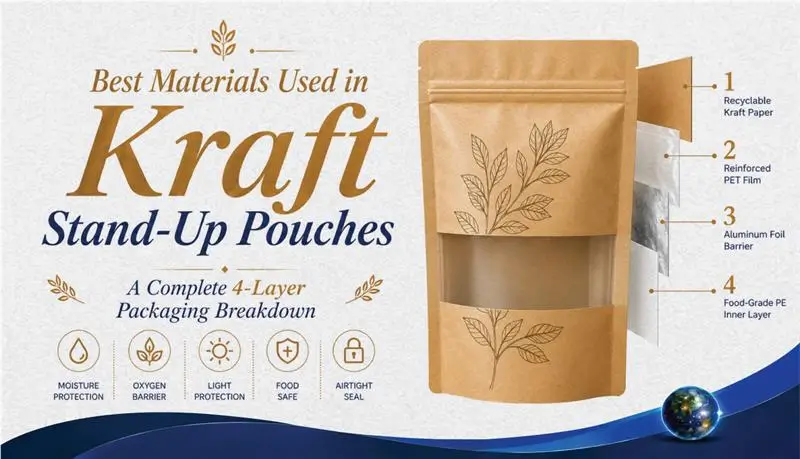
High-Quality 4-Layer Kraft Packaging Materials
A combination of four distinct materials is brought together in the making of a pouch made from kraft paper, and a specific role is carried out by each one within the overall structure. Strength, freshness, and safety of the product are collectively addressed through this layered approach, and this is exactly where the best materials used in kraft stand up pouches are ultimately brought together. Below, each layer is explained individually, starting from the outer surface and moving toward the innermost seal, so that a clear overview of the best materials used in kraft stand up pouches is formed.
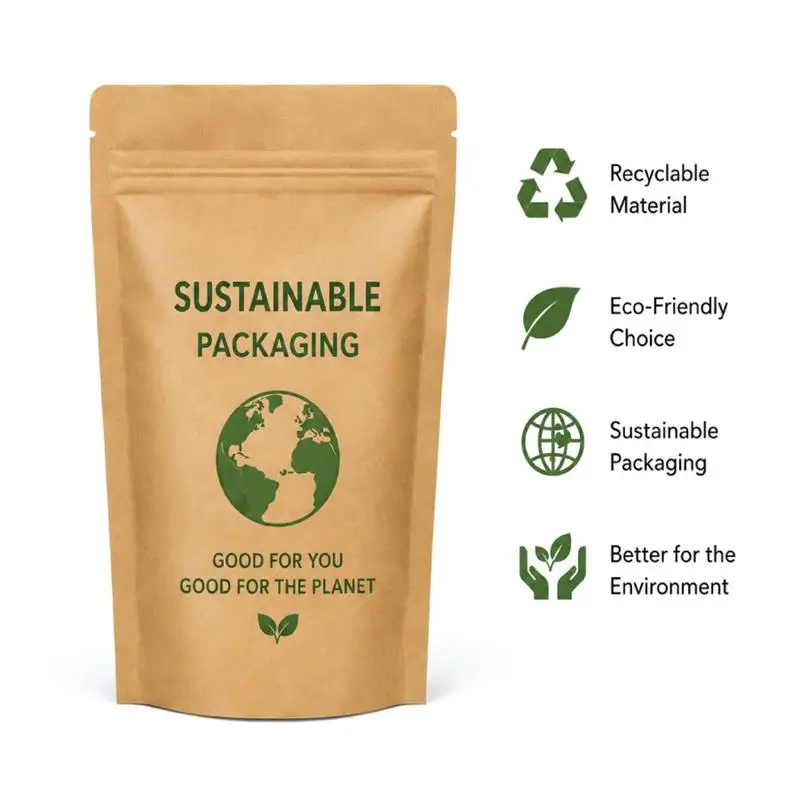
1. Outer Layer: Recyclable Kraft Paper
A natural, eco-friendly appearance is presented right from the outside, and this first impression is created through a matte kraft finish. In many cases, food-grade kraft paper is selected for direct-contact applications so that safety standards are met, and this is where a discussion of the best materials used in kraft stand up pouches naturally begins.
- Purpose: A natural matte texture along with a clean surface for printing of the brand is provided through this layer.
- Benefit: Attention of eco-conscious buyers is drawn through this natural finish, and a sturdy, paper-like stiffness is added to the pouch.
- Composition: Bleached or unbleached pure wood pulp fibres are used in the making of this layer.
- Thickness Range: A thickness of 60-80 GSM is typically maintained for standard pouches.
- Recyclability Status: This layer is recycled in paper waste streams when lamination with foil is not involved.
- Shelf Presentation Impact: An artisanal feel is added to retail shelves through the natural texture of this layer, and the identity of the product is strengthened as a result.
- Colour Variation: Multiple shades, including natural brown, white kraft, and bleached kraft, are made, so that flexibility in design is offered according to the requirements of the brand.
- Cost Factor: A relatively lower cost, compared to fully plastic laminates, is associated with this layer, and affordability for small-batch and large-scale production alike is offered.
- Best Suited For: Dry snacks, tea, cookies, and other non-greasy products are considered ideal for packaging with this outer material, which is why kraft paper is often listed among the best materials used in kraft stand up pouches for lightweight goods.
A stronger protection is added right beneath this paper; find out how in the next layer, where more of the best materials used in kraft stand up pouches are revealed.
2. Support Layer: Supported PET Film
Right beneath the visible surface, a hidden layer of strength is placed, and structural integrity is maintained through this material during shipping and handling and also considered the best materials used in kraft stand up pouches. This is where a dedicated PET film layer is positioned, so that the softer paper above is protected from stress and impact. The required strength and shape of Custom Gusset Bags are also maintained through this supportive layer, particularly when heavier products or larger filling capacities are involved. Because of this added strength, a wide range of custom pouch sizes is made possible without a loss of durability.
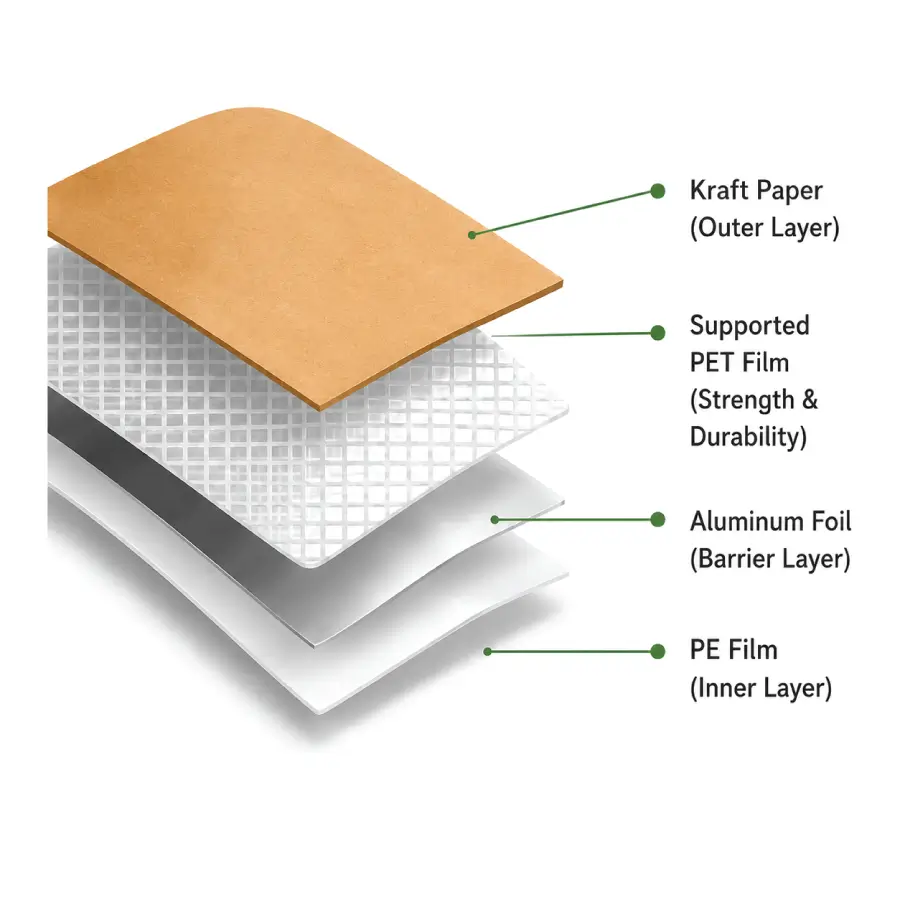
- Purpose: The paper is protected from tearing or stretching through this layer, functioning as a backbone within the structure.
- Benefit: Bursting of the bag during shipping is prevented, and high manufacturing heat is withstood through this film.
- Composition: A synthetic polyester resin, manufactured through an extrusion process, is used in this layer.
- Thickness Range: A thickness of 12-15 microns is usually maintained in standard structures.
- Recyclability Status: Separation of this material in mixed laminates is considered difficult, and easy biodegradation is not achieved through this film.
- Weight Factor: A lightweight design, relative to its strength, is offered through this layer, and shipping costs are reduced as a consequence.
- Best Suited For: Products requiring extra puncture resistance, such as items with sharp edges or heavier fill weights, are commonly packaged with this reinforcement, making it one of the best materials used in kraft stand up pouches for high-stress applications.
The real freshness protector layer lies just below; discover the barrier layer next, where perhaps the most talked-about of the best materials used in kraft stand up pouches is found.
3. Barrier Layer: Aluminum Foil
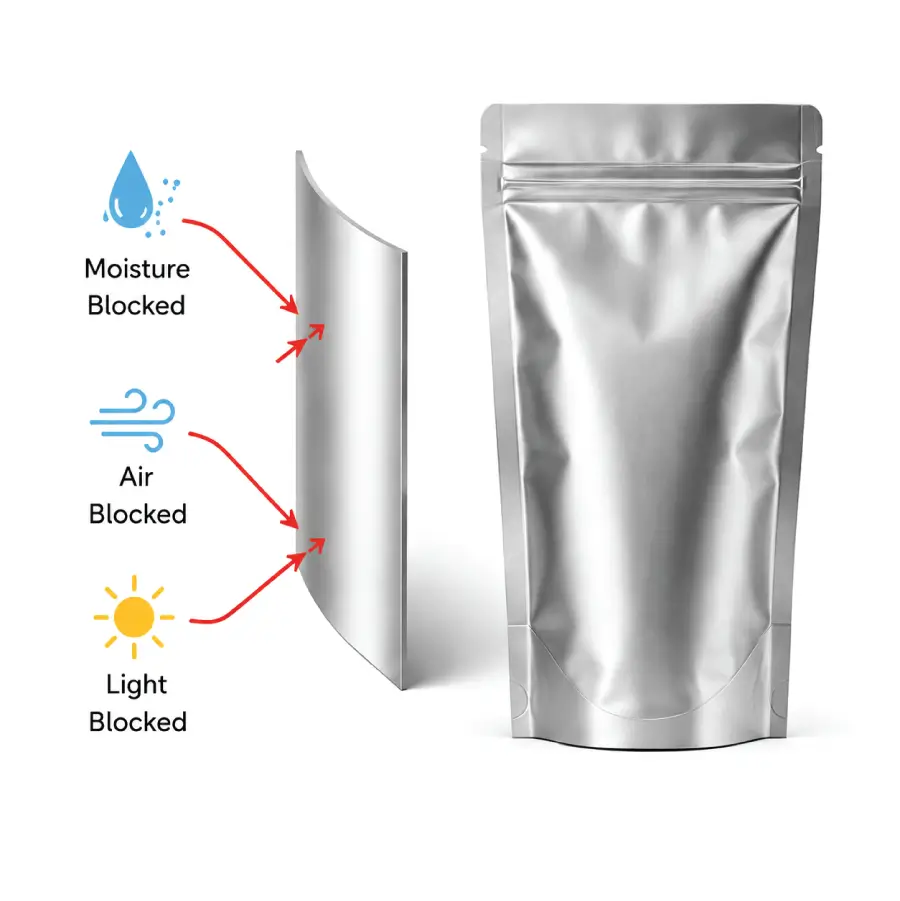
At this structure, the most important layer for freshness is positioned, and protection against air, light, and moisture is centred within this material. This is where the true aluminum foil barrier is found, and a dependable moisture barrier is created against outside humidity, confirming why foil sits at the top of the best materials used in kraft stand up pouches for barrier performance. In lighter-duty structures, an oxygen barrier film is sometimes used as an alternative to solid foil, though it is rarely ranked among the best materials used in kraft stand up pouches for maximum protection.
- Purpose: External air, moisture, and light are completely blocked from entering through this layer.
- Benefit: The shelf life of the product is significantly extended, and the original flavour and smell are preserved through this barrier.
- Composition: Pure aluminum metal, rolled into ultra-thin sheets, is used in the making of this layer.
- Thickness Range: A thickness of 7-9 microns is commonly maintained for flexible packaging applications.
- Recyclability Status: This layer is not accepted in recycling when it is bonded with other materials.
- Temperature Resistance: A wide range of temperatures, from cold storage to warmer climates, is withstood through this layer, without a reduction in barrier performance.
- Best Suited For: Coffee, spices, protein powders, and other aroma-sensitive or light-sensitive products are considered best suited for packaging with this barrier material, which is precisely why it is featured among the best materials used in kraft stand up pouches for coffee and spice brands.
A proper understanding of material layers, barrier protection, and product safety is important for effective packaging decisions. For deeper insight, explore Eco-Friendly Kraft Packaging For Modern Brands.
One final layer remains: the one that actually interacts with your product. Read on to see the last of the best materials used in kraft stand up pouches.
4. Inner Layer: Food-Grade PE
Closest to the product itself, direct contact is made through the final layer, and food safety, along with a secure seal, is ensured through this material. This is where the actual PE inner lining does its work, sealing everything safely into place and rounding out the full list of the best materials used in kraft stand up pouches.
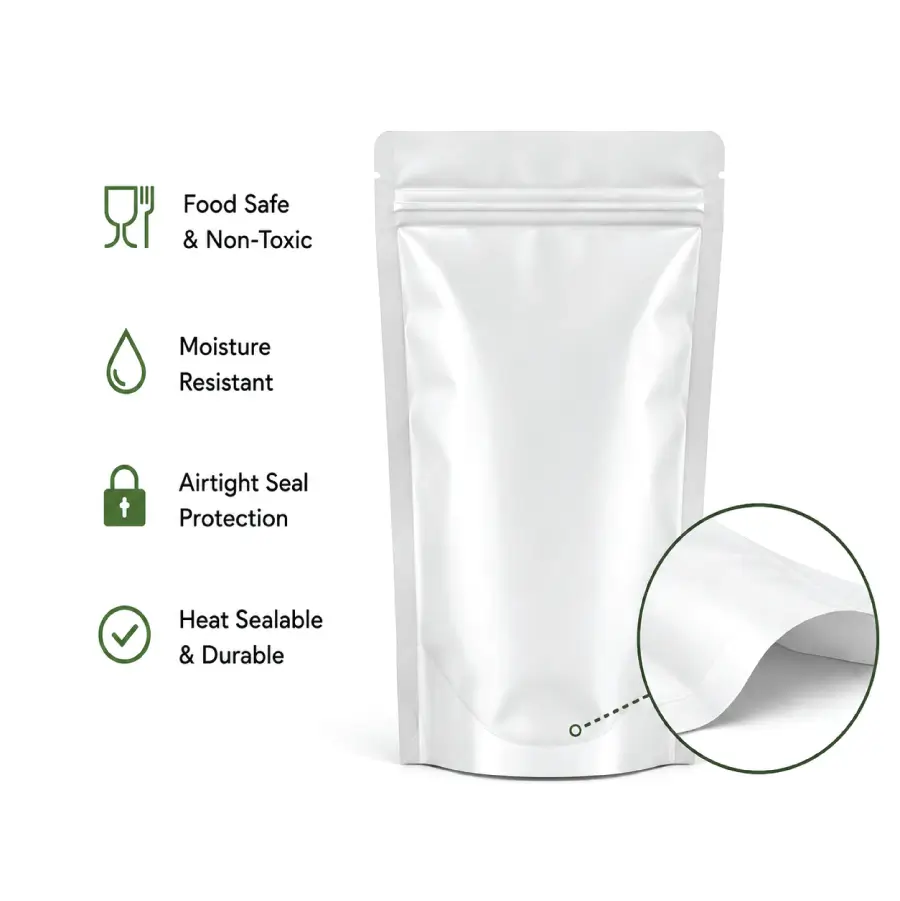
- Purpose: A food-grade surface for food is provided through this layer, and easy melting for sealing of the bag is enabled.
- Benefit: A leak-proof, airtight seal is created, and no reaction with oils or acids of the product takes place through this material.
- Composition: A petroleum-based polymer, either low-density (LDPE) or linear low-density (LLDPE), is used in the making of this layer.
- Thickness Range: A thickness of 40-60 microns is generally maintained, depending on seal strength requirements.
- Recyclability Status: This layer is recycled only as a mono-material, and separation after lamination is not possible.
- Closure Compatibility: Both zipper closures and heat-seal closures are supported through this material, so that resealable or one-time-seal options are made available according to the requirements of the brand.
- Flavour Protection: Transfer of flavour is prevented through the non-reactive surface of this layer, and the true taste of the product is preserved.
- Best Suited For: Products requiring an airtight, food-safe seal, including snacks, powders, and liquids, are commonly packaged with this inner material, securing PE’s place among the best materials used in kraft stand up pouches for food safety.
Design & Customization Options
Beyond the four core layers, a range of design features is also added to complete the finished pouch, though these additions sit outside the core discussion of the best materials used in kraft stand up pouches. A resealable zipper is commonly included at the top, and a small tear notch is positioned nearby, making it simple for the end user to open the pouch. For products requiring controlled access, Childproof Bags are produced with certified child-resistant zipper closures, through which added safety is provided while convenient use by adults is maintained.
A bottom gusset is frequently built into the base so that an upright and stable position is maintained on retail shelves. For brands seeking a more distinctive presentation, Holographic 3.5 Mylar Bags are produced with reflective finishes, custom printing, and safe closure options according to the requirements of the product. The holographic material is also considered best materials used in kraft stand up pouches When branding is required, digital printing or traditional rotogravure printing is selected depending on order volume and design complexity.
“Packaging can be theater; it can create a story.” — Steve Jobs
Explore Kraft Stand Up Pouches today, through which freshness, protection, and shelf-ready presentation of the product are maintained.
Eco-Friendly Kraft Packaging Options
This material combination plays a direct role in how a product is perceived on the shelf, and this is another option of Eco Friendly Kraft Pouches that are included in the best materials used in Kraft stand up pouches are chosen so carefully. A strong premium presentation is achieved through the natural kraft finish, while Custom Stand-Up Pouches are personalized through colours, printed artwork, finishes, and functional additions according to the requirements of the brand. In simpler dry-good applications, a straightforward paper polyethylene laminate is sometimes chosen instead of a full four-layer build, so that cost and environmental impact are both reduced
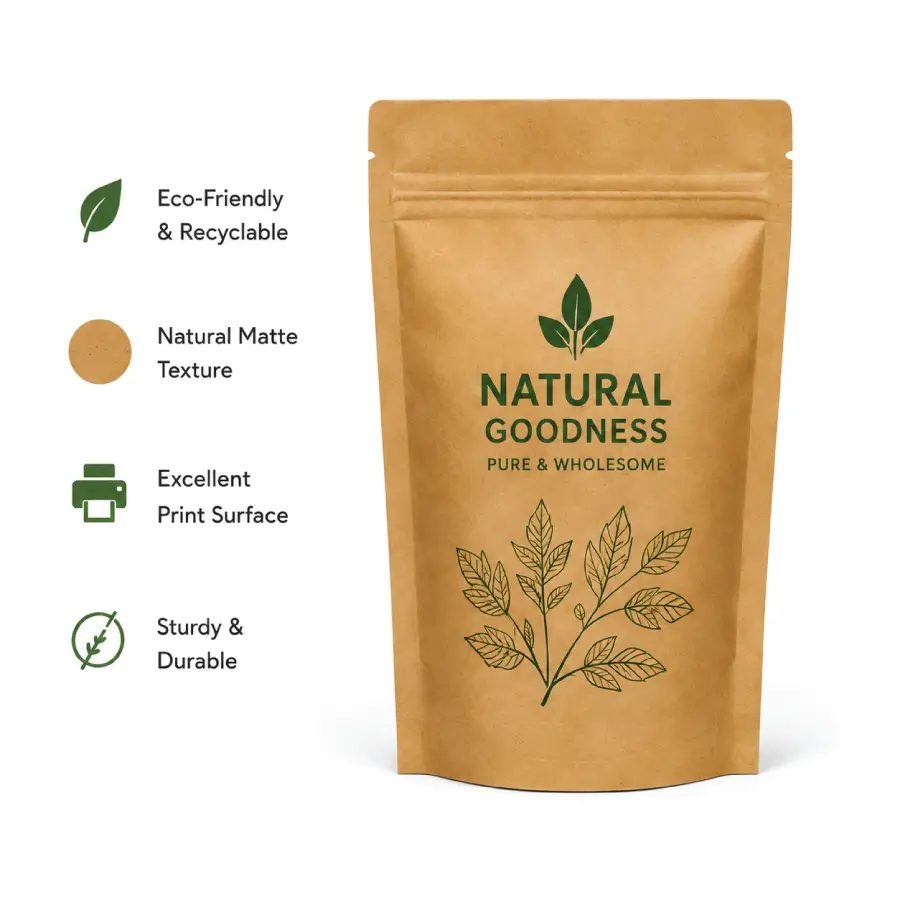
“Recycling, packaging, businesses are changing all of those things because that’s what consumers want.” — Jerry Greenfield
For personalised packaging aligned with the requirements of the brand, explore our Custom Packaging Vancouver services and contact us now.
Conclusion
Everything about the best materials used in kraft stand up pouches was covered in a different style, from the outer kraft surface to the innermost sealing layer. The purpose, benefits, composition, thickness range, and recyclability status of each layer were explained in detail so that an informed decision could be made by brands and buyers alike. Whether a focus on sustainability, protection of the product, or strength of the packaging is required, the right combination of materials is now understood clearly.
Frequently Asked Questions (FAQs)
Are Kraft stand-up pouches customized according to the needs of a brand?
Yes, kraft stand-up pouches are customized according to the needs of the brand, including size, printing, valve addition, and closure type, so that the best materials used in kraft stand up pouches are matched to the requirements of the brand.
What is a kraft stand-up pouch made of?
A kraft stand-up pouch is generally made of four layers: kraft paper, PET film, aluminum foil, and food-grade PE, with a different purpose served by each layer within the structure.
Is kraft paper packaging recyclable?
Kraft paper packaging is recycled in paper waste streams when lamination with foil or plastic is not involved in the structure. This eco friendly material is considered the best materials used in kraft stand up pouches.
Why is aluminum foil used as a barrier layer?
Aluminum foil is included as a barrier layer because air, moisture, and light are blocked effectively through this material, and the shelf life of the product is extended as a result.
What is the role of PET film in a kraft pouch?
PET film is included between the kraft paper and foil so that strength is added to the structure, and tearing of the pouch is prevented during handling and transport.
What thickness is generally used for the kraft paper layer?
A thickness of 60-80 GSM is typically maintained for the kraft paper layer in standard pouches, depending on the requirements of the brand.
Are Kraft stand-up pouches considered eco-friendly?
Kraft stand-up pouches are considered more eco-friendly than fully plastic pouches, as the outer surface is made from recyclable paper, and the perception of the brand is strengthened as a result.
How is the shelf life of a product affected by pouch material?
A longer shelf life is achieved when a barrier layer, such as aluminum foil or metallized film, is included in the pouch structure, and exposure to air and light is minimized.